How to Take Control of Recurring Payments Across Every Account You Own
Effective recurring payment management multiple accounts setups require a three-part system: a subscription tracker that scans all your bank accounts and credit cards (Rocket Money or Quicken Simplifi for most people), consolidation of charges onto fewer payment methods where possible, and secure browser-based access to each financial portal through isolated sessions so you can review, cancel, or adjust charges without constantly re-authenticating. This combination typically reveals $50-200/month in savings within the first 30 minutes of setup.

The Real Cost of Unmanaged Recurring Payments
Recurring payments are designed to be invisible. That’s the point — set it and forget it. But when those payments are scattered across multiple bank accounts, credit cards, PayPal accounts, and digital wallets, “forget it” becomes the operative phrase. If you are already managing multiple accounts for personal or business purposes, recurring payment tracking becomes a critical blind spot.
Forgotten Subscriptions
The average consumer wastes $133 per month on subscriptions they don’t actively use. That figure climbs sharply for anyone with multiple payment accounts, because charges on a secondary credit card or a rarely-checked bank account slip below the awareness threshold. A $14.99/month SaaS tool billed to your business card, a $9.99 streaming service on a joint account, and a $29/month gym membership auto-renewing on a debit card you barely use — individually small, collectively significant.
Overdraft and Failed Payment Fees
When recurring charges hit accounts with insufficient funds, the financial damage multiplies. Banks charge $35+ per overdraft, and many services impose their own failed payment fees on top. If you’re juggling multiple accounts, keeping sufficient balances in each to cover all recurring charges becomes an active management task rather than a passive one.
Duplicate Subscriptions
It’s surprisingly common to pay for the same service twice when charges are split across accounts. Two Spotify subscriptions — one personal, one that was supposed to be the family plan. Two cloud storage services that each seemed necessary at the time. Two VPN subscriptions that both auto-renewed because each was on a different card. Without a unified view across all payment methods, duplicates hide in plain sight.
Missed Cancellation Windows
Annual subscriptions are especially dangerous. A $199/year software renewal attached to a credit card you monitor quarterly may renew three months before you notice. Most services have narrow cancellation windows — some as short as 48 hours — after which you’re locked into another cycle.
Credit Score Impact
Failed payments on forgotten accounts don’t just cost fees. If a subscription service you’ve forgotten about exhausts its retry attempts and sends the balance to collections, the delinquency hits your credit report. This is particularly risky with accounts attached to old email addresses where you never see the warning notifications.
Best Tools for Multi-Account Recurring Payment Tracking
The following five tools represent the strongest options for people who need to track recurring charges across multiple banks, credit cards, and payment platforms. Each approaches the problem differently.
1. Rocket Money (formerly Truebill)
Rocket Money is the most full-featured subscription management tool available. It automatically scans all linked bank accounts and credit cards to identify every recurring charge, categorizes them, and alerts you to changes. What sets it apart is its concierge cancellation service — Rocket Money will negotiate lower rates on your behalf or cancel subscriptions for you. It links unlimited accounts through Plaid’s read-only bank connections.
- Multi-account support: Unlimited bank accounts and credit cards in a single dashboard
- Auto-detection: AI identifies recurring charges automatically, including those billed irregularly
- Standout feature: Bill negotiation service that saves users an average of $30/month
- Pricing: Free (basic tracking) / $3-12/month for premium features including cancellation
2. Trim
Trim takes an AI-first approach to subscription management. It analyzes spending patterns across linked accounts to surface recurring charges you may have forgotten. Its bill negotiation service claims to save users significant amounts on recurring bills like internet, phone, and insurance. Trim’s strength is its proactive approach — it doesn’t just show you subscriptions, it actively recommends which to cut.
- Multi-account support: Aggregates charges across all linked financial accounts
- Auto-detection: Pattern recognition identifies recurring charges even when amounts vary slightly
- Standout feature: Proactive savings recommendations based on spending analysis
- Pricing: Free to scan. Negotiation service takes 33% of first-year savings (you keep the rest)
3. Prism
Prism differentiates itself with actual bill payment capability — not just tracking. You can link multiple bank accounts and pay bills directly from the app, choosing which account to draw from for each payment. This makes it uniquely useful for people who intentionally spread payments across accounts for cash flow or rewards optimization.
- Multi-account support: Links multiple bank accounts with payment routing from any linked account
- Auto-detection: Identifies recurring bills and organizes them by due date
- Standout feature: In-app bill payment — pay from any linked account without visiting each biller’s site
- Pricing: Free
4. Empower Personal Dashboard (formerly Mint)
Empower provides the broadest financial picture, placing recurring payments in the context of your overall budget, net worth, and investment portfolio. It links unlimited accounts and automatically categorizes transactions, including recurring ones. While it’s less focused on subscription management specifically, the holistic view helps you understand how recurring charges fit into your total financial picture.
- Multi-account support: Unlimited account linking with automatic categorization across banks, credit cards, loans, and investments
- Auto-detection: Identifies recurring transactions and flags changes in amounts
- Standout feature: Budget and net worth context — see recurring charges as a percentage of income
- Pricing: Free
5. Quicken Simplifi
Quicken Simplifi bridges the gap between simple subscription trackers and full-featured personal finance tools. It links all accounts, categorizes recurring charges, and — critically — alerts you when a recurring charge changes unexpectedly. Its spending watchlists let you set thresholds for specific subscriptions so you’re notified the moment a price increase hits.
- Multi-account support: Links all financial accounts with robust categorization
- Auto-detection: Identifies recurring charges and tracks billing date patterns
- Standout feature: Spending watchlists with automatic alerts on price changes
- Pricing: $3.99/month
Multi-Account Payment Tool Comparison
| Tool | Account Linking | Auto-Detection | Bill Pay | Cancellation Service | Price Alerts | Cost |
|---|---|---|---|---|---|---|
| Rocket Money | Unlimited | ✅ | ❌ | ✅ | ✅ | Free / $3-12/mo |
| Trim | Unlimited | ✅ | ❌ | ✅ | ❌ | Free / 33% savings |
| Prism | Unlimited | ✅ | ✅ | ❌ | ❌ | Free |
| Empower | Unlimited | ✅ | ❌ | ❌ | ❌ | Free |
| Quicken Simplifi | Unlimited | ✅ | ❌ | ❌ | ✅ | $3.99/mo |
Setting Up a Multi-Account Recurring Payment System
Tools alone don’t solve the problem — you need a systematic approach. The following three-step process, combined with the right tracking tool, creates a recurring payment management system that catches leaks and prevents future waste.
Step 1: Conduct a Full Account Audit
Before deploying any tracking tool, manually audit every financial account you hold:
- List every bank account, credit card, debit card, PayPal account, and digital wallet you use or have used in the past two years
- Pull the last 12 months of statements for each account (most banks offer downloadable CSV or PDF exports)
- Flag every recurring charge — both obvious ones (Netflix, Spotify, gym) and hidden ones (annual software renewals, domain registrations, forgotten trial conversions)
- Record the billing date, amount, frequency (monthly, quarterly, annual), and cancellation policy for each recurring payment
- Identify which charges are essential, which are useful, and which can be cut immediately
Step 2: Consolidate Payment Methods
Reduce complexity by funneling recurring charges onto fewer payment methods:
- Designate a primary subscription card: Move as many recurring charges as possible to one credit card. This creates a single statement you can review monthly for a complete picture
- Use virtual cards for granular control: Services like Privacy.com, Capital One Eno, and Revolut Business let you create unique virtual card numbers per subscription — making cancellation as simple as pausing the card
- Eliminate duplicate services: If you’re paying for both Spotify and Apple Music, both Google Drive and Dropbox, or both NordVPN and ExpressVPN across different accounts, pick one and cancel the rest
- Match payment frequency to cash flow: Where possible, align all recurring charges to bill on the same date range to make balance management predictable
Step 3: Deploy Monitoring and Alerts
Connect a tracking tool (Rocket Money or Simplifi) and configure proactive alerts:
- Price change notifications when any recurring charge increases
- New recurring charge alerts when a trial converts or a new subscription starts
- Annual renewal reminders set 30 days before the charge date
- Failed payment notifications across all linked accounts
- Monthly summary emails showing total recurring spend versus the previous month
Business Recurring Payment Challenges
Business environments compound every challenge of personal recurring payment management. The stakes are higher, the account count is larger, and the number of people involved multiplies the coordination overhead.
SaaS Subscription Sprawl
Modern businesses use an average of 130+ SaaS tools, and that number grows as individual departments adopt their own solutions without central IT approval. Finance teams often discover they’re paying for three different project management tools across three departments, each billed to different corporate cards. Tools like Zylo, Productiv, and Vendr specialize in SaaS spend management, but they require significant implementation effort. For many small-to-mid-size businesses, the combination of a spreadsheet audit and a subscription tracker covers 80% of the problem.
Multi-Department Budget Visibility
When marketing has its own corporate card, engineering uses a shared team card, and operations bills to the company’s primary account, finance teams lose complete visibility into total recurring spend. Implementing a purchase order requirement for any recurring charge above a set threshold ($50/month, for instance) creates a centralized record before the charge even begins.
Vendor Portal Management
Finance and operations teams routinely access dozens of vendor portals, banking dashboards, and payment platforms to verify charges, download invoices, and manage payment methods. Logging into each portal individually — re-authenticating each time, managing separate credentials — eats hours every week. Using multi-login browser capabilities, teams can maintain persistent, isolated sessions for every banking and vendor portal simultaneously. Each portal stays logged in within its own secure environment, eliminating repeated authentication and reducing the time spent on routine payment verification from hours to minutes.
Advanced Recurring Payment Strategies
Virtual Card Management
Virtual cards from services like Privacy.com, Capital One Eno, or Revolut Business represent the most powerful tool for individual subscription control:
- One card per subscription: Create a unique virtual card number for each recurring charge. Cancellation becomes as simple as pausing or deleting the card — no need to navigate the vendor’s cancellation flow
- Spending limits as guardrails: Set the card’s spending limit to match the exact subscription cost. If the vendor raises prices, the charge fails and you’re immediately notified rather than silently paying more
- Instant freeze capability: Pause a virtual card to temporarily stop charges without fully canceling — useful for seasonal subscriptions you want to resume later
- Automatic labeling: Name each virtual card after its subscription (e.g., “Netflix,” “Adobe CC,” “Slack”) for instant identification in your statement
Calendar-Based Payment Tracking
For people who find financial apps overwhelming, a calendar-based approach provides a simple, visual alternative. This method works especially well as a complement to app-based tracking rather than a replacement:
- Create a dedicated Google Calendar or Outlook calendar named “Recurring Payments”
- Add each recurring charge as a repeating event on its billing date, with the amount and payment account in the event description
- Set reminder notifications 2 days before each charge so you can verify account balances
- Add annual renewal events with 30-day advance reminders for evaluation and potential cancellation
- Review the calendar at the start of each month to see your total upcoming charges at a glance
Secure Multi-Account Portal Access With Send.win
Whether managing personal or business recurring payments, you’ll frequently access multiple banking portals, credit card dashboards, and vendor payment pages. Each portal requires its own login, its own cookies, and its own session state. Switching between them in a standard browser means constant re-authentication, session timeouts, and the risk of accidentally performing actions in the wrong account.
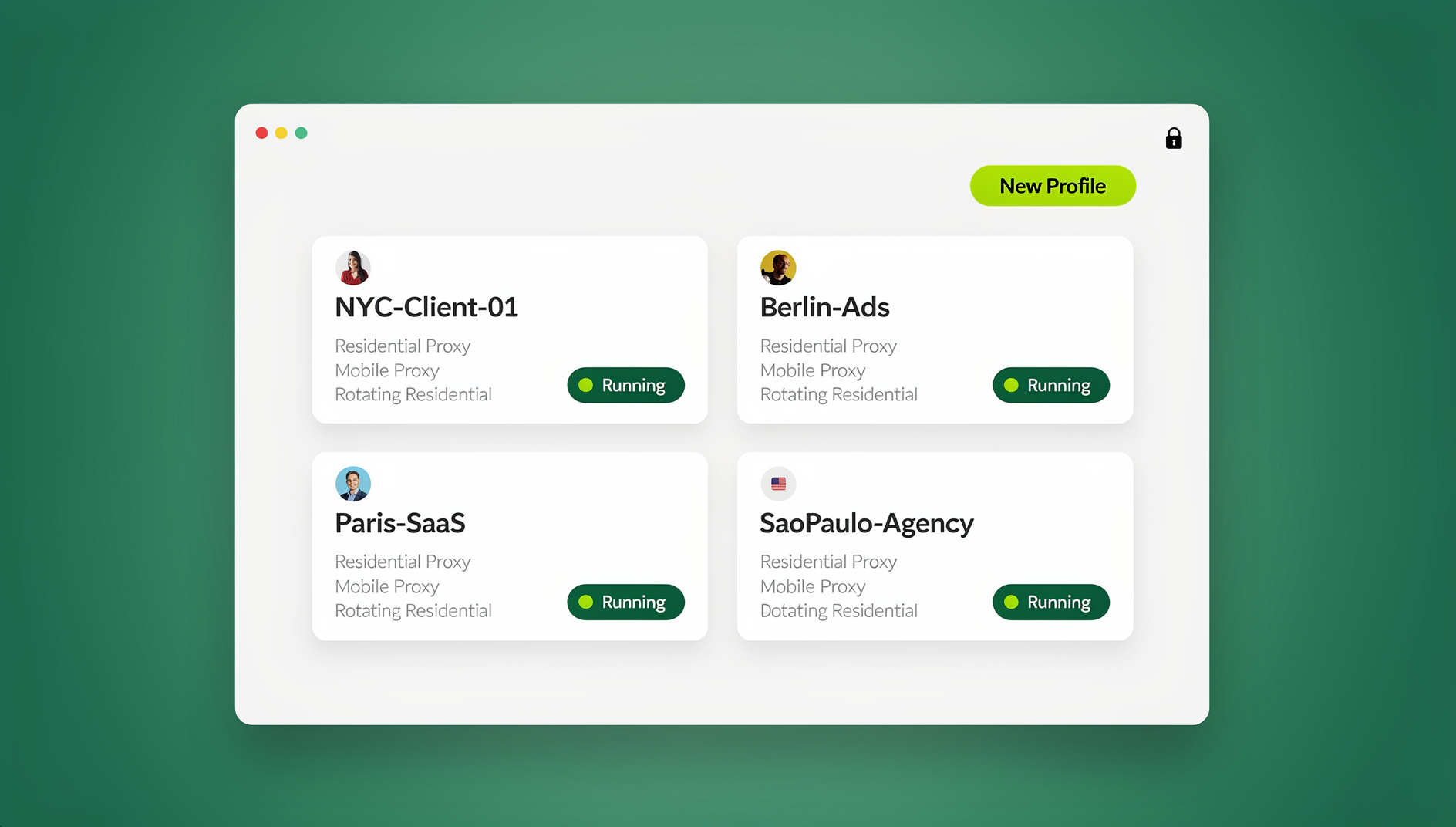
Send.win solves this with session isolation — each financial portal runs in its own sandboxed browser session with unique fingerprints, separate cookies, and independent storage. You can have your Chase dashboard, Capital One portal, PayPal account, and Stripe dashboard all open simultaneously in isolated sessions, each maintaining its own persistent login.
This isn’t just a convenience improvement — it’s a security one. Session isolation prevents cross-site tracking, cookie leakage, and session hijacking between financial portals. If one session is compromised, the isolation boundary prevents lateral movement to your other accounts.
Send.win offers two modes for this: the Sendwin Browser desktop application for persistent local sessions, and cloud browser sessions for teams that need access from any device without installation. Both support proxy assignment per session if you need additional IP-level separation. The Pro plan at $19/month ($6.99/month annually) includes the Automation API, and a 30-day free trial lets you test the full feature set before committing. Teams looking for productivity hacks in their multi-account workflows find that isolated sessions alone can save hours per week in authentication overhead.
Recurring Payment Audit Checklist
| Audit Task | Frequency | Action Required |
|---|---|---|
| Review all active recurring charges | Monthly | Identify unused or underused subscriptions for cancellation |
| Verify payment amounts haven’t changed | Monthly | Flag and investigate any unexpected price increases |
| Check for duplicate services across accounts | Quarterly | Eliminate redundant subscriptions billed to different cards |
| Preview upcoming annual renewals | Monthly | Evaluate value and cancel or renegotiate before auto-renewal |
| Audit who has access to payment accounts | Quarterly | Remove departed team members and revoke unnecessary access |
| Reconcile total recurring spend to budget | Monthly | Verify actual spend matches projected recurring budget |
| Test cancellation for unused services | As identified | Confirm cancellation processed and no further charges occur |
| Review virtual card assignments | Quarterly | Ensure each active subscription is matched to its virtual card |
🏆 Send.win Verdict
The best approach to recurring payment management across multiple accounts combines three layers: a subscription tracker (Rocket Money for most individuals, Quicken Simplifi for those who want price-change alerts), payment consolidation onto fewer cards with virtual card numbers for individual control, and secure browser isolation for accessing every financial portal simultaneously without re-authentication headaches. The 30 minutes you spend setting up proper tracking typically reveals $50-200/month in forgotten or underused subscriptions — and Send.win’s isolated sessions at $19/month (with a 30-day free trial) make the ongoing management of multiple banking and vendor portals painless and secure.
Try Send.win free today — manage every financial portal in its own isolated session with a 30-day free trial.
Frequently Asked Questions
What happens when a recurring payment fails on one of my accounts?
Most services retry failed payments 2-3 times over a 7-10 day window before suspending or canceling your subscription. Use a monitoring tool that alerts you immediately on failed payments across all linked accounts so you can fund the account or update payment methods before service disruption — or before the vendor sends the balance to collections.
Is it safe to link all my bank accounts to a subscription tracking app?
Reputable tools like Rocket Money, Empower, and Quicken Simplifi use read-only connections through Plaid, meaning they can view your transactions but cannot initiate payments, transfers, or withdrawals. Plaid uses bank-level encryption (256-bit AES) and is SOC 2 Type II certified. You should still verify that any tool you use connects through Plaid or an equivalent read-only aggregator rather than asking for your banking credentials directly.
How do I handle recurring payments billed in different currencies?
Use a multi-currency account (Wise, Revolut, or Payoneer) as your primary payment method for international subscriptions. These services offer real mid-market exchange rates and charge far less in conversion fees than standard credit cards — often 0.3-0.5% versus 2-3%. This also centralizes your international recurring charges in one account for easier tracking.
Should I put all subscriptions on one credit card?
One card simplifies tracking, but virtual cards offer better control. The ideal approach is a single primary card for all subscriptions, with virtual card numbers generated per subscription through Privacy.com or your bank’s virtual card feature. You get the consolidated statement of a single card with the per-subscription control of individual cards.
How often should I audit my recurring payments?
Monthly quick reviews (10 minutes scanning for new or changed charges) combined with quarterly deep audits (30 minutes evaluating each subscription’s value and usage patterns). Annual renewals should trigger 30-day advance reminders so you have time to research alternatives or negotiate before you’re locked in.
What’s the fastest way to find forgotten subscriptions?
Link all your financial accounts to Rocket Money or a similar tool — it will surface recurring charges within minutes. For accounts you can’t link electronically, search your email inbox for common subscription confirmation phrases like “your subscription,” “recurring payment,” “auto-renewal,” and “billing confirmation” to catch charges attached to accounts the tracking tool can’t see.
Can I use Send.win to manage multiple banking portals securely?
Yes. Send.win creates isolated browser sessions with unique fingerprints, separate cookies, and independent storage for each portal. You can maintain persistent logins across Chase, Capital One, PayPal, Stripe, and any other financial portal simultaneously. Each session is sandboxed, so a compromise in one session cannot affect others. Both the Sendwin Browser desktop app and cloud browser sessions support this workflow.