
The Complexity of Digital Account Management in America
The best tools for managing multiple online accounts usa include secure password managers, social schedulers, and browser isolation platforms like Send.win. These solutions prevent session conflicts, IP blocks, and tracking cookies across platforms like Amazon, Facebook, and banking portals. While specific software manages individual niches, a dedicated multi-account workspace ensures complete security and session isolation for US-based digital operations.
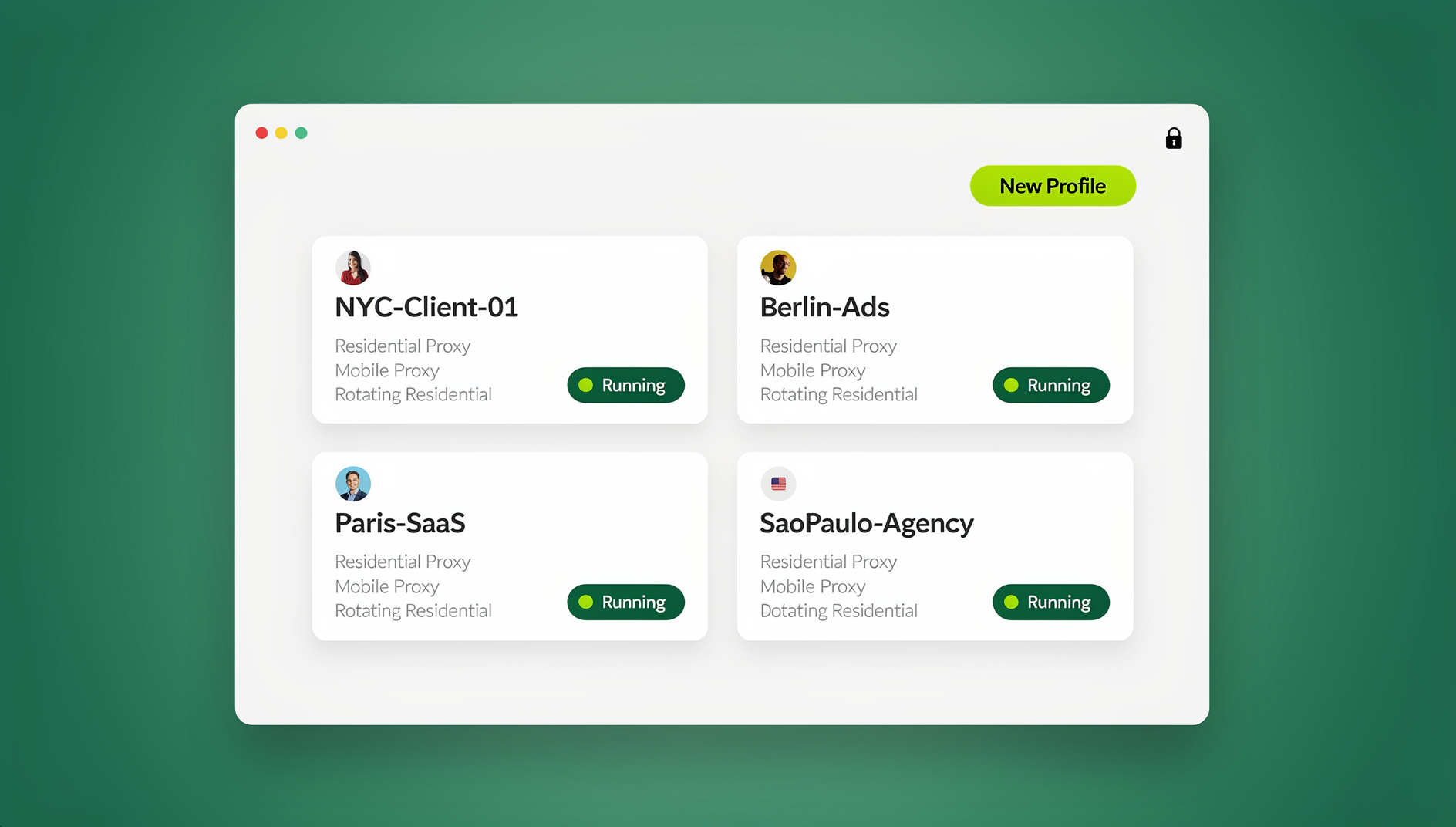
In the modern digital landscape, the average American internet user maintains over 130 online accounts, ranging from financial dashboards and e-commerce stores to social media profiles and cloud services. Juggling these identities creates significant friction. When you attempt to run multiple accounts on the same website using a standard web browser, you are constantly met with session timeouts, security verification loops, and IP restrictions. This is because modern websites are designed to track browser cookies and digital fingerprints to identify individual users and prevent duplicate registrations. For businesses, agencies, and independent professionals in the United States, managing this complexity is essential for maintaining operational efficiency and data security.
Failing to use dedicated software solutions to isolate these accounts can lead to severe consequences. For instance, digital marketing agencies running campaigns for multiple clients on Facebook or Google risk having all their client accounts banned if a single account triggers a security flag. Similarly, e-commerce sellers managing multiple storefronts on Amazon or Walmart Marketplace can experience account suspensions if the platforms detect that the stores are operating from the same browser fingerprint. In this detailed guide, we will analyze the top tools available to US-based users, explore how to build a secure multi-account workflow, and demonstrate how advanced browser isolation provides the ultimate solution.
Why US Users Face Unique Multi-Account Challenges
Users in the United States operate under a unique regulatory and platform ecosystem that makes account management particularly challenging. Key factors include:
- Strict Anti-Bot Measures: Top US platforms like Amazon, eBay, Google, and Meta deploy advanced fraud detection algorithms. These systems monitor browser configurations, hardware setups, canvas rendering, and network pathways to detect automation and linked profiles.
- State-by-State Regulatory Frameworks: With laws like the CCPA/CPRA in California and data privacy statutes in Virginia, Colorado, and Texas, companies are legally mandated to track data origin and session permissions. This makes keeping business and personal accounts strictly separated a matter of legal compliance.
- Complex Financial Networks: US professionals frequently manage a wide variety of accounts across institutions, including business checking, retirement accounts (401k, IRA), tax portals (IRS, state tax systems), and payment processors (Venmo, PayPal, Zelle). Connecting to these systems securely requires tools that prevent credential leakage.
To navigate these hurdles, professionals must move beyond basic workarounds like clearing browser histories or using incognito tabs, which do not alter your digital fingerprint. Implementing specialized tools is the only way to establish a stable, secure workflow.
The Different Categories of Account Management Software
When searching for the best software to manage multiple accounts, it helps to understand that different tools are designed to solve different aspects of the problem. A complete stack typically combines tools from these major categories.
1. Password and Credential Managers
Password managers are the foundation of digital security. They store unique, complex credentials for every online account, eliminating the need to reuse passwords. Top solutions like 1Password and Bitwarden allow users to categorize credentials, share folders with team members securely, and generate time-based one-time passwords (TOTP) for two-factor authentication. While password managers are excellent for storing credentials, they do not prevent cookie conflicts or browser fingerprint tracking, meaning they must be paired with isolation tools.
2. Social Media Scheduling and Management Dashboards
For marketing agencies and brand managers, logging into multiple social profiles individually is highly inefficient. Dashboards like Hootsuite and Buffer allow users to schedule posts, respond to messages, and track performance metrics across multiple Facebook, Instagram, LinkedIn, and X accounts from a single interface. However, these dashboards operate via APIs, which can limit functionality. For actions that require direct browser access, such as running ads or managing community groups, users must still log into the native platforms directly, necessitating session isolation.
3. Financial and Budget Aggregators
For individuals and small business owners, tracking financial health across multiple banks and credit cards is a major chore. Aggregators like Monarch Money and Empower connect to thousands of US financial institutions, pulling transaction histories and account balances into a single dashboard. These read-only views are great for tracking net worth, but they do not allow users to execute transactions. For active cash management and wire transfers, advisors and business owners must still log into the bank portals directly.
Why Browser Isolation is the Ultimate Foundation
While category-specific software solves targeted problems, browser isolation is the underlying technology that allows you to manage any web-based account securely. Standard web browsers share session details across all open tabs. If you log into two different Google accounts in two tabs, they will conflict. Browser isolation solves this by creating sandboxed environments for each tab, ensuring that cookies, cache, local storage, and digital fingerprints are completely segregated.
When choosing a browser isolation tool, it is important to understand the different approaches available. For example, some users rely on a virtual browser to run profiles on remote virtual machines. This is highly secure, but it can be slow and expensive. Alternatively, using a dedicated online browser running on secure cloud infrastructure allows you to access accounts from any device without local installation, combining security with flexibility.
For e-commerce operators, this isolation is critical for survival. Sellers managing multiple amazon accounts use these tools to prevent Amazon’s automated systems from linking their stores and triggering bans. By following a structured multiple amazon accounts complete guide, merchants can run separate storefronts safely by matching each isolated profile with a unique residential proxy, ensuring that each store appears to originate from a different physical location in the United States.
Evaluating the Top Multi-Account Tools for US Professionals
Below is a detailed analysis of the top tools used by US professionals to manage multiple accounts across various business niches.
1. Send.win
Send.win is a professional multi-login browser built specifically for secure, concurrent account management. It isolates digital environments at both the cookie and hardware fingerprint levels. Send.win offers two main modes of operation:
- Sendwin Browser: A native desktop application for Windows, macOS, and Linux that runs isolated browser profiles locally. This provides maximum speed and support for media-heavy sites.
- Cloud Browser Sessions: A zero-install solution that runs browser profiles in secure cloud environments, allowing you to access your accounts from any machine, tablet, or phone.
Send.win does not offer an automation interface: there is no API, SDK, headless mode or Selenium/Puppeteer/Playwright support on any plan. The pricing is straightforward: there is no free trial, but the first card purchase is covered by a 7-day money-back guarantee. The Pro plan costs $19/month or $83.88/year, and the Team plan costs $49/month or $251.88/year. The only free option is the cloud demo at https://send.win/demo-browser/.
2. 1Password
1Password is a premium security manager that excels at organizing digital credentials. It is widely adopted by US businesses for its robust team sharing features. It allows organizations to create shared vaults, set granular user permissions, and monitor security breaches via its Watchtower dashboard. It also features a “Travel Mode” that removes sensitive vaults from your devices when crossing borders, protecting corporate data. Paid plans start at $2.99/month for individuals and $7.99/user/month for teams.
3. Bitwarden
Bitwarden is a leading open-source security manager that offers a fully functional free tier. It supports unlimited accounts on unlimited devices, making it a favorite for budget-conscious professionals. Because its codebase is open-source, it is regularly audited by independent security firms, providing high levels of trust. Premium plans are incredibly affordable, starting at just $10/year for individuals, which includes advanced 2FA options and security reports.
4. Monarch Money
Monarch Money has emerged as a top personal finance manager in the US, especially after the closure of Mint. It integrates with Plaid and MX to pull data from over 11,000 American financial institutions. The dashboard provides clean budgeting tools, cash flow tracking, and net worth charts. It is highly collaborative, allowing household members to manage shared finances without sharing credentials. The pricing is $14.99/month or $99.99/year.
Multi-Account Tool Comparison Matrix
The table below summarizes the core differences between the top multi-account management solutions in the US market in 2026.
| Software Tool | Primary Category | US Integration Level | Best Suited For | Starting Price |
|---|---|---|---|---|
| Send.win | Browser Isolation | High (Supports all US platforms) | Universal account isolation | Pro $19/mo (7-day money-back guarantee) |
| 1Password | Credential Manager | High (Enterprise compliance) | Secure password sharing | $2.99/mo (Individual) |
| Bitwarden | Credential Manager | High (Open-source) | Budget-friendly security | Free (Premium $10/yr) |
| Monarch Money | Finance Aggregator | Very High (11,000+ US banks) | Household cash tracking | $14.99/mo |
| Buffer | Social Scheduler | High (US Social APIs) | Multi-profile scheduling | $6/mo per channel |
| Empower | Finance Aggregator | Very High (US Brokerages) | Investment monitoring | Free (Brokerage upsell) |
Security Best Practices for American Multi-Account Workflows
Managing multiple online profiles requires a proactive approach to cybersecurity. US businesses should implement the following protocols to protect their digital identities:
- Enforce Strict Multi-Factor Authentication: Always configure MFA on important accounts. Avoid SMS-based verification, which is vulnerable to SIM-swapping attacks. Instead, use authenticator apps like Authy or hardware keys like YubiKeys.
- Implement Least Privilege Access: When sharing account access with team members, only grant the minimum permissions required to perform their roles. Use credential vaults that allow employees to log into accounts without viewing the raw passwords.
- Match Proxies to Account Demographics: If you are managing social media or advertising accounts for a client based in California, configure your isolated browser profile to route through a residential proxy located in California. This prevents security alerts triggered by geo-location mismatches.
- Monitor Identity Breaches Constantly: Set up automated alerts to monitor whether your corporate emails or credentials appear on the dark web. If a breach is detected, immediately update the credentials and rotate the active session tokens.
Frictionless Workspace Scaling with Send.win
Implementing Send.win allows US organizations to eliminate the technical hurdles of multi-account management. The platform’s ability to separate cookies, localStorage, and digital fingerprints ensures that each browser profile operates as a completely unique machine. This prevents platforms from linking your accounts, protecting your business from automated restrictions and bans.
Advisory firms, digital agencies, and e-commerce merchants can utilize Send.win’s cloud browser sessions to coordinate their workflows. Team members can collaborate on client profiles in real-time, sharing active sessions securely without sharing passwords. The desktop app, Sendwin Browser, provides a fast, native interface that integrates easily into daily workflows. Send.win offers a powerful, scalable framework that helps businesses grow securely. Start with the 7-day money-back guarantee on your first card purchase and experience the efficiency of isolated browsing.
🏆 Send.win Verdict
Managing multiple online accounts in the United States requires robust, secure isolation to prevent account bans and data leaks. While password managers and aggregators solve specific needs, Send.win offers the essential browser isolation layer. Running profiles in the Sendwin Browser desktop client or via cloud browser sessions keeps your digital footprints completely separate and secure.
Try Send.win today — Access all premium features with a 7-day money-back guarantee on your first card purchase and streamline your multi-account workspace.
Frequently Asked Questions
What are the best tools for managing multiple online accounts USA?
The best tools for managing multiple online accounts USA depend on your specific needs. For universal browser isolation, Send.win is the top platform. For security and credential storage, 1Password and Bitwarden are excellent. For financial aggregation, Monarch Money is the leading US choice.
Is it legal to manage multiple accounts on US platforms?
Yes, it is entirely legal. However, most platforms have strict terms of service regarding duplicate registrations or bot activities. Using a browser isolation tool like Send.win allows you to comply with platform policies by running each profile as a distinct, unique browser environment.
How does browser isolation prevent account suspensions?
Browser isolation prevents account suspensions by separating cookie storage, local cache, and browser fingerprints (like canvas rendering and user-agent strings) between different tabs. This ensures that websites cannot detect that multiple accounts are being operated by the same user or device.
Do I need a VPN to manage multiple accounts?
A VPN encrypts your overall network connection but applies the same IP address to all your traffic. To manage multiple accounts securely on sensitive platforms, it is better to use isolated browser profiles paired with unique residential proxies, giving each account its own dedicated IP.
What is the difference between a password manager and browser isolation?
A password manager stores and auto-fills credentials, ensuring you use unique passwords. Browser isolation goes further by sandboxing the active session, separating cookies and browser fingerprints to prevent websites from tracking your activities across different accounts.
Can I share isolated browser profiles with my team?
Yes. Send.win supports secure team sharing, allowing you to delegate specific browser profiles to colleagues. Team members can access the target accounts and perform tasks without ever seeing the raw credentials or triggering security MFA checks.
How much does Send.win cost for US users?
Send.win has no free trial; the first card purchase is covered by a 7-day money-back guarantee. The Pro plan costs $19/month or $83.88/year and includes 150 profiles. The Team plan costs $49/month or $251.88/year for 500 profiles and 16 team seats.