Why QA Engineers Are Moving From Local Browsers to Cloud Browsers?
A cloud browser for qa testing provides quality assurance engineers and software development agencies with clean, reproducible, and isolated browser environments running across multiple operating systems without local hardware constraints. By eliminating local environment drift, device state contamination, and anti-bot testing bottlenecks, cloud browser testing platforms enable parallel cross-browser test execution with authentic digital fingerprints. Send.win offers cloud browsing and automation API capabilities starting at $19/mo (Pro) and $49/mo (Team) with a 30-day free trial.
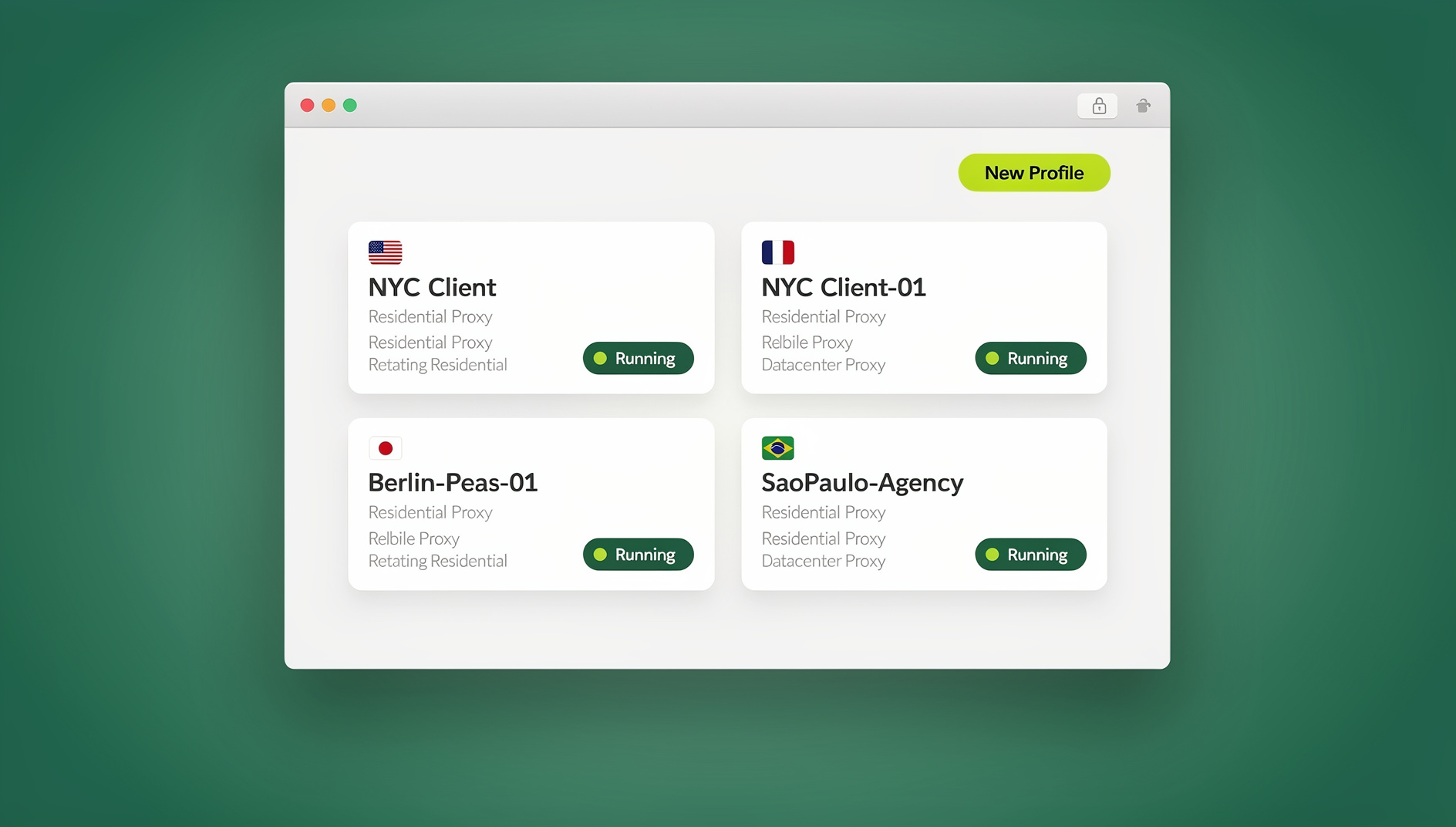
The Pain Points of Traditional Local Cross-Browser Testing
Software development teams, QA agencies, and enterprise test engineers face growing friction when validating complex web applications on local workstations. As web applications adopt sophisticated client-side rendering engines, progressive web app (PWA) architectures, dynamic single-page applications (SPAs), and strict security layers, maintaining test consistency on individual developer machines becomes increasingly unmanageable.
1. Environment Drift and Workstation Inconsistency
Local QA testing relies heavily on individual engineer machine setups, localized operating system patches, cached DNS configurations, custom graphic driver versions, and background browser extensions. An automated test suite that passes flawlessly on a senior QA engineer’s macOS machine frequently fails on a continuous integration (CI) Linux runner or a junior developer’s Windows laptop. This phenomenon—commonly known as environment drift—wastes hundreds of engineering hours spent diagnosing non-reproducible test failures and debating whether bugs reside in application code or local test environments.
2. State Contamination and Flaky Test Artifacts
Executing continuous regression testing against local Chrome, Firefox, or Safari instances inevitably leaves residual browser state behind. Persistent cookies, lingering IndexedDB databases, service worker caches, and local storage keys spill over between test runs. Over time, these stale artifacts trigger unexpected application behavior, leading to flaky tests where suites fail randomly without any underlying code defects. Debugging these transient state bugs frustrates developers and erodes trust in automated quality gates.
3. Slow Parallel Execution and Hardware Bottlenecks
Modern agile deployment cadences require running hundreds or thousands of automated test cases within tight sprint windows. Attempting to execute 20 concurrent headless browser instances locally exhausts CPU cores, spikes RAM utilization to maximum capacity, and leads to unhandled browser process crashes. Furthermore, local test rigs struggle to simulate diverse network conditions, geo-located IP addresses, dynamic screen resolutions, or custom canvas parameters simultaneously.
4. Anti-Bot and WAF Verification Roadblocks
Staging and production web applications increasingly deploy Web Application Firewalls (WAFs) and bot mitigation platforms like Cloudflare, Akamai, Datadome, and Imperva. When QA automated regression scripts run sequentially from static office IP addresses or standard datacenter runner nodes, security systems flag the traffic as suspicious. This results in automated scripts getting blocked by CAPTCHAs or HTTP 403 access denied screens during routine testing runs. Understanding how bot detection algorithms analyze automated drivers like Selenium is crucial; read our in-depth study on selenium browser fingerprint signatures for detailed technical insights.
How Cloud Browser Environments Revolutionize Modern QA Workflows
Adopting a dedicated cloud browser environment fundamentally transforms how software organizations approach quality assurance. By shifting browser execution off local hardware into containerized, state-isolated cloud environments, test engineers gain full control over every parameter of the testing context.
Instead of wrestling with local browser binary updates, managing complex Selenium Grid hubs, or installing multiple browser versions on a single host machine, QA teams interact with cloud-hosted browser instances on demand. These instances run on dedicated cloud infrastructure or native desktop client engines while maintaining absolute separation between execution threads.
Implementing continuous testing within a cloud browser infrastructure relies on robust security principles. Security-conscious organizations frequently combine testing pipelines with enterprise security frameworks like remote browser isolation to protect internal staging environments while validating untrusted third-party web elements and external webhooks.
Key Advantages of Using a Cloud Browser for QA Testing
1. Instant Session Isolation and Clean States
Every test run in a cloud browser environment starts from a pristine, un-contaminated state. Cookies, local storage, cache buffers, IndexedDB tables, and browser history are instantiated dynamically upon session launch and wiped completely upon test completion. Enforcing strict session isolation guarantees that every end-to-end user scenario executes in a true “first-time visitor” environment, eliminating false positives caused by leftover session data.
2. Authentic Multi-Fingerprint Environment Spoofing
Testing how web applications behave across different operating systems, canvas renderers, hardware configurations, and screen resolutions traditionally required physical device labs or expensive virtual machine fleets. Leveraging a modern cloud browser for QA testing allows engineers to configure realistic hardware signatures programmatically. You can launch one browser profile mimicking a Windows 11 Chrome client with an NVIDIA GPU, while simultaneously running another profile simulating a macOS Sonoma Safari instance—all managed from a unified dashboard or API endpoint.
3. Seamless Geo-Location and Network Testing
Validating multi-lingual, multi-currency, or geo-restricted web features requires testing from exact geographic regions. Cloud browser environments enable QA teams to bind residential, mobile, or datacenter proxies directly to specific browser profiles. Automated test scripts can verify location-based pricing, localized tax calculations, regional privacy banner compliance (GDPR/CCPA), and regional content delivery rules without requiring physical VPNs or manual network proxy configuration.
4. Parallel Scaling Without Local Resource Saturation
Cloud browser platforms decouple test execution from local CPU and memory constraints. QA engineers can trigger 50 concurrent automated Playwright, Puppeteer, or Selenium test runs across cloud nodes, completing comprehensive regression suites in minutes rather than hours. This parallel execution capability dramatically accelerates release cycles while keeping local developer workstations fast, responsive, and available for active coding tasks.
5. Zero-Trust Security for External Component Testing
QA teams frequently test third-party integrations, external payment gateways, embedded analytics scripts, marketing pixels, and untrusted user-submitted URLs. Utilizing cloud browser infrastructure creates a secure sandbox that isolates local corporate networks from malicious web code, drive-by downloads, and cross-site scripting (XSS) vectors. For teams prioritizing organizational web security, integrating these practices reinforces overall safe browsing compliance across development and testing teams.
Core Capabilities to Look For in a QA Cloud Browser Platform
When selecting a cloud browser solution for your quality assurance operations, ensure the platform provides essential enterprise capabilities required for automated and manual software testing:
| Capability | Legacy Device Grids | Send.win Cloud Browser Platform |
|---|---|---|
| Fingerprint Management | Basic User-Agent string switching | Kernel-level OS, WebGL, Canvas, Audio & Hardware masking |
| Automation API Access | Expensive enterprise add-on ($500+/mo) | Included out-of-the-box on Pro ($19/mo) and Team ($49/mo) |
| Local App & Cloud Modes | Cloud-only streaming with network latency | Dual mode: Native Sendwin Browser desktop client & Cloud sessions |
| Team Collaboration | Single-seat login sharing | 16 team seats with granular profile permissions & cloud sync |
| Proxy & Timezone Sync | Manual scripting per test run | Automated proxy IP, timezone, and WebRTC leak protection |
| Pricing Transparency | Opaque annual contracts | 30-day free trial (no credit card), $6.99/mo annual Pro, $20.99/mo annual Team |
Step-by-Step Guide: Setting Up Send.win for End-to-End QA Testing
Implementing Send.win into your software quality assurance workflow is straightforward, whether your team focuses on manual exploratory testing, automated regression verification, or multi-tenant API test execution.
Step 1: Setting Up Profile Templates for Operating System Verification
Begin by defining standardized browser profile templates inside Send.win for each target user environment your application supports. For example, create designated profiles for:
- Desktop Windows Chrome: Windows 11 kernel, Chrome 124+, 1920×1080 resolution, WebGL noise enabled.
- Desktop macOS Safari/Edge: macOS Sonoma kernel, Edge/Safari signatures, Retina display scaling.
- Linux Ubuntu Firefox: Linux kernel, Firefox ESR, standard X11 display settings.
Each profile operates with complete storage isolation, ensuring that logins, cookies, and local caches never bleed across test environments.
Step 2: Configuring Proxy and Timezone Matching
If your QA suite tests localized e-commerce checkout flows or regional subscription pricing, attach proxies to your target profiles. Send.win automatically detects the proxy IP location and synchronizes the browser’s JavaScript system timezone, language HTTP headers, and WebRTC settings to match the proxy endpoint automatically.
Step 3: Connecting Automated Test Suites (Selenium, Playwright, Puppeteer)
Integrate your existing test code with Send.win’s Automation API (available on both Pro and Team plans). Rather than spawning unstable local Chrome subprocesses, your test scripts communicate with Send.win via Chrome DevTools Protocol (CDP) WebSocket endpoints.
Below is a practical Python example showing how a QA automated script connects Selenium to a pre-configured Send.win cloud browser profile for regression testing:
from selenium import webdriver
from selenium.webdriver.chrome.options import Options
from selenium.webdriver.common.by import By
from selenium.webdriver.support.ui import WebDriverWait
from selenium.webdriver.support import expected_conditions as EC
import requests
import os

# Send.win Automation API setup for QA Test Suite
API_BASE_URL = "http://localhost:3000/api/v1"
API_KEY = os.getenv("SENDWIN_API_KEY")

def execute_qa_regression_test(profile_id, target_url):
    headers = {"Authorization": f"Bearer {API_KEY}"}

    # 1. Launch Send.win QA Profile
    response = requests.post(f"{API_BASE_URL}/profiles/start", json={"profile_id": profile_id}, headers=headers)
    debug_address = response.json().get("debugger_address")

    # 2. Attach Selenium Remote Driver to isolated browser instance
    options = Options()
    options.add_experimental_option("debuggerAddress", debug_address)
    driver = webdriver.Chrome(options=options)

    try:
        print(f"[QA Execution] Loading staging URL: {target_url}")
        driver.get(target_url)

        # Verify page header element exists
        wait = WebDriverWait(driver, 10)
        heading = wait.until(EC.presence_of_element_located((By.TAG_NAME, "h1")))

        print(f"[QA Pass] Heading Found: '{heading.text}'")
        assert len(heading.text) > 0, "H1 text must not be empty"

    finally:
        # 3. Clean teardown and release cloud resources
        driver.quit()
        requests.post(f"{API_BASE_URL}/profiles/stop", json={"profile_id": profile_id}, headers=headers)
        print("[QA Execution] Test suite completed and profile safely closed.")

# Run test scenario
execute_qa_regression_test("qa_prof_win11_chrome", "https://staging.example.com/checkout")
Step 4: Streamlining Manual Bug Reproduction and Team Handoffs
When an automated test fails or a manual tester discovers a complex UI defect, reproducing the exact bug environment can be challenging. With Send.win’s Team plan ($49/mo), QA engineers can share the exact browser profile state—including active session cookies, URL state, and console logs—with developers across up to 16 seats. Developers can open the shared profile in their Sendwin Browser desktop app or cloud session and immediately observe the defect in the exact state it occurred, eliminating “cannot reproduce” tickets.
Debunking Common Misconceptions About Cloud Browser Testing
Despite the rapid adoption of cloud browser infrastructure, several persistent myths cause QA managers to hesitate before upgrading from local test rigs:
Myth 1: “Cloud browser execution is always slower than local testing.”
While establishing initial remote WebSocket connections introduces a few milliseconds of network overhead, cloud browser environments execute parallel test batches significantly faster overall. Local machines quickly hit CPU throttling thresholds when running 10+ concurrent browser instances. In contrast, cloud infrastructures scale horizontally across isolated cloud nodes, cutting overall test suite execution time by 60% to 80%.
Myth 2: “Cloud browsers cannot test internal staging environments behind firewalls.”
Modern cloud browser platforms support secure tunnel configurations, local proxy bridging, and IP whitelisting. Send.win profiles can route test traffic securely through dedicated corporate gateways, allowing QA teams to validate private staging environments and pre-release builds without exposing internal servers to public internet traffic.
Myth 3: “Anti-detect cloud browsers are only for social media and affiliate marketing.”
While anti-detect browsers gained initial popularity in multi-account marketing, their core technology—kernel-level fingerprint spoofing, session isolation, and proxy management—is vital for enterprise QA. Modern web applications employ aggressive bot detection algorithms that mistake automated QA suites for malicious scrapers. Using an isolated cloud browser for QA testing ensures automated regression scripts complete without triggering false-positive security blocks.
Best Practices for Maintaining Zero-Flakiness Cloud Test Suites
To maximize return on investment when deploying a cloud browser for QA testing, follow these battle-tested engineering practices:
1. Enforce Explicit Session Teardowns
Always ensure your automated testing framework calls session teardown endpoints upon script completion. While Send.win isolated profiles prevent data leakage by design, explicit cleanup API calls ensure cloud CPU and memory resources are released immediately for subsequent queue items.
2. Avoid Over-Overriding User-Agent Headers
Let Send.win handle browser fingerprint spoofing at the kernel level. Avoid manually overwriting user-agent strings or navigator properties inside Playwright or Selenium scripts, as manual overrides can introduce internal object inconsistencies that trigger anti-bot security alerts.
3. Use Dynamic Wait Conditions Over Hardcoded Sleep Timers
Cloud browser network throughput and DOM rendering times can fluctuate slightly based on proxy latency. Replace static `time.sleep()` statements with dynamic explicit waits (`WebDriverWait` in Selenium or `page.waitForSelector()` in Playwright) to create fast, resilient test scripts.
4. Leverage Staging Account Pre-Authentication
Reduce test suite runtime by bypassing repetitive user login steps during non-auth regression tests. Inject pre-authenticated session cookies into your QA profiles via Send.win’s REST API before launching your test runs, saving valuable seconds on every execution.
Evaluating Cost Efficiency: Local Hardware vs Managed Cloud Browsers
Calculating the true cost of software quality assurance requires looking beyond direct software subscription fees to consider developer productivity, infrastructure maintenance, and release velocity.
- In-House Local Grid Maintenance: Building and maintaining a custom local Selenium grid or Docker container cluster requires dedicated DevOps time, hardware upgrades, and constant patching when browser binaries update. Total estimated cost: $1,500 – $4,000/month in engineering overhead.
- Traditional Enterprise Cloud Testing Grids: Legacy cloud testing services charge steep per-minute or per-parallel-runner fees, often costing $300 to $1,200/month for small QA teams.
- Send.win Managed Cloud & Desktop Solution: Provides flexible multi-profile testing, native browser fingerprint masking, and Automation API integration starting at just $19/mo ($6.99/mo billed annually — 63% off) for Pro, or $49/mo ($20.99/mo billed annually — 57% off) for Team with 16 seats and 500 profiles.
Run Cloud Browser For Qa Testing in the Cloud With Send.win
Send.win’s cloud browser runs your isolated profiles on remote infrastructure — open a clean, fingerprint-isolated session from any device without installing anything:
- Instant cloud sessions – launch an isolated browser in seconds, no local install
- Isolated profiles – separate fingerprint, cookies, and storage per session
- Cloud sync & profile sharing – pick up the same profiles on the desktop app (Windows, macOS, Linux) or share them with your team
- Built-in residential proxies – with automatic timezone and locale matching
You can try it right now: the Send.win demo browser opens an isolated cloud session directly in this browser tab. The 30-day free trial needs no credit card, and paid plans start at $6.99/month billed annually — see pricing.
🏆 Send.win Verdict
Relying on fragmented local browser setups for software quality assurance leads to environment drift, flaky test results, and wasted engineering hours. Switching to a cloud browser for QA testing provides development teams and agencies with clean, reproducible, and isolated testing environments across Windows, macOS, and Linux. Send.win delivers powerful session isolation, kernel-level fingerprint protection, and seamless Selenium/Playwright/Puppeteer Automation API integration on Pro ($19/mo) and Team ($49/mo) plans, enabling teams to ship higher-quality software faster.
Try Send.win free today — Start your 30-day free trial with no credit card required and elevate your QA testing pipeline.
Frequently Asked Questions
Why should QA teams use a cloud browser for qa testing instead of local browsers?
Using a cloud browser for qa testing eliminates environment drift, device inconsistency, state contamination, and hardware resource bottlenecks. It provides pristine, isolated browser profiles with authentic hardware signatures and proxy support, ensuring tests are 100% reproducible across different operating systems and team members.
Does Send.win support automated QA testing frameworks like Selenium and Playwright?
Yes. Send.win includes full Automation API support on both Pro ($19/mo) and Team ($49/mo) plans. Developers can connect standard Playwright, Puppeteer, and Selenium scripts via Chrome DevTools Protocol (CDP) WebSocket endpoints without changing test logic.
How does session isolation improve QA test accuracy?
Session isolation ensures that every test run starts with a completely clean browser environment. Cookies, local storage, cached files, and history are wiped between sessions, preventing state contamination and eliminating false test failures caused by lingering data from prior runs.
Can QA engineers test location-specific features in a cloud browser?
Yes. Send.win allows QA engineers to assign HTTP, HTTPS, or SOCKS5 proxies to specific browser profiles. The system automatically synchronizes the browser’s JavaScript system timezone, WebRTC parameters, and geolocation settings to match the proxy IP address for accurate regional testing.
How does Send.win help developers reproduce bugs reported by QA?
On the Team plan ($49/mo), QA engineers can share exact browser profiles—including active session states, cookies, and console logs—with developers across up to 16 seats. Developers can open the shared profile instantly, eliminating “cannot reproduce” tickets.
Are cloud browser sessions available without installing desktop software?
Yes. Send.win supports both the native Sendwin Browser desktop client (for Windows, macOS, and Linux) and cloud browser sessions that run entirely in cloud environments without requiring any local software installation.
What pricing options are available for QA testing teams?
Send.win offers a 30-day free trial with no credit card required. Paid options include the Pro plan at $19/mo ($6.99/mo annual — 63% off) for 150 profiles and Automation API access, and the Team plan at $49/mo ($20.99/mo annual — 57% off) for 500 profiles, Automation API access, and 16 team seats.
Is a credit card required to start testing Send.win?
No credit card is required to sign up. Send.win provides a 30-day free trial so QA teams and software agencies can test all features risk-free.