
Introduction to Multi-Account Privacy
If you are constantly getting blocked, this antidetect browser privacy multi account guide 2026 7 provides the ultimate solution by showing how to manage multiple profiles securely without triggering digital fingerprint bans. By isolating browser environments and utilizing residential proxies, users can bypass fraud detection on major platforms. This guide outlines 7 key steps to ensure privacy, from setting up desktop clients to launching cloud browser sessions.
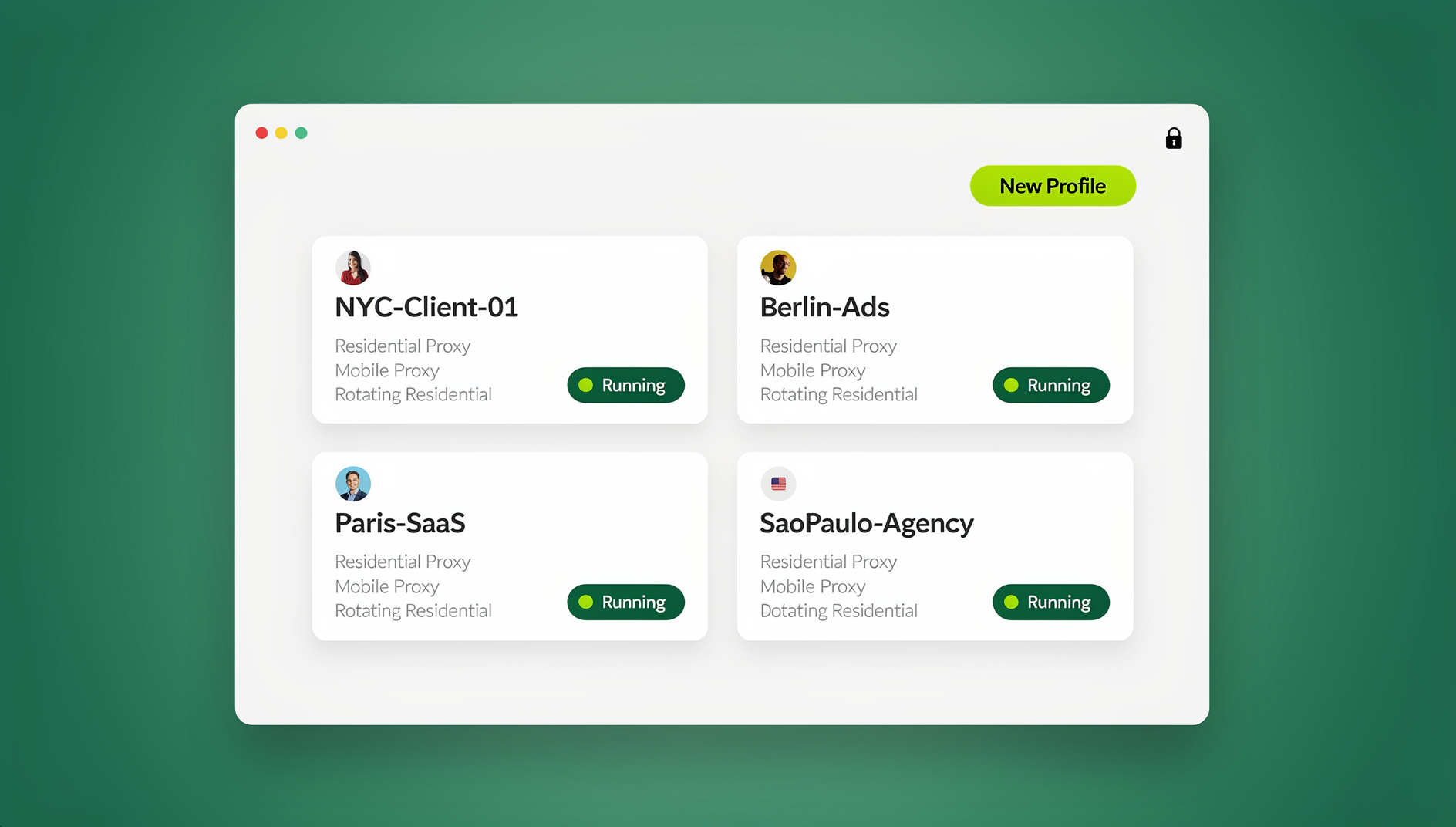
In the modern digital environment, websites use highly sophisticated tracking mechanisms to link multiple accounts to a single user. Traditional methods like clearing cookies or using incognito mode are no longer sufficient to protect your digital identity. Modern fraud detection systems analyze your hardware profile, browser characteristics, and IP reputation to build a unique digital fingerprint. If two different accounts share similar fingerprint characteristics, they will be instantly linked, resulting in account suspension. To bypass these restrictions, you must adopt dedicated tools that decouple your accounts from your local hardware.
This detailed guide will walk you through the essential technical details of digital fingerprinting, proxy configurations, and workflow automation. Whether you are an affiliate marketer, e-commerce entrepreneur, or privacy researcher, implementing these seven steps will ensure that your accounts remain isolated and secure. We will also examine how cloud-first architectures like Send.win outperform traditional local clients by eliminating hardware leaks entirely and providing seamless access across devices.
To implement this successfully, you need to understand that the goal is not to hide your identity entirely, but to present multiple, distinct, realistic identities. Websites are suspicious of completely anonymous traffic (such as Tor or heavily blacklisted VPNs). Instead, they look for typical residential users. The key is to generate natural browser fingerprints that match your proxy location, creating a series of isolated browser environments that appear to be run by different real people on distinct devices around the world.
How Digital Fingerprinting Threatens Account Privacy
Digital fingerprinting is a technique used by websites to gather information about your web browser and physical computer. Unlike cookies, which are stored locally on your machine and can be easily deleted, browser fingerprints are reconstructed server-side based on data sent by your browser during standard HTTP requests. This includes your User-Agent string, screen resolution, operating system, system fonts, and browser add-ons (which we refer to as add-ons or native tools). Additionally, advanced scripts query your graphics card via WebGL and render invisible text using the Canvas API to create a unique identifier based on your GPU configuration.
When you attempt to manage multiple social media or seller accounts from the same computer, these fingerprint parameters remain identical. Even if you use different proxies to change your IP address, the canvas hash and WebGL renderer will match, allowing websites to determine that the same computer is accessing all the accounts. Anti-detect browser solves this problem by modifying the browser code at the engine level. It generates a completely unique and consistent fingerprint for each profile, ensuring that every session appears as if it originates from a separate physical device.
Moreover, websites track other advanced metrics such as WebRTC local IP addresses, media device configurations (such as fake microphone and camera IDs), and even battery API status. If any of these values remain identical across different browser profiles, a linkage is established. Bypassing these tracking layers requires a tool that masks these attributes dynamically. This is where advanced antidetect setups are crucial for sustaining long-term operations on platforms like Facebook, Google Ads, Amazon, and eBay.
Step 1: Choosing Between Desktop Clients and Cloud Sessions
The first step in establishing a secure multi-account workflow is choosing the right architecture. Traditional anti-detect tools operate as local desktop clients. You download and install the software on your machine, and it launches modified browser instances locally. While this gives you full control over local files, it consumes significant local RAM and CPU. If you need to run dozens of profiles simultaneously, your machine’s performance will degrade rapidly. Furthermore, local clients are still susceptible to hardware leaks if the underlying spoofing engine fails to mask deep system parameters.
Alternatively, you can utilize cloud browser sessions. In this setup, the browser profiles run on remote servers inside secure, isolated containers. You interact with the browser via a standard web application, meaning no local installation is required. This architecture completely eliminates the risk of local hardware leaks because target websites only see the remote server’s specifications. It also allows you to access your profiles from any device, including tablets and mobile phones. Choosing a hybrid platform like Send.win, which offers both the native Sendwin Browser desktop client and cloud browser sessions, provides the maximum level of flexibility and safety.
Step 2: Configuring Fingerprint Parameters to Prevent Detection
Once you have selected your deployment mode, you must configure the fingerprint parameters for each profile. Modern fraud detection systems look for patterns that deviate from normal user distributions. For example, if your User-Agent claims you are using macOS, but your screen resolution or system fonts are typical of Windows, your profile will be immediately flagged as inconsistent. Therefore, you should rely on the automatic fingerprint generator provided by your tool rather than manually editing parameters.
The generator will automatically align all parameters based on a real device database. It will pair a macOS User-Agent with realistic Mac screen resolutions, system fonts, and WebGL renderer strings. It will also modify your canvas hashes, audio context signatures, and WebGL metadata so that they are unique to that profile but remain consistent across restarts. This consistency is vital; if your fingerprint changes every time you log in, websites will flag the activity as suspicious. By keeping the parameters stable, you establish a trusted relationship with the target platforms.
Step 3: Setting Up High-Quality Proxy Infrastructure
A secure fingerprint is useless without clean IP addresses. You must assign a dedicated proxy to each browser profile. There are three main types of proxies: datacenter, residential, and mobile. Datacenter proxies are cheap and fast, but they are hosted in server warehouses, making them easy for websites to detect and block. For multi-account management, you should avoid datacenter proxies and use high-quality residential or mobile proxies. These proxies route traffic through real home internet connections or cellular networks, making them look identical to normal user traffic.
When configuring your proxy, ensure that your browser profile’s timezone, language, and geolocation parameters match the proxy’s IP location. If your proxy is located in Germany, but your browser timezone is set to Eastern Standard Time and your preferred language is English, websites will immediately detect the proxy setup. Advanced anti-detect tools automatically adjust the profile’s timezone and language settings to match the proxy’s metadata. This automatic alignment is critical for maintaining high browsing protection standards and avoiding account restrictions. Setting up a dedicated proxy browser setup for each profile ensures that there is no crossover traffic that could link your accounts.
Step 4: Automating Workflows Securely with APIs
For businesses operating at scale, manual account management is too slow. You will need to automate tasks like account creation, posting, and data scraping. Traditional browsers cannot be automated safely because standard Selenium or Puppeteer drivers leak automation flags, such as the `navigator.webdriver` parameter. Modern browser profile managers resolve this by offering isolated profiles with separate cookies, storage and fingerprint settings, so each profile keeps its own consistent browser identity.
When setting up your automation scripts, it is important to choose a platform that offers API access on entry-level plans. For example, some tools provide local Automation API support on their entry-level tiers, while others charge €199/month or more for API access. When writing your Puppeteer or Playwright scripts, always implement natural human delays, mouse movements, and typing patterns to avoid triggering behavioral detection systems. Implementing a robust browser setup alongside your automation code will ensure that your scripts run continuously without getting blocked, protecting your automation investments.
Step 5: Implementing Team Roles and Secure Profile Sharing
If you work in an agency or digital marketing team, you will need to share access to browser profiles with other operators. Traditional methods involve sharing username and password credentials, which is highly insecure and can trigger security bans if team members log in from different locations. Modern anti-detect platforms solve this by allowing you to share active browser sessions. When you share a session, the profile’s cookies, history, and active tabs are synchronized in the cloud, allowing another team member to take over the session instantly.
Using cloud browser sessions makes this process even simpler. You can share a secure link with a team member, and they can open the browser profile directly inside their standard web browser without installing any software. The administrator can assign specific roles and permissions to each user, controlling who can create, edit, or delete profiles. This ensures that sensitive client credentials are never exposed to contractors or junior team members. Having a centralized control panel simplifies team onboarding and protects your company’s operational security. It also creates a clean audit trail of who accessed which account and when.
Furthermore, team collaboration inside remote browser environments protects your clients’ intellectual property. When contractors or external media buyers work on your projects, they do not have direct visibility into the recovery emails or backup phone numbers associated with the accounts. If a team member leaves your organization, you can instantly revoke their access from the centralized dashboard with a single click, without needing to change the passwords on dozens of marketing and selling platforms. This granular access control is a necessity for modern digital agencies handling high-ticket client portfolios.
Step 6: Managing Cookies and Maintaining Session Longevity
Cookies are small pieces of data that websites use to remember your login status and preferences. When migrating accounts to a new anti-detect browser, you must export your cookies from your old browser in Netscape or JSON format and import them into your new profiles. Logging in via cookies rather than entering your username and password builds immediate trust with the website, as it sees an existing active session. This reduces the likelihood of triggering two-factor authentication or account verification blocks.
Maintaining session longevity also requires “cookie warming.” When you create a new profile, do not log into your target accounts immediately. Instead, spend a few days visiting popular websites, reading articles, and accepting cookies. This builds a natural browsing history and establishes a positive cookie profile. Websites analyze this history to determine if a connection is organic or a automated bot. Once your profile has been properly warmed, you can safely log into your primary accounts. This cookie management strategy is a core pillar of modern browser isolation technology, protecting your digital assets from sudden bans.
Step 7: Testing and Auditing Profile Anonymity
The final step in your multi-account guide is continuous testing and auditing. Before logging into any high-value account, you must verify that your profile’s fingerprint is completely secure. Always launch the profile and navigate to a fingerprint testing website, such as browserleaks.com or iphey.com. These sites will analyze your connection and report any inconsistencies, such as mismatches between your IP location and timezone, or leaks of your real local hardware parameters.
If the testing site detects any issues, close the browser immediately and adjust your profile settings. Common issues include slow proxy response times, which can cause WebRTC leaks, or inconsistent User-Agent headers. Regularly auditing your profiles ensures that your isolation remains complete. In addition to fingerprint verification, monitor your proxy bandwidth consumption. Running out of bandwidth mid-session can cause your connection to drop or fall back to your real IP, exposing your accounts. By maintaining a strict testing routine, you minimize operational risks and protect your digital assets.
Additionally, remember to check your proxy IP reputation score using fraud scoring tools. Even if your browser fingerprint is perfectly configured, using an IP address with a high spam score will trigger immediate verification checkpoints. Websites evaluate the ISP type, ASN reputation, and history of malicious activity associated with your assigned IP. If the IP has been flagged for botanical activity or abuse, platforms will block access. Keeping a log of proxy health and rotating low-performing IPs regularly is the final, essential practice for maintaining long-term multi-account stability.
🏆 Send.win Verdict
Following this browser profile manager privacy multi account guide 2026 7 is the most reliable way to secure your digital operations, and Send.win is the perfect platform to execute it, offering robust cloud-based browser isolation that eliminates hardware tracking at unbeatable price points.
Try Send.win today — start with a paid plan covered by a 7-day money-back guarantee, or preview the cloud browser for free at the demo.
Frequently Asked Questions
What is the focus of this antidetect browser privacy multi account guide 2026 7?
The focus of this guide is to provide a comprehensive, seven-step technical roadmap for managing multiple online accounts securely. It explains how to avoid account suspensions by isolating browser fingerprints, setting up proxies, managing cookies, and leveraging cloud browser sessions.
How do websites detect multiple accounts from the same computer?
Websites utilize digital fingerprinting to identify computers. They collect parameters such as your User-Agent, system fonts, canvas and WebGL hashes, audio contexts, and WebRTC configurations. If multiple accounts share these exact parameters, websites will link them and suspend them, even if you use different IPs.
What is the difference between a desktop client and a cloud browser session?
A desktop client runs on your physical machine and consumes local RAM and CPU. It spoofs fingerprint parameters locally. A cloud browser session runs inside a secure, remote server container. It consumes zero local resources, eliminates local hardware leaks, and is accessible from any web-enabled device.
Can I use free proxies for multi-account management?
No, you should avoid free proxies. Free proxies are often slow, unstable, and blacklisted by major websites. For secure multi-account management, you should use high-quality residential or mobile proxies that route traffic through real residential networks, providing clean IP addresses.
What pricing plans does Send.win offer for privacy-conscious users?
Send.win has no free trial. The Pro plan costs $19/month or $83.88/year and the Team plan costs $49/month or $251.88/year. The first card purchase is covered by a 7-day money-back guarantee. The only free option is the cloud demo at https://send.win/demo-browser/.
Does Send.win offer an Automation API?
In many tools, automation API access is locked behind expensive plans (often costing €199/month or more). Send.win, however, does not offer an automation interface on any plan.
How do I share access to accounts with team members safely?
You can share access safely by sharing browser profiles via cloud synchronization or session links. Platforms like Send.win allow team members to access active browser profiles directly from their standard web applications without exposing the actual login credentials of the accounts.
How does WebGL and Canvas fingerprinting bypass detection?
WebGL and Canvas fingerprinting query your computer’s graphics card to generate unique hashes. Standard browsers return the same hash, linking your accounts. Anti-detect browsers modify the rendering output at the engine level, returning unique but consistent hashes for each profile, bypassing detection.