Finding the Best Online Banking Services for Managing Multiple Accounts
Finding the best online banking services for managing multiple accounts 2025 requires choosing platforms that offer zero-fee sub-accounts, automated cash allocation, and consolidated dashboards. Modern digital-first banks like Relay and Mercury stand out by allowing users to open and customize up to 20 or even unlimited dedicated checking accounts with percentage-based auto-transfers. Below, we compare the top eight multi-account banking services, evaluate their core features, and detail how to integrate them with advanced workflow security.
For modern business owners, freelancers, and growing startups, financial organization is no longer a luxury—it is a critical requirement for survival and growth. Adopting a structured banking system allows you to separate operational expenses, tax reserves, payroll, and profit distributions. This prevents the common trap of commingling funds, simplifies tax time, and provides real-time visibility into the financial health of your enterprise. However, traditional brick-and-mortar banks have historically made managing multiple accounts a nightmare, charging monthly fees for each sub-account and offering slow, clunky dashboards that require repetitive logouts and logins. Fortunately, the rise of digital-first business banking has ushered in a new era of flexibility, where opening and maintaining dozens of accounts is free, fast, and highly automated.
When you are managing several business portals or personal ledgers, security and ease of access are paramount. Using a standard browser to access multiple banking accounts can trigger security alerts, flag your IP address, or lead to unexpected logouts due to cookie conflicts. A dedicated online browser environment provides the necessary sandboxing to keep each session isolated. For a comprehensive look at how sandboxed environments protect your sensitive data, consult our detailed online browser isolation guide. Integrating a secure session container ensures that your banking portals remain open and accessible without cross-contamination or security blocks.
What to Look for in a Multi-Account Banking Platform
Choosing the right partner for your multi-account setup involves evaluating several core metrics. Not all digital banks are created equal; some specialize in automated allocations, while others focus on high-yield interest or multi-currency support. Below is a checklist of critical features you must prioritize when selecting your provider:
| Required Feature | Why It Matters to Multi-Account Management | Priority Level |
|---|---|---|
| No-fee sub-accounts | Allows you to create separate buckets for taxes, profit, and payroll without eroding your balances. | 🔴 Critical |
| Custom labeling and tagging | Enables instant identification of each account’s specific purpose (e.g., “Q3 Estimated Tax”). | 🔴 Critical |
| Automated transfer rules | Enables hands-free cash distribution based on percentages or fixed schedules. | 🔴 Critical |
| Granular user permissions | Allows you to share specific account views with partners or bookkeepers without exposing all funds. | 🟡 Important |
| Robust API access | Integrates bank feeds directly into accounting platforms like QuickBooks or custom dashboards. | 🟡 Important |
| FDIC insurance coverage | Guarantees protection for your deposits up to standard regulatory limits through partner banks. | 🔴 Critical |
By focusing on these features, you can design a financial stack that operates on autopilot. For example, if you run multiple storefronts or e-commerce businesses, separating your cash flow is essential. If you manage multiple Amazon accounts, keeping separate bank accounts for each store helps maintain clean book boundaries and prevents linked-account suspension flags. A structured bank setup protects your operations, ensuring compliance with both platform policies and tax regulations. This isolation strategy is a pillar of safe multi-store operations in the modern e-commerce landscape.
Deep Dive: Top 8 Online Banking Services for Multiple Account Management
1. Relay Financial — The Ultimate Profit First Champion
Relay is widely regarded as the premier choice for businesses implementing the popular Profit First framework. The platform allows you to open up to 20 individual business checking accounts under a single login, completely free of monthly maintenance fees or minimum balance requirements. Each account is fully functional, with its own unique account and routing numbers. You can assign custom names to each account, such as “Operating Expenses,” “Owner’s Pay,” “Tax Reserve,” and “Profit.”
Relay’s standout feature is its powerful automation engine. You can create rules to automatically transfer incoming revenue into your sub-accounts based on custom percentages. For instance, every time a client payment clears, Relay can instantly direct 30% to taxes, 15% to profit, and 55% to operations. Relay also integrates natively with QuickBooks Online and Xero, feeding transactions from all 20 accounts cleanly into your books. It is FDIC-insured up to $250,000 through its partner, Thread Bank.
2. Mercury — Scalable Banking for Startups and High-Growth Teams
Mercury is the go-to platform for venture-backed startups and tech companies. It offers unlimited checking and savings accounts with no monthly fees, no transaction limits, and no minimum balances. Mercury’s interface is sleek, developer-friendly, and highly optimized for scaling operations. You can issue physical and virtual debit cards tied to specific sub-accounts, making it easy to track department-level spending.
For cash management, Mercury offers Treasury accounts that allow you to earn high yields on idle cash through money market funds. It also provides granular team management, allowing you to grant read-only access to investors or specific spending limits to employees. Mercury’s robust developer API allows tech teams to automate custom workflows, such as programmatic payouts or internal transfers. Deposits are FDIC-insured up to $5 million through their partner network.
3. Novo — Freelancer-Friendly Virtual Reserves
Novo is tailored specifically for solopreneurs, freelancers, and micro-businesses. Instead of traditional separate checking accounts, Novo utilizes a feature called “Reserves.” You can create up to 20 virtual reserves within a single checking account to allocate funds for specific purposes, such as estimated taxes, business savings, or upcoming software renewals. Novo allows you to set up automatic percentage-based rules, meaning a portion of every incoming deposit is instantly routed to your reserves.
Novo’s primary advantage is its extensive integrations. You can connect your account to Stripe, Shopify, Wise, and QuickBooks to sync sales data and automate bookkeeping. Novo also offers refund and fee-free incoming domestic wires, making it highly cost-effective for solopreneurs. Banking services are provided by Middlesex Federal Savings, ensuring standard FDIC protection.
4. Wise Business — Global Multi-Currency Multi-Account Operations
If your business operates across international borders, Wise Business is an indispensable tool. Wise allows you to hold balances in over 40 currencies simultaneously under one account. More importantly, it provides local bank details for major regions, including the US (Routing/Account), UK (Sort Code/Account), Eurozone (IBAN), Australia, and Canada. This allows you to receive payments locally, avoiding expensive incoming wire fees and currency conversion costs.
Wise provides real-time mid-market exchange rates and charges transparent, low fees for conversions. You can set up batch payments to pay up to 1,000 vendors or contractors globally in their local currencies with a single click. Wise also features robust API capabilities for automated payroll and bookkeeping sync. While not a traditional US bank, Wise is a registered Money Services Business and keeps customer funds fully safeguarded in low-risk financial institutions.
5. Brex — Enterprise Spend Management and Corporate Cash
Brex combines corporate cash accounts, business credit cards, and spend management software into a single unified platform. It is designed for venture-backed startups and mid-market companies that need tight control over team spending. Brex allows you to create multiple cash accounts and instantly issue physical or virtual corporate cards with customized limits linked to those accounts. This setup eliminates the need for employee expense reports by tracking all spending at the source.
Brex provides automated receipt matching, bill pay, and deep integrations with enterprise accounting systems like NetSuite, Workday, and Sage Intacct. Its treasury management allows companies to sweep cash into money market funds for higher yields. FDIC insurance is provided up to $6 million through partner banks.
6. Bluevine — High-Yield Business Checking with Sub-Accounts
Bluevine is an excellent option for businesses that want to earn interest on their operational cash. It offers up to five sub-accounts under one main checking account, allowing you to separate funds for different business needs. If you meet simple monthly requirements (such as spending $500 on their debit card or receiving $2,500 in customer payments), you earn an industry-leading interest rate (currently 2.0% APY) on checking balances up to $250,000 across your accounts.
Bluevine features no monthly fees, no minimum balance requirements, and unlimited transactions. It integrates with QuickBooks and Xero and allows you to add team members with tailored access permissions. FDIC insurance is managed through Coastal Community Bank.
7. Lili — Built-in Tax Automation for Gig Workers
Lili is designed specifically for gig economy workers, sole proprietors, and small LLCs. It simplifies the administrative side of self-employment by building accounting, invoicing, and tax tools directly into your banking app. Lili’s “Tax Optimizer” automatically sweeps a designated percentage of your incoming income into a dedicated, tax sub-account. This ensures you never find yourself short of funds when quarterly estimated taxes are due.
Lili also offers an automatic write-off tracker, which categorizes transactions as business expenses in real-time, maximizing your deductions. Lili’s basic plan has no monthly fee, while paid tiers add premium features like invoicing and faster payment processing. FDIC protection is provided via Choice Financial Group.
8. Revolut Business — Global Financial Operations Hub
Revolut Business is a comprehensive multi-currency platform popular among European and global businesses. It allows you to create multi-currency checking accounts, issue physical and virtual corporate debit cards, and manage team spending with automated approval workflows. You can hold and exchange over 25 currencies, with competitive rates and instant execution.
Revolut features detailed analytics, expense tracking, and deep API integrations with major accounting tools. Its multi-account structure allows large teams to isolate budgets by department, project, or location. Revolut operates as a licensed bank in many European jurisdictions and uses strict safeguarding regulations for US depositors.
Direct Head-to-Head Comparison Matrix
To help you choose the best provider for your business, here is a direct comparison of the key features of the top eight multi-account banking services:
| Banking Platform | Max Sub-Accounts | Automated Allocations | API Access | Best For | Key Yield/Benefit | |
|---|---|---|---|---|---|---|
| Relay Financial | 20 checking accounts | ✅ Percentage-based rules | ✅ Standard REST API | Profit First practitioners | 1.0% to 3.0% APY | |
| Mercury | Unlimited checking/savings | ✅ Custom rules | ✅ Full Developer API | Tech startups and scaleups | Treasury yields | |
| Novo | 20 virtual reserves | ✅ Automated rules | ⚠️ Standard integration only | Freelancers and solopreneurs | No-fee invoicing | |
| Wise Business | 40+ currencies | ✅ Auto-conversion limits | ✅ Full Payout API | International trade/teams | Local bank details | |
| Brex | Multiple cash accounts | ✅ Dynamic spending limits | ✅ Custom integrations | Mid-market companies | High-yield treasury | |
| Bluevine | 5 checking sub-accounts | ✅ Scheduled transfers | ⚠️ Limited sync only | Yield-focused businesses | 2.0% APY on checking | |
| Lili | Dedicated tax buckets | ✅ Automatic tax sweep | ❌ None | Gig workers and sole proprietors | In-app tax prep | |
| Revolut Business | Unlimited multi-currency | ✅ Automated conversions | ✅ Core API | Global and European teams | Instant currency swaps |
Overcoming the Banking Dashboard Access Challenge
While digital banks make opening multiple accounts straightforward, a major operational friction point remains: accessing and managing these accounts daily. If your business operates across multiple brands, uses separate legal entities, or maintains accounts at different institutions (for instance, a domestic operating account at Relay and an international collection portal at Wise), keeping these dashboards open simultaneously in a standard browser is challenging.
Standard web browsers share cookies and session states across tabs. Logging into one business profile frequently logs you out of another. Furthermore, logging into multiple financial portals from the same IP address and browser fingerprint can trigger risk alerts, causing banks to lock your accounts or demand repetitive two-factor authentication. The traditional solution of using “incognito” windows is clunky and forces you to re-enter passwords and 2FA codes every time you open the browser.
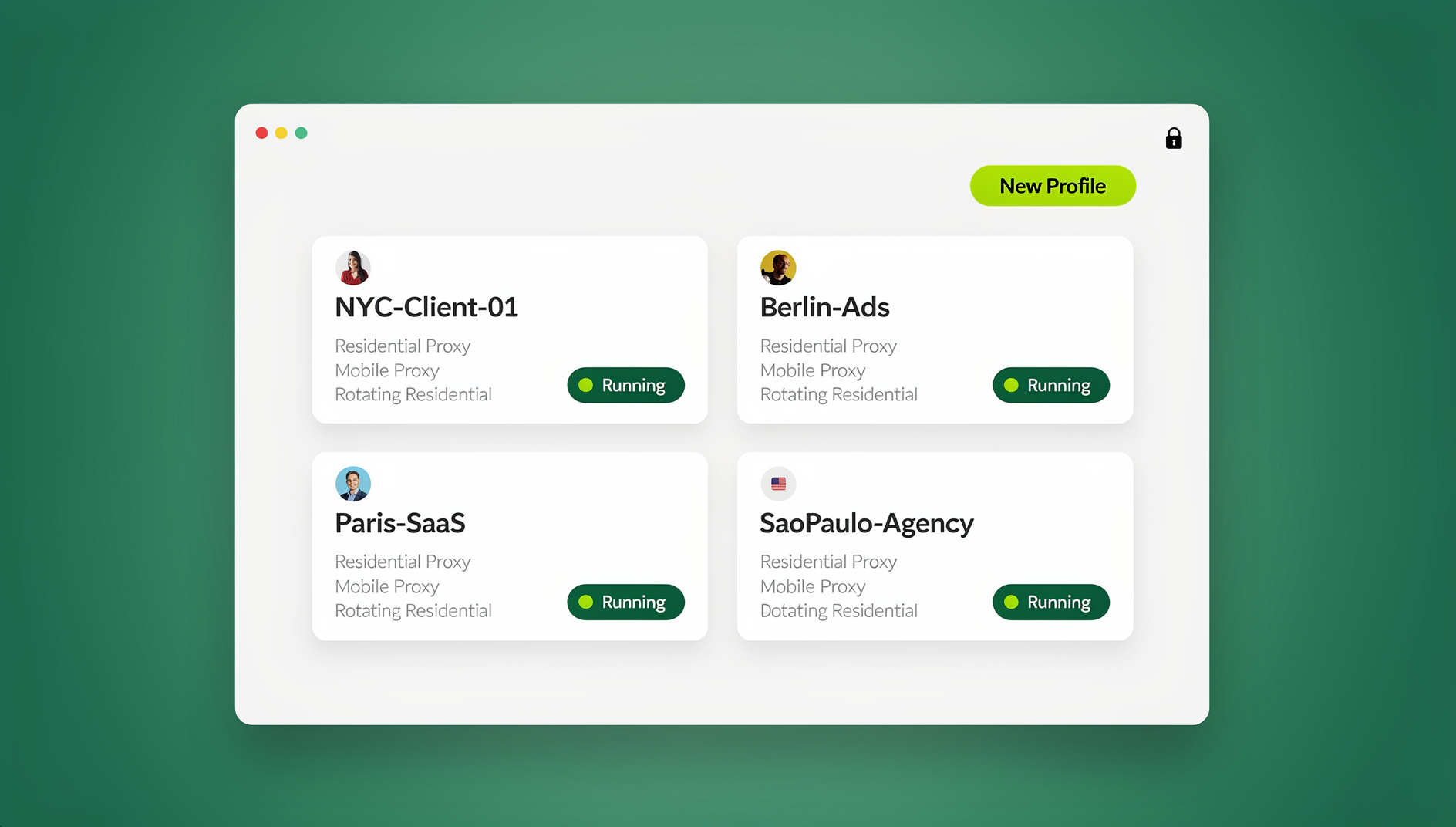
This is where isolated browser environments solve the problem. By creating distinct, sandboxed browser sessions for each financial platform, you can maintain separate sets of cookies, local storage, and digital fingerprints. This means you can stay logged into multiple banking dashboards, Stripe portals, and accounting packages simultaneously. There is no risk of session crossover, and the isolation protects your primary system from cross-site scripting vulnerabilities, ensuring your financial credentials remain completely secure.
🏆 Send.win Verdict
Managing multiple online banking portals in standard browsers creates a constant risk of session cross-contamination, IP flag triggers, and manual logout hassles. The Sendwin Browser desktop client and cloud browser sessions isolate your banking tabs completely, keeping all your bank accounts safely separated and logged in. When combined with the best online banking services for managing multiple accounts 2025, Send.win provides small business owners and freelancers with a bulletproof financial stack that eliminates security risks and saves hours of operational overhead.
Try Send.win today — secure all your financial dashboards with isolated browser sessions. Plans start at $19/mo, and your first card purchase is covered by a 7-day money-back guarantee.
Security Best Practices for Multiple Bank Account Management
As you scale your multi-account banking setup, implementing strict security protocols is vital to protect your capital. Follow these rules to keep your accounts secure:
- Enable Multi-Factor Authentication (MFA) Everywhere: Never bypass MFA. Avoid SMS-based 2FA, which is vulnerable to SIM-swapping. Instead, use secure authenticator apps (such as Google Authenticator, Authy, or hardware keys like YubiKeys).
- Use Unique, Complex Passwords: Never reuse credentials across different banking platforms. Utilize a reputable password manager to generate and store randomized passwords for every portal.
- Utilize Dedicated IP Addresses: When accessing bank accounts from various locations or using automated tools, assign static residential proxies to your sessions. This avoids triggering fraud algorithms that flag rapid location changes.
- Enforce Role-Based Access Control (RBAC): When adding team members or bookkeepers, grant the absolute minimum permissions required. Never share primary owner login credentials. Give accountants read-only access or limited transaction-creation rights.
- Set Up Real-Time Transaction Alerts: Configure push notifications or email alerts for all outgoing transactions. This ensures you are notified immediately of any unauthorized movement of funds.
Frequently Asked Questions
Which is the best online banking service for managing multiple accounts 2025?
Relay Financial is the best online banking service for managing multiple accounts 2025 because it is built specifically for multi-account structures and supports up to 20 free checking accounts. It features automated, percentage-based allocations, custom naming, and direct integrations with accounting tools like QuickBooks and Xero. For tech startups, Mercury is a top alternative, offering unlimited free accounts and robust API capabilities.
Can I open multiple bank accounts under one business entity?
Yes, modern digital banks allow you to open multiple checking and savings accounts under a single business entity. This is highly recommended for implementing the Profit First method, separating tax reserves, managing payroll, or keeping track of different product lines. Traditional banks also allow this, but they often charge monthly maintenance fees for each additional account.
How do I safely manage logins across different banking platforms simultaneously?
To safely manage logins across multiple platforms without constant logouts or security blocks, you should use a dedicated session isolation tool like the Sendwin Browser. This native desktop client isolates cookies and local storage for each tab, allowing you to access multiple banking accounts simultaneously without risk of data leakage or triggering security locks.
Is there a fee for opening sub-accounts in digital banking?
Most digital-first business banks, including Relay, Mercury, Novo, and Bluevine, do not charge any fees for opening or maintaining sub-accounts. In contrast, legacy traditional banks frequently charge a fee of $10 to $15 per month for each additional checking account unless you maintain high minimum balances.
Do these multi-account banking platforms integrate with accounting software?
Yes, the leading multi-account banks integrate natively with popular accounting software like QuickBooks Online, Xero, and Wave. Platforms like Relay and Mercury feed individual transaction streams from each sub-account directly into your general ledger, ensuring automated, accurate, and error-free bank reconciliations.
Why do banks sometimes lock profiles when logging in from different devices?
Banks lock user profiles when they detect suspicious login patterns, such as multiple active sessions with conflicting browser signatures or rapid shifts in IP addresses. To prevent these locks, you should maintain stable, isolated browser sessions with consistent digital fingerprints for each of your financial portals.
Is it safe to share bank logins with team members or bookkeepers?
Sharing primary bank login credentials is a major security risk and usually violates your bank’s terms of service. Instead, use the multi-user access features provided by platforms like Relay and Mercury to invite users with individual credentials and specific role permissions, such as read-only view for your bookkeeper.