Can Recruiters Safely Manage Multiple LinkedIn Accounts?
Yes, recruiters can manage multiple linkedin accounts recruiter operations safely, but only by implementing strict browser profile isolation and dedicated residential proxies for each profile. Because LinkedIn’s User Agreement strictly prohibits account sharing and monitors for multi-account usage via IP tracking, hardware signatures, and InMail velocity spikes, headhunters and recruitment agencies must use anti-detect browsers to keep candidate sourcing profiles completely decoupled.
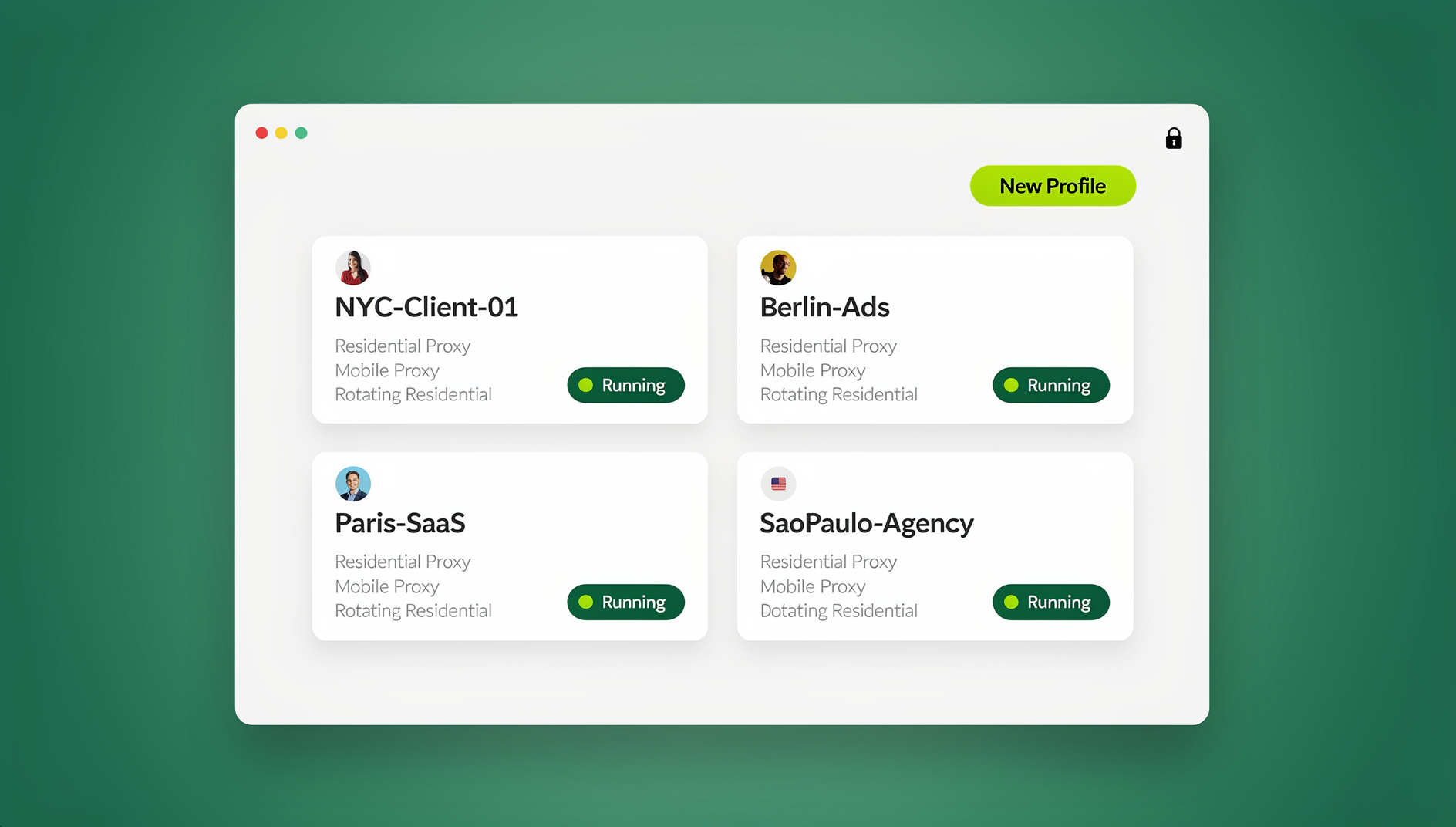
For executive search firms, staffing agencies, and internal talent acquisition teams, LinkedIn is the primary database for sourcing top-tier candidates. However, managing client-dedicated recruiter accounts, specialized niche sourcing profiles, and personal recruiter personas creates a massive operational challenge. One misplaced login or suspicious IP jump can lead to permanent account restriction, freezing valuable candidate pipelines and destroying client trust.
In this guide, we explore the legal and technical boundaries of managing multiple LinkedIn accounts in recruitment, analyze how LinkedIn’s AI security mechanisms spot multi-account handlers, and outline a battle-tested profile isolation framework using Send.win.
The Talent Acquisition Dilemma: LinkedIn Terms vs. Agency Realities
LinkedIn’s User Agreement (specifically Section 2.1) explicitly mandates that an individual account must belong to a single person and cannot be transferred, shared, or operated by multiple users. Furthermore, creating fake profiles or maintaining secondary personal accounts is against LinkedIn policy.
Despite these strict terms, recruitment agencies face real-world business requirements that make multi-account management essential:
- Client-Dedicated Sourcing: Many enterprise clients supply recruitment agencies with dedicated corporate LinkedIn seats or Recruiter Lite sub-accounts to source candidates under the client’s brand umbrella.
- Specialized Niche Personas: Staffing firms operating across diverse verticals (e.g., healthcare tech vs. heavy industrial engineering) often manage distinct recruiter profiles tailored to communicate effectively with specific candidate demographics.
- Distributed Sourcing Teams: Senior recruiters often delegate preliminary candidate outreach and InMail responses to offshore researchers, virtual assistants, or junior sourcers.
- Outsourced Talent Acquisition (RPO): Recruitment Process Outsourcing (RPO) providers manage dozens of client candidate pipelines concurrently, requiring separate recruiter identities for each engagement.
How Send.win Helps With Manage Multiple Linkedin Accounts Recruiter
Send.win is an antidetect browser built for exactly this kind of work — every profile is a clean, isolated identity:
- Isolated profiles – unique fingerprint, separate cookies and storage per profile
- Stealth engine – canvas, WebGL, fonts, and audio spoofed at the engine level
- Desktop app + cloud sessions – native app for Windows, macOS, and Linux, or run profiles in the cloud with no install
- Built-in residential proxies – with automatic timezone, locale, and WebRTC matching
- Team features – share logged-in profiles with teammates without sharing passwords
Try the instant cloud browser demo — no install, no signup — or download the desktop app. The 30-day free trial needs no credit card, and paid plans start at $6.99/month billed annually (see pricing).
When agencies attempt to handle these requirements using standard web browsers, they expose their teams to catastrophic account link bans. Learning how to safely run multiple LinkedIn accounts is the only way to satisfy agency operational needs without triggering anti-abuse algorithms.
How LinkedIn Detects Shared & Multiple Recruiter Accounts
LinkedIn operates one of the most sophisticated abuse-detection engines in the corporate tech sector. The platform monitors incoming HTTP requests and WebSocket telemetry continuously to spot unauthorized account sharing and multi-profile management.
Here are the primary detection signals LinkedIn uses to flag recruiter accounts:
1. IP Address Anomalies & Impossible Travel Velocity
If a recruiter account logs in from London at 9:00 AM and then sends an InMail from Manila at 9:15 AM, LinkedIn’s anomaly detection triggers an instant security lock. Similarly, if 10 different recruiter accounts connect through the exact same office IP address or commercial datacenter VPN, LinkedIn flags the IP subnetwork for elevated monitoring.
2. Hardware & Browser Engine Fingerprinting
Modern web browsers broadcast unique hardware signatures. LinkedIn’s security scripts inspect WebGL graphics renderers, screen resolutions, system fonts, and audio context parameters. When multiple LinkedIn accounts log in from browser instances sharing identical hardware signatures, LinkedIn links those profiles under a single physical operator. Read our guide on how a browser fingerprint explained details how hardware data is tracked across sessions.
3. InMail & Connection Request Velocity
Recruiters who send hundreds of connection requests or InMail messages in rapid succession trigger rate limits. If LinkedIn detects identical messaging templates sent across multiple accounts hosted on the same browser environment, all linked accounts face temporary restrict notices or permanent bans.
4. Session Cookie & Storage Cross-Contamination
Logging out of one LinkedIn account and logging into another within the same standard Chrome profile leaves residual cookies, indexedDB entries, and local storage tokens. LinkedIn reads these persistent artifacts, immediately linking the two profiles behind the scenes. Enforcing strict session isolation is essential to prevent cookie leakage.
5 Critical Rules for Recruiters Managing Multiple LinkedIn Profiles
Rule 1: Never Share Passwords or Swap Accounts in Standard Chrome
Avoid using Chrome’s native profile switcher or standard browser extensions to switch between recruiter accounts. Standard browser profiles fail to isolate hardware fingerprints, allowing LinkedIn to associate all profiles with the same desktop workstation.
Rule 2: Assign a Dedicated Static Residential Proxy Per Recruiter Account
Pair every recruiter profile with a dedicated static residential proxy located in the account’s designated geographic city. Datacenter proxies (AWS, Azure, DigitalOcean) are flagged immediately by LinkedIn security. Static residential proxies provide legitimate ISP IP addresses (e.g., AT&T, Comcast, BT) that mimic authentic home or local office connections.
Rule 3: Maintain Environment Hardware & Canvas Fingerprint Consistency
Ensure that each recruiter profile retains its own persistent User-Agent string, screen resolution, GPU canvas parameters, and system font configuration. Consistent browser environments signal stability and legitimacy to LinkedIn’s anti-abuse engine.
Rule 4: Throttle InMail & Connection Request Velocity Realistically
Even with complete environment isolation, aggressive automated outreach will trigger action blocks. Keep connection requests under 30-50 per day per account, space out InMail messages with natural delays, and personalize outreach templates to maintain high acceptance rates.
Rule 5: Implement Secure Team Profile Delegation Without Raw Password Access
Allowing remote researchers or offshore team members to access recruiter profiles should never involve sending plain-text passwords or 2FA codes across email or Slack. Use centralized profile management where managers grant encrypted session access directly, preserving security while adhering to safe browsing standards.
5 Costly Mistakes Recruitment Teams Make on LinkedIn
To keep your sourcing profiles active and protected, avoid these five common operational traps:
- Reusing 2FA Phone Numbers Across Profiles: Binding multiple recruiter accounts to the same mobile phone number for 2FA creates a direct relational link in LinkedIn’s fraud database. Assign unique virtual or dedicated numbers per account.
- Sudden Geolocation Swaps: Accessing a recruiter profile from a London proxy in the morning and a California proxy in the afternoon triggers immediate security checkpoints. Always keep proxy geography consistent.
- Unwarmed Account Outreach: Sourcing heavily on a newly registered or long-dormant account triggers rate-limit flags. Gradually ramp up viewing, connecting, and messaging over 10-14 days.
- Ignoring WebRTC IP Leaks: Standard VPNs or browser extensions often leak your real home IP via WebRTC calls. Send.win masks WebRTC requests natively at the browser engine level.
- Using Outdated User-Agent Strings: Setting a User-Agent from Chrome 90 while using a browser engine running Chrome 125 creates a clear inconsistency that automated security scanners flag instantly.
Common Recruiter Sourcing Methods Comparison Matrix
Understanding how different technical setups perform is vital for talent acquisition leaders. The table below compares common methods across key security and operational metrics:
| Sourcing Setup | Fingerprint Isolation | Proxy Assignment | Team Sharing Security | Account Restriction Risk |
|---|---|---|---|---|
| Standard Chrome Switcher | ❌ None (Shared GPU/Canvas) | ❌ No Native Proxy Support | ❌ Raw Password Sharing | 🔴 High (Chain Bans) |
| Commercial VPN Services | ❌ None (Shared Browser Core) | ⚠️ Rotating Datacenter IPs | ❌ Manual 2FA Handshake | 🔴 High (Shared Datacenter IPs) |
| Virtual Machines (VPS) | ✅ Complete (Separate OS) | ✅ OS-level Proxy Support | ⚠️ Slow RDP Access | 🟢 Low (High Cost & Complexity) |
| Send.win Anti-Detect Browser | ✅ Complete (Canvas/TLS/Audio) | ✅ Dedicated Proxy per Profile | ✅ One-Click Encrypted Sharing | 🟢 Very Low (Isolated Environments) |
How to Safely Migrate Existing Recruiter Accounts to Send.win
When transitioning an established LinkedIn Recruiter seat or client-dedicated account to Send.win, following a smooth migration protocol prevents security warnings. Here is the recommended step-by-step workflow for recruitment leaders:
- Export Existing Browser Cookies (Optional): If the account is currently logged in on a team computer, export the active session cookies using a standard JSON cookie exporter. Importing these cookies directly into Send.win bypasses the need for a fresh login attempt.
- Create and Configure the Profile: Open Sendwin Desktop App or Cloud sessions dashboard. Create a new profile, select your browser operating system target, and attach your assigned static residential proxy.
- Verify IP and Geolocation Alignment: Launch the Send.win profile and navigate to an IP verification tool (such as IPLeak or Whoer) to confirm that the proxy location, WebRTC status, and system timezone match perfectly.
- Import Cookies and Access LinkedIn: Navigate to LinkedIn. If session cookies were imported, you will instantly access the feed without entering credentials. If logging in manually, complete 2FA once; Send.win will persist the login state permanently.
- Conduct a 7-Day Warmup Phase: For the first week after migration, avoid launching massive candidate sourcing campaigns. Limit daily profile views and InMail sends to 50% of your standard volume so LinkedIn’s AI registers the environment as trusted.
How Send.win Protects Recruitment Agencies & Talent Teams
Send.win provides recruitment agencies, executive search firms, and talent acquisition teams with a complete profile isolation platform designed to manage multiple LinkedIn accounts without risk.
Send.win offers two flexible deployment modes to suit every recruitment workflow:
- Sendwin Browser (Desktop App): A native desktop application for Windows, macOS, and Linux that runs isolated browser profiles locally on your computer with high performance and zero latency.
- Cloud Browser Sessions: Run recruiter profiles entirely in the cloud directly from your Send.win dashboard. Ideal for remote talent teams who need to access candidate sourcing profiles from laptops or mobile devices without installing local software.
Step-by-Step Setup Guide for Talent Teams Using Send.win
Step 1: Create Isolated Recruiter Profiles
In your Send.win dashboard, create a new profile for each recruiter seat (e.g., Recruiter_TechSourcing_EU). Send.win automatically assigns custom canvas, audio, WebGL, and hardware parameters.
Step 2: Attach Dedicated Residential Proxies
Assign a static residential proxy to each profile. Send.win automatically detects the proxy IP location and synchronizes the browser’s timezone, language headers, and WebRTC settings to match.
Step 3: Delegate Access to Team Members Securely
Using Send.win’s Team plan (supporting up to 16 seats), managers can share pre-authenticated recruiter profiles with team members or offshore researchers. Staff launch the profile with active cookie sessions intact—no password sharing required.
Step 4: Connect Sourcing Automation via API
For recruitment teams leveraging automated sourcing scripts or ATS integrations, Send.win offers a built-in Automation API (supported on both Pro and Team plans) compatible with Selenium, Puppeteer, and Playwright. Run outreach automation securely through authentic browser environments.
🏆 Send.win Verdict
Managing multiple LinkedIn recruiter accounts requires complete hardware, network, and session isolation. Send.win allows recruitment agencies to run isolated candidate sourcing profiles safely, eliminate cross-account bans, and share pre-authenticated sessions across team members seamlessly.
Try Send.win free today — start your 30-day free trial with no credit card required and protect your recruitment pipelines.
Frequently Asked Questions
Is managing multiple LinkedIn accounts legal for recruitment agencies?
Managing multiple accounts for client engagements is a standard business practice in recruitment, but it violates LinkedIn’s strict User Agreement if done on a single browser. Using Send.win isolates each profile into an independent browser environment, mitigating technical detection and operational risk.
Can LinkedIn detect when multiple recruiter profiles share the same IP?
Yes. LinkedIn tracks IP addresses and subnets. If multiple accounts connect from the same IP or commercial datacenter VPN, LinkedIn flags them for velocity monitoring. Assigning a dedicated static residential proxy to each Send.win profile eliminates this risk.
How does Send.win differ between Desktop App and Cloud sessions?
The Sendwin Browser desktop app is a native application for Windows, macOS, and Linux running profiles on your local machine. Cloud browser sessions run profiles on Send.win’s cloud infrastructure, letting recruiters access profiles from any device without installing software.
Can remote team members access LinkedIn recruiter accounts without passwords?
Yes. Send.win’s Team plan lets managers share authenticated browser sessions with team members. Staff can launch pre-logged-in sessions without ever receiving raw passwords or handling 2FA tokens.
What proxy type is best for LinkedIn recruiter accounts?
Static residential proxies are the gold standard for LinkedIn accounts. They originate from legitimate consumer internet service providers (ISPs), providing high trust scores while keeping the IP static across every login session.
What happens if one LinkedIn account gets restricted? Will other profiles be affected?
If accounts are managed in standard Chrome, a restriction on one profile frequently triggers chain bans across linked accounts due to shared canvas fingerprints and IP addresses. Using Send.win profile isolation ensures that an issue with one account never impacts secondary profiles.
Does Send.win support ATS automation with Selenium or Playwright?
Yes. Send.win features a local Automation API available on Pro ($19/mo) and Team ($49/mo) plans, enabling automated candidate search and ATS data sync via Selenium, Puppeteer, or Playwright scripts.
What are Send.win’s pricing plans for recruitment teams?
Send.win provides a 30-day free trial with no credit card needed. The Pro plan costs $19/mo ($6.99/mo billed annually — 63% off) for 150 profiles, 5GB storage, and Automation API access. The Team plan costs $49/mo ($20.99/mo billed annually — 57% off) for 500 profiles, 20GB storage, 16 team seats, and Automation API access.