Can Websites Really Identify You Through Your Fonts?
Yes — and it happens silently on nearly every site you visit. Font enumeration fingerprinting defense is the practice of blocking or spoofing the list of fonts installed on your system so websites cannot use that list as a unique identifier. Your operating system, language packs, design software, and even office suites install distinctive font combinations that, when read by JavaScript or CSS probing, create a near-unique signature. This guide explains exactly how font enumeration works, why your font list is more revealing than you think, and the seven most effective defenses available today — from quick browser tweaks to full antidetect isolation.
How Font Enumeration Fingerprinting Works
Font fingerprinting exploits the fact that every computer has a different set of installed typefaces. Trackers don’t need cookies, login sessions, or IP addresses — they just quietly measure which fonts your browser can render. Here’s how each technique operates.
JavaScript Font Probing (Canvas and DOM Measurement)
The most common modern technique uses JavaScript to render a test string in hundreds of font names and measure the resulting pixel dimensions. When a font exists on your system, the browser renders text at that font’s specific metrics — its character widths, kerning, and ascender heights differ from the fallback font. The script compares each rendered size against a known baseline to determine whether the font is present.
Canvas-based probing goes further: it draws text onto an invisible <canvas> element and hashes the pixel output. Because font hinting, anti-aliasing, and sub-pixel rendering vary across systems, even two machines with identical font lists can produce different canvas hashes — but the font list itself remains the primary signal. Libraries like fingerprintjs test 50–70 popular fonts; commercial trackers may test 500+.
CSS-Only Detection (No JavaScript Required)
Even with JavaScript disabled, CSS can detect fonts. The trick uses @font-face declarations with a local source and a remote fallback. If the local font exists, the browser uses it and never fetches the remote file. If the local font is missing, the browser requests the fallback URL — and that HTTP request tells the server which fonts you don’t have. By setting up hundreds of these probes, a server can reconstruct your font list without a single line of JavaScript.
A variation uses the font-display: swap descriptor combined with load-event listeners to time how quickly each font becomes available, further refining the fingerprint.
The Flash Legacy (and Why It Still Matters)
Before 2021, Adobe Flash’s TextField.getFontList() method returned the complete list of system fonts in a single API call — no measurement tricks needed. Flash is dead, but the fingerprinting databases built during the Flash era still inform modern tracking. Many analytics companies cross-reference JavaScript-probed font data against historical Flash-era profiles to link old and new browsing identities. If your font list hasn’t changed since the Flash days, that continuity itself is a tracking signal.
What Makes Your Font List Unique
You might assume everyone running Windows 11 has the same fonts. In reality, the overlap is surprisingly thin. A study by the Electronic Frontier Foundation found that the combination of installed fonts alone can uniquely identify a browser with over 80% accuracy. Here’s why.
Operating System Defaults Diverge Early
Windows, macOS, and Linux each ship different base font sets. But even within one OS, the installed fonts vary by:
- OS version and edition — Windows 11 Pro includes fonts absent from Windows 11 Home; macOS Ventura added several fonts not present in Monterey.
- Language packs — installing Chinese, Arabic, or Hindi language support adds dozens of typefaces. A bilingual user’s font list is markedly different from a monolingual one.
- Optional features — Windows “Features on Demand” includes supplemental fonts that most users never install but some do (Bahnschrift, Cascadia Code, Myanmar Text).
Software Installations Stack Up
Every application you install can change your font fingerprint:
| Software | Fonts Added | Fingerprint Impact |
|---|---|---|
| Microsoft Office | ~60 fonts (Calibri, Cambria, Consolas…) | High — splits users into Office vs. non-Office |
| Adobe Creative Suite | ~200+ fonts (Myriad, Minion, Adobe Caslon…) | Very High — narrows to design professionals |
| LibreOffice | ~30 fonts (Liberation, Caladea, Carlito…) | Medium — identifies Linux/open-source users |
| Google Fonts (local install) | Varies (Inter, Roboto, Poppins…) | Medium — identifies developers/designers |
| Gaming clients (Steam, Epic) | 5–15 UI fonts | Low individually, cumulative over time |
A graphic designer running Adobe CC on macOS with Japanese language support has a font list radically different from a gamer running Windows 11 Home with only Steam installed. These differences are stable across sessions and survive cookie deletion, making font fingerprinting extremely persistent.
Entropy and Uniqueness
Information entropy measures how many bits of identifying information a data point provides. Research from Princeton’s WebTAP project measured font-list entropy at 7–10 bits on desktop browsers — enough to narrow your identity from millions of visitors to a pool of a few hundred. Combined with screen resolution (4 bits), timezone (3 bits), and WebGL renderer (8 bits), your browser fingerprint becomes nearly unique.
Testing Your Font Fingerprint Exposure
Before deploying defenses, you need to know how exposed you are. These free tools reveal exactly what trackers see.
BrowserLeaks Fonts Test
Visit BrowserLeaks.com/fonts to see the full list of fonts your browser exposes. The tool probes via JavaScript and reports the total count, the specific typefaces detected, and the estimated uniqueness of your combination. A typical Windows desktop exposes 150–300 fonts; a hardened browser may report under 30.
AmIUnique and Cover Your Tracks
The AmIUnique project from INRIA and the EFF’s Cover Your Tracks (formerly Panopticlick) test your entire fingerprint — including fonts — and tell you how unique you are among their sample set. They’re useful for verifying that your defenses actually reduce uniqueness rather than making you stand out more (a common mistake with overly aggressive blocking).
What “Good” Results Look Like
The goal is not to report zero fonts — that’s abnormal and itself a fingerprint. The ideal result shows a generic, common font set that matches a large population. Think: the default Windows 11 font list with no extras, or the default macOS set. Standardization beats elimination.
Seven Proven Font Fingerprinting Defenses
Not all defenses are equal. Some are quick browser tweaks; others require dedicated tooling. Here they are, ordered from simplest to most effective.
1. Limit Installed Fonts
The most direct defense: uninstall fonts you don’t actively use. On Windows, open Settings → Personalization → Fonts and remove any typeface you didn’t intentionally install. On macOS, use Font Book to disable (not delete) non-essential fonts. This reduces your surface area but has limits — you can’t remove system-required fonts, and you’ll lose them for any application that depends on them.
Practical tip: Before removing fonts, export the list (PowerShell: Get-ItemProperty 'HKLM:\SOFTWARE\Microsoft\Windows NT\CurrentVersion\Fonts') so you can restore them if an application breaks.
2. Use a Common Font Set
Instead of stripping fonts arbitrarily, aim for a standardized baseline — the set that the largest population shares. For Windows, that’s the factory-default fonts with no Office or Adobe additions. For macOS, it’s the default install without Xcode developer fonts. The closer your list matches the median, the harder it is to single you out.
3. CSS font-display Tricks (Site Owners)
If you run a website and want to protect your visitors, avoid loading web fonts with font-display: optional — this prevents the browser from measuring local font metrics during the swap period. Use font-display: swap only with fonts you control, and load them from your own domain (no third-party font CDNs that can track requests). This doesn’t help the visitor directly, but it reduces the tracking surface your site contributes to.
4. Browser Extensions
Several browser extensions intercept font-probing scripts:
- Canvas Blocker — blocks or randomizes canvas API calls that font probes rely on.
- Font Fingerprint Defender — reports a fake, standardized font list to JavaScript.
- uBlock Origin — with custom filter lists, can block known fingerprinting scripts entirely.
How Send.win Helps With Font Enumeration Fingerprinting Defense
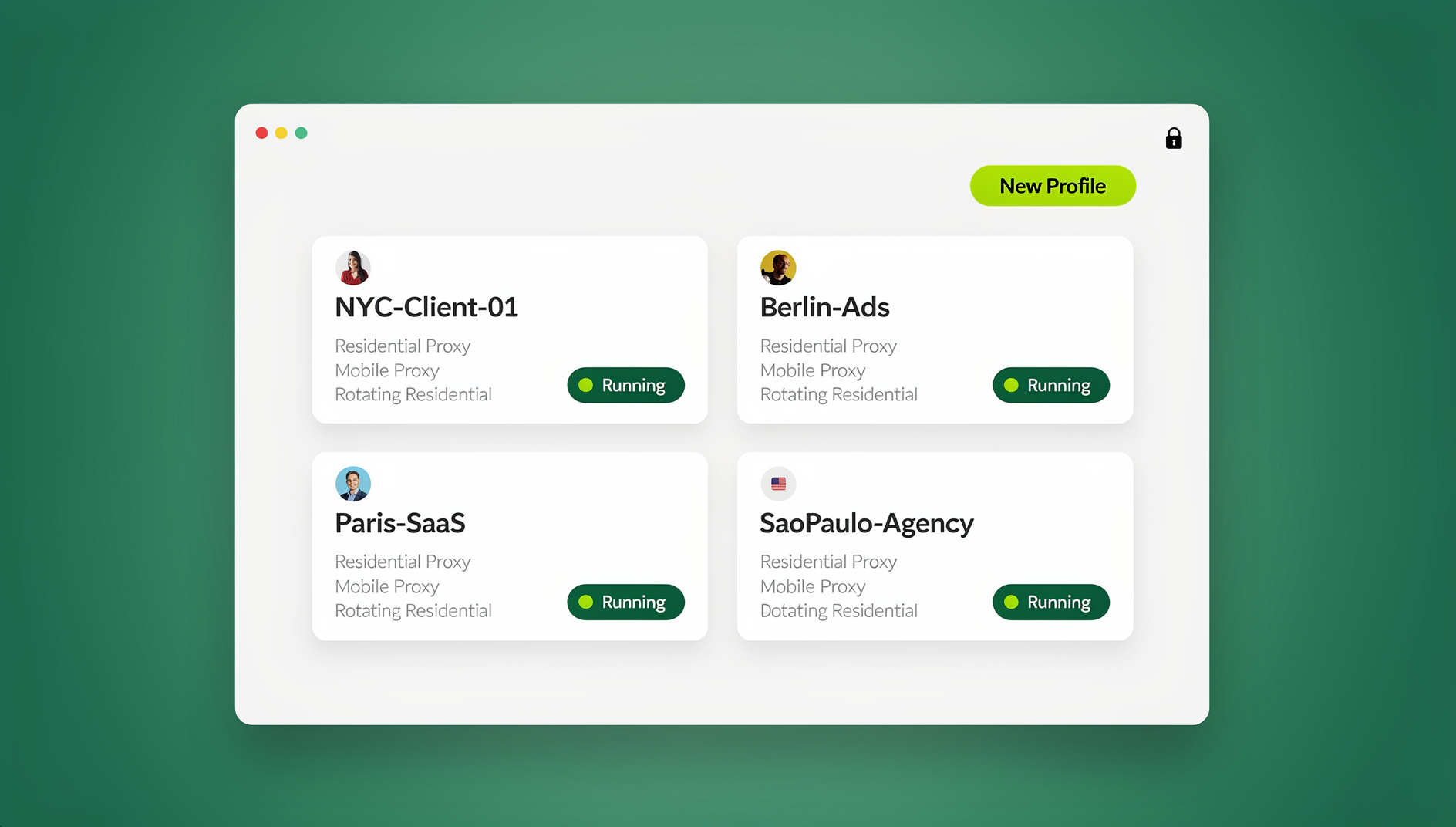
Send.win is a browser profile manager built for exactly this kind of work — every profile is a clean, isolated identity:
- Isolated profiles – unique fingerprint, separate cookies and storage per profile
- Consistent fingerprint per profile – each profile keeps its own browser fingerprint, including canvas, WebGL, fonts, and audio
- Desktop app + cloud sessions – native app for Windows, macOS, and Linux, or run profiles in the cloud with no install
- Built-in residential proxies – with automatic timezone, locale, and WebRTC matching
- Team features – share logged-in profiles with teammates without sharing passwords
Try the instant cloud browser demo — no install, no signup — or download the desktop app. There is no free trial; paid plans start at $19/month, and the first card purchase is covered by a 7-day money-back guarantee (see pricing).
Extensions help, but they have a fundamental weakness: the extension itself is detectable. Trackers can probe for the behavioral signatures these extensions leave behind, potentially flagging you as a privacy-conscious user — which is itself a distinguishing trait. For stronger protection, see method 6.
5. Firefox’s Built-In Font Protection
Firefox offers native font fingerprinting resistance through its Enhanced Tracking Protection (strict mode) and the hidden privacy.resistFingerprinting preference in about:config. When enabled, Firefox reports only a hardcoded whitelist of common fonts regardless of what’s actually installed. This is one of the strongest built-in defenses available, but it can break sites that depend on detecting specific fonts for layout rendering.
If you practice safe browsing habits, combining Firefox’s built-in protections with a strict content blocker covers most casual tracking scenarios.
6. Browser Profile Managers That Keep Font Lists Consistent
This is where passive defense becomes active control. Browser profile managers like Send.win don’t just block font probing — they replace your real font list with a curated, consistent set that matches the target fingerprint profile. Each browser profile can present a different (but internally consistent) font configuration tied to its assigned OS, browser version, and locale.
Why this matters: blocking font probing leaves a gap (no data = suspicious). Randomizing on each page load creates inconsistency trackers can detect. Standardizing — presenting a believable, stable font list per profile — is the only approach that passes both detection and consistency checks.
Send.win’s Sendwin Browser (the native desktop app) manages font fingerprints alongside dozens of other parameters — WebGL fingerprinting, canvas hashes, screen resolution, timezone, and language headers — ensuring that every surface tells the same story. Each profile is isolated, so your font fingerprint in Profile A never leaks into Profile B.
7. Virtual Machines and Containers
Running a clean VM or Docker container with a known font set guarantees a predictable fingerprint. This is the most thorough approach for one-off tasks, but it’s impractical for daily multi-account work due to the resource overhead and manual setup. For professionals managing multiple identities — ad buyers, e-commerce sellers, affiliate marketers — a dedicated browser profile manager is far more efficient than spinning up a new VM per session.
Why One Defense Isn’t Enough
Font fingerprinting is just one vector in a multi-layered tracking system. Sites combine font data with canvas rendering, WebGL parameters, AudioContext fingerprints, and behavioral signals (typing cadence, mouse movement patterns). Defending against fonts alone while leaving other surfaces exposed is like locking your front door but leaving the windows open.
This is the core argument for anonymous browsing tools that handle all fingerprint surfaces simultaneously. A holistic antidetect solution manages fonts alongside every other signal, ensuring consistency across the board.
The “Standing Out by Hiding” Paradox
A critical mistake in font fingerprinting defense is being too aggressive. If you block all fonts, report an empty list, or randomize on every page load, you become more identifiable, not less. Only a tiny fraction of users take these extreme measures, so the behavior itself becomes a fingerprint. The goal is blending in with the largest group — looking like a stock Windows or macOS machine — not looking like someone with something to hide.
Font Fingerprinting in the Wild: Real-World Examples
Understanding who uses font fingerprinting and why helps calibrate your defense.
Advertising Networks
Major ad exchanges use font fingerprinting as part of probabilistic identity resolution. When a user clears cookies, the ad network reconstructs their identity from font list + screen resolution + timezone — often matching with 90%+ confidence. This is why you see the same ads follow you even after a “clean” browser restart.
Fraud Detection Systems
Banks, payment processors, and e-commerce platforms fingerprint fonts to detect account fraud. If someone logs into your account from a device with a radically different font list, it triggers a risk flag. This is a legitimate security use — but it also means that anyone managing multiple accounts (social media managers, QA testers, e-commerce sellers with regional storefronts) faces false positives unless each session presents a consistent, isolated fingerprint.
Government and Law Enforcement
Some jurisdictions use browser fingerprinting — including font enumeration — for surveillance and tracking of persons of interest. In these scenarios, standardized fingerprints from an antidetect browser aren’t just convenient; they’re a matter of personal safety for journalists, activists, and researchers working in hostile environments.
Advanced: How Font Fingerprinting Interacts With Other Vectors
Font data rarely stands alone. Here’s how it combines with other fingerprinting surfaces to create a super-identifier.
Canvas + Fonts = High-Entropy Combo
When a tracking script draws text on a canvas element, it captures both the font metrics and the rendering engine’s pixel-level output. This combines font presence data with GPU rendering characteristics, producing a fingerprint with significantly higher entropy than either signal alone. Defending against fonts without addressing canvas leaves half the attack surface open.
WebGL + Fonts
WebGL fingerprinting reads your GPU model, driver version, and rendering behavior. When correlated with your font list (which reveals your OS and installed software), the two vectors together narrow your identity to an extremely small cohort. This is why comprehensive solutions — like Send.win — manage both the WebGL renderer string and the font list in each profile, ensuring they tell a consistent hardware story.
AudioContext Fingerprinting
The Web Audio API processes signals slightly differently based on your hardware and software stack. This signal is orthogonal to fonts but highly correlated with the same user. Blocking fonts while ignoring audio creates a mismatch that sophisticated trackers can exploit: “This user hides their fonts but has a unique audio signature — probably the same person as before.”
Building a Complete Font Fingerprinting Defense Strategy
Here’s a decision framework for choosing the right level of protection.
Casual Privacy (Most Users)
- Use Firefox with
privacy.resistFingerprintingenabled. - Install uBlock Origin with fingerprinting filter lists.
- Remove unusual fonts you don’t use.
- Accept that this reduces tracking but doesn’t eliminate it.
Professional Multi-Account Work
- Use an antidetect browser with per-profile font management.
- Assign each profile a consistent font set matching its target platform.
- Pair each profile with a dedicated proxy for IP isolation.
- Test each profile on BrowserLeaks before deploying it.
High-Security Scenarios
- Use Send.win’s cloud browser sessions (no local install, no local font leakage).
- Route traffic through chained proxies or Tor.
- Verify the complete fingerprint — fonts, canvas, WebGL, audio — before each sensitive session.
- Rotate profiles periodically to prevent long-term correlation.
🏆 Send.win Verdict
Font enumeration fingerprinting is one of the most persistent tracking methods because it survives cookie deletion, browser restarts, and even VPN changes. Browser extensions and manual font removal help, but they can’t guarantee consistency across sessions. Send.win’s Sendwin Browser solves this at the architecture level: each profile carries a standardized, believable font list that matches its assigned OS and locale — alongside consistent canvas, WebGL, and audio fingerprints. Pro starts at $19/mo ($83.88/yr) with 150 profiles, 5GB storage, and Team adds 500 profiles, 20GB storage, and 16 seats at $49/mo ($251.88/yr) — both include cloud browser sessions with no local install needed. The first card purchase is covered by a 7-day money-back guarantee, and you can preview the cloud browser free at send.win/demo-browser.
Try the free Send.win cloud demo — no signup needed for a 3-minute preview, font fingerprint isolation from your first profile.
Frequently Asked Questions
What is font enumeration fingerprinting?
Font enumeration fingerprinting is a browser tracking technique where websites probe your system to discover which fonts are installed. The resulting list — typically 100–300 fonts on a desktop — acts as a semi-unique identifier that persists across sessions, even after clearing cookies or switching networks.
Can font fingerprinting track me even if I use a VPN?
Yes. A VPN hides your IP address but does nothing to change your font list, canvas hash, or WebGL output. Font fingerprinting operates entirely within the browser, so it bypasses network-level privacy tools completely. You need browser-level or profile-level defenses.
Is it safe to delete all non-system fonts?
Removing fonts reduces your fingerprint surface, but deleting too many can break applications (Office, design tools) and make your remaining set unusually small — which is itself a fingerprint. A better approach is to standardize to a known common set rather than strip everything.
Does incognito mode prevent font fingerprinting?
No. Incognito/private mode only clears cookies, history, and session data. Your installed fonts, GPU, screen resolution, and other hardware-level attributes remain fully visible in incognito mode. Font fingerprinting works identically whether you’re in normal or private browsing.
How many fonts does a typical Windows computer expose?
A stock Windows 11 installation exposes roughly 180–220 fonts. Installing Microsoft Office adds 50–60 more. Adobe Creative Cloud can add 200+. Power users with multiple creative applications often expose 400+ fonts, making their fingerprint highly distinctive.
Can websites detect that I’m blocking font enumeration?
Yes, in many cases. If a site probes 200 fonts and your browser reports zero or returns suspiciously uniform measurements, the site knows you’re actively blocking. This is why standardization (reporting a normal-looking font set) is superior to blocking (reporting nothing). Browser profile managers like Send.win choose standardization for consistent, believable profiles.
Do mobile devices have the same font fingerprinting risk?
Mobile browsers are harder to font-fingerprint because iOS and Android restrict font installation. The base font sets are more uniform across devices of the same OS version. However, rooted Android devices and iPads with custom profiles can still accumulate unique font lists, so the risk isn’t zero.
How often should I test my font fingerprint?
Test after any system change that might alter your font list — OS updates, new software installations, language pack changes. For multi-account professionals, test each browser profile when you create it and again after any Send.win or OS update. BrowserLeaks is the fastest check; run it in under 30 seconds.