A cloud virtual browser runs your web sessions on remote servers instead of your laptop, streaming back an isolated, disposable browser window so cookies, malware, and cross-account logins never touch your device. Send.win delivers this two ways: a native Sendwin Browser desktop app for local-first work with encrypted cloud sync, or fully cloud-hosted Cloud Browser sessions billed by cloud browsing time for true zero-install access from anywhere.
What Is a Cloud/Virtual Browser, and Why It Matters in 2026
A cloud browser (sometimes called a virtual browser or remote browser isolation) executes pages, scripts, and media on provider infrastructure rather than on your own machine. Your device only receives a visual, interactive stream. That separation blocks malware from touching your endpoint, keeps cookies and cache off your laptop, and removes the cross-site tracking that piles up when you juggle a dozen logins in one local browser.
For anyone managing multiple ad accounts, marketplace storefronts, client logins, or QA environments, that architecture solves a real problem: local profiles collide, cache builds up, and one compromised tab can put every other open session at risk. Moving execution off the endpoint fixes that at the root instead of papering over it with more browser windows.
Two Ways to Run a Cloud Virtual Browser With Send.win
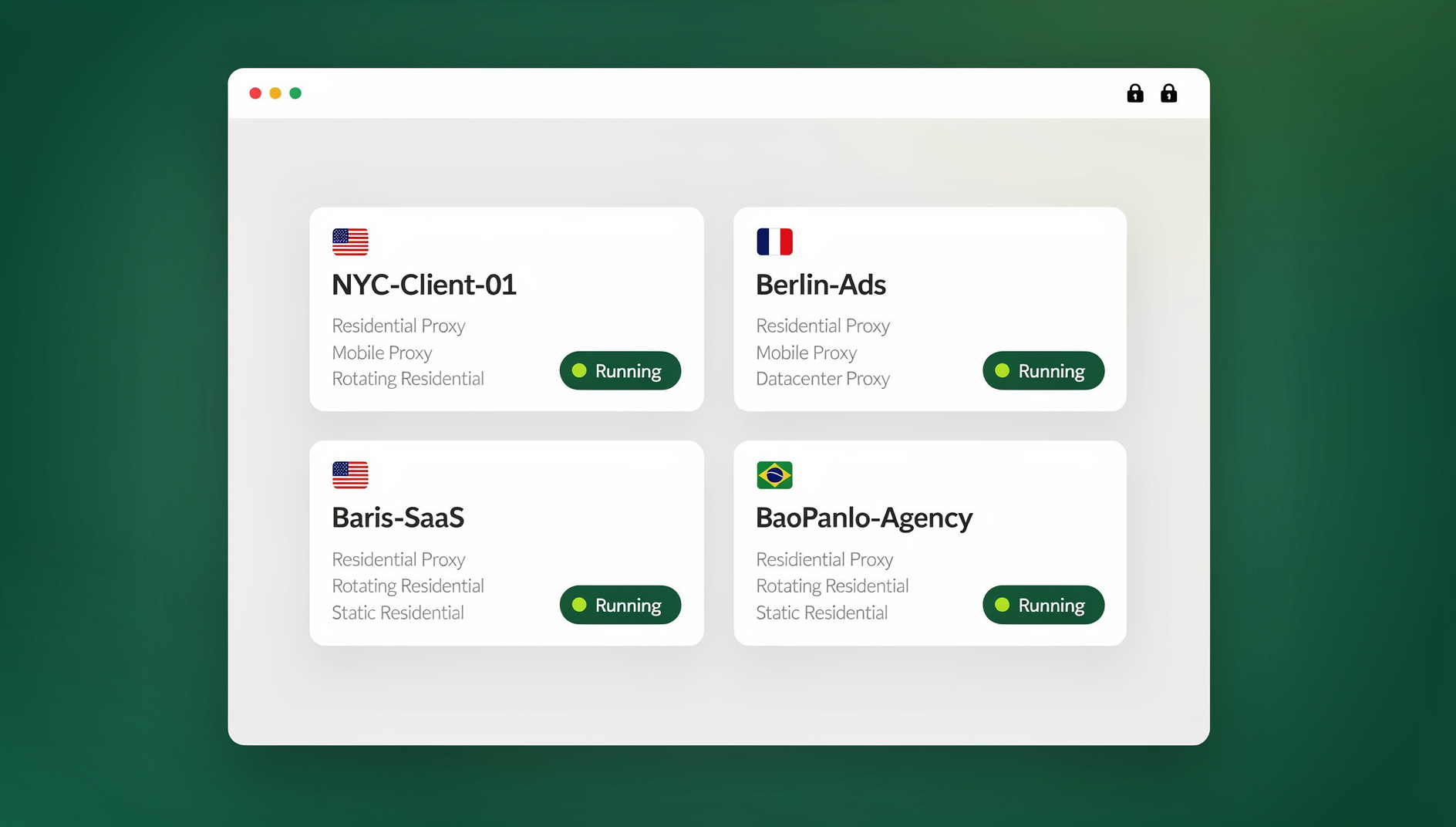
Send.win is not a one-size-fits-all tool — it gives you two distinct ways to get a cloud virtual browser experience, depending on how you like to work. The first is the Sendwin Browser, a native, downloadable desktop application for Windows, macOS, and Linux. It’s local-first, meaning your sessions and profiles live on your machine for speed and offline access, while an encrypted cloud sync keeps everything backed up and available across devices. The second is a Cloud Browser session, which runs entirely on Send.win’s infrastructure with zero local install. You open a dashboard, launch a session, and every click executes remotely — ideal for shared machines, locked-down corporate laptops, or quick one-off tasks where you don’t want to install anything at all. Cloud Browser usage is metered by cloud browsing time rather than a flat seat count, so occasional users aren’t paying for capacity they don’t touch.
| Aspect | Sendwin Browser (Desktop App) | Cloud Browser Sessions |
|---|---|---|
| Where it runs | Locally on your Windows, macOS, or Linux machine | Entirely in the cloud, streamed to your screen |
| Install required | Yes — one-time desktop download | No — launch from a browser dashboard |
| Data storage | Local-first, with encrypted cloud sync | Cloud-hosted, nothing persists on your device |
| Billing basis | Included in plan (profiles, bandwidth) | Metered by cloud browsing time |
| Best for | Daily power users, heavy multi-account work | Locked-down devices, quick tasks, shared/public machines |
| Automation API | No | Not applicable — automation targets the desktop app |
Most agencies and power users end up running the desktop app day-to-day and reaching for a cloud session only when they’re on a machine they don’t control. Both modes plug into the same session, proxy, and sharing infrastructure, so switching between them doesn’t mean rebuilding your workflow.
Zero-Trust Security Architecture Behind Every Session
Whichever mode you use, Send.win is built around a zero-trust posture rather than bolted-on security features:
- Isolated execution: every profile or session is sandboxed so a compromised site or malicious download can’t reach your other accounts or your local files.
- Strong encryption: session and sync data is encrypted in transit and at rest, protecting credentials and cookies from interception.
- No shared storage between sessions: cookies, local storage, and cache stay siloed per profile, so one tab or account can’t fingerprint or contaminate another.
- Real desktop browsers, not emulators: rendering, plugins, and performance behave the way sites expect, which matters for payment flows, ad managers, and compliance-sensitive dashboards.
That combination means you get the isolation benefits of remote browser isolation without giving up the day-to-day speed of a normal browser.
Who Actually Uses a Cloud + Virtual Browser Like Send.win
Marketers & Advertisers
- Run multiple ad accounts side by side without cross-contamination or accidental logouts.
- Attach region-specific proxies to validate creative and landing pages the way a local user in that market would see them.
- Share a live, logged-in session with a client or reviewer for a fixed window instead of handing over a password.
E-commerce Sellers
- Keep several storefronts or marketplace identities cleanly separated to avoid policy violations tied to account overlap.
- Use per-session proxies to keep IP and region signals consistent for each store.
- Bring a contractor into a specific payout or listing task without exposing full account credentials.
SEO Professionals
- Check rankings and SERPs from different regions using proxy-backed sessions instead of a shared VPN exit node.
- Keep research and testing sessions isolated from client accounts and production logins.
- Capture accurate, local views of search results without polluting your main browsing identity.
Developers, QA Engineers & Automation Teams
This is where the desktop app really earns its keep. Send.win keeps each profile isolated with its own cookies, storage, proxy, and fingerprint settings, so you can run many accounts side by side without their sessions bleeding into one another. Each profile maintains its own consistent browser fingerprint, and profiles do not share one browser identity. This is available starting on the Pro plan, not locked behind the top tier, which makes it realistic for a solo marketer or a small team to organise repetitive multi-account work without paying for enterprise seats they don’t need.
Remote Teams & Everyday Power Users
- Collaborate across shared accounts without creating account sprawl or emailing passwords around.
- Invite a teammate into the exact page they need, then revoke access when the task is done.
- Keep sensitive data off personal devices for a lighter compliance footprint.
Feature Deep-Dive: Isolation, Collaboration & Network Control
Session Isolation & Privacy
Every profile keeps its own cookies, cache, and local storage, so parallel work on the same platform — five ad accounts, ten marketplace stores, a dozen client logins — stays predictable instead of colliding. This is the same principle behind a multi-login browser workflow built to manage multiple accounts safely, and it’s the foundation everything else in Send.win is built on top of.
Share Sessions, Not Passwords
Instead of emailing a password to a contractor, teammate, or client, Send.win lets you invite someone directly into a live, already-authenticated session. You can time-box that access — say, 30 minutes or a single day — and blur or block sensitive areas like billing pages before you hand over the link. When the task is done, you revoke access with one click and the credentials never left your hands. If you regularly bring outside collaborators into client accounts, it’s worth reading how teams share accounts without passwords while keeping a clean audit trail.
Proxies & Global Endpoints
Attach your own proxy to any session for precise geo control — cleaner attribution than a machine-wide VPN, since only that one profile’s traffic is routed through it. Combine that with endpoints across the Americas, Europe, and Asia for lower latency and region-accurate previews when you’re checking how a page renders for users in a specific market.
Isolated Profiles for Local Work
Because each profile runs locally in the Sendwin Browser rather than a remote black box, your profiles stay on your own machine. Send.win’s job is to keep each profile isolated with its own cookies, storage, proxy, and fingerprint surface, which is what makes it practical for teams that need to work across many accounts without one profile’s state bleeding into another’s.
Send.win vs. Local Browser Profiles
Local browser profiles and incognito windows help a little, but they still share the same OS-level resources, leave cache and cookies behind for someone to clean up later, and offer no real way to hand a session to a teammate without sharing a password outright. A cloud-and-desktop hybrid like Send.win removes those overlaps by isolating every login at the profile level and adding collaboration controls — timers, blur, one-click revoke — on top. The result is closer to remote browser isolation designed for daily productivity than a security appliance bolted onto a browser you already have.
If your day-to-day pain is specifically ad account management — juggling client logins, proxies, and reviewer access — it’s worth comparing this approach directly against a dedicated browser for ads management setup to see which controls matter most for your workflow.
Send.win Pricing & Plans in 2026
Send.win has no free trial; paid plans start at $19/mo for Pro, and your first card purchase is covered by a 7-day money-back guarantee. You can also preview the cloud browser for free at the demo. Full details live at send.win/pricing; here’s the quick comparison:
| Plan | Monthly | Billed Annually | Profiles | Proxy Bandwidth | Seats | |
|---|---|---|---|---|---|---|
| Pro | $19/mo | $6.99/mo | 150 | 5GB | Included | 1 |
| Team | $49/mo | $20.99/mo | 500 | 20GB | Included | 16 |
The Pro plan covers the vast majority of individual marketers, sellers, and freelancers with 150 profiles and 5GB of proxy bandwidth. Team makes sense once you need more than a single seat: 16 seats, 500 profiles, and 20GB of bandwidth are built for agencies coordinating client work across a small team.
Real-World Workflows You Can Ship Today
Multi-Account Ads Management
- Open each client’s ad manager in its own isolated profile.
- Attach region-appropriate proxies per client account.
- Share a live session with a reviewer for a fixed window — no credentials exchanged.
E-commerce Operations Across Storefronts
- Keep storefront logins siloed to prevent accidental cross-posting or payout mix-ups.
- Invite contractors into time-boxed sessions for catalog or listing updates.
- Use proxies or regional endpoints to preview geo-specific pricing and promotions.
SEO Research & QA
- Validate SERPs from multiple regions in parallel using per-session proxies.
- Run disposable sessions for tool or crawler tests that shouldn’t touch your primary identity.
- Keep experimentation separate from live client accounts.
Automated Testing & Scraping
- Run the same regression suite across dozens of isolated accounts without manual profile switching.
- Keep test traffic separated from production sessions to avoid rate limits or account flags.
Remote Team Collaboration
- Share the exact page a teammate needs, add a session timer, and blur sensitive dashboards first.
- Maintain an audit-friendly workflow with no shared passwords to rotate later.
- Revoke access instantly once a task wraps up.
Getting Started With Send.win
- Sign up: Create your account and choose a paid plan — your first card purchase is covered by a 7-day money-back guarantee.
- Choose your mode: Download the native Sendwin Browser for daily, local-first work, or launch a Cloud Browser session straight from the dashboard for zero-install access.
- Start working: Create your first isolated profile, attach a proxy if you need one, and invite a teammate into a session whenever you need a second pair of hands.
🏆 Send.win Verdict
If you’re wrestling with local profiles, cookie collisions, and password hand-offs just to keep multiple accounts straight, Send.win’s combination of a native desktop app and on-demand cloud sessions solves it at the architecture level — isolated profiles, encrypted sync, and session sharing without passwords.
Try the Send.win cloud demo — a 3-minute preview without signup, 10 minutes a day with a free account.
Frequently Asked Questions
What’s the difference between the Sendwin Browser and a Cloud Browser session?
The Sendwin Browser is a native app you download for Windows, macOS, or Linux; it’s local-first with encrypted cloud sync, so your profiles are fast and available offline. A Cloud Browser session runs entirely on Send.win’s servers with nothing installed locally, and usage is metered by cloud browsing time — better for shared machines or occasional quick tasks.
Do I need to install anything to use a cloud browser session?
No. Cloud Browser sessions launch straight from your dashboard and stream to your screen, so there’s nothing to install on the device you’re using.
Is there a free trial?
No — Send.win has no free trial. The first card purchase is covered by a 7-day money-back guarantee, and the only free option is the cloud demo at https://send.win/demo-browser/.
Can I automate tasks with Send.win?
No. Send.win has no automation interface — no API, SDK, headless mode, or Selenium/Puppeteer/Playwright support on any plan. Each profile stays isolated with its own cookies, storage, proxy, and fingerprint settings.
How much does Send.win cost?
Pro is $19/mo or $83.88/yr with 150 profiles and 5GB of proxy bandwidth. Team is $49/mo or $251.88/yr with 500 profiles, 20GB of bandwidth, and 16 seats. The first card purchase is covered by a 7-day money-back guarantee.
Can I share a session without sharing my password?
Yes. You can invite someone directly into a live, logged-in session, time-box their access, and blur or block sensitive pages before sharing — then revoke access with one click when they’re done.
Are these real browsers or emulators?
They’re real desktop browsers running on managed infrastructure, not emulators, which is why complex sites — payment flows, ad managers, compliance-sensitive dashboards — render and behave correctly.
Do I need a VPN as well?
Not necessarily. Attaching your own proxy to a specific session gives cleaner, per-profile geo control than a machine-wide VPN, since only that session’s traffic is routed through it.