Managing Multiple Online Accounts Doesn’t Have to Be Complicated
Whether you’re running multiple e-commerce stores, managing social media for several brands, or simply trying to keep personal and professional accounts organized, figuring out the easiest ways to manage multiple accounts online usa is a common challenge for millions of Americans today. The average internet user maintains over 100 online accounts. For digital marketers, freelancers, and small business owners, that number can be significantly higher.
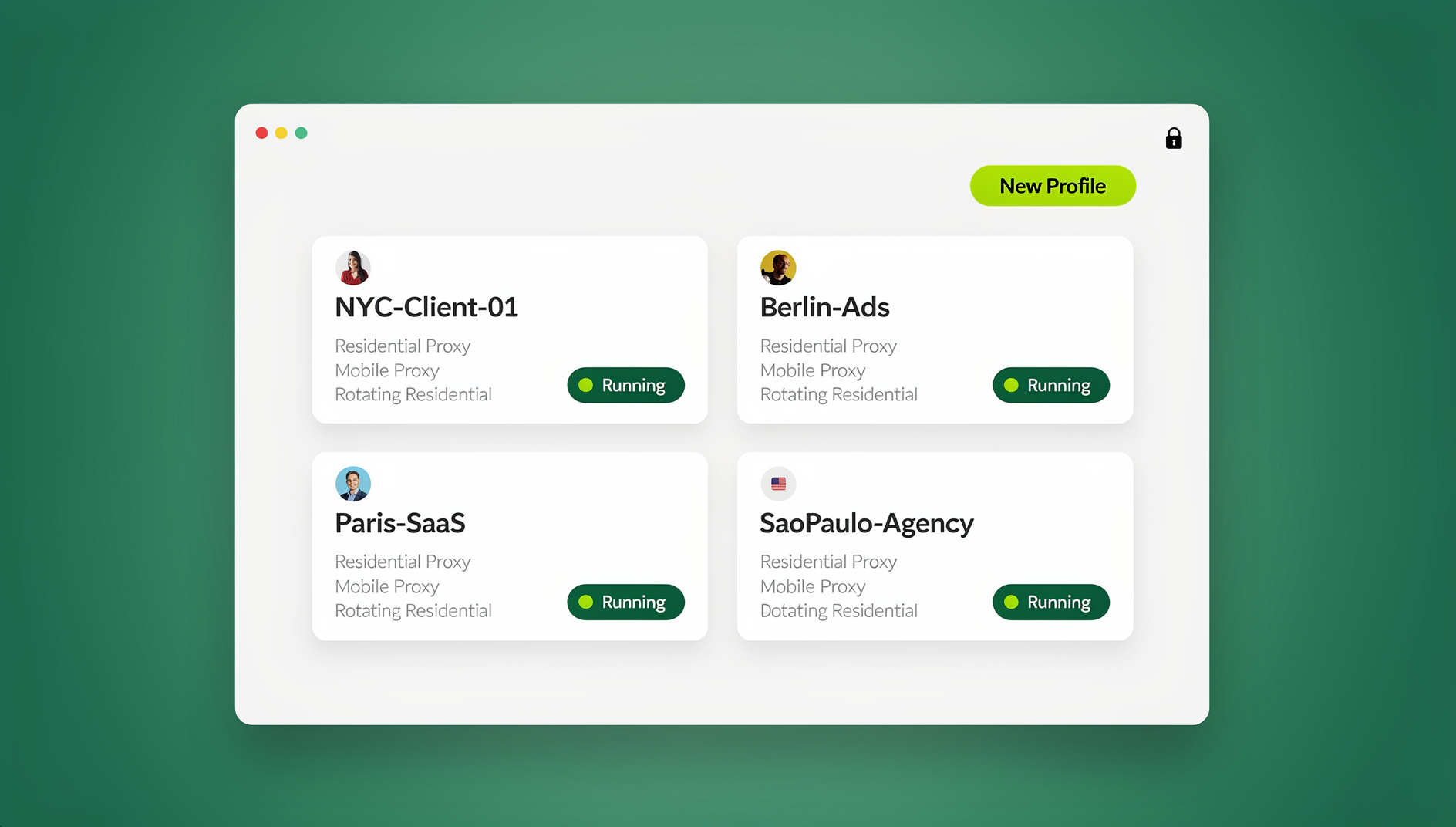
Managing these accounts efficiently isn’t just about convenience; it’s about security, productivity, and preventing the costly mistakes that come from disorganized account management. When researching the easiest ways to manage multiple accounts online usa, users often start with simple bookmark tools before realizing they need true fingerprint isolation.
In this guide, we’ll walk through the simplest, most practical methods for managing multiple accounts online, from built-in browser features you might already have to specialized tools designed for heavy multi-account users. Every method is tested, practical, and accessible to users at any technical level.
Method 1: Browser Profiles — The Free Starting Point
The easiest entry point for managing multiple accounts is using browser profiles. Both Google Chrome and Microsoft Edge support multiple profiles, each with its own bookmarks, saved passwords, and logged-in sessions.
To set up profiles, open Chrome and click your profile icon in the top-right corner, select “Add,” name the profile, and choose a distinct color or avatar for easy identification. All logins and cookies stay separate within that profile environment. This is highly effective for casual users who want to keep their work emails separate from their personal browsing history.
Another risk of standard browser profiles is that they sync data to your personal Google or Microsoft accounts by default if you log in. If an employee logs into their personal Google account inside a client’s profile, their personal search history, bookmarks, and autofill suggestions will sync, which violates basic client data separation rules.
Pros and Cons of Browser Profiles:
- Pros: Completely free, easy to set up, separate cookies and sessions, works with any website.
- Cons: All profiles share the same IP address and hardware fingerprint, profiles are local to one computer, and platforms can detect shared fingerprints.
This is best for managing 2-5 accounts on platforms that don’t have strict anti-fraud measures, or simply separating personal and professional browsing. Using a dedicated cookie management tool helps you import, export, and clean sessions to avoid cross-profile leakage.
Method 2: Container Tabs (Firefox)
Firefox’s Multi-Account Containers add-on takes browser-based separation a step further. Containers isolate cookies within color-coded tabs, letting you be logged into multiple accounts on the same platform simultaneously in the same browser window.
By using the container add-on, you can open different containers for personal, work, and client accounts. The key advantage of containers is convenience — you can have multiple accounts open in the same window without constantly switching profiles. However, like Chrome profiles, container tabs share the same external IP address and browser hardware fingerprint, leaving you vulnerable to cross-account tracking. If one account triggers a security flag, platforms can easily link the other open containers via the shared IP and browser configurations.
For cloud-based workflows, running a virtual browser online provides remote isolation without requiring any local software setup.
Method 3: Antidetect Browsers — The Professional Solution
For professionals managing many accounts — especially on platforms with sophisticated detection systems — antidetect browsers provide the most robust solution. These specialized browsers create completely isolated environments with unique fingerprints for each profile. For freelancers and marketers, finding the easiest ways to manage multiple accounts online usa is critical to preventing sudden login suspensions.
Even with separate profiles or containers, regular browsers share hardware, canvas, and WebGL fingerprints, timezone settings, and IP addresses. Platforms like Amazon, Facebook, and Google use these signals to link accounts. When they detect multiple accounts from the same device, they may flag, restrict, or ban them.
Browser profile managers like Send.win give each profile its own consistent browser fingerprint. Every browser profile keeps its own cookies, storage, sessions, fingerprint settings and proxy, so profiles do not share one browser identity. This is a solid foundation for organised multiple account management. Send.win also lets you configure WebRTC and audio settings per profile, so each profile’s setup matches your selected proxy identity. In addition, each profile keeps its own fingerprint settings for canvas, audio context, and WebGL APIs. Standard browsers expose details about your local graphic card and audio drivers, which platforms can use to compile a unique identifier. Send.win keeps each profile’s fingerprint consistent and separate from your other profiles.
If you are using Google Chrome, check our Chrome multi-account management guide to optimize your profile settings.
Method 4: Password Managers with Account Organization
While not a multi-account management tool per se, a good password manager is an essential component of any multi-account strategy. They solve the fundamental problem of remembering and organizing credentials for dozens or hundreds of accounts.
Vaults in tools like 1Password, Bitwarden, or Dashlane let you organize credentials by client or department, share access safely, and auto-fill logins without copy-paste errors. A password manager is a baseline requirement for anyone managing multiple accounts, regardless of what other tools they use. To bypass the need for browser plugins, many password managers now offer desktop applications that allow you to copy credentials securely using global hotkeys. They also help identify leaked passwords, prompting you to update them before security is compromised. When choosing a password manager, look for features like secure password sharing and auto-change capabilities. These features allow you to share client logins with assistants without exposing the raw credentials, reducing the risk of unauthorized sharing. Furthermore, utilizing corporate vaults ensures that when team roles change, permissions can be reassigned dynamically without having to reset primary passwords. This structured password vault organization is a vital security layer for any digital marketer operating in the USA.
Method 5: Social Media Management Platforms
If your multiple accounts are primarily on social media, dedicated management platforms offer scheduling, analytics, and engagement features that go beyond simple account access. Tools like Agorapulse, Sprout Social, and Buffer connect to your accounts via official APIs, letting you post, schedule, and engage without logging into each platform individually. This consolidation reduces the need to log into native platforms, reducing the exposure of your passwords to daily workflows. Additionally, most enterprise social schedulers offer automated queue systems, letting you upload content in bulk via spreadsheets. This feature minimizes manual browser activity, significantly reducing the chances of triggering login flags.
To run profiles in sandbox mode, utilizing an online browser isolation tool ensures that malware or trackers cannot access your system.
Method 6: Virtual Machines and Cloud Desktops
Virtual machines (VMs) provide separate operating systems running on a single computer. Each VM has its own registry, file system, and browser configuration. While this offers excellent isolation, setting up and maintaining multiple VMs is resource-heavy, complex, and requires a powerful computer. Cloud-based desktops (such as AWS WorkSpaces) offer similar isolation benefits but are metered hourly, which can lead to high operating costs for small agencies.
In addition to cloud virtual machines, you can run local hypervisors like VMware Workstation or Oracle VirtualBox. This is highly effective because it allows you to run completely separate guest operating systems (such as Windows, Linux, or Android x86) on a single physical machine. Each operating system has its own virtual networking interface card, its own MAC address, and its own local file registry. To target servers, each VM acts as a unique device. However, the system resources required to run multiple VMs are massive: you need at least 16GB or 32GB of RAM and a modern multi-core processor to host just three or four virtual desktops concurrently without severe lag. For high-volume operators, this quickly becomes a bottleneck.
Method 7: Mobile Device App Cloners
Mobile operating systems offer built-in features for multi-account management. Android devices support multiple user profiles and application cloning, allowing you to run two instances of apps like WhatsApp or Messenger. While helpful for small businesses, managing dozens of accounts on a small mobile interface is impractical and lacks the proxy configuration flexibility required for commercial scaling.
While cloner apps (such as Parallel Space, Island, or App Cloner) are convenient, they carry significant security risks. Because these cloning applications run in a shared user space, they often leak device identifiers. Many e-commerce and banking apps scan for the presence of cloning tools and will flag or suspend accounts that run within sandboxed environments on a single physical phone. Furthermore, managing cellular proxies or mobile IP rotation on a physical phone is extremely challenging, making mobile device cloning a risky choice for commercial operations in the USA.
Choosing the Right Method: Decision Framework
| Your Situation | Recommended Method | Estimated Cost |
|---|---|---|
| 2-3 personal accounts | Browser profiles or container tabs | Free |
| 5-10 social media accounts | Social inbox + password manager | $25-100/month |
| 10+ accounts across platforms | Send.win + password manager | From $19/month |
| Agency with client accounts | Send.win + social inbox | $100-300/month |
Security Best Practices for US-Based Multi-Account Users
Managing multiple accounts increases your attack surface. Follow these security practices to protect yourself: use unique, strong passwords of at least 16 characters, enable two-factor authentication (2FA) via authenticator apps rather than SMS, monitor for data breaches, and separate business and personal accounts. Furthermore, be cautious with third-party app permissions, regularly auditing and revoking access for apps you no longer use.
It is also critical to configure a high-quality proxy provider. Using cheap or free proxy lists will damage your account health, as those IP addresses are often blacklisted by fraud detection systems. Invest in clean residential or mobile proxies that match your target login regions to keep your profiles safe.
Understanding the Risk of Shared Internet Connections (IP Isolation)
When running multiple accounts, the IP address is one of the most critical tracking mechanisms used by platforms. If you log into five different seller or ad accounts from the same home or office Wi-Fi, the host servers immediately link them. If one account is suspended for a policy violation, the others are often closed in a chain reaction, known as “associated account suspension.”
To avoid this, you must separate your network connections. Datacenter proxies are cheap but easily detected because they belong to cloud hosting ranges. Residential proxies, which use real residential internet service providers (ISPs), are much safer because they appear as normal home users. For the highest security, use mobile proxies, which route traffic through cellular networks (AT&T, Verizon, T-Mobile). Because thousands of users share mobile IPs daily, platforms are extremely hesitant to block them, making mobile proxies highly resilient for multi-accounting.
Additionally, when using residential or mobile proxies, configure geo-targeting options to match the client’s registered location. If a client’s e-commerce store is registered in California, logging in from a New York residential IP will trigger security checks. Matching the state and city is essential for safe multi-accounting.
US-Specific Considerations for Multi-Account Management
In the United States, managing multiple profiles is a common practice, but it requires careful navigation of platform policies. Amazon Seller, eBay, and Meta Ads have strict policies regarding account ownership. Violating platform Terms of Service can lead to swift, permanent bans. Additionally, keep in mind tax reporting requirements for e-commerce stores, and state-level privacy laws like CCPA that impact how customer data is processed across your accounts. Ensure your data sharing and storage workflows respect state privacy protocols. Regarding CCPA compliance, US business operators must ensure that client database profiles and customer contact details are stored securely. When sharing profiles across your team, verify that team members do not copy or export customer data onto their personal devices, which could lead to severe regulatory non-compliance.
Step-by-Step: Setting Up a Complete Multi-Account System
To establish a secure, organized system from scratch, follow these five steps:
- Inventory: Document all your active accounts, login methods, and purposes in a central spreadsheet.
- Security: Set up a password manager, import credentials, and update weak or reused passwords.
- Browser Isolation: Implement Send.win to create isolated profiles for each client or account.
- Proxy Setup: Assign unique residential or mobile proxies to your sensitive profiles to ensure separate IP addresses.
- Workflow: Create a schedule to monitor notifications and comments, utilizing dashboards to review activities.
Additionally, review your active profiles weekly. Delete any inactive profiles to free up system resources and proxy bandwidth. Regular maintenance keeps your dashboard clean and ensures that your active client profiles run at maximum speed. Finally, train your team on basic session hygiene. Remind them to close profile windows when they finish their tasks, rather than leaving them open indefinitely. This reduces proxy consumption and prevents simultaneous session conflicts.
In summary, the easiest ways to manage multiple accounts online usa involve a combination of password managers and isolated browser profiles.
Final Thoughts and Verdict
Choosing the easiest ways to manage multiple accounts online usa depends on your scale. Standard profiles are fine for simple personal setups, but professional multi-accounting requires dedicated isolation tools like Send.win to run securely.
🏆 Send.win Verdict
For individuals and businesses looking for the easiest ways to manage multiple accounts online usa, Send.win offers the perfect solution. It eliminates complex setups by providing sandboxed browser profiles and cloud sessions that isolate your accounts automatically.
Try Send.win free today — streamline your multi-account browsing and protect your assets.
Frequently Asked Questions
What is the easiest way to manage multiple accounts online in the USA?
For a few accounts, browser profiles in Google Chrome are the easiest free option. For professional needs, using Send.win is the easiest way to manage multiple accounts online usa because it isolates fingerprints and sessions automatically.
Is it legal to have multiple accounts on the same platform in the USA?
Yes, having multiple accounts is legal. However, it may violate specific platform terms of service (such as Amazon Seller or eBay policies), which can lead to your accounts being flagged or suspended.
How does Send.win keep multiple accounts from getting linked?
Send.win isolates all browser cookies, local storage, cache, canvas and WebGL fingerprints, timezone settings, and user-agent strings. Each profile acts as a separate physical device.
How much does Send.win cost?
Send.win offers a Pro plan at $19/month (or $6.99/month when billed annually) for up to 150 profiles, and a Team plan at $49/month ($20.99/month annual — 57% savings) for 500 profiles and 16 team seats.
Does Send.win offer a free trial?
Send.win has no free trial. Paid plans start at $19/mo for Pro or $49/mo for Team, and the first card purchase is covered by a 7-day money-back guarantee. You can also preview it for free with the cloud demo at https://send.win/demo-browser/.
Does the Pro plan include an Automation API?
No. Send.win has no automation interface: no API, SDK, headless mode or Selenium/Puppeteer/Playwright support on any plan.
Do I need to install any browser add-ons to use Send.win?
No, Send.win does not use any browser add-ons. You can use either the Sendwin Browser native desktop app or launch cloud browser sessions directly from the web.
How do proxies help when managing multiple accounts?
Proxies hide your actual internet connection, routing your traffic through separate IP addresses. This prevents platforms from linking different profiles based on a shared home or office network connection.