To manage facebook business manager multiple accounts without triggering Meta suspensions, you must separate each account using isolated browser environments, dedicated residential proxies, and unique browser fingerprints. Because Meta uses device telemetry to identify and link unauthorized account networks, running multiple profiles on a standard browser will result in shared cookies and linked IP addresses. Using a secure multi-profile browser like Send.win allows you to run multiple Business Managers independently.
Understanding Meta’s Strict Detection Algorithms
Meta’s compliance system is one of the most advanced security infrastructures in the world. It is designed to identify and disable network groups of pages, ad accounts, and personal profiles that appear to be run by the same person without permission. E-commerce agencies and digital marketers frequently run into trouble because they manage multiple client portfolios from the same workstation. When you switch between profiles in a standard browser, Meta’s security servers register this as suspicious behavior, leading to sweeping restrictions.
Meta does not rely on simple cookies. They collect extensive device metadata to build a complete hardware identity. This hardware signature contains values like canvas hashes, WebGL vendor strings, active screen resolutions, system fonts, device memory settings, and audio device parameters. If two different personal accounts log into Meta from the same hardware profile, Meta links them. Meta’s security system assumes that linked profiles indicate multi-account evasion, resulting in immediate suspensions across all connected ad accounts.
1. IP Reputation and Connection Flags
Every server request transmits your current IP address. Standard virtual private networks assign datacenter IP addresses that are shared by hundreds of other users. Because Meta has blocklisted these datacenter ranges, using them triggers instant security checks. To ensure safe operation, each profile must run on a clean, residential proxy that routes traffic through real residential connections, making them appear completely natural.
2. Cookie Leakage and Session Bleed
Standard web browsers store cookies in shared local directories. Even if you use separate windows, background service workers and local storage databases can leak data between sessions. When Meta’s tracking scripts detect shared storage footprints, they flag the accounts. Ensuring complete cookie isolation is a critical step in multi-profile management.
3. Account Linkage via Verification Details
Beyond network and browser profiles, Meta traces shared details like credit cards, recovery email addresses, and phone numbers. If one ad account is disabled for a policy issue, Meta will scan its database for any other portfolios sharing the same payment method or recovery contact, disabling them as well. Keeping payment and registration details separate is vital.
Method 1: Client-Owned Portfolios with Partner Access (Best Practice)
For agencies, the cleanest way to manage client properties is to have clients create their own Business Manager portfolios and grant your agency “Partner” access. This places the primary account ownership and compliance responsibility on the client’s business entity, which protects your agency’s standing.
Under this setup, the client goes to their Business Settings, navigates to Partners, and enters your agency’s Business ID. They can then assign specific Pages and ad accounts to your agency. Your team can access these assets without owning them, allowing you to manage operations through a single dashboard. This structure also ensures clean offboarding if the contract ends.
Method 2: Separate Profiles in Standard Browsers (Highly Risky)
Some managers try to handle multiple accounts by creating separate profiles in standard browsers like Chrome or Firefox. While this separates basic cookies and history, it does not isolate your browser fingerprints. Both profiles return the exact same graphics card properties, system font lists, and hardware specifications. They also connect from the same local IP address. Meta easily links these profiles, making this method highly unsafe for professional advertising campaigns.
Method 3: Dedicated Profiles in Send.win (Professional Solution)
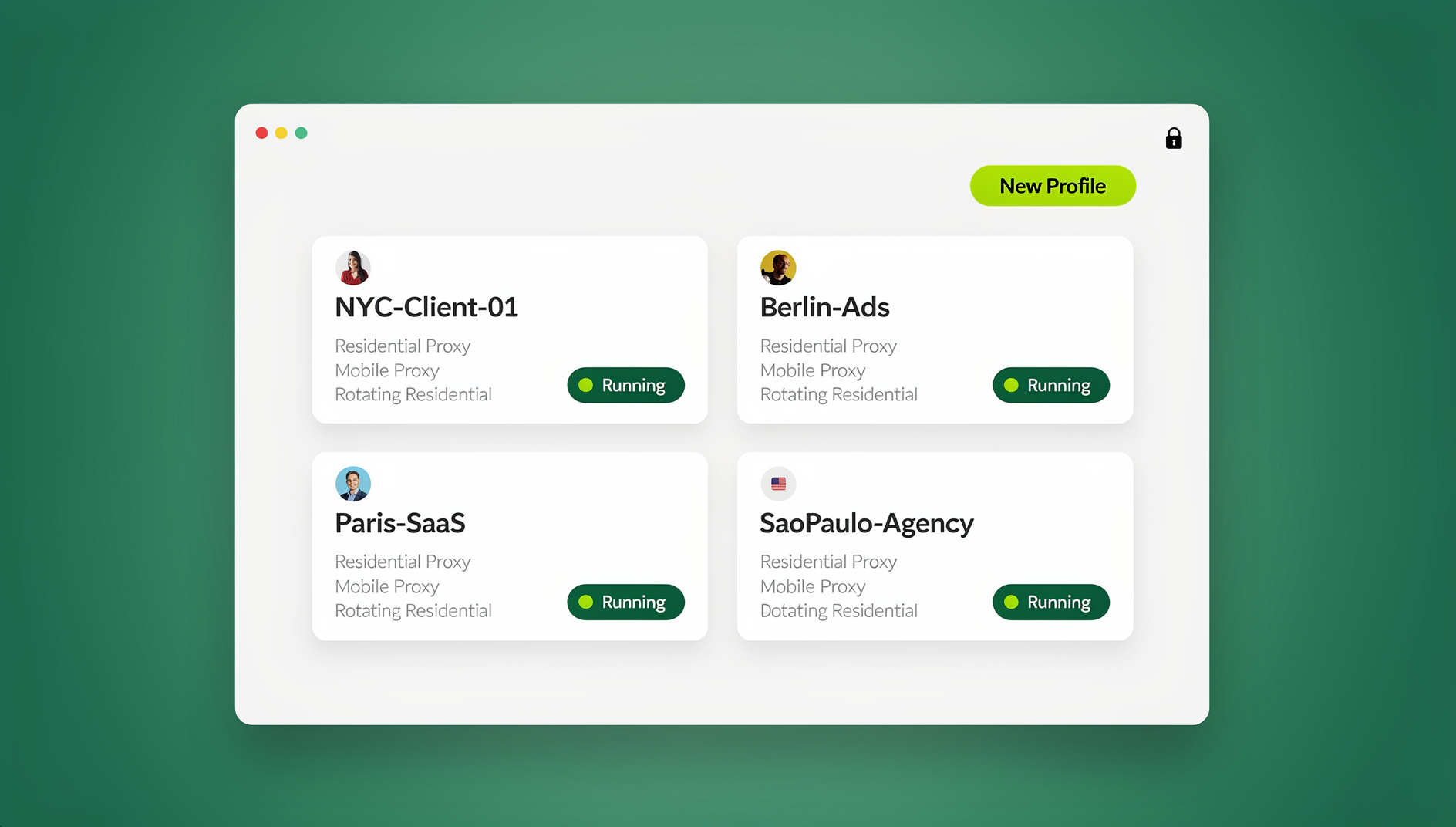
For professional scaling, Send.win provides complete, secure isolation for each Meta portfolio. Using the Sendwin Browser native desktop app or cloud browser sessions, you build independent browsing environments for each personal Facebook account. Each profile operates with a distinct canvas signature, unique hardware identifiers, separate cookie jars, and dedicated proxy settings.
By routing each profile through its own residential proxy, you ensure that Meta sees each login as a distinct device connecting from a separate location. If one account faces a policy review, the other profiles remain unaffected, keeping your agency’s operations running smoothly.
Technical Profile Setup for Agency Scaling
Setting up your workspace to manage multiple Meta profiles is straightforward:
- Create Independent Profiles: Create a new profile for each personal Facebook account. Use descriptive names like “Meta Profile – Client A” and assign color codes to avoid mistakes.
- Configure Fingerprint Variables: Let the application generate a natural, randomized browser fingerprint. This ensures Meta sees unique hardware specs for each session.
- Assign Residential Proxies: Set up a dedicated residential proxy for each profile. Match the proxy location to the primary location of the personal account holder to avoid geolocation flags.
- Log In and Persist Sessions: Open the profile, log into Facebook, and go to Meta Business Suite. The session cookies are saved, allowing you to access the dashboard instantly next time without repeated logins or 2FA checks.
Proxy Strategy for Meta Ad Managers
A secure profile requires a clean network connection. Datacenter proxies should never be used for Meta management, as their IP ranges are blacklisted. Instead, choose residential proxies. Static residential proxies (ISP proxies) are the best option because they provide a consistent, long-term IP address, which prevents Meta from flagging your account for location switching.
For high-risk verification tasks, mobile proxies (4G/5G) offer the highest trust rating because cellular IPs are shared by thousands of real users, making them virtually immune to blocklists. Ensure your profile’s timezone and language settings match your proxy’s location to prevent mismatch alerts.
How to Verify Your Business Entity with Meta
To scale your advertising capacity and avoid sudden restrictions, completing the Meta Business Verification process is highly recommended. Unverified portfolios face tighter ad spend limits and cannot access advanced developer APIs or custom target datasets. To verify your entity, navigate to the Security Center inside your Business Settings and click “Start Verification”.
You must provide official government-issued documents that prove your legal business identity, such as articles of incorporation, business licenses, or tax certificates. Meta also requires proof of physical location via utility bills or bank statements. The verification review typically takes between two and five business days, and once approved, it increases your ad account creation limits from 5 to 30 or more, while strengthening your compliance standing.
Managing restricted Ad Accounts and Appeals
Even compliance-focused agencies will occasionally face restrictions due to Meta’s aggressive automated safety filters. If an ad account gets restricted, do not panic. Navigate to the Account Quality dashboard to review the exact policy violations. If you believe the flag was a mistake, submit an appeal by uploading a scan of your photo identification card and providing a clear explanation of your business activities.
While waiting for the review team to respond, do not attempt to create duplicate ad accounts within the same restricted portfolio, as this triggers permanent bans. By using Send.win, you can isolate high-risk campaigns in separate, unrelated profiles. If one profile’s account faces a review, the others continue running campaigns normally, ensuring business continuity.
Sharing Pixels and Conversion APIs Safely
Agencies must frequently share tracking pixels and conversion APIs (CAPI) across multiple ad accounts to optimize bidding models. To share a pixel safely, navigate to Data Sources -> Pixels in your Business Settings. Select the pixel and click “Assign Partners” to enter the Business ID of the target portfolio. This official partner sharing method keeps data flows clean.
Avoid using third-party tracking scripts that bypass official sharing protocols, as Meta flags unusual javascript activity. By structuring your pixel relationships officially through Partner access, you maintain perfect compliance. Make sure your tracking domains are verified under the correct Business Managers using DNS verification to protect domain reputation.
Chrome Profiles vs. Firefox Containers vs. Send.win
Understanding the technical differences between these tools helps you choose the best solution for your agency:
| Feature / Security Parameter | Chrome Profiles | Firefox Containers | Send.win Isolated Profiles |
|---|---|---|---|
| Cookie Isolation | Yes (Per Window) | Yes (Per Tab) | Yes (Complete Sandbox) |
| Canvas Fingerprint Masking | No | No | Yes (Randomized hashes) |
| WebGL Hardware Masking | No | No | Yes (Unique hardware signatures) |
| Dedicated Proxy Per Profile | No (Global settings only) | No (Requires add-ons) | Yes (Built-in proxy engine) |
| Revocable Team Sharing | No | No | Yes (Secure profile transfer) |
| Automation API Integration | No | No | No |
Security Rules for Multi-Account Meta Compliance
To protect your account network from suspensions, follow these core security rules:
- Avoid basic profile switching: Standard browser profiles, like a basic managing multiple accounts approach, do not mask your hardware details. Always use dedicated multi-profile browsers.
- Never reuse payment methods: Use unique credit cards or billing profiles for each Meta Business Manager. If one account is flagged, any other account using the same card will face holds.
- Add backup administrators: Always add at least two admin accounts to every Business Manager portfolio. If one personal profile is locked out, you can still access the asset through the backup admin.
- Leverage secure browsing: Using the best browser for multiple accounts ensures that your sessions remain isolated and secure, preventing cross-profile tracking.
Warming Up New Meta Ad Accounts
New Meta accounts are subject to intense scrutiny. When launching a new ad account, start with small daily budgets ($10-$20) and run simple campaigns (like page likes or engagement) for the first week. This builds a positive payment history and trust score. Avoid editing budgets or target locations rapidly, as sudden changes look suspicious. Install your tracking pixels early and gather natural traffic data to establish organic activity before scaling your ad spend.
Advanced Team Collaboration and Workspace Management
Running a marketing agency requires secure teamwork. Sharing passwords via chat tools is a security risk. Send.win solves this by allowing profile sharing. You can share access to an isolated Meta session with a media buyer. They can log in, edit campaigns, and manage ads without ever seeing the password or recovery details. This keeps your credentials secure.
Furthermore, cloud sync ensures that all cookies and session data are stored securely. If a team member goes offline, another can open the same profile on their machine and continue the work instantly, maintaining a seamless agency workflow.
Managing Multiple Accounts Without Automation
For large agencies, managing campaigns manually is time-consuming. Send.win does not offer an automation interface: there is no API, SDK, headless mode or Selenium/Puppeteer/Playwright support on any plan. Instead, each isolated browser profile keeps its own cookies, storage, sessions, fingerprint settings and proxy, so you can organise work across multiple accounts by hand.
You can work through tasks like checking ad spend, downloading invoices, or generating reports inside each profile. Because every Send.win profile keeps its own dedicated proxy and consistent fingerprint, your profiles stay separate from one another and do not share a single browser identity.
For e-commerce agencies who run both stores and social channels, our multiple amazon accounts complete guide outlines the exact strategy for setting up billing, residential proxies, and security profiles. Similar to how retail businesses organize multiple amazon accounts to scale their sales, agency managers must organize their social campaigns.
🏆 Send.win Verdict
Managing multiple Meta Business Managers using native browsers is highly risky. Standard profiles do not provide the hardware fingerprint masking and proxy control needed to prevent platform suspensions. Send.win provides complete, secure isolation for each session, making it the ideal tool for professional media buyers and marketing agencies.
Try the free Send.win cloud demo — preview it in your browser, secure your profiles, and manage multiple Meta Business Managers safely.
Frequently Asked Questions
How many Meta Business Managers can I run?
Each personal Facebook account can create up to two Business Manager portfolios. To manage more, you must use additional personal accounts, each isolated inside its own Send.win profile with dedicated proxies.
Can I transfer a Page from one Business Manager to another?
Yes. You can request a page transfer in your Business Settings. The receiving Business Manager must accept the request. Note that page ownership transfers can trigger temporary security reviews.
Is it safe to manage multiple profiles from one PC?
Only if you use a secure multi-profile browser. Standard browsers share hardware fingerprints and IP addresses. Using Send.win ensures each profile runs in a separate, isolated sandbox with unique fingerprints.
Do e-commerce managers need isolated profiles too?
Yes. Just as media buyers isolate profiles, e-commerce sellers must manage multiple amazon accounts with dedicated IPs and fingerprints to prevent store suspensions.
How does Send.win pricing work?
Send.win has no free trial. The Pro plan is $19/month or $83.88/year, and the Team plan is $49/month or $251.88/year. The first card purchase is covered by a 7-day money-back guarantee, and the only free option is the cloud demo at https://send.win/demo-browser/.
Do I need to install a browser add-on to run Send.win?
No. Send.win works as a standalone native desktop app and also offers cloud browser sessions that run directly in your web dashboard, requiring no local installations.
Can my team access my profiles simultaneously?
Yes. With Send.win’s Team plan, you can share profiles with team members. They can access the sessions securely from their own devices with synchronized session cookies.
Does Send.win offer an Automation API?
No. Send.win has no automation interface: there is no API, SDK, headless mode or Selenium/Puppeteer/Playwright support on any plan, including Pro ($19/month) and Team ($49/month).