To google adwords manage multiple accounts successfully, you should set up a Google Ads Manager Account (formerly MCC) to link all profiles under a single dashboard. For maximum security, combine this with a multi-login browser like Send.win to run each account in a separate, isolated session with its own cookie and fingerprint profiles. This guide explains how to configure these tools to run parallel campaigns without risking account suspension.
Understanding the Google Ads Manager Account (MCC)
Juggling several corporate campaigns or handling different client portfolios requires a structured administrative layout. In the digital advertising space, the Google Ads Manager Account (commonly referred to by its legacy name, My Client Center or MCC) functions as the central hub. It operates as an umbrella platform that sits above individual client IDs. Instead of logging out and logging back in with different credentials, a manager can access every linked dashboard using one email and password combination.
For marketing teams, PPC agencies, and large enterprises running multiple brands, this administrative structure is not just a convenience—it is a business necessity. It enables consolidated campaign oversight, cross-account performance tracking, and streamlined team access control. However, as we will explore below, while an MCC resolves administrative access challenges, it does not address the underlying browser-level and network-level security challenges that occur when managing multiple ad portfolios from a single computer.
When multiple client accounts are handled through a single dashboard, the convenience is undeniable. However, this centralized access also creates a single point of failure. If one of the linked accounts experiences a policy violation or billing issue, Google’s automated systems immediately investigate the manager account and the other linked profiles. This is why having administrative access via an MCC is only half the battle; the other half is ensuring that the physical access points—specifically, the browser sessions used to log into these accounts—are kept completely separate and secure.
Key Features of the Manager Account
- Consolidated Dashboard: View top-level performance metrics, such as impressions, clicks, cost, and conversion rates, for all linked profiles on a single screen. This eliminates the need to compile manual spreadsheets or jump between tabs.
- Shared Library Assets: Create and apply shared negative keyword lists, audience segments, and conversion tracking definitions across multiple client portfolios simultaneously, ensuring consistent optimization strategies.
- Centralized Billing: Consolidate separate invoices into a single monthly invoice, simplifying accounting workflows for agencies and corporate conglomerates who manage high-volume budgets.
- Granular User Permissions: Grant different access levels (Admin, Standard, Read-Only) to employees or external contractors at the manager level or individual account level, maintaining tight control over who can make budget changes.
Step-by-Step Guide: How to Link and Create Accounts
Setting up your Manager Account dashboard is a straightforward process, but it requires careful coordination with your clients to ensure proper authorization and access settings. It is vital to perform each step correctly to avoid setting off security triggers on newly linked accounts.
Step 1: Create Your Manager Account
To begin, visit the official Google Ads Manager Accounts portal (ads.google.com/home/tools/manager-accounts/) and click the registration button. Make sure to use a clean Google account that is not already tied to an individual ad profile as its primary owner. Enter your business name, choose whether you are managing other people’s accounts or your own, and specify your billing country, time zone, and primary currency. Submit the form to initialize your manager dashboard. Once created, you will see a clean overview dashboard ready for profile integration.
Step 2: Link Existing Client Accounts
To connect an existing account, navigate to the “Accounts” tab in your manager dashboard, click the blue plus icon, and select “Link existing account.” You will need to enter the client’s 10-digit Customer ID, which is visible in the top-right corner of their Google Ads dashboard. After submitting the link request, your client will receive an email notification. They must approve the request under the “Access and security” section of their account settings for the link to become active. Once approved, their campaign data will populate in your MCC overview screen.
Step 3: Create New Client Profiles
If you are onboarding a new client who does not yet have a Google Ads footprint, you can create a new profile directly from your manager dashboard. Click the blue plus icon and select “Create new account.” Define the profile name, account type, country, time zone, and currency. This profile will automatically be linked to your manager account, and you can invite the client to access it as an admin so they retain ultimate ownership of their advertising asset. This maintains professional boundaries and ensures transparency.
| Step | Action Required | Key Outcome |
|---|---|---|
| 1. Setup | Register MCC account at ads.google.com using a dedicated agency email address. | Establish the parent admin panel. |
| 2. Link | Input client’s 10-digit Customer ID and send a connection request. | Client approves link, granting dashboard access. |
| 3. Verify | Assign team members standard or read-only permissions inside the client’s profile. | Staff can execute campaigns without sharing root credentials. |
The Hidden Detection Risks of Multi-Account Advertising
While the Google Ads Manager Account is the official way to administer multiple client portfolios, relying on it alone within a standard browser window introduces significant risks. When your team members switch between client accounts, run campaigns for competing businesses, or access billing settings, Google’s automated anti-fraud and security systems analyze the underlying digital fingerprints of the browser session. If these sessions are not properly isolated, you risk triggering cross-account suspensions.
Every standard web browser transmits a wealth of data to web servers, including your IP address, canvas rendering fingerprints, WebGL settings, installed fonts, and cookie history. If you are using a standard web browser to access multiple distinct advertiser accounts, Google’s trackers can easily identify that the same physical machine is operating all of them. If one client account suffers a policy violation, a payment failure, or a suspension for “circumventing systems,” all other client accounts accessed from that same browser profile risk being flagged, restricted, or permanently suspended due to association. This is why strict digital isolation is necessary.
To mitigate these hazards, professional media buyers use specialized tools to isolate their browser environments. Integrating a robust cookie management tool into your operational layout ensures that cookies, local storage, and cached data are completely segregated between individual client sessions. Furthermore, performing Chrome multi-account management inside a single default browser window without advanced fingerprint spoofing is no longer sufficient for high-spend agencies, as browser fingerprints remain consistent across standard profiles, allowing algorithms to easily link separate accounts.
Isolate Your Ad Campaigns with Browser Isolation
To shield your advertising campaigns from cross-contamination, you must implement strict browser isolation. This process involves running each client’s Google Ads account in a completely sandboxed browser environment that has its own unique, consistent digital fingerprint. By presenting separate browser fingerprints and cookies to Google’s servers, you simulate different devices and users, making it impossible for automated systems to link your clients’ profiles together. This step is critical for agencies managing high-value client assets.
Using a specialized browser for ads management allows your team to run multiple parallel sessions safely. In this setup, each client profile has its own localized environment where canvas data, WebGL parameters, audio fingerprints, and user-agent strings are fully customized. This level of technical separation is identical to the techniques used by top-tier agencies to manage multiple Amazon accounts and other e-commerce assets without triggering security blocks or multi-accounting flags, ensuring that each business entity remains distinct and protected.
Using Send.win to Streamline Your AdWords Workflow
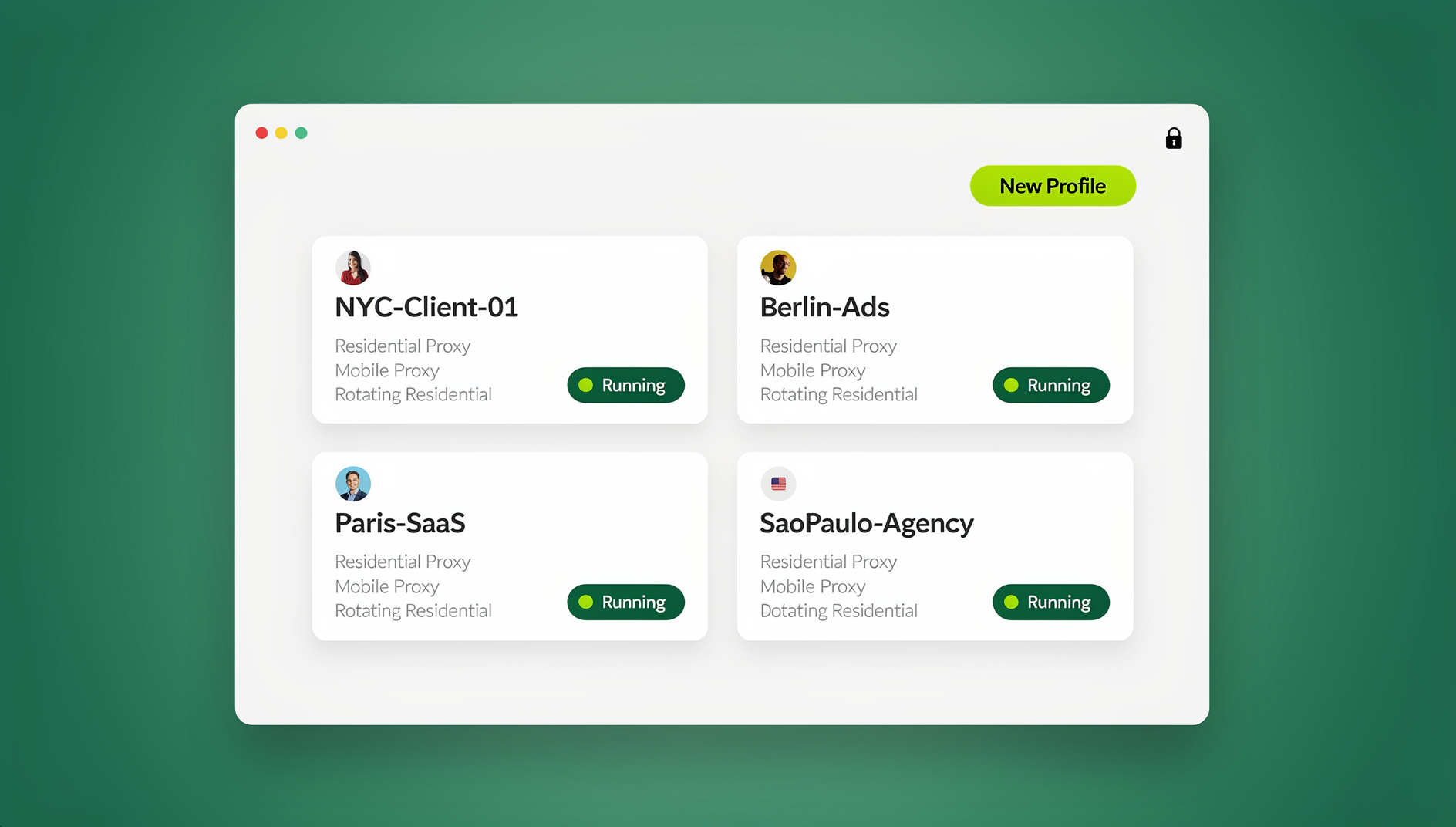
Send.win is a professional multi-login browser designed to solve the challenges of multi-account management. It provides a secure platform where you can build, organize, and execute campaigns across dozens of Google Ads accounts simultaneously, without the risk of cross-contamination or security bans. It isolates cookies, local storage, and system fingerprints at the kernel level, ensuring that each profile appears as an entirely separate physical device to Google’s algorithms.
Send.win operates using two main modes, giving your team maximum flexibility depending on their location and technical requirements:
- Sendwin Browser (the native desktop app): A high-performance, downloadable client for Windows, macOS, and Linux. This desktop client runs profiles locally, utilizing your machine’s hardware to provide fast profile switching, offline profile storage, and direct proxy integration. It is the primary tool for daily media buying operations, ensuring maximum speed and stability during intense campaign updates.
- Cloud Browser Sessions: A fully cloud-based solution that allows you to launch and run isolated browser sessions directly inside your web dashboard. This requires no local installation, enabling team members to access client accounts securely from any device, including tablets and mobile phones, with all cookies and session states synced in real time. This is perfect for quick checks or adjustments while traveling.
Send.win Plans and Features
Send.win offers clear, budget-friendly pricing structures designed to scale with your agency’s growth. Every new user can take advantage of a 30-day free trial (no credit card required) to evaluate the system in their actual daily operations, ensuring that the tool fits their workflow before committing financially.
- Pro Plan ($19/month, or $6.99/month billed annually): Provides support for up to 150 isolated profiles, 5GB of built-in proxy bandwidth, and full access to the local Automation API. This plan is ideal for individual freelancers and growing media buyers who need reliable account isolation.
- Team Plan ($49/month, or $20.99/month billed annually): Expands capacity to 500 isolated profiles, 20GB of proxy bandwidth, and includes 16 seats for seamless team collaboration. Team accounts can share profiles with colleagues or clients without exposing passwords, and access the Automation API for scalable script-driven actions.
A critical advantage of the Pro and Team plans is the inclusion of the Automation API. This local endpoint allows developers and technical media buyers to connect Puppeteer, Playwright, or Selenium scripts directly to their isolated Sendwin Browser profiles. You can automate reporting, ad creation, and bid monitoring across hundreds of accounts programmatically while maintaining complete browser isolation, saving hours of manual labor every single week.
Best Practices for Agencies Juggling Client Ad Portfolios
To maintain a clean, ban-resistant operational workflow, your agency should establish strict guidelines for all team members handling advertiser accounts. These habits form a protective shield around your digital assets:
- Assign Dedicated Proxies: Never access different client ad accounts using the same IP address. Assign a high-quality residential or mobile proxy to each Send.win profile so that each account consistently connects from the same geographic location, matching the client’s physical business address.
- Avoid Shared Payment Methods: Do not use the same credit card or billing profile across different client accounts. Ensure each client is billed directly through their own payment methods linked to their specific Google Ads ID to prevent billing-related suspensions from spreading.
- Isolate User Access: Do not invite the same personal Gmail address to manage multiple client accounts directly. Instead, invite the user to your manager account, or have them log into separate, dedicated Google profiles within isolated Send.win sessions to keep access points distinct.
- Monitor Fingerprint Health: Regularly verify that your browser profiles pass leak tests and present natural, non-spoofed digital footprints. Send.win automatically optimizes these settings, but maintaining clean habits and avoiding cookie bleeding is essential.
🏆 Send.win Verdict
While a Google Ads Manager Account simplifies administrative dashboard access, it does not protect your client accounts from browser-level fingerprinting and IP-based association bans. Combining your MCC panel with Send.win’s isolated profiles ensures complete data segregation and security. With its high-performance Sendwin Browser desktop client, cloud browser sessions, and integrated Automation API, Send.win delivers enterprise-level account protection at a highly competitive price point.
Try Send.win free today — Start your 30-day free trial now to protect your client ad portfolios and run parallel campaigns without security risk.
Frequently Asked Questions
Is a Google Ads Manager Account free to use?
Yes. Creating a Google Ads Manager Account (MCC) is entirely free. You are only responsible for paying the actual advertising spend generated by the individual ad accounts linked to your manager dashboard. The manager dashboard itself does not carry any subscription fees or setup charges, making it accessible to advertisers of all sizes.
Can I link a single Google Ads account to multiple Manager Accounts?
Yes. A single individual Google Ads account can be linked to up to five different Manager Accounts at the same time. This is particularly helpful in situations where a client works with multiple agencies, such as one agency handling search network campaigns and another managing programmatic display advertising, allowing both to access the account without password sharing.
How do I prevent Google from linking my client accounts to each other?
To prevent association links, you must avoid accessing different client accounts from the same browser profile or the same IP address. Use a multi-login platform like Send.win to isolate cookies, local storage, and hardware fingerprints for each client profile, and assign distinct residential proxies to ensure unique connection points, keeping each account fully siloed.
What is the difference between standard Chrome profiles and Send.win?
Standard Chrome profiles separate basic cookies and browsing history, but they do not isolate or alter your underlying hardware fingerprints, such as WebGL, Canvas, audio, or media device configurations. Send.win spoofs these deep hardware identifiers, giving each profile a unique, consistent digital fingerprint that appears as a separate physical computer to trackers.
Does Send.win offer residential proxy integration?
Yes. Send.win includes built-in proxy settings that support HTTP, HTTPS, SOCKS5, and SSH protocols. Both Pro and Team plans include dedicated proxy bandwidth, allowing you to easily route each profile through high-quality residential IPs to match the geographic location of your client’s business, enhancing security and localization.
Can I automate my Google Ads management using scripts with Send.win?
Yes. Send.win features a local Automation API available on both Pro and Team plans. This API allows you to connect automated testing and scripting frameworks like Selenium, Puppeteer, or Playwright to your profiles, enabling you to automate campaign adjustments and report generation across multiple profiles programmatically while maintaining isolation.
How does consolidated billing work for multiple Google Ads accounts?
Consolidated billing allows you to group the invoices of multiple linked Google Ads accounts into a single monthly invoice. To qualify, your manager account must meet certain spend criteria, and you must apply to Google for invoice-based payment. Once active, you receive one invoice showing the breakdown of spend per individual customer ID.