What Is a “Session” in Send.win?
If you’re new to Send.win, the word “session” is the single most important concept to understand before you do anything else. A session in Send.win is not just a browser tab — it’s a fully isolated browser profile with its own cookies, local storage, cache, canvas and WebGL fingerprint, timezone, language settings, and (optionally) its own dedicated proxy. Two sessions running side by side look like two completely different devices to any website you visit, even though they’re both running on your one computer.
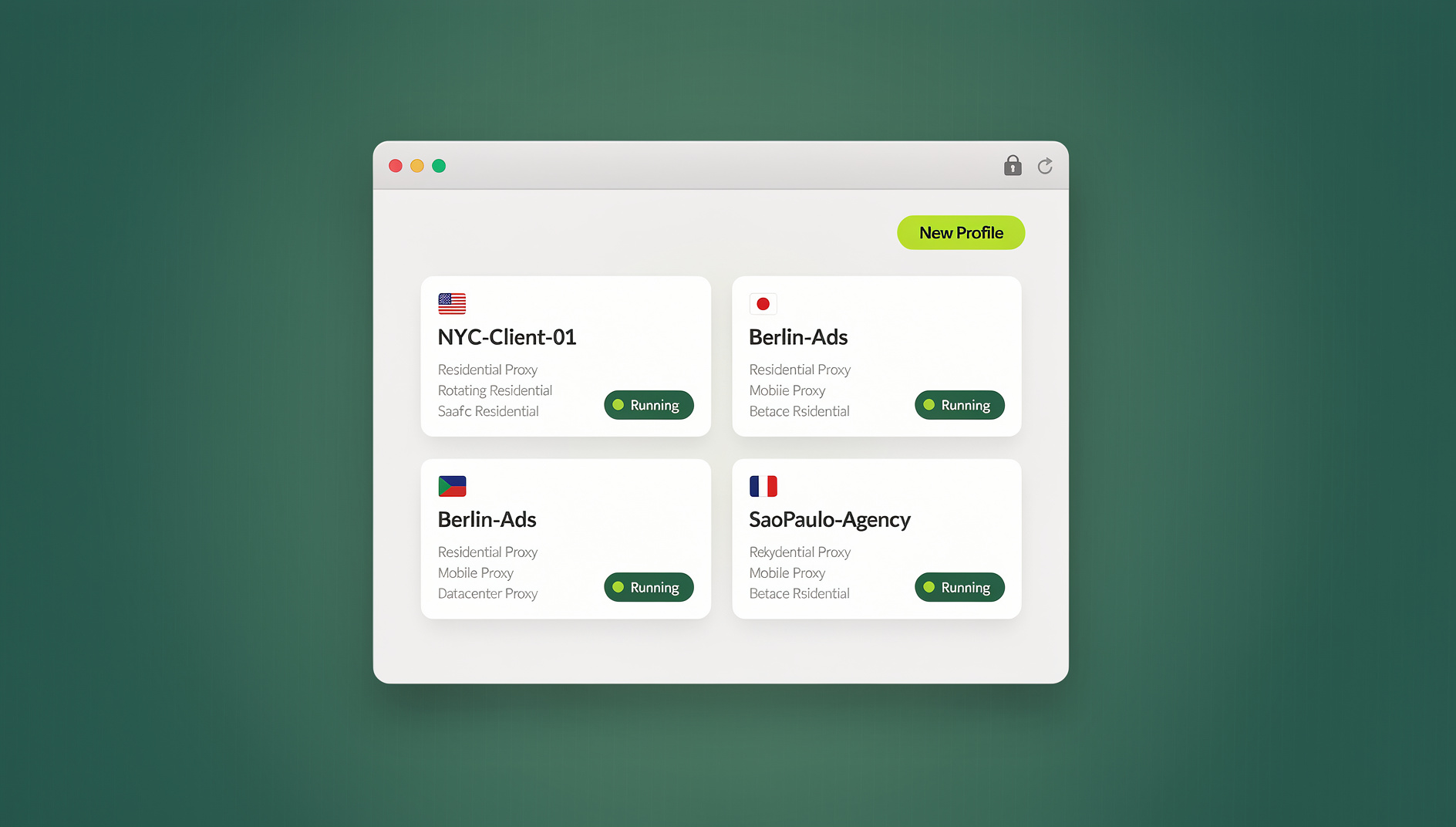
That distinction matters. Older guides (including the original version of this post) described sessions as little more than “isolated tabs.” That undersells what’s actually happening under the hood. Each session gets a unique digital fingerprint that Send.win generates and locks in, so the sites you log into can’t connect your five Instagram accounts, three Amazon seller accounts, or a dozen ad accounts back to a single fingerprint and flag them as related. This is the core reason people reach for a multi-login browser instead of just opening more Chrome windows.
In this guide, we’ll walk through exactly how to create your first session in Send.win, explain the difference between saved and unsaved sessions in plain language, and cover the parts most tutorials skip — proxy setup, team sharing, and organizing sessions into groups.
Saved Sessions vs. Unsaved Sessions: The Key Difference
When you create a new session in Send.win, you’re asked to choose between two types. Getting this choice right up front saves you from losing work or cluttering your dashboard later.
- Saved sessions are permanent profiles. Everything about the session — its fingerprint, cookies, saved logins, proxy assignment, and browsing history — persists after you close it. The next time you open that saved session, you’re logged back into the same accounts with the same identity, exactly where you left off.
- Unsaved sessions (sometimes called temporary or disposable sessions) exist only for the duration of that browsing window. Once you close it, the fingerprint, cookies, and any logins you created inside it are discarded. Reopening it starts completely fresh.
Here’s a side-by-side breakdown to make the decision easier:
| Factor | Saved Session | Unsaved Session |
|---|---|---|
| Persists after closing | Yes — fingerprint, cookies, and logins are stored | No — everything is wiped on close |
| Best for | Social accounts, ad accounts, marketplace stores, client logins you’ll return to daily | One-off research, price checks, testing a site, verifying an ad, quick logins you won’t repeat |
| Storage usage | Counts toward your saved profile limit | Doesn’t count toward your saved profile limit |
| Can be shared with team | Yes | No (nothing to share once it’s closed) |
| Proxy assignment | Sticks permanently to the session | Can be assigned per-session but isn’t retained |
| Ideal user | Anyone managing recurring multi-account workflows | Anyone doing quick, anonymous, single-use browsing |
A simple rule of thumb: if you’re going to log back into this account tomorrow, save the session. If you just need to check something once and never touch it again, leave it unsaved and let Send.win clean up after you.
Before You Create a Session: Getting Send.win Set Up
Send.win now ships two ways to run your sessions, and it’s worth knowing both before you create your first one.
Option 1: The Send.win Desktop App
Send.win offers a native Desktop app for Windows, macOS, and Linux. This is the recommended route for anyone running more than a handful of sessions, because the desktop client handles fingerprint rendering, proxy routing, and local resource allocation more efficiently than running everything through a cloud-streamed tab, and it keeps working even if your regular browser is closed. To get started:
- Go to send.win and click “Download” in the top navigation.
- Choose the installer that matches your operating system (Windows, macOS, or Linux).
- Run the installer and sign in with your Send.win account (or pick a paid plan if you’re new — the first card purchase is covered by a 7-day money-back guarantee).
- Once installed, the desktop app becomes your control center for creating, launching, organizing, and sharing sessions.
Option 2: Cloud Browser Sessions (No Install Needed)
If you’d rather not install anything, Send.win also lets you run a browsing session entirely in the cloud, with zero local install. Sign in at send.win, launch a cloud session, and you’re isolated and fingerprinted from the first click — no download, no browser add-on. Cloud sessions are metered by cloud browsing time instead of a device install: the free cloud demo gives you a 3-minute preview without signup, or 10 minutes a day with a free account, while the Pro and Team plans raise the available time and the number of saved and concurrent cloud sessions.
Most teams end up using both: the desktop app as the primary workspace for managing dozens or hundreds of profiles, and cloud browser sessions for quick access from a machine where they don’t want to install anything.
How to Create Your First Session in Send.win (Step-by-Step)
Once you’re signed in — whether through the desktop app or a cloud browser session — creating your first session takes less than a minute. Here’s the full process:
- Open Send.win and click the “New Session” (or “Create Session”) button on your dashboard.
- Choose Saved or Unsaved. Pick “Saved” if this is an account you’ll return to, or “Unsaved” for a one-time browsing task.
- Name your session. Use something descriptive — “Amazon Seller – US Store 1” is far more useful six weeks from now than “Session 4.”
- Assign it to a group (optional but recommended). Groups let you organize sessions by client, platform, or team member so your dashboard doesn’t turn into an unsorted list once you’re running 20+ profiles.
- Configure the fingerprint settings. Send.win auto-generates a realistic, unique fingerprint by default (operating system, screen resolution, WebGL/canvas signature, fonts, timezone, and language). You can leave these on auto-generate or manually adjust them if you need to match a specific region or device type.
- Attach a proxy (recommended). Send.win includes built-in proxies, or you can add your own. This step matters more than it sounds — a session with a clean fingerprint but no proxy, or a mismatched IP location, is still detectable. If you skip this during creation, you can always add a proxy to any session afterward.
- Click “Create.” Your new session launches in its own isolated window, ready for you to log in and start browsing.
That’s the whole flow. If you need more than one profile at once — which is the norm for most Send.win users — the process for creating multiple sessions in a single batch works almost identically, just repeated or templated across accounts.
Saved vs. Unsaved: Which Should You Pick for Your First Session?
For your very first session, we’d generally recommend starting with a saved session, even if you’re just testing the platform. It gives you a clearer sense of how Send.win preserves your fingerprint, cookies, and login state between browsing sessions — which is the entire point of using a tool like this in the first place. Once you’re comfortable with the saved workflow, try creating an unsaved session for a quick, throwaway browsing task so you can feel the difference firsthand.
A few concrete examples to make the choice obvious:
- Use a saved session for: a second Gmail account you check daily, a client’s Facebook Ads Manager account, an Etsy or Amazon seller store, a recurring freelance client login, or any social media profile you post to regularly.
- Use an unsaved session for: checking how a competitor’s site looks from a different region, verifying an ad is displaying correctly, testing a signup flow before rolling it out to real users, or browsing something once without leaving a trace in your saved profile list.
Understanding Session Isolation (Why This Actually Works)
The reason saved sessions don’t get your accounts flagged or linked together comes down to session isolation. Every session Send.win creates runs in its own sandboxed environment — separate cookie jars, separate local storage, separate cache, and a separate, consistent fingerprint. Websites use dozens of signals beyond just your login credentials (canvas rendering, audio context, installed fonts, WebRTC leaks, timezone-vs-IP mismatches) to quietly cluster accounts together behind the scenes. Session isolation blocks that clustering at the source, which is a fundamentally different — and more durable — approach than simply clearing cookies or using multiple browser windows.
Organizing Sessions with Groups and Tags
Once you’ve created more than a handful of sessions, an unorganized list becomes a real productivity drag. Send.win lets you:
- Group sessions by client, platform, or campaign (e.g., “Client A – Social,” “Client B – Ads,” “Personal”).
- Rename sessions at any time without affecting their saved fingerprint or login state.
- Search and filter your dashboard by group name, making it fast to jump to the right profile even with hundreds of saved sessions.
- Duplicate a session’s settings (fingerprint template, proxy region) when spinning up a new but similar profile, without duplicating its actual login data.
If you’re managing sessions for a whole team rather than just yourself, groups become even more important — they’re what keeps a shared dashboard from turning into chaos once five or six people are creating sessions inside it.
Sharing a Session with Your Team
One of the most requested features from agencies and teams is the ability to hand a teammate access to a session — without ever handing over the actual password. Send.win supports this natively. Once a session is saved, you can share sessions with your team directly from the dashboard, assigning view or edit permissions, and revoking access instantly if someone leaves the project. This is a meaningfully safer pattern than the old approach of emailing a password around or storing shared logins in a spreadsheet — nobody outside your Send.win workspace ever sees the underlying credentials.
Adding a Proxy to Your Session
A session’s fingerprint and its IP address need to tell a consistent story. If your fingerprint says “Chrome on Windows in Berlin” but your IP address resolves to a residential connection in a different country, that mismatch is itself a red flag to fraud-detection systems. Send.win addresses this with:
- Built-in proxies included on paid plans, with bandwidth allotments that scale by tier.
- Bring-your-own-proxy support if you already have a residential, datacenter, or mobile proxy provider you prefer.
- Geo/timezone auto-matching, so your session’s timezone and language settings line up with wherever your proxy is exiting from.
You can attach a proxy at the moment you create a session, or add one later from the session’s settings panel — the fingerprint and login data aren’t affected either way.
Organizing Sessions at Scale
For agencies, developers, and QA teams running sessions at scale, manually clicking “New Session” dozens of times a day isn’t practical. Send.win has no automation interface — no API, SDK, headless mode or Selenium/Puppeteer/Playwright support on any plan — so session creation and management happen through the app’s interface, where you can organize profiles into groups and share them with your team.
- Spin up new saved or unsaved sessions programmatically as part of a script or CI pipeline.
- Bulk-create dozens or hundreds of sessions for QA testing, ad verification, or account provisioning without touching the UI at all.
- Integrate session lifecycle management (create, launch, close, delete) directly into your existing automation or RPA workflows.
This is the feature that separates Send.win from tools that only offer a manual point-and-click interface — each profile keeps its own cookies, storage and fingerprint settings, so your work stays organised and isolated without mixing browser identities.
Common Mistakes First-Time Users Make
A few avoidable errors show up constantly with people creating their first Send.win session:
- Creating everything as unsaved. New users sometimes default to unsaved sessions out of caution, then lose logins they actually needed to keep. If you’re planning to return to an account, save it from the start.
- Skipping the proxy step. A perfect fingerprint with no proxy — or the wrong proxy region — still leaves a visible mismatch. Always pair a session with a proxy that matches its intended fingerprint region.
- Vague session names. “Session 1,” “Session 2,” and “Test” become meaningless within a week. Name sessions by account, client, or purpose from the first click.
- Never grouping sessions. Skipping groups feels fine at 5 sessions and becomes a real problem at 50. Set up groups early, even if you only have a few sessions today.
- Reusing one session for unrelated accounts. Logging a second, unrelated account into an already-saved session defeats the purpose of isolation. One session per account, always.
🏆 Send.win Verdict
Creating your first session in Send.win takes under a minute, but the decision between saved and unsaved sessions — and whether you pair each one with a matching proxy — is what determines whether your multi-account setup actually holds up over time. Send.win gives you both a native Desktop app for Windows, macOS, and Linux and cloud browser sessions with zero local install, built-in and bring-your-own proxy support, team sharing without password handoffs, and a separate fingerprint per profile — everything you need to go from one manual session to a well-organized, multi-account operation.
Try Send.win today — plans start at $19/mo, the first card purchase is covered by a 7-day money-back guarantee, and you can create your first saved session in under a minute.
Frequently Asked Questions
What’s the difference between a saved and an unsaved session in Send.win?
A saved session keeps its fingerprint, cookies, and logged-in accounts permanently, so you can close it and return to the exact same state later. An unsaved session is temporary — everything about it is discarded the moment you close the window, so reopening it starts from scratch.
Do I need to create a new session for every account I use?
Yes, for any accounts you want to keep isolated from one another. One session should map to one account or one identity. Logging multiple unrelated accounts into the same session removes the isolation benefit entirely.
Can I use Send.win without installing the Desktop app?
Yes. You can run a browsing session entirely in the cloud with zero local install — the free cloud demo gives you a 3-minute preview without signup, or 10 minutes a day with a free account, with more cloud browsing time and saved/concurrent sessions on the Pro and Team plans. That said, the native Desktop app for Windows, macOS, and Linux is recommended if you’re running many sessions at once, since it manages fingerprint rendering and proxy routing more efficiently than the cloud-streamed mode.
Does an unsaved session still get its own unique fingerprint?
Yes. Even though it isn’t retained after you close it, an unsaved session gets its own isolated, unique fingerprint for the duration it’s open — it just isn’t stored for reuse afterward.
How many sessions can I create with Send.win?
Your saved session limit depends on your plan. The Pro plan supports up to 150 profiles, and the Team plan supports up to 500 profiles with additional seats for collaborators. You can always add extra profiles or bandwidth as add-ons if you outgrow your plan’s default limits.
Can I add a proxy to a session after I’ve already created it?
Yes. You don’t have to attach a proxy at creation time. You can add, change, or remove a proxy for any existing session at any point from its settings, without affecting its saved fingerprint or login data.
Is it safe to share a saved session with a teammate?
Yes. Send.win’s team sharing feature grants a teammate access to log into and use a session without ever exposing the underlying password or credentials. You can revoke that access instantly if needed, which is significantly safer than sharing raw passwords over email or chat.
Can I automate session creation instead of clicking through the dashboard manually?
No. Send.win has no automation interface — no API, SDK, headless mode or Selenium/Puppeteer/Playwright support on any plan. Sessions are created, launched, and managed through the app’s interface.