Managing multiple Gmail accounts using a dedicated multi-login browser is the fastest way to stop the endless cycle of logging out of one inbox just to log into another. If you run a personal account, a work account, a couple of client accounts, and one or two accounts for side projects, you already know the pain: Gmail only lets you juggle so many profiles before Chrome starts throwing “you’re already signed in elsewhere” errors, session cookies collide, and you end up opening five different browser windows just to check email.
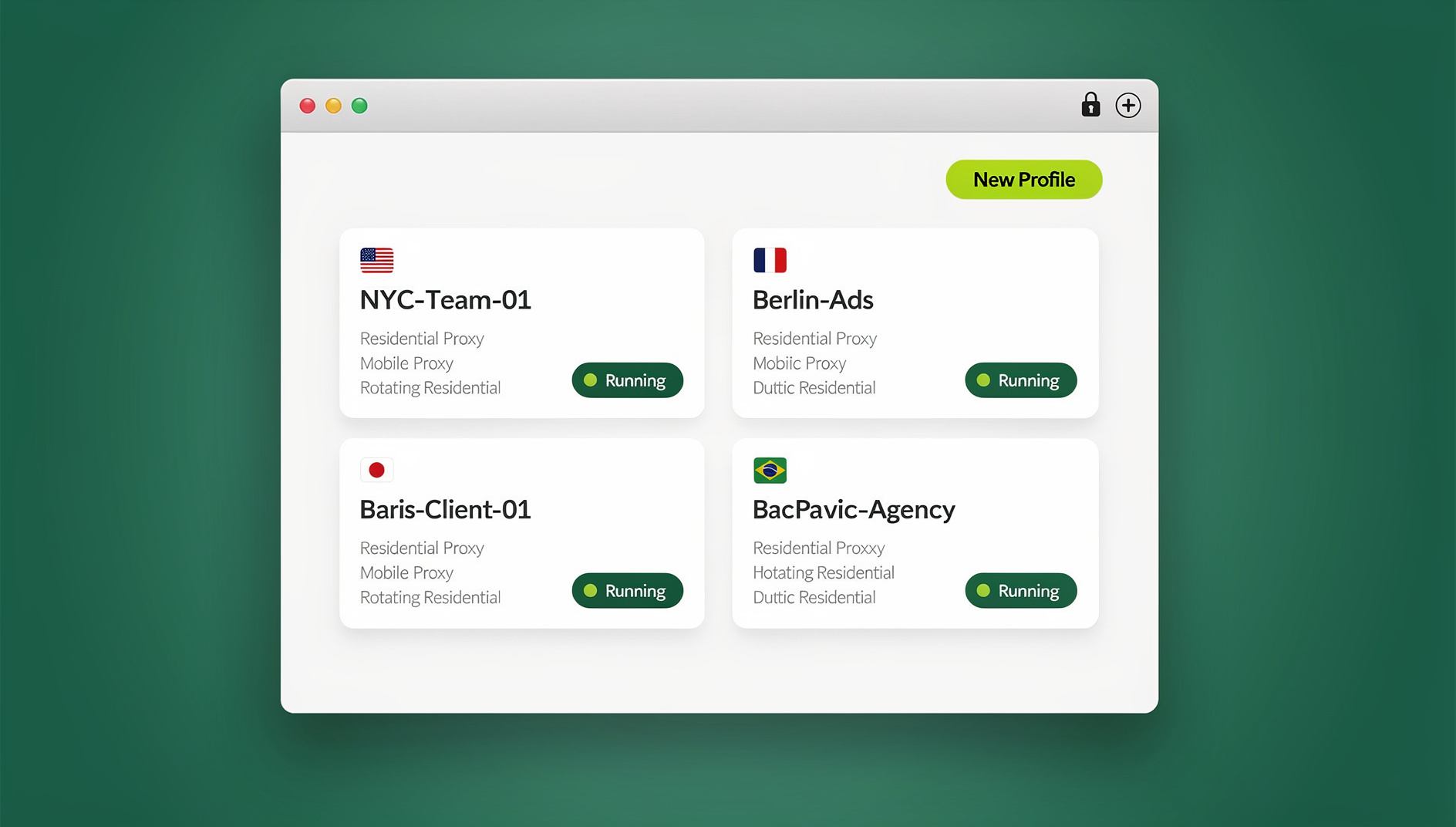
A dedicated multi-login browser solves this by giving every Gmail account its own isolated session — its own cookies, its own local storage, and (with the right tool) its own browser fingerprint — inside a single browser window. No more incognito tab juggling, no more separate Chrome user profiles that eat 400MB of RAM each, and no more accidentally sending an email from the wrong account.
This guide walks through exactly how to manage multiple Gmail accounts using Send.win, why dedicated session management beats the alternatives, and how to scale the same workflow up with the Send.win Desktop app once you’re managing accounts at scale.
Why Managing Multiple Gmail Accounts Gets Messy Fast
Gmail was never designed with heavy multi-account use in mind. Google’s native “Add account” feature technically lets you sign into several accounts at once, but it comes with real friction:
- Session bleed: Cookies and cached credentials from one account can interfere with another, especially across Google Workspace and personal Gmail combinations.
- Fingerprint overlap: Even in separate tabs, Google sees the same browser fingerprint, IP address, and device signals for every account — which is exactly what triggers “unusual activity” flags and temporary lockouts if you manage accounts for clients, freelance work, or e-commerce.
- No team access: If a virtual assistant, agency, or teammate needs to send email from a shared Gmail account, native Google account switching means handing over the actual password — a security risk the moment that person leaves the project.
- Slow context switching: Clicking through Google’s account switcher, waiting for the page to reload, and re-authenticating 2FA every time adds up to real lost minutes across a workday.
A dedicated multi-login browser built specifically for this kind of session management fixes all four problems at once by treating each Gmail account as a completely separate, isolated browsing session rather than a tab within the same browser identity.
Send.win vs. Other Multi-Account Methods
Before settling on a dedicated multi-login workflow, it’s worth understanding how it stacks up against the other common approaches people use to manage multiple Gmail accounts.
| Method | Session Isolation | Fingerprint Uniqueness | Team Sharing | Setup Effort |
|---|---|---|---|---|
| Google’s native “Add account” | Partial (shared browser identity) | None — same fingerprint for all accounts | No — requires password sharing | Very low |
| Separate Chrome user profiles | Good | None — same machine fingerprint | No | Medium (manual profile creation) |
| Incognito / private windows | Weak — cookies clear on close | None | No | Low, but no persistence |
| Multiple physical browsers | Good | None — same machine fingerprint | No | High (resource-heavy) |
| Send.win (Sendwin Browser + cloud sessions) | Full — isolated cookies, cache, and storage per session | Unique fingerprint per profile | Yes — one-click session sharing, no passwords | Low — no install needed for cloud sessions, one-time setup for the desktop app |
The core difference is isolation depth. Chrome profiles and incognito windows separate cookies, but they still share the underlying browser and device fingerprint that sites use to correlate accounts. A purpose-built tool like Send.win goes a layer deeper, giving each saved session its own fingerprint signature so Gmail — and any other service you log into — treats each profile as a genuinely separate visitor.
What a Multi-Login Tool Actually Does Under the Hood
When people hear “a tool for managing multiple accounts,” they often assume it’s just a fancy bookmark manager. It’s more than that. A proper multi-login tool:
- Creates an isolated container for each saved session — separate cookies, local storage, and cached login tokens, so Account A’s session data never touches Account B’s.
- Assigns a unique browser fingerprint to each session (canvas, WebGL, timezone, and other device signals), so Gmail’s fraud-detection systems don’t see ten “identical” browsers logging in from the same machine.
- Persists the session so you don’t have to re-enter credentials or pass 2FA every single time you switch — you click the saved session and you’re already logged in.
- Lets you group and label sessions so ten, fifty, or a hundred Gmail accounts stay organized instead of turning into an unmanageable list.
This is the same underlying technology that professional teams use for multi-login browser account management at scale — the Gmail use case is simply the most common entry point because almost everyone eventually ends up needing two or more inboxes.
Step-by-Step: Managing Multiple Gmail Accounts With Send.win
Here’s the exact workflow, from install to daily use.
Step 1: Create Your Send.win Account (or Start a Cloud Session)
Go to Send.win and create an account — the first card purchase is covered by a 7-day money-back guarantee. From your dashboard, you can jump straight into a cloud browsing session with nothing to install:
- 10 minutes of free cloud browsing time per day
- Cloud demo available: a 3-minute preview without signup, 10 minutes a day with a free account
- No download required — works instantly from any computer
Your Send.win dashboard becomes the control panel for every saved Gmail session going forward.
Step 2: Install the Send.win Desktop App (Recommended)
While a cloud browsing session alone covers basic session switching, Send.win also ships a native Desktop app called Sendwin Browser for Windows, macOS, and Linux. Installing it unlocks the full feature set — dedicated proxy assignment per profile, deeper fingerprint control, offline session management, and faster performance when you’re running dozens of Gmail sessions side by side rather than the metered, cloud-only version of the tool. If you’re managing more than a handful of accounts, or managing them for a team, download Sendwin Browser from your Send.win dashboard and sign in with the same account.
Step 3: Create a Saved Session for Each Gmail Account
Open Gmail.com inside Sendwin Browser (or your active cloud session) and open Send.win’s session panel. From there:
- Click “Create New Session.”
- Name the session clearly — for example, “Gmail — Client A” or “Gmail — Marketing Team.”
- Log into that specific Gmail account inside the new session.
- Save it. The session now stores that account’s cookies and login state independently.
Repeat this for every Gmail account you manage. For a full walkthrough of the session creation flow with screenshots, see our dedicated guide on how to create sessions in Sendwin.
Step 4: Organize Sessions Into Groups
Once you’re past three or four accounts, flat lists get messy. Use Send.win’s grouping feature to bucket sessions logically — by client, by department, or by account type (personal vs. business). This turns a scroll-heavy list into a folder structure you can navigate in seconds.
Step 5: Add a Proxy to Sensitive Sessions (Optional but Recommended)
If you’re managing Gmail accounts tied to different clients, regions, or business entities, pairing each session with its own residential or datacenter proxy adds another layer of separation — matching the account’s expected geography and IP history instead of routing everything through your one home or office IP. Send.win includes built-in proxy support, and you can add a proxy to any session directly from the same panel where you manage the session itself.
Step 6: Switch Between Accounts With One Click
This is where Send.win pays off day to day. Open the session panel, pick the saved session you need, and you’re instantly in that Gmail account — fully authenticated, no re-login, no 2FA prompt, no waiting for Google’s account switcher to reload the page. Hotkeys can be configured for your most-used sessions so switching between your top two or three accounts becomes near-instant.
Step 7: Share Sessions With Your Team — Without Sharing Passwords
If a virtual assistant, support rep, or agency teammate needs access to a shared Gmail inbox, don’t hand over the password. Send.win lets you share a session directly, so the teammate gets working access to the account without ever seeing the underlying credentials — and you can revoke that access instantly if the working relationship ends. Full steps are in our guide on how to share sessions to your team.
Advanced Features Worth Knowing About
Beyond the basic install-and-save workflow, a few features separate a serious multi-login tool from a simple bookmark trick:
| Feature | What It Does | Why It Matters for Gmail |
|---|---|---|
| Unique fingerprints per profile | Randomizes canvas, WebGL, timezone, and device signals per session | Prevents Google’s fraud detection from linking accounts by device signature |
| Proxy per session | Routes each session through its own IP | Matches account login history and location expectations |
| Session sharing | Grants account access without exposing the password | Safe delegation to VAs, freelancers, and support teams |
| Hotkeys | Keyboard shortcuts to jump between saved sessions | Cuts context-switching time for high-volume users |
| Blur / privacy mode | Obscures sensitive on-screen content during screen shares | Useful when demoing a workflow without exposing account details |
| Virtual profiles | Pre-configured identity + fingerprint bundles | Speeds up onboarding new Gmail accounts with consistent settings |
Managing Gmail Accounts at Scale With Send.win
Manual clicking works well for a handful of accounts, but teams managing dozens or hundreds of Gmail inboxes — for outreach, QA, or account monitoring — eventually need a more organised approach. This is where Send.win’s Desktop app becomes relevant. Each profile keeps its own cookies, storage and fingerprint, so you can open a specific saved Gmail session, perform an action (check for new mail, send a templated message, verify a login still works), and close it, all while keeping the same cookie and fingerprint isolation you get from manual use.
In practice this means you can programmatically:
- Spin up a specific Gmail session by name or ID from a script.
- Run scheduled checks across every managed inbox without triggering “suspicious login” flags from shared fingerprints.
- Chain Gmail actions into larger automated workflows (e.g., account verification, inbox monitoring, or bulk outreach QA) using the same automation stack your team already knows.
This turns session-based Gmail management from a convenience feature into genuine infrastructure — each profile keeps its own cookies, storage and fingerprint, so your Gmail sessions stay separate and organised as you work through them.
Common Mistakes to Avoid
- Reusing the same session for unrelated accounts. Each Gmail account should get its own dedicated session — mixing accounts inside one session defeats the isolation entirely.
- Skipping proxies for business-critical accounts. If an account represents real revenue (client work, e-commerce, ad accounts linked to Gmail), routing it through a matched proxy is cheap insurance against flags.
- Sharing passwords instead of sessions. Every password you hand out is a password you eventually have to remember to revoke. Session sharing removes that liability.
- Not labeling sessions clearly. “Gmail 1,” “Gmail 2,” “Gmail 3” becomes unmanageable fast. Name sessions by client, purpose, or team from day one.
- Ignoring the desktop app for heavy use. A quick cloud browsing session is great for light day-to-day switching, but anyone running 10+ concurrent sessions will get noticeably better performance and control from Sendwin Browser, the desktop app.
Cloud Sessions vs. Full Antidetect Browser: Which Do You Need?
For most people managing a handful of personal or client Gmail accounts, cloud sessions plus the Sendwin Browser desktop app cover everything. If your use case grows into higher-volume account operations — e-commerce, affiliate marketing, or agency-scale ad management — it’s worth understanding where this kind of lightweight session management sits relative to a full multiple Gmail account management strategy built around dedicated browser profile infrastructure. The good news: Send.win covers both ends of that spectrum inside one product, so you’re not migrating tools as your needs grow — you’re just turning on more of what’s already there (proxies, more profiles) as you scale.
🏆 Send.win Verdict
If you’re managing more than one Gmail account, a dedicated multi-login browser with real session isolation beats Chrome profiles, incognito tabs, and password sharing on every front — speed, security, and team collaboration. Send.win gives each Gmail account its own isolated session and its own consistent fingerprint, adds a Desktop app for heavier workloads, and scales up to more profiles and proxies on the Team plan when you need to manage accounts at higher volume.
Try Send.win today — the first card purchase is covered by a 7-day money-back guarantee, and you can have your first isolated Gmail session running in under five minutes.
Frequently Asked Questions
Can I really manage unlimited Gmail accounts with Send.win?
Yes, in principle — there’s no hard cap on how many Gmail sessions you can save. In practice, your plan’s profile limit is the constraint (Send.win’s Pro plan supports up to 150 profiles, and the Team plan supports up to 500), which comfortably covers the vast majority of individuals, freelancers, and agencies.
Is it safe to log into multiple Gmail accounts using the same tool?
Yes, as long as the tool actually isolates sessions rather than just switching cookies in the same browser context. Send.win gives each saved session its own cookies, cache, and browser fingerprint, so Google sees genuinely separate sessions rather than one browser cycling through several logins.
Do I need Sendwin Browser, or is a cloud session enough?
A cloud browsing session handles day-to-day account switching well for light use, with nothing to install. Sendwin Browser becomes worthwhile once you’re running many sessions simultaneously, need per-session proxy control, or want better performance than a browser-based session can offer — it’s a native Windows, macOS, and Linux client built for exactly that heavier workload.
Will Google flag or suspend my accounts for using a multi-login tool?
Google’s fraud detection generally flags accounts based on suspicious patterns — identical fingerprints across “different” users, mismatched IP geography, or rapid unexplained location changes — not the mere act of using more than one account. Proper session isolation with unique fingerprints and, where appropriate, matched proxies is specifically designed to avoid those red flags.
Can I share a Gmail account with a teammate without giving them my password?
Yes. Session sharing lets you grant a teammate working access to a specific saved Gmail session without ever exposing the actual login credentials. You can revoke that access at any time from your dashboard.
What’s the difference between this and just using separate Chrome profiles?
Chrome profiles isolate cookies but not your device fingerprint — every profile on the same machine still looks identical to Gmail’s tracking systems. A dedicated tool like Send.win assigns each session its own fingerprint on top of cookie isolation, which is the piece that actually matters for avoiding cross-account correlation.
Can I automate actions across my Gmail accounts instead of clicking through them manually?
No — Send.win has no automation interface: no API, SDK, headless mode or Selenium/Puppeteer/Playwright support on any plan. Each profile keeps its own cookies, storage and fingerprint, so you manage Gmail sessions manually with the same isolation throughout.
How much does Send.win cost?
Send.win has no free trial. The Pro plan is $19/month or $83.88/year, and the Team plan is $49/month or $251.88/year. The first card purchase is covered by a 7-day money-back guarantee, and the only free option is the cloud demo at https://send.win/demo-browser/.
Does this work for email providers other than Gmail?
Yes. The same session-isolation approach works for Outlook, Yahoo Mail, ProtonMail, or any other web-based account — Gmail is simply the most common starting point because of how frequently people end up needing more than one Google account.