The most secure way of learning how to manage multiple twitter account profiles is to use a sandboxed multi-profile browser like Sendwin to run each account in a dedicated session with its own unique digital fingerprint. This keeps your cookies, IP addresses, and browsing signals completely isolated, preventing X (formerly Twitter) from linking and suspending your profiles. This guide covers built-in options, third-party social media managers, and advanced cloud-based browser session tools to organize your social media workflow.
Why People Manage Multiple Twitter Accounts
Running multiple profiles on X (formerly Twitter) is a standard practice for many creators, brand managers, and digital marketing agencies. Having different profiles allows you to separate your personal views from your professional brand. Additionally, agencies manage multiple client profiles to build targeted communities, run geographic campaigns in different languages, or A/B test content strategies. Keeping these profiles separate and organized is crucial for maintaining a professional presence online.
However, managing multiple accounts presents technical and organizational challenges. If you switch profiles incorrectly, you risk posting to the wrong account or triggering security alerts. In this guide, we will explore the best methods for learning how to manage multiple twitter account profiles efficiently and safely.
Twitter’s Rules on Multiple Accounts
X officially allows users to run multiple profiles from a single device. However, the platform has strict rules to prevent spam and manipulation. You are prohibited from using multiple accounts to artificially amplify tweets. This means you cannot use your other profiles to like, retweet, or reply to posts from your main profile. Coordinated interactions across profiles can lead to immediate suspension of all related accounts.
Additionally, you cannot use automation to post identical content across multiple profiles simultaneously. Each account must remain independent, sharing original, niche-focused content. As long as your profiles are operated for separate business purposes and engage naturally, you are in compliance with the platform’s rules.
Method 1: Twitter’s Built-in Account Switching
The easiest way to manage a few profiles is through X’s built-in account switcher. This feature is available on both the mobile app and the desktop website. To add another profile on mobile, tap your profile picture in the top left corner, click the three-dots icon, and select “Add an existing account.” On desktop, click your profile name in the bottom left corner and select “Add an existing account.”
Once added, you can switch between profiles with a single click. While this is convenient for personal use, it has limitations. The native switcher caps the number of profiles you can add to five. Furthermore, it does not support team collaboration, meaning you cannot share access with employees without giving them the account passwords.
Method 2: Multiple Browser Profiles
For managers who need to run more than five profiles, creating separate browser profiles in Chrome or Firefox is a common workaround. You can dedicate a Chrome profile to each client account, allowing you to stay logged in without switching. This method is free and simple to configure, but it lacks security isolation. Browser profiles run on the same physical computer and share the same hardware characteristics, such as canvas hashes, WebGL profiles, and system fonts.
Social network algorithms can analyze these hardware characteristics to link your profiles together. If one of your profiles is flagged for a policy violation, the shared fingerprint can lead to automated security blocks on your other profiles. For teams, using a chrome multi account management approach does not provide the fingerprint sandboxing required to protect your client profiles from cross-contamination.
Method 3: Social Media Management Tools
Professional agencies often use social media management platforms to coordinate their posting schedules. These tools connect to your profiles via X’s official developer API, allowing you to publish posts and monitor engagement from a single dashboard. Popular tools like Hootsuite, Buffer, and Sprout Social let you queue content, view analytics, and set up team approval workflows. This makes scheduling highly efficient and keeps your team organized.
However, social media scheduling tools have limits. They do not allow you to perform manual actions like sending direct messages (DMs), joining spaces, or engaging in real-time conversations securely. To perform these manual actions, you still need to log in directly. If you manage multiple client profiles, logging in via standard browsers exposes you to fingerprint correlation. This is why agencies combine scheduling tools with secure multi-session browsers.
Method 4: Cloud Browser Sessions (Most Secure for Agencies)
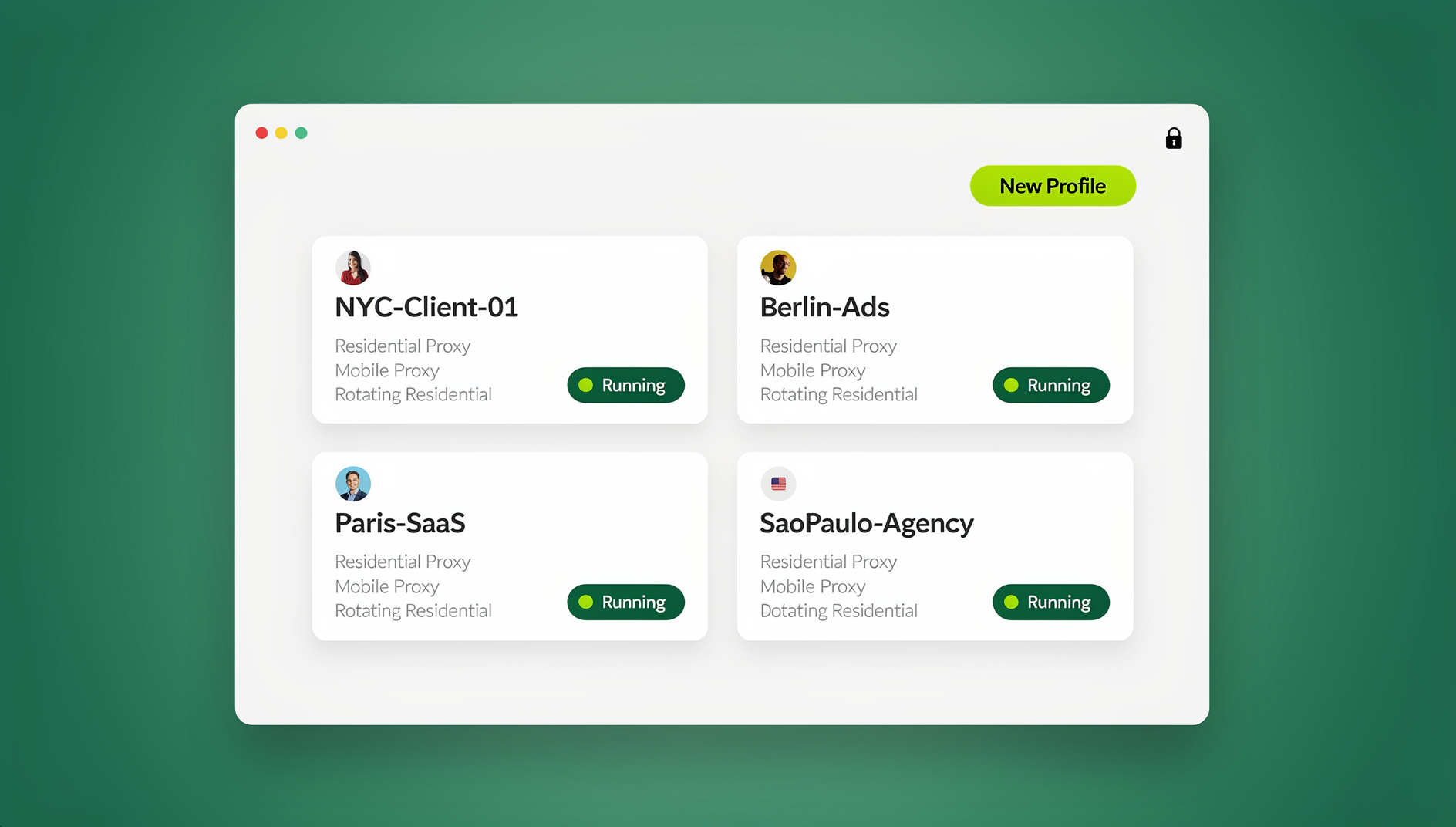
For professional agencies managing client assets, cloud browser isolation is the most secure approach. Sendwin provides isolated, sandboxed environments that prevent social platforms from linking your client profiles together. With Sendwin, each profile runs in a dedicated session with its own unique digital fingerprint, including independent cookies, canvas hashes, user agents, and IP addresses. This prevents cross-contamination and ensures that an issue with one client’s profile does not affect the others.
Sendwin offers two real modes of operation: the Sendwin Browser (a native desktop client for Windows, macOS, and Linux) and cloud browser sessions that run directly in the cloud without requiring any local installation. For agencies, using a professional cookie management tool is essential to ensure that login sessions remain persistent and don’t conflict. Sendwin handles this automatically, saving your session states so you never have to re-enter credentials or request client verification codes.
Sendwin’s plans are highly affordable. The Pro plan costs $19/mo (or $6.99/mo billed annually — 63% off) and includes 150 profiles, 5GB of proxy bandwidth, and local Automation API support. The Team plan costs $49/mo (or $20.99/mo billed annually — 57% off) and includes 500 profiles, 20GB of proxy bandwidth, the local Automation API, and 16 team seats. You can get started with a 30-day free trial that requires no credit card, letting you test the isolated environment risk-free.
Understanding X (Twitter) Algorithm and Engagement Triggers
X monitors profile engagement to distinguish real users from bots. The platform’s algorithm analyzes metrics like follow-to-unfollow ratios, direct message frequency, space attendance, and response times. If you log into multiple profiles and immediately like or retweet the same post, the algorithm detects this coordinated behavior as artificial manipulation and flags the accounts.
To manage profiles naturally, you must ensure that each profile operates within its own behavioral limits. Encourage organic engagement by having each profile interact with different accounts, join industry-specific spaces, and publish unique content. By keeping profile behaviors completely independent, you prevent X’s automated scrapers from recognizing a central management pattern, protecting your client assets from shadowbans.
X Premium (Twitter Blue) and Account Verification Considerations
For professional profiles, subscribing to X Premium (formerly Twitter Blue) has become a common practice. A verified badge improves search visibility, allows longer posts, and builds trust with potential customers. However, managing verified profiles requires extra security. X uses automated verification systems that verify your profile name, bio, and login consistency. If a verified account is accessed from many different IP addresses within a short period, it triggers security flags.
When an account is flagged for suspicious login behavior, X can temporarily restrict the account and strip the blue checkmark during the review process. For agencies, losing a client’s verification status is a major problem. To prevent this, using isolated sessions is critical. Each profile must be bound to a persistent residential proxy. This ensures that the client’s verified profile is always accessed from the same geographic region, maintaining login stability and protecting the verification badge from automated security reviews.
Configuring Custom User Agents for Twitter Access
Every web browser transmits a header called a User Agent string to websites you visit. The User Agent contains information about your browser brand, version, operating system, and hardware architecture. If you run multiple client accounts using standard browser profiles, they all transmit identical User Agent strings. While this is normal for a single user, logging into twenty different accounts with the exact same browser version and operating system profile from a single office location is a strong technical correlation.
To break this connection, professional managers randomize the User Agent settings for each profile. Sandboxed browsers like Sendwin handle this automatically. When you create a new session, Sendwin generates a unique, modern User Agent string that matches the session’s fingerprint settings. This makes each session look like a unique device—such as a Windows PC running Edge, a MacBook running Safari, or a Linux workstation running Chrome—preventing platforms from linking your client accounts based on technical header configurations.
Automating X Workflows Securely with the Sendwin Automation API
For agencies managing high volumes of accounts, manual posting is not enough. You can automate posting, scraping, and real-time monitoring workflows using developer frameworks like Puppeteer, Playwright, or Selenium. However, standard automation scripts connect from generic server environments, which are easily flagged by X’s anti-bot systems. To automate safely, your scripts must run through established browser sessions.
Sendwin’s local Automation API allows you to connect automated scripts to individual profile sessions. Available starting on the Pro plan ($19/mo or $6.99/mo annual), the API exposes a remote debugging port for each profile. Your Puppeteer or Playwright script can connect to this port and automate actions within a fully fingerprinted, proxy-bound browser. This ensures that your automation traffic looks identical to manual user traffic, eliminating bot detection flags.
Best Practices for Managing Multiple Twitter Accounts
To run multiple X profiles successfully, you must establish clear workflows. First, use a content calendar to plan your posts. This helps prevent the embarrassing mistake of posting client content to the wrong profile. Second, do not cross-promote excessively. Having your profiles retweet each other constantly is flagged by X’s algorithm as coordinated behavior and can lead to immediate shadowbans. Third, assign location-appropriate proxies to each profile. If you manage an account for a UK client from a US office, using a UK residential proxy ensures the login looks natural.
Finally, protect your accounts. Enable two-factor authentication (2FA) on all profiles using an authenticator app. Instead of sharing passwords with employees, share the Sendwin session. This allows team members to access the account without seeing the credentials, protecting client data. This secure access workflow is similar to how digital marketers use a browser for ads management to run client campaigns securely, and how e-commerce brands manage multiple amazon accounts without triggering security holds. By combining structured workflows with technical isolation, you can scale your social media management safely.
🏆 Send.win Verdict
Managing multiple Twitter (X) profiles requires a clear content strategy and strict technical isolation. While scheduling tools keep your content organized, Sendwin provides the essential fingerprint isolation and session-sharing features that protect your profiles from platform suspensions.
Try Send.win free today — Isolate your X profiles, collaborate securely with your team, and protect your client assets with a 30-day free trial.
Frequently Asked Questions
Can I get banned for having multiple Twitter accounts?
No, X allows users to run multiple profiles. However, you can be banned if you use multiple accounts to violate platform policies, such as engaging in coordinated spam, artificially amplifying tweets, or harassing other users.
How many Twitter accounts can I have?
X does not publish an official limit on the number of profiles a user can own. You can manage as many profiles as your business requires, provided each profile is used for legitimate, independent purposes and managed safely.
How do I switch between Twitter accounts quickly?
On mobile or desktop, you can use the built-in account switcher to navigate between up to five profiles. For managing larger numbers of accounts, using Sendwin allows you to open multiple profiles in separate tabs simultaneously without logging out.
What’s the best free tool for managing multiple Twitter accounts?
For simple content scheduling, Buffer and Hootsuite offer free plans with basic features. For manual account management and secure switching, Sendwin’s free trial allows you to experience isolated profile management without any initial cost.
How do I manage multiple Twitter accounts without getting them linked?
To prevent account linking, you must use a sandboxed multi-session browser like Sendwin. This isolates your cookies, local storage, and digital fingerprints, and allows you to assign unique proxies to each profile.
Is it safe to use third-party apps to manage multiple Twitter accounts?
Yes, as long as the tool uses X’s official developer API. Avoid any tools that ask for your direct login credentials. For manual engagement and full browser control, using a secure multi-session platform like Sendwin is the safest option.
Do I need different email addresses for multiple Twitter accounts?
Yes, X requires a unique email address or phone number for each profile you register. You can use email aliases (e.g., [email protected]) if your email provider supports them, which simplifies account registration and notification management.