Why So Many People Are Trying to Work 80 Hours a Week in 2026
Search “work 80 hours a week” and you’ll find two very different crowds asking about it: founders in a launch sprint, and freelancers/agency owners juggling six clients, four ad accounts, and a day job they haven’t quit yet. Neither group is doing it for fun. They’re doing it because the math of modern work has changed — a solo operator today can run a Shopify store, three social accounts, a freelance client roster, and a side project simultaneously, and each of those “jobs” now demands its own login, its own browser session, and its own slice of attention.
The old advice about 80-hour weeks — “just want it more,” “sleep is for the weak” — is not what this article is about. Working extreme hours without a system is how people burn out in eight weeks instead of finishing what they started. This guide is about the difference: a realistic, evidence-based approach to high-output weeks that protects your health, cuts the hours you spend on busywork, and tells you honestly when 80 hours is the wrong answer.
The Honest Trade-Offs of Long-Hour Work
Before any tactics, it’s worth being blunt about what the research actually shows. Studies from Stanford and the OECD consistently find that productivity per hour drops sharply after roughly 50 hours a week, and that output at 70+ hours is barely higher than at 55 — you’re just spreading the same results over more hours, with worse decision quality and higher error rates. That doesn’t mean 80-hour weeks are never worth it. It means they only make sense in short, defined sprints (a product launch, tax season, a client crunch) with a clear end date — not as a permanent lifestyle.
| Sustainable long-hour work | Unsustainable “grind” |
|---|---|
| Time-boxed sprint with a defined end date | Open-ended, “just keep going” mentality |
| Sleep protected at 7+ hours even during the sprint | Sleep treated as the first thing to cut |
| Repetitive/administrative work automated or tooled away | Every task done manually, every time |
| Single-tasking with scheduled context switches | Constant multitasking across tabs, accounts, chats |
| Weekly review of hours vs. actual output | Hours logged as a badge of honor, output never measured |
| A hard stop date or review checkpoint | No exit plan — “we’ll see how it goes” |
If you’re heading into a genuine crunch — launching a product, onboarding a wave of new clients, running a multi-account ad campaign for a launch window — the goal isn’t to romanticize 80 hours. It’s to make those hours count and get you back to a normal schedule as fast as possible.
The Real Time Sink Isn’t Effort — It’s Context-Switching
Here’s what almost never gets said in “hustle culture” advice: most people who feel like they’re working 80 hours aren’t actually producing 80 hours of output. A large chunk of that time gets eaten by friction that has nothing to do with the actual work — logging out of one Google account to log into another, re-entering 2FA codes, losing your place when a tab crashes, or manually resetting a browser fingerprint before touching a second client’s ad account.
Research on task-switching from the American Psychological Association puts the cost of switching between unrelated tasks at up to 40% of productive time. If you’re managing five client accounts, three social profiles, and two ad platforms in a single day, that’s not five separate 20-minute tasks — it’s five tasks plus the tax of constantly re-orienting your browser, your credentials, and your mental state every time you switch. This is exactly the gap that the tools freelancers use to juggle clients without burning out are built to close — not by making you work more hours, but by removing the hours that were never real work in the first place.
Where the Hours Actually Go
- Login/logout cycles: switching Google, Facebook, or Amazon accounts by logging out and back in, repeatedly, all day
- Session loss: a crashed tab or cleared cookies wiping out a saved login, forcing a re-login and re-navigation
- Duplicate tool subscriptions: juggling three separate apps because none of them talk to each other
- Manual reporting: copy-pasting data between dashboards instead of pulling it once, automatically
- Re-explaining context to yourself: the mental “where was I?” reset every time you switch clients or accounts
A Step-by-Step System for High-Output Weeks Without Burning Out
1. Protect Sleep and Recovery Like a Hard Deadline
This is the one non-negotiable. Sleep deprivation below 6 hours a night measurably degrades judgment, reaction time, and error rate within 3-4 days — you will make more mistakes, not fewer, and those mistakes cost more time than the sleep you saved. If you’re in a genuine sprint, protect a 7-hour sleep floor and treat it the same way you’d treat a client deadline: non-negotiable, scheduled, defended.
2. Batch Similar Work Instead of Multitasking
Group tasks by type, not by urgency. Do all your client emails in one block, all your reporting in another, all your social posting in a third. Every time you jump between unrelated task types, you pay the context-switching tax described above. A simple rule: if two tasks require different logins, different tools, or a different “mode” of thinking, they belong in different time blocks, not interleaved minute-to-minute.
3. Eliminate Login and Account Friction
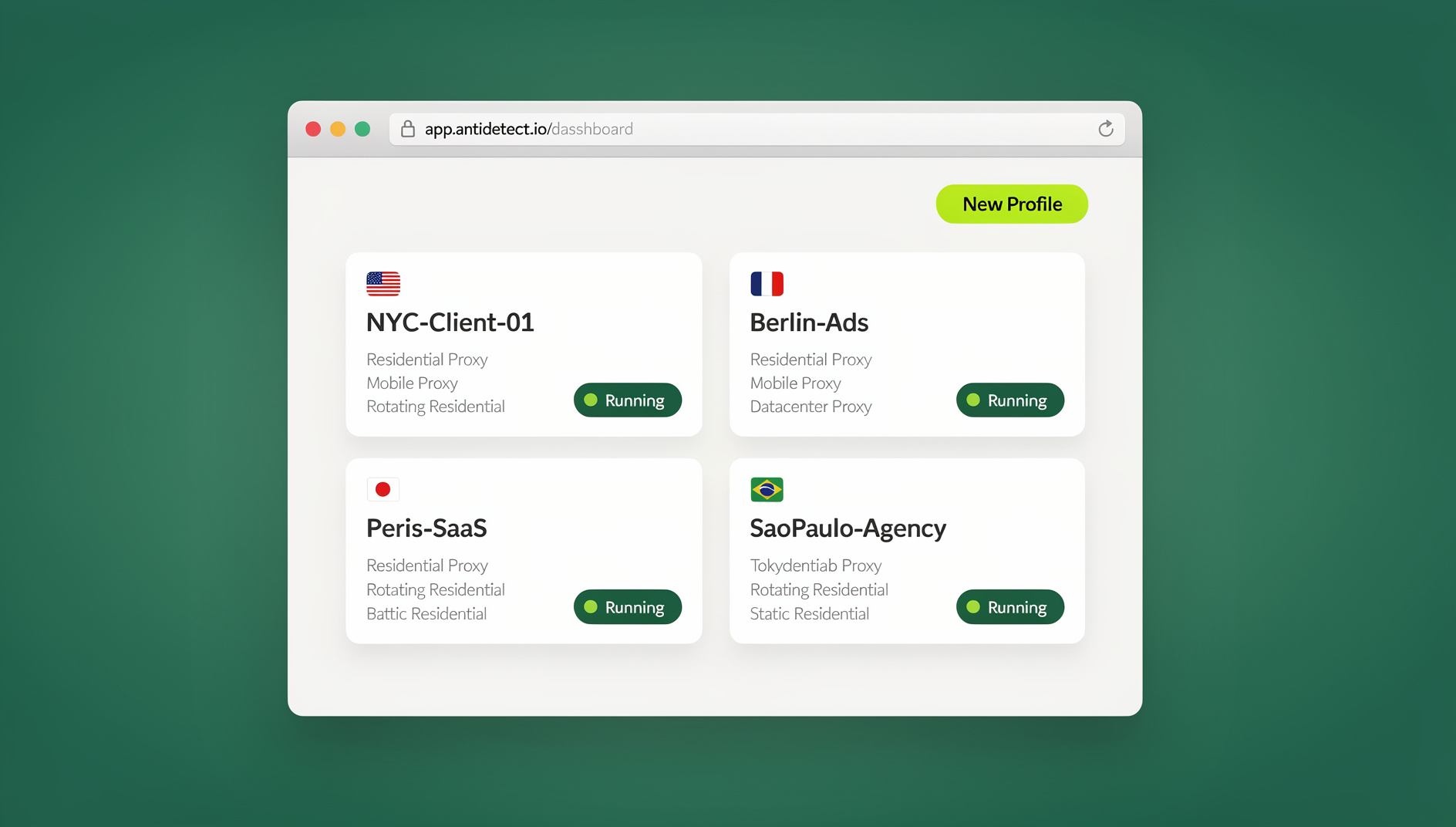
If you manage multiple client accounts, ad accounts, or social profiles, the single highest-leverage change you can make is removing the manual login/logout cycle entirely. A multi-login browser lets you keep every account — each with its own cookies, session, and browser fingerprint — open and isolated in its own tab or window, so you switch between them instantly instead of logging out and back in every time. This is exactly what Send.win is built for: unlimited isolated profiles, one click between them, no re-authentication, no cross-contamination between client accounts.
4. Automate the Repetitive 20%
Almost every long-hour job has a repetitive slice — pulling the same report, checking the same dashboards, refreshing the same data — that doesn’t need a human doing it manually every single day. If you or your team can script it (in Selenium, Puppeteer, or Playwright), a browser automation setup can run those repetitive checks in the background across isolated profiles, freeing hours for the work that actually needs a human. Send.win is a browser profile manager: each profile keeps its own cookies, storage, sessions and fingerprint settings, so you can keep that repetitive work organised across separate profiles.
5. Build In Real Breaks — Not Just Shorter Ones
The Pomodoro-style advice to take a 5-minute break every 25 minutes is fine for focus, but during a genuine long-hour sprint you also need at least one real break daily — 30-60 minutes, away from every screen. This isn’t wasted time; it’s what prevents the slow decline in decision quality that turns an 80-hour week into 80 hours of diminishing returns.
6. Track Hours vs. Output, Not Just Hours
At the end of each day during a sprint, write down what actually got finished — not what you worked on, what got completed. If your finished-output list is shrinking while your hours stay flat or grow, that’s the clearest signal you’re in unsustainable territory and it’s time to cut scope, delegate, or extend the deadline rather than add more hours.
How Send.win Fits Into a High-Output Workweek
Send.win doesn’t make you work more hours — it removes the hours that weren’t real work. For anyone managing multiple client accounts, ad accounts, or social profiles across a long week, the platform gives every account its own isolated browser environment: unique fingerprint, dedicated cookies and local storage, and optional built-in residential proxies, all switchable in one click from a single dashboard. That means no more logging out of one Gmail account to check another, no more re-entering 2FA codes five times a day, and no more risk of one client’s ad account getting flagged because it shares a browser fingerprint with three others.
Send.win ships as a native Sendwin Browser desktop app for Windows, macOS, and Linux — a dedicated application (not just a browser tab) for running dozens of isolated profiles side by side, with lower overhead than juggling the same number of browser windows. For anyone who’d rather skip the install entirely, Send.win’s cloud browser sessions run the same kind of isolated session directly in the cloud with zero local software. If you’re the kind of operator running multiple ad accounts across platforms, switching between isolated profiles in one click is hours back every single week — the exact hours a genuine 80-hour crunch can’t afford to waste on login screens.
Teams also lean on this for a different reason: shared access. Instead of handing a teammate or contractor your actual password, you can grant them access to a specific isolated profile without ever exposing the underlying credentials — useful for the kind of quick delegation that a long-hour week demands, without creating a security liability. It’s part of why so many freelancers and small teams specifically look to save time managing multiple accounts rather than accepting the login treadmill as a fixed cost of the job.
🏆 Send.win Verdict
If you’re heading into a genuine long-hour crunch, the fastest, lowest-risk way to claw back real time is to stop paying the login/logout tax on every account you manage. Send.win gives every client, ad account, or social profile its own isolated session with its own cookies, storage and fingerprint settings, which you can switch to in one click — on the native Sendwin Browser desktop app, or in a cloud browser session with zero local install. It won’t make an 80-hour week healthy on its own, but it will make sure every one of those hours is spent on real work instead of re-logging into accounts.
Try Send.win today — plans start at $19/month, the first card purchase is covered by a 7-day money-back guarantee, and you can preview it free in the cloud demo at https://send.win/demo-browser/ to see how many hours a week you get back.
Warning Signs You’re Overworking, Not Optimizing
A time-boxed sprint is different from a slow slide into chronic overwork. Watch for these signals — they mean it’s time to cut scope, not push harder:
- Your finished-task list is shrinking while your hours logged stay the same or grow
- You’re making the same mistake twice in the same week — a sign of fatigue-driven error, not skill
- You’ve stopped sleeping 6+ hours for more than three consecutive nights
- You can’t name an end date for the current intensity — “just until things calm down” is not a plan
- You’re skipping meals or exercise entirely, not just occasionally
- Small annoyances feel disproportionately overwhelming — a classic early burnout marker
If two or more of these are true, the honest move is to renegotiate scope or deadlines before your output collapses entirely — which, per the research cited earlier, it eventually will.
A Sample 80-Hour Week, Broken Down Realistically
| Block | Hours/week | What it actually covers |
|---|---|---|
| Deep, focused client/project work | 35-40 | The work only you can do — strategy, creative, decisions |
| Meetings and communication | 10-12 | Client calls, team syncs, async messages |
| Administrative/reporting | 8-10 | Reduced sharply by automation and tooling |
| Account/login switching (optimized) | 2-3 | Down from 8-10+ hours/week without a multi-login setup |
| Learning/planning | 5-6 | Reviewing what worked, adjusting the coming week |
| Buffer/overflow | 8-10 | Unplanned fires — every real week has some |
Notice the “account/login switching” row: for someone managing five or more accounts manually, that line item alone can eat 8-10 hours a week — a full extra workday spent purely on logging in and out. Cutting it to 2-3 hours with proper session isolation is, on its own, close to a 10% reduction in a genuine 80-hour week, recovered without touching sleep or actual output.
Frequently Asked Questions
Is it actually possible to work 80 hours a week without burning out?
For a short, defined sprint — a few weeks to a couple of months — yes, if sleep is protected, repetitive tasks are automated or tooled away, and there’s a clear end date. As a permanent lifestyle, most research and most people’s lived experience say no: output per hour declines sharply past 50-55 hours, and burnout risk rises fast beyond that.
How many hours a week should I actually work?
Most productivity research points to 40-50 hours a week as the range where output per hour stays high. Beyond that, each additional hour produces diminishing and eventually negative returns. Short sprints above that range can make sense for a launch or deadline, but they should be the exception, not the baseline.
What’s the biggest time-waster when managing multiple accounts or clients?
Context-switching — specifically the login/logout cycle between accounts, lost sessions from crashed tabs, and the mental “re-orientation” cost every time you jump between unrelated tasks. Studies put the productivity cost of unstructured task-switching as high as 40%.
Can Send.win help me actually work fewer hours, not more?
Yes — that’s the more accurate framing. Send.win doesn’t add hours to your day; it removes the hours currently lost to manually logging in and out of multiple accounts, re-entering credentials, and managing session conflicts. Most users managing several accounts recover several hours a week just from eliminating that friction.
Does Send.win require installing software, or can it work with no local install?
Both are available. Send.win’s native Sendwin Browser desktop app (Windows, macOS, and Linux) handles isolated profiles locally for day-to-day account switching, and its cloud browser sessions let you run a session entirely in the cloud with zero local install, metered by cloud browsing time.
Does Send.win have an automation interface?
No. Send.win has no automation interface: there is no API, SDK, headless mode or Selenium/Puppeteer/Playwright support on any plan. Send.win is a browser profile manager — each profile keeps its own cookies, storage, sessions and fingerprint settings, so you can organise repetitive work across separate profiles manually.
How much does Send.win cost?
Send.win has no free trial. The Pro plan is $19/month or $83.88/year, and the Team plan is $49/month or $251.88/year. The first card purchase is covered by a 7-day money-back guarantee, and the only free option is the cloud demo at https://send.win/demo-browser/.
What are realistic warning signs that a long-hour work stretch has gone too far?
A shrinking finished-task list despite steady or rising hours, repeated small mistakes, fewer than 6 hours of sleep for several nights running, no defined end date for the current pace, and skipped meals or exercise are the clearest signals it’s time to cut scope rather than push through.
What’s the single fastest change to make if I’m already in an 80-hour week?
Audit where the hours actually go for one full day. Most people are shocked to find 1-2 hours went to login/logout cycles, lost sessions, or manual copy-pasting between tools rather than the actual work — and that’s the easiest chunk to eliminate immediately, without cutting a single hour of real output.