To manage multiple facebook accounts multi account management guide 2026 2 provides the exact blueprint: use a dedicated browser profile manager like Send.win to run each profile in an isolated environment with its own cookies, storage, fingerprint settings and proxy, keeping your accounts organised and separate. Below, we outline the exact setup to scale your operations in 2026.
Facebook Account Policies and the Risk of Suspensions
Meta enforces strict guidelines regarding how users interact with its platforms. To understand why so many businesses run into trouble, one must distinguish between the various types of accounts and assets Meta provides. While personal profiles are strictly limited to one per individual, business managers, ad accounts, and pages can be managed in bulk. However, if Meta detects that a single user is operating duplicate personal profiles to circumvent restrictions, it will initiate a sweep, banning every linked asset. This manage multiple facebook accounts multi account management guide 2026 2 is designed to protect your legitimate business operations from these automated sweeps.
Personal Profiles vs. Business Managers
Every business page or ad account on Facebook must be tied to a verified personal profile. Meta uses this structure to ensure accountability. Because of this, agencies managing hundreds of client pages often make the mistake of creating dummy personal profiles to act as admins. This violates Meta’s terms of service and triggers immediate verification checkpoints. The solution is not to create more dummy profiles on the same browser, but to separate your legitimate profiles using sandboxed browser sessions.
Ad Account Limitations and Verification Requirements
New business managers are limited in the number of ad accounts they can create. Juggling these ad accounts requires clean separation. If one account is flagged for a policy violation, Meta’s automated systems analyze the surrounding browser environment. If they find shared cookies or matching device footprints, the restriction is quickly applied to all related ad accounts. Maintaining strict isolation is the only way to safeguard your active campaigns. Ad account scaling is a delicate process that requires patience, identity verification, and structured organizational management.
How Meta Traces and Links Multiple Accounts
Meta’s detection systems are highly sophisticated, relying on hundreds of digital signals to build a unique profile of every user. Simply logging out and logging back in, or using a standard private browsing window, is no longer sufficient to bypass detection. Here are the primary signals Meta tracks to identify linked profiles:
- IP Address and Network Congestion: Logging into multiple profiles from the identical residential IP address flags them as linked. If one profile triggers a violation, all profiles sharing that IP are immediately scrutinized. Commercial VPN IPs are usually blacklisted.
- Browser Fingerprinting: Meta tracks canvas hashes, WebGL configurations, screen resolutions, system fonts, and audio signatures. Even without cookies, these settings create a unique device signature that does not change between profile logouts.
- Cookie Cross-Pollination: Standard browsers share local storage and cookie databases. Even if you clear your history, tracking pixels embedded on third-party websites can link your separate logins.
- Payment Methods and Billing Info: Sharing a single credit card or PayPal account across separate business managers creates a direct technical link.
- Behavioral Patterns: Logging in at identical times, running similar ad creatives, or inviting the same admin profiles to multiple assets signals automated coordination.
Detailed Breakdown of Browser Fingerprint Components
Browser fingerprinting is the primary method platforms use to track you silently. Unlike cookies, which you can clear, your fingerprint is read dynamically whenever your browser loads a webpage. Facebook reads this fingerprint to verify your identity.
Canvas and WebGL Rendering
When a website requests your browser to draw a hidden image using the Canvas API, the result is rendered slightly differently based on your graphics card, drivers, and operating system. This output is hashed into a unique string. Similarly, WebGL provides details about your physical graphics processing unit. If two Facebook accounts render identical Canvas hashes and GPU strings from the same IP address, Facebook links them immediately.
Audio Context and System Fonts
The AudioContext API measures how your system processes audio signals, creating another unique data point. Furthermore, websites can query the list of fonts installed on your computer. Since users install custom software, the list of available fonts acts as a highly unique identifier. A sandbox tool masks these parameters, ensuring each profile presents a generic, natural, yet completely randomized font list and audio signature.
WebRTC and Device Enumeration
WebRTC allows real-time communications but can leak your true local IP address behind a proxy. Furthermore, browser APIs can list the number of connected media devices, such as microphones, webcams, and speakers. By spoofing device enumeration and disabling WebRTC leaks, sandboxed sessions prevent Facebook from viewing your physical hardware configuration.
Professional Tools for Safe Account Separation
To safely scale your marketing operations, you must move beyond basic browser profiles. Standard browsers share low-level system resources, which allows Meta to detect the underlying hardware. Instead, professional teams use advanced isolation systems.
The Limitations of Standard Browser Profiles
While standard profiles isolate basic cookies, they do not mask your browser fingerprint. Your canvas hash, WebGL settings, and hardware details remain identical across all profiles. If Meta audits your device, it will quickly link all active profiles back to your physical machine. In addition, standard profiles do not offer proxy-per-profile settings natively, forcing you to use third-party add-ons that can leak your true IP address.
Why Virtual Sandbox Technology is Essential
A professional sandbox environment virtualizes these digital signatures. By generating unique, randomized browser fingerprints for each session, the software makes each profile look like a completely different physical device located in a different region. To ensure robust browsing protection on all your profiles, you must decouple your local system parameters from your web sessions.
Implementing Isolated Sessions step-by-step
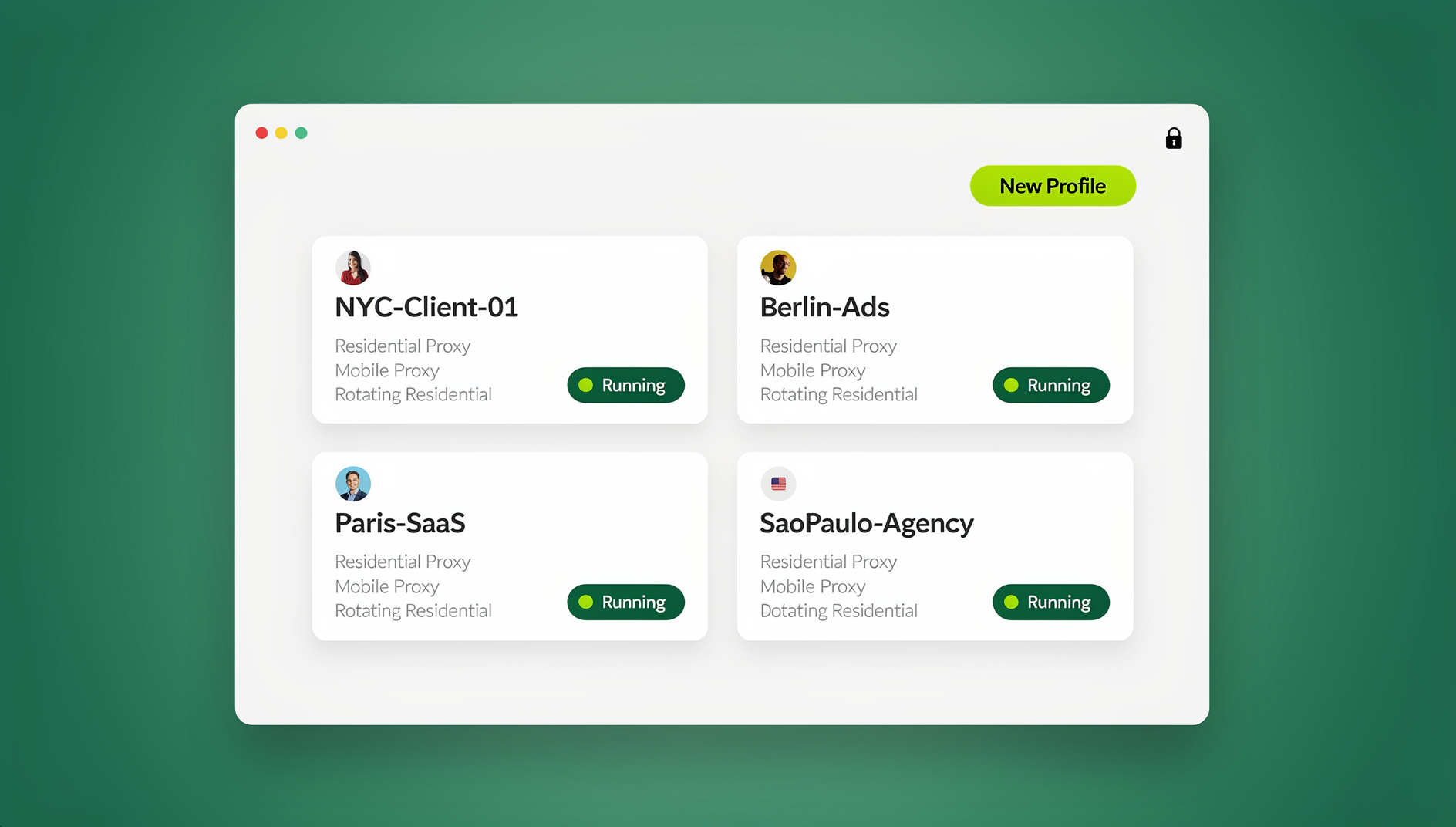
Setting up a secure workflow is straightforward when utilizing the right platform. Here is the step-by-step setup to isolate your Facebook profiles using Send.win:
- Configure Your Profiles: Create a new session for each Facebook account in your dashboard. Assign a descriptive name to keep assets organized.
- Assign Proxies: For each session, bind a dedicated residential proxy. This ensures each account appears from a unique IP address, setting up a secure proxy browser setup for each account.
- Configure the Fingerprint: Ensure the browser fingerprint settings are randomized. The system automatically adjusts canvas, WebGL, and font parameters to match the proxy’s location.
- Execute Login: Open the session and log into Facebook. The sandbox will store all cookies and session data securely in the cloud.
- Establish a Warm-up Period: Do not launch ads immediately on a fresh profile. Spend two weeks posting organic content and interacting naturally to establish trust.
By leveraging advanced browser isolation technology to keep your sessions completely separate, you can eliminate the threat of sudden, coordinated suspensions across your entire agency portfolio.
Step-by-Step Account Warmup Protocol
A major mistake made by digital marketers is logging into a new account and immediately launching heavy ad campaigns. This behavior is highly suspicious and triggers automated checkpoints. Instead, follow a structured warmup routine:
- Days 1-3: Initial Trust Building. Log in for 10-15 minutes daily. Scroll through the newsfeed, watch a few videos, and like a couple of organic posts. Do not make any changes to account settings or add billing details. Ensure that you do not send friend requests to random accounts at this stage, as Facebook’s security systems are highly sensitive to sudden outgoing friend requests from unrecognized browser fingerprints.
- Days 4-7: Profile Optimization. Complete the profile info naturally. Add a profile picture and a cover image. Join two or three public groups related to your business niche. Make one or two simple text posts. When posting, write something related to local interests or check in at a local business to mimic realistic human travel and daily patterns. This builds local presence indicators.
- Days 8-14: Active Engagement. Begin commenting in groups and sharing relevant articles. Invite a few friends or connect with client profiles. At this stage, Facebook’s algorithm registers the account as a genuine user. You can also link the profile to a Spotify or Pinterest account using social login buttons, as these cross-site authentication events are heavy trust signals in Meta’s risk engine.
- Day 15 onwards: Business Manager Setup. Create or link your Business Manager. Add a residential proxy session. Attach your payment method and start with a low daily ad budget, scaling slowly over several weeks. Ensure the Business Manager is verified via an official business license and utility bill if possible. This provides an additional layer of account resilience.
Proxy Selection: Residential vs. Datacenter vs. Mobile
Your proxy configuration is just as important as your browser fingerprint. Using the wrong type of proxy will result in immediate checkpoints. Let’s compare the three main options:
- Residential Proxies: These IPs are assigned by Internet Service Providers (ISPs) to real homes. They are the most trusted by Facebook. Because they look like average home users, they are ideal for logging into client accounts and running ad campaigns.
- Mobile Proxies: Mobile proxies route traffic through cell towers (4G/5G). They are highly dynamic and trusted because hundreds of users share the same mobile IP address. If Facebook flags a mobile IP, it risks banning innocent users. This makes mobile proxies excellent for creating new accounts.
- Datacenter Proxies: These IPs come from secondary data centers. They are cheap and fast, but highly suspicious. Facebook knows that average users do not access social media from data centers. Using datacenter proxies for Facebook is highly risky and often leads to instant account suspensions.
Agency Workflows and Team Collaboration
Agencies face the additional challenge of delegating profile access to multiple team members. Traditional password sharing is a security risk and triggers security alerts due to changing locations. A professional setup allows you to share access to active sessions without exposing sensitive login credentials.
Password-Free Account Sharing
By sharing the active browser session itself, team members can access the Facebook account directly from their own devices. Since the session carries the authenticated cookies, the user is logged in instantly without needing a password or generating a two-factor verification request.
Scoping Roles and Revoking Access
Administrators can assign sessions to specific media buyers. If an employee leaves the team, access to the session can be revoked in a single click, securing the client’s assets instantly without needing to change passwords across multiple platforms. This prevents team members from taking client assets with them.
Safe Automation and API Workflows in 2026
Automation can save hundreds of hours, but aggressive scripting will get your accounts banned. In 2026, Meta uses AI to analyze user interactions, flagging any account that performs actions with robotic precision.
Meta-Approved Scheduling Tools
For standard publishing and messaging, always use Meta-approved scheduling tools like Meta Business Suite. These tools interact with the official API, which is completely compliant with platform terms.
Organising Send.win Profiles for Multiple Accounts
For custom workflows, Send.win does not offer an automation interface: there is no API, SDK, headless mode or Selenium/Puppeteer/Playwright support on any plan. Instead, work with each isolated profile manually, keeping its own cookies, storage and fingerprint settings separate.
Recovery Workflows for Restrictions and Bans
Even the most cautious marketers will eventually face a verification checkpoint or restriction. Having a clear recovery protocol is essential to minimize downtime.
Analyzing the Restriction
When an account is restricted, review the Account Quality page to identify the specific policy violation. Understanding the root cause will help you structure a successful appeal. Look closely at whether the issue lies with the ad creative, the landing page, or the profile identity.
Submitting the Appeal
Submit a formal appeal through the official channels. Be prepared to upload government identification or business registration documents. Do not attempt to log into other profiles from the same browser while the appeal is pending, as this can link and disable your remaining accounts.
Comparison of Account Separation Methods
Choosing the right method depends on your scale and budget. The table below compares the most common approaches used by digital agencies:
| Separation Method | Fingerprint Isolation | IP Separation | Team Sharing | Cost Efficiency |
|---|---|---|---|---|
| Standard Profiles | Poor | None (Shared) | Manual Passwords | Free |
| Private Browsing | None | None (Shared) | None | Free |
| Multiple Devices | Excellent | Excellent (Mobile Data) | Physical Handover | Very Expensive |
| Send.win Cloud Sessions | Excellent | Excellent (Per-Session) | One-Click Sharing | Highly Cost-Effective |
For team-based workflows that require high reliability, this manage multiple facebook accounts multi account management guide 2026 2 strongly recommends moving away from legacy setups and embracing sandboxed environments.
🏆 Send.win Verdict
Managing multiple social assets doesn’t have to result in constant blocks and sweeps. By utilizing Send.win’s native desktop application or secure cloud browser sessions, you can keep each profile fully sandboxed. This isolates cookies, local storage, and digital fingerprints to make each profile look like a completely independent device, allowing you to run your campaigns with absolute peace of mind.
Try Send.win today — paid plans start at $19/mo, and your first card purchase is covered by a 7-day money-back guarantee. You can also preview it free in the cloud demo.
Frequently Asked Questions
Is it possible to manage multiple business accounts from a single profile?
Yes. Facebook allows a single personal profile to administrate multiple Business Managers and pages. However, you should avoid using one personal profile to run ads for unrelated businesses, as an issue with one business can disable access to all of them.
What is the difference between a cloud session and a local desktop client?
Cloud sessions run entirely on virtual servers, requiring no installation and letting you access your profiles from any device. The desktop client runs locally on your machine, using your local resources while syncing session data securely to the cloud.
Do I need to buy proxies for every facebook profile?
Yes, dedicated residential proxies are highly recommended. If multiple profiles share the same IP address, Facebook will flag them as linked, which increases the likelihood of coordinated sweeps and checkpoints.
What pricing tiers are available for business teams?
Send.win offers flexible pricing plans. The Pro plan is available for $19 monthly (or $83.88 billed annually). The Team plan is $49 monthly (or $251.88 billed annually) and supports 500 profiles and 16 user seats.
Can I share access to an account without sharing the password?
Yes. Send.win allows you to share active browser sessions with your team members. They can access the profile directly with the active cookies, bypassing the password requirement and avoiding security checkpoints.
Is there a free trial option available?
No, Send.win does not offer a free trial. Paid plans start at $19/mo, and your first card purchase is covered by a 7-day money-back guarantee. The only free option is the cloud demo, which gives you a 3-minute preview without signup, or 10 minutes a day with a free account.
How does browser fingerprinting affect social profiles?
Browser fingerprinting allows platforms to identify the hardware and software configuration of your computer. Even if you clear your cookies, matching fingerprints will link your profiles, leading to quick suspensions.