The most secure way to manage multiple gmail accounts is to run each account inside isolated browser sessions using a dedicated tool like Send.win, which sandboxes cookies, cache, and local storage per profile to prevent cross-account linking. Below, we compare the best methods, productivity frameworks, and tools to handle multiple Gmail inboxes safely and efficiently.
Understanding the Professional Need for Multiple Gmail Profiles
Modern business operations frequently require users to maintain several distinct Google identities. Freelancers, digital agencies, e-commerce sellers, and virtual assistants must routinely log into different corporate inboxes throughout the day. While a casual user might only need to toggle between a personal address and a work address, a professional marketer may need access to dozens of client accounts. If these accounts are accessed from the same browser without strict technical boundaries, Google’s algorithms will link them, creating a massive vulnerability if any single account is flagged or suspended. To manage multiple gmail accounts successfully at scale, a structured, technical separation protocol must be established.
Client Management for Agencies and Freelancers
For marketing agencies managing client search consoles, analytics, and YouTube channels, logging in via traditional means presents unique risks. Clients expect their data to remain confidential. If a junior media buyer accidentally mixes up client credentials or accesses client databases from a tainted browser session, it can cause irreparable brand damage. Transitioning to isolated browser environments is standard practice for modern digital agencies. This ensure that all team interactions remain confidential and technically separated.
E-commerce Store Management
E-commerce sellers running multiple brands on Shopify, eBay, or Amazon require dedicated email addresses for customer support, supplier communications, and administrative tasks. Since platforms aggressively track linked merchant accounts, using a unified browser environment can trigger seller suspensions. If one store is flagged, all linked accounts are quickly shut down by automated security systems. This makes technical isolation an operational requirement for e-commerce brands.
Built-in Methods to Access Multiple Google Inboxes
Google provides several native features to help users handle more than one account. While these methods are convenient, they do not provide technical isolation or hide your browser fingerprint.
Google Account Switcher
The account switcher allows you to add up to ten Google accounts within a single browser tab. Toggling between them is as simple as clicking your profile picture and selecting another email. Google formats the URL as mail.google.com/mail/u/0/ for the first login, /u/1/ for the second, and so on. While this is helpful for casual users, Google tracks all active sessions together, linking your search history, location data, and browser fingerprint across all profiles. This means that logging out of one account does not sever the link between them.
Gmail Delegation and Inbox Sharing
Gmail Delegation allows you to grant another Google user permission to read and send emails on your behalf. This is ideal for executive assistants who need to manage their manager’s email without having direct access to their account password. While delegation is highly secure and Meta-compliant, it is limited to email communication and does not grant access to other Google Workspace assets like Ads or Analytics. It also requires the delegate to log in from their own Google account.
Google Workspace Groups
Google Workspace allows administrators to create shared inboxes, such as [email protected] or [email protected], using Google Groups. Team members can view and reply to incoming emails directly from their own personal business accounts. This is highly effective for customer support teams but requires a paid Google Workspace subscription and does not support third-party integrations.
The Risks of Cookie Sharing and Profile Linking
Standard web browsers are designed to share resources. If you run multiple profiles on the same computer, the browser shares your local storage, graphics rendering pipeline, and hardware metrics. This shared profile environment makes it easy for platforms to track your activity.
How Cookies and Local Storage Leaks Happen
Cookies track your login states, while local storage saves site preferences. Standard browsers share this data across active tabs. Even if you log out of one account and into another, tracking pixels from third-party advertising networks can read your browser cache. This allows them to link your distinct logins back to a single physical device. This makes standard browsers highly vulnerable to tracking.
The Danger of Chain Reactions and Suspensions
If Google detects a policy violation on one of your accounts—such as an ad account suspension or a security alert—its algorithms immediately check for linked profiles. If they find shared cookies or matching device footprints, the restriction is applied to all related accounts. A single mistake on a test profile can shut down your entire business infrastructure overnight. This chain-reaction suspension is one of the most common reasons agencies lose their active clients.
Google’s Device Fingerprinting and Technical Checks
To identify automated scripts and multiple account operators, Google uses advanced fingerprinting techniques. When your browser requests a webpage, Google reads hundreds of parameters to establish your identity. This includes details like your graphics card rendering speed, your monitor’s subpixel layout, and your system’s audio compression algorithm. If multiple Google accounts log in with identical hardware signatures, Google flags them as linked, even if you are using different IP addresses.
WebRTC Leaks and IP Leakage
WebRTC is a protocol used for video calls in the browser. However, WebRTC can query your physical network card, leaking your true home IP address even if you are using a proxy. This is why standard browsers cannot be trusted for multi-accounting. Sandboxed browser sessions block WebRTC leaks by default, ensuring your proxy IP remains your only visible network address.
User-Agent and HTTP Header Consistency
Your browser sends a User-Agent string to identify your operating system and browser version. If this string does not match the hardware parameters reported by your browser’s APIs, Google’s risk engine will flag the session as a spoofed environment. Sandbox tools ensure that all HTTP headers and API responses are aligned and consistent with your selected profile characteristics.
Professional Isolation: Sandboxing Gmail Profiles
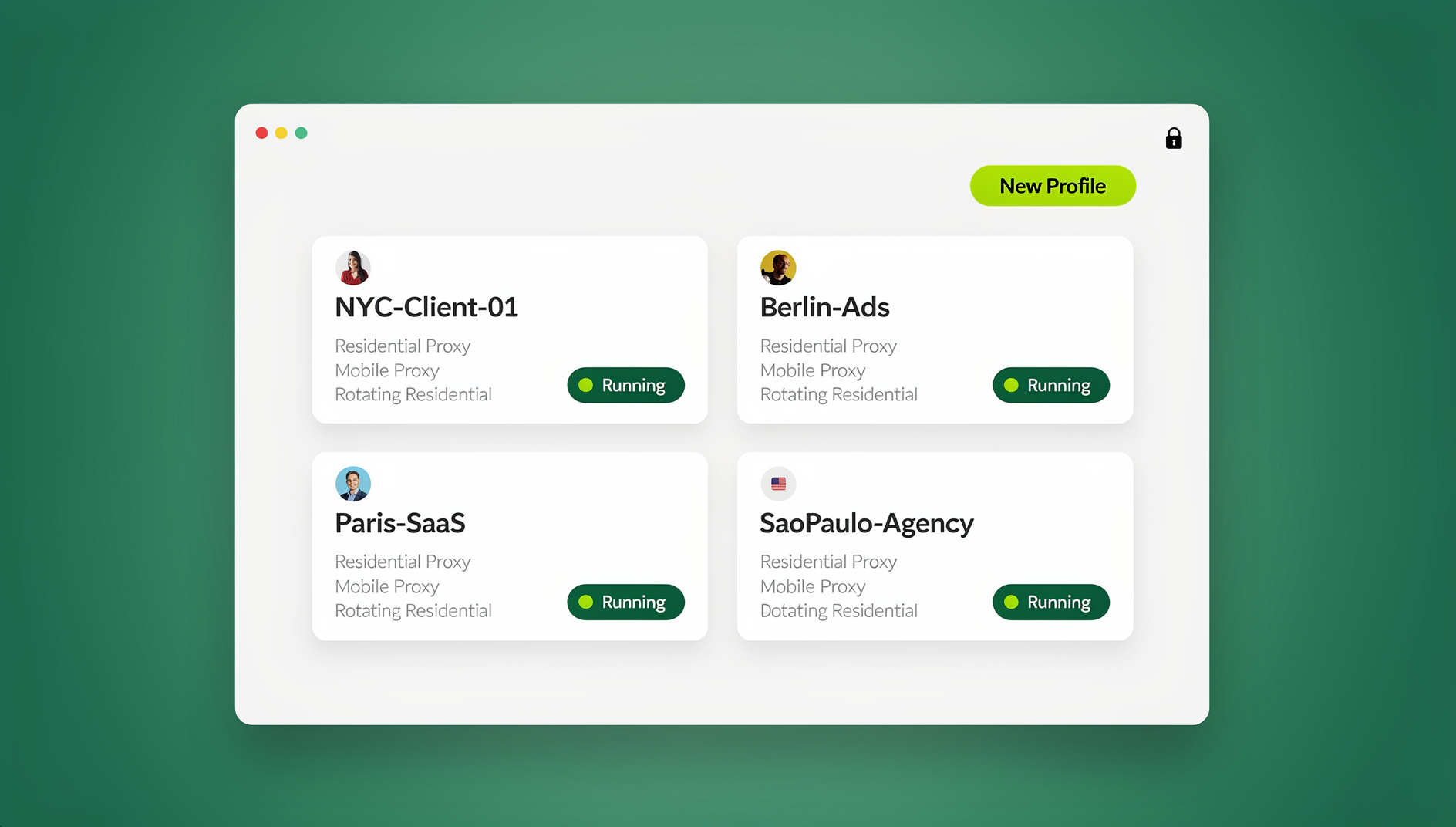
To safely manage multiple gmail accounts, you must isolate each login environment completely. This requires moving away from standard browsers and utilizing sandboxed profiles.
Utilizing Cookie Management Tools
By utilizing a professional cookie management tool to handle session states, you can ensure that each profile maintains its own sandboxed cookie database. This prevents data leakage and ensures you stay logged in indefinitely without needing to re-authenticate every morning.
Configuring Dedicated Proxies
Pairing each session with a residential proxy ensures that each profile has a unique, consistent IP address. This mimics the behavior of a real user logging in from a home office, which prevents Google’s security systems from flagging your logins as suspicious automated activity. Residential proxies are the most reliable option for managing corporate inboxes.
Chrome vs. Multi-Login Browsers
Many users attempt to solve this issue by creating multiple Google Chrome profiles. Let’s compare this approach to professional multi-login browsers.
How Chrome Profiles Work
Chrome profiles allow you to separate cookies and bookmarks locally. However, they do not mask your hardware signatures. By understanding how a chrome multi account structure operates, you can see that Chrome still exposes your underlying canvas hash, graphics card info, and system fonts to Google’s tracking scripts. This means that Chrome profiles do not protect you from fingerprint-based linking.
Why Sandboxed Sessions Are Superior
Sandboxed sessions spoof your browser fingerprint, generating unique hardware parameters for each profile. This ensures that each account appears to log in from a completely different physical device, which provides the highest level of security for high-risk operations.
E-commerce and Ad Account Multi-Login Setup
For businesses running multiple advertising campaigns, managing separate logins is critical to prevent ad account shutdowns.
Isolating Advertising Assets
By selecting the right browser for ads management to separate advertising profiles, you can prevent Google from linking your ad accounts. This is especially important for agencies managing accounts for multiple clients, as it ensures a restriction on one client’s account does not affect other campaigns.
Managing Multiple E-commerce Channels
In the same way that successful sellers manage multiple seller profiles without cross-contamination, you should isolate the email addresses associated with your seller stores. This prevents automated security sweeps from flagging your accounts as linked, which protects your active sales channels during busy retail seasons.
Inbox Warmup Protocols for Client Gmail Accounts
When you take over a new client’s Gmail account or create a fresh workspace inbox, you must establish trust before running outbound campaigns. If a new inbox suddenly sends fifty emails in one day, Google will flag it for spam. Follow a structured warmup routine:
- Days 1-5: Gentle Interaction. Send two or three manual emails daily to trusted contacts. Ensure they reply to your messages. Open the account daily to read incoming mail and archive newsletters.
- Days 6-10: Subscription Setup. Subscribe to three or four active industry newsletters. When they arrive, mark them as important and read them. This signals to Google’s algorithms that the account is active and receiving valuable content.
- Days 11-20: Incremental Scaling. Slowly increase your daily output to ten or fifteen emails. Ensure that you write unique, personalized messages. Avoid copy-pasting the same template, as Google’s natural language processing scripts will flag repetitive text.
- Day 21 onwards: Normal Operations. You can now integrate the inbox with your automation tools, keeping output to a safe daily limit. Always use residential proxies to match the client’s home region.
A Productivity System for Gmail Multi-Management
Managing several active inboxes can quickly lead to cognitive overload. Without a structured productivity system, you will waste hours checking folders and responding to notifications.
The 4-Quadrant Inbox Framework
Apply this framework to categorize incoming emails in each of your accounts:
- Quadrant 1: Urgent Action. Emails that require a response or action today. Complete these tasks immediately.
- Quadrant 2: Planned Tasks. Emails that require action but can wait. Schedule them in your task manager and archive the thread.
- Quadrant 3: Delegated Tasks. Emails that should be handled by someone else. Forward the message to a team member and archive it.
- Quadrant 4: Reference / Archive. Informational emails, receipts, and newsletters. Label them appropriately and archive them out of your inbox.
Advanced Rules and Labels
Create automated filters in each account to handle routine notifications. For example, you can set up filters to automatically label and archive receipts, GitHub updates, and automated alerts. This keeps your inbox clean and allows you to focus on high-priority client emails.
Structured Email Processing Times
Do not leave your email accounts open all day. Checking notifications continuously ruins your focus. Instead, schedule three 30-minute block periods daily to process all inboxes. This allows you to work efficiently and prevents distraction.
Unified Inbox Clients vs. Sandbox Profiles
Depending on your security requirements, you can choose between unified email clients and sandboxed profiles. The table below compares the two approaches:
| Feature | Unified Email Clients (Spark, Mimestream) | Sandboxed Browser Profiles (Send.win) |
|---|---|---|
| Interface | Unified single inbox view | Separate isolated tabs |
| Security Isolation | Low (Shared cookies and system IP) | High (Isolated cookies and unique proxy IP) |
| Team Sharing | Limited password sharing | Secure password-free session sharing |
| Asset Integration | Email only | Access to Ads, Analytics, and Workspace |
For simple email reading, a unified client is convenient. However, if you need to manage advertising campaigns, access analytics, or share profiles securely with a team, sandboxed profiles are essential to manage multiple gmail accounts safely.
🏆 Send.win Verdict
Managing multiple client profiles doesn’t have to be a security nightmare. By running each Gmail profile inside Send.win’s native desktop application or secure cloud browser sessions, you can keep cookies, local storage, and digital fingerprints completely isolated. This prevents cross-account tracking and ensures your business operations remain secure and organized.
Try Send.win today — Paid plans start at $19/mo, and your first card purchase is covered by a 7-day money-back guarantee. You can also preview it free in the cloud demo.
Frequently Asked Questions
Is it possible to log into multiple Google accounts simultaneously?
Yes, Google allows you to log into up to ten accounts using its built-in account switcher. However, this links your browsing data and fingerprints across all profiles. For professional isolation, use sandboxed browser sessions.
What is the difference between a cloud session and a local client?
Cloud sessions run on virtual servers, allowing you to access your accounts from any device without installation. The desktop client runs locally on your machine, which is ideal for daily operations and local automation workflows.
Do I need to assign a proxy to every Gmail profile?
Yes. If you log into multiple accounts from the same IP address, Google will flag them as linked. Using dedicated residential proxies for each profile prevents security checkpoints and keeps your accounts safe.
What pricing tiers are available for business teams?
Send.win offers the Pro plan for $19 monthly (or $83.88 billed annually). The Team plan is $49 monthly (or $251.88 billed annually) and includes 500 profiles and 16 user seats.
Can I share access to an account without sharing the password?
Yes. Send.win allows you to share active browser sessions with your team. They can access the profile directly with the active cookies, which avoids password entry and security checkpoints.
Is there a free trial option available?
No, Send.win does not offer a free trial. Paid plans start at $19/mo, and the first card purchase is covered by a 7-day money-back guarantee. The only free option is the cloud demo, which gives you a 3-minute preview without signup or 10 minutes a day with a free account.
How does browser fingerprinting affect social profiles?
Browser fingerprinting allows platforms to identify the hardware and software configuration of your computer. Even if you clear your cookies, matching fingerprints will link your profiles, leading to quick suspensions.