This **how to manage multiple gmail accounts step by step setup guide 2026 2** explains how to coordinate several inboxes by utilizing a professional desktop client like the Sendwin Browser or running sandboxed cloud browser sessions. By isolating cookies and device profiles rather than relying on basic account switching, you can safely scale your email workflows, protect accounts from security links, and bypass IP restrictions using residential proxies.
Understanding the Risks of Native Gmail Account Switching
For years, users have relied on Google’s native account switcher to move between personal, business, and client email addresses. While clicking your profile picture and selecting another account is convenient, it poses significant risks for business owners, agency teams, and privacy-focused users. This is because all accounts managed in a standard browser share the same cookie jar, local storage, IP address, and browser fingerprint.
When Google links these accounts, a security issue or policy violation on one account can trigger verification locks or suspensions across all associated profiles. For example, if a client’s Google Workspace account is flagged for spam or payment issues, your personal and agency accounts might face sudden restriction. To mitigate these risks, modern professionals rely on advanced browsing protection that keeps cookie data and hardware fingerprints completely separate.
Google’s algorithms are designed to detect suspicious behavior, and logging into dozens of accounts from the same browser is a major red flag. When you switch between profiles, the browser headers, canvas hashes, and TCP/IP stack signals remain identical. This gives Google’s automated systems clear evidence that a single user is controlling multiple identities, often leading to automated phone verification requests and temporary lockouts.
Furthermore, standard browser environments allow websites to query browser metadata and hardware parameters. Google uses this information to build a detailed device fingerprint, which links your physical machine to every Google account you access. If one account is flagged for suspicious login locations or unexpected outbound mail volumes, Google’s security heuristics can place security locks on all linked profiles, creating massive disruptions for your daily operations.
To eliminate these hazards, you must break the link between your different accounts. This means separating not just cookies and local storage, but also your external IP addresses and the underlying hardware parameters reported to the server. By setting up isolated, containerized environments, you ensure that each Gmail account operates within its own digital sandbox, completely hidden from Google’s cross-correlation scripts.
5 Ways to Manage Multiple Gmail Accounts in 2026
To successfully organize your email workspace, several options exist, ranging from simple built-in utilities to enterprise-grade isolation platforms. Here is a breakdown of the top five methods available today.
1. Sendwin Browser (Native Desktop Client)
The Sendwin Browser is a native desktop application designed specifically for multi-account management. It allows you to run multiple isolated profiles, each with its own cookie storage, local cache, and browser fingerprint. Because it runs locally on Windows, macOS, and Linux, it is extremely fast and integrates seamlessly with your desktop workflow.
For advanced teams, the Sendwin Browser offers powerful profile management starting on the Pro plan ($19/mo monthly, or $83.88/yr billed annually). Each profile keeps its own cookies, storage, sessions and fingerprint settings, so email workflows stay organised and separate. The Team plan ($49/mo monthly, or $251.88/yr billed annually) expands this with profile sharing features.
Using the native desktop client provides the highest level of performance, as it leverages your local computer’s processing power while spoofing individual hardware characteristics. This means you can run dozens of sessions simultaneously without experiencing the lag or latency often associated with cloud-only solutions. The local profile storage is fully encrypted, ensuring that your login credentials and session data remain secure on your hard drive.
2. Cloud Browser Sessions (No Local Install)
If you need to access your Gmail profiles from different devices without installing a local desktop app, Send.win’s cloud browser sessions are the perfect solution. These sessions run in isolated cloud environments and are streamed to your browser, offering maximum portability and security.
With cloud sessions, you can log in from a tablet, phone, or public computer and immediately access your configured profiles. Because the browser instance runs in the cloud, your local machine is insulated from any malicious attachments or web-based threats, providing an extra layer of defense for business operations. Cloud sessions are metered by monthly cloud browsing time and are synced across your entire team automatically.
This server-side isolation also prevents local tracking. Because all web traffic is processed on Send.win’s secure remote servers, your local network administrator or internet service provider cannot see which Gmail profiles you are accessing or monitor the content of your sessions. This makes cloud sessions the ideal choice for remote teams who require high levels of privacy and flexibility.
3. Chrome and Brave User Profiles
Creating separate user profiles in Chrome or Brave is a basic method to split cookies. Each user profile gets its own local storage, meaning you can stay logged in to different Gmail accounts in different windows.
However, this method lacks fingerprint masking and IP separation. All profiles still share your computer’s hardware profile and external IP address. If you need a secure proxy browser setup to route different accounts through different geographic IPs, user profiles alone will not suffice. This makes them unsuitable for high-volume marketing or security-sensitive tasks, as Google can easily link all profiles back to the same physical machine.
Furthermore, managing more than a few profiles in standard browsers becomes highly disorganized. Switching between profiles requires opening separate windows, which consumes large amounts of system RAM and quickly clutter your desktop workspace. Standard profiles also lack any built-in tools for proxy rotation or browser fingerprint rotation, leaving your setups vulnerable to detection over time.
4. Gmail Delegation and Send Mail As Aliases
Google offers native email delegation, which allows you to grant another Google account access to your inbox without sharing passwords. Similarly, the “Send mail as” feature lets you send outgoing mail using a secondary email address from within your primary inbox.
While useful for virtual assistants, this method does not provide true isolation. It links the delegated account directly to the manager’s account. It is also unsuitable for managing completely separate client brands where data cross-contamination is forbidden, as Google keeps a clear record of the linkages. If either account is flagged for a policy violation, the other is immediately put at risk.
In addition, email delegation is limited to the Gmail interface itself. It does not grant access to associated Google Drive files, Google Docs, or Google Calendar events in a clean, segregated manner. This means your team members will still need direct access to secondary accounts for full workspace operations, which defeats the security purpose of delegation.
5. Unified Desktop Email Clients
Unified email clients like Mimestream, Spark, and Missive let you add multiple Gmail accounts and view emails in a unified inbox or switch between accounts with a single click. Mimestream is highly optimized for Mac users, while Spark and Missive provide robust cross-platform collaboration.
These clients are excellent for productivity, but they act as APIs that fetch mail to a single device. They do not mask your IP address or hardware fingerprints when interacting with web-based Google services like Google Ads, Google Analytics, or YouTube Studio, which leaves your accounts connected under the hood. If Google flags your local IP, all connected accounts on that client may suffer simultaneous access blocks.
Moreover, desktop clients do not support advanced browser features like custom user-agents or browser parameter spoofing. If you need to access Gmail’s web interface to configure filters, manage integrations, or review account security settings, the email client will redirect you to your system’s default browser, exposing your true device fingerprint and merging your session data once again.
Comparing Gmail Multi-Account Management Techniques
Choosing the right approach depends on whether you require cookie isolation, fingerprint masking, or IP isolation. Below is a comparison of how different methods stack up in 2026:
| Feature / Method | Sendwin Desktop | Cloud Sessions | User Profiles | Delegation | Email Clients |
|---|---|---|---|---|---|
| Cookie Isolation | Complete | Complete | Partial | None (Linked) | Not Applicable |
| Fingerprint Masking | Yes | Yes | No | No | No |
| IP Proxy Support | Yes | Yes | No | No | No |
| Team Session Sharing | Yes (Team plan) | Yes (Team plan) | No | Yes (Limited) | No |
| Automation API Support | No | No | No | No | No |
| Setup Complexity | Low | Low | Low | Medium | Medium |
| Bans Risk | Very Low | Very Low | High | Medium | Medium |
Step-by-Step Setup Guide to Managing Gmail with Send.win
Implementing a secure system for multiple Gmail accounts takes only a few minutes. Here is the step-by-step configuration workflow:
- Get Started: Visit Send.win and choose a paid plan — Pro at $19/mo or Team at $49/mo — with the first card purchase covered by a 7-day money-back guarantee. You can also preview the cloud browser for free at the Send.win demo.
- Download the Desktop Client: Install the native Sendwin Browser client for your operating system (Windows, macOS, or Linux). Alternatively, you can use the cloud browser sessions directly from any modern web browser.
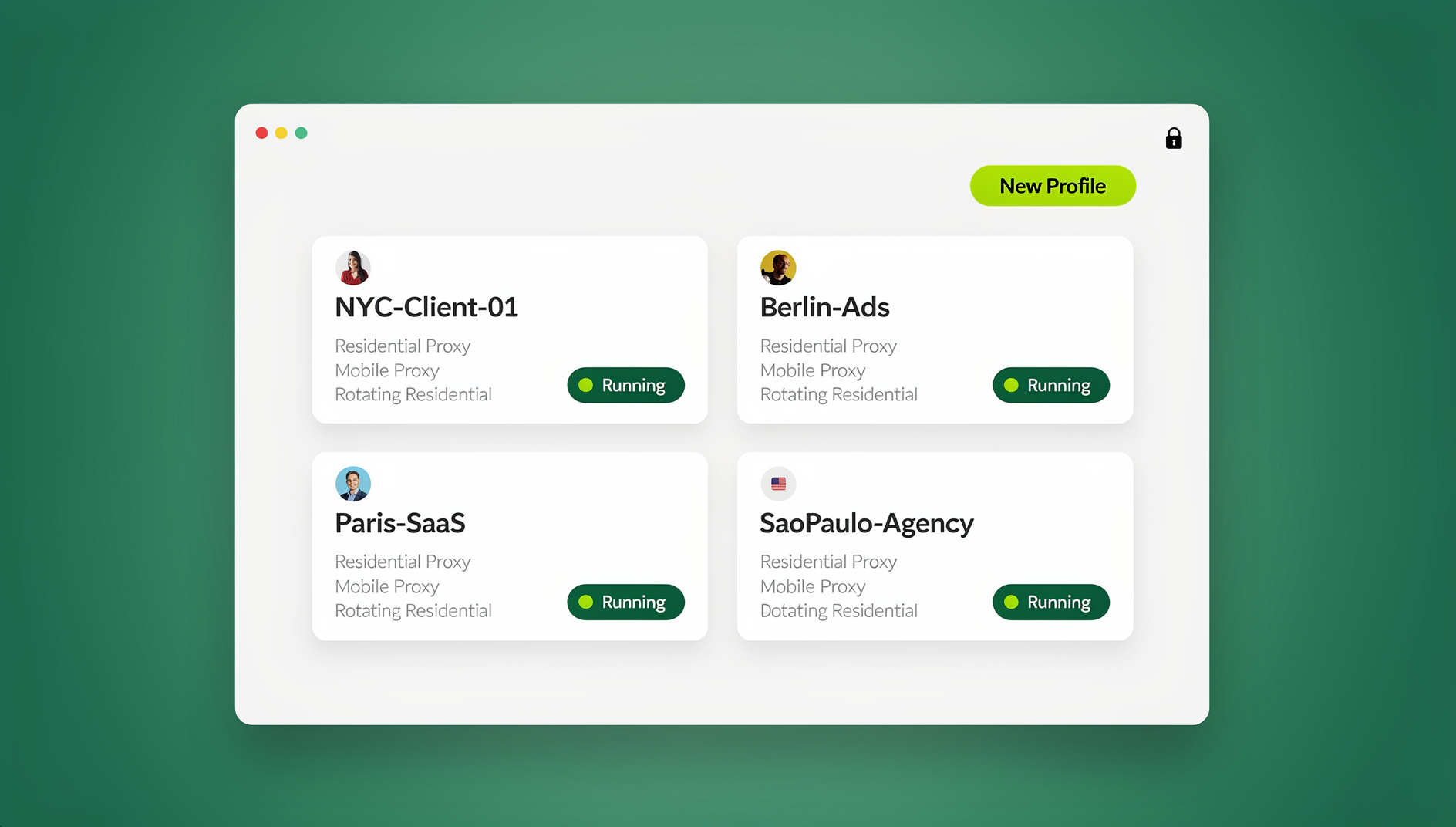
- Create a New Profile: Click the “New Profile” button in your dashboard. Give it a descriptive name (e.g., “Work Gmail” or “Client A Gmail”).
- Assign a Proxy: Under the network settings of the profile, select residential or datacenter proxies. This gives the profile a unique IP address, which is highly recommended for security and bypasses localized restrictions.
- Open the Session: Click the start button. A new, isolated browser window will open. Navigation is powered by advanced browser isolation technology, ensuring this session is completely containerized.
- Log In to Gmail: Navigate to Gmail and enter your credentials. Because cookies are saved securely and synced to the cloud, you will remain logged in for future sessions.
By repeating this process, you can build a library of independent, isolated profiles for all your Google accounts, avoiding verification loops and cross-account tracking.
Essential Settings for Multi-Account Workspace Operations
Once your profiles are active, configuring specific Gmail and browser options will streamline daily productivity. First, set up custom labels and filters in each inbox to categorize incoming mail. For example, create an “Action Required” label for emails needing urgent attention and set filters to automatically apply labels based on the sender’s domain.
Second, enable desktop notifications in your browser profile settings so that you are alerted to urgent client queries without needing to keep every tab open. You can also configure the startup page of each profile to open Gmail, Google Calendar, and Google Drive automatically, ensuring a complete and ready workspace upon launching the session.
Additionally, when executing corporate email strategies, understanding **how to manage multiple gmail accounts step by step setup guide 2026 2** helps you configure automatic forwarding rules. If you prefer to receive notifications in a central inbox, forward secondary accounts to your primary email address. You can still compose and reply to messages using the secondary address by configuring the “Send mail as” setting in Gmail’s Accounts and Import menu.
To further optimize, you should establish a routine for checking your inboxes. Instead of keeping all sessions active and open all day, set up dedicated time blocks to focus on processing incoming mail. This batching strategy prevents constant distractions and allows you to maintain high productivity while handling dozens of accounts.
You can also use custom search operators in Gmail to quickly find messages across different threads. Using queries like “has:attachment” or “older_than:30d” within your specific isolated profiles will save you hours of manual scrolling. Combining these native Gmail features with the organization dashboard of Send.win creates a highly efficient command center for all your business correspondence.
Security Best Practices for Multi-Inbox Administration
Managing several accounts increases the security footprint of your business. To protect your digital assets, adhere to the following security guidelines:
- Use a Password Manager: Generate a unique, complex password for every Gmail account. Never reuse passwords across profiles. Tools like Bitwarden or 1Password make generating and storing strong passwords effortless.
- Implement Strong 2FA: Turn on two-factor authentication for all Google profiles. Rather than SMS verification, which is vulnerable to SIM-swapping, use authenticator apps like Google Authenticator or hardware keys.
- Avoid SMS Recovery: Don’t link the same phone number or recovery email address to all Gmail accounts. If one profile is compromised, an attacker can use linked recovery paths to target your other accounts.
- Perform Regular Audits: Periodically review third-party apps that have access to your Google accounts. Revoke access for any applications you no longer use or trust.
Additionally, make sure to save your backup codes for each Gmail account in a secure, offline location. If you ever lose access to your primary 2FA device, these recovery codes are the only way to regain access to your account without undergoing a lengthy Google account recovery process, which can disrupt your daily operations.
By implementing these robust security protocols alongside a containerized browser environment, you ensure your organization remains resilient against data breaches and unauthorized access attempts across your entire fleet of Google accounts. This comprehensive setup represents the most secure method to manage corporate communication in 2026.
🏆 Send.win Verdict
Managing multiple Gmail accounts using traditional tools leads to security issues, cookie contamination, and tedious switching. Send.win solves this by providing isolated cloud browser sessions and a dedicated desktop client, assigning unique browser fingerprints and IPs to each Gmail profile. This guarantees Google views each account as an independent user on a separate machine.
Try Send.win today — Start with a paid plan covered by a 7-day money-back guarantee, or preview the free cloud demo, to run multiple Gmail accounts in separate, isolated browser profiles.
Frequently Asked Questions
Can I use Send.win to manage multiple Gmail accounts?
Yes, Send.win is the premier tool for managing multiple Gmail accounts. It provides isolated browser sessions, unique device fingerprints, and proxy support to keep your accounts secure and independent.
How many Gmail accounts can I run simultaneously?
With Send.win, there are no software-imposed limits. The Pro plan includes up to 150 profiles, while the Team plan supports up to 500 profiles. You can run as many sessions as your plan allows.
Does Send.win require a local desktop installation?
Send.win offers two modes of operation: the Sendwin Browser, which is a native desktop app for maximum performance, and cloud browser sessions that run in the cloud with no local installation required.
Is there a free trial for Send.win?
No, Send.win does not offer a free trial. Paid plans start at $19/mo for Pro or $49/mo for Team, and the first card purchase is covered by a 7-day money-back guarantee. The only free option is the cloud demo at https://send.win/demo-browser/.
Are the local profiles synced to the cloud?
Yes, all sessions and profile settings in Send.win are synced to the cloud automatically, so you can access your accounts from any device running the Sendwin Browser.
Can I share Gmail access with my team without sharing passwords?
Yes, the Team plan allows you to share profile sessions with team members, giving them instant access to Gmail without disclosing passwords or verification codes.
Does Send.win offer an Automation API?
No, Send.win does not offer an Automation API, SDK, headless mode or Selenium/Puppeteer/Playwright support on any plan.
Following this **how to manage multiple gmail accounts step by step setup guide 2026 2** will ensure your email environments remain organized, protected, and fully isolated from cross-account correlation. By shifting away from native switching and adopting isolated container technology, you protect your business, streamline your team’s workflow, and secure your email communication for the long term.