Choosing the right software features for managing multiple service lines in accounting firms requires prioritizing granular service line tagging, customizable workflow templates, multi-rate billing engines, and cross-service client dashboards. When managing diverse client cloud portals, firms should utilize a secure browser like Send.win to run isolated sessions for bookkeeping, payroll, and tax platforms simultaneously without session conflicts.
The Structural Complexity of Modern Accounting Firms
Accounting firms no longer focus on a single service. A typical firm handles monthly bookkeeping, annual tax preparation, complex audits, corporate payroll, and specialized advisory services like wealth management or forensic analysis. Each of these service lines operates under different rules: bookkeeping is cyclical and recurring, tax preparation is seasonal and deadline-driven, audit is phase-based and requires strict documentation, and advisory is project-based and bills at premium rates.
Operating these distinct service lines in technological isolation causes major inefficiencies. Staff members struggle to track tasks across separate software tools, billing teams miss billable hours, and partners cannot see the full scope of a client’s relationship. To resolve these issues, firms must implement software features for managing multiple service lines in accounting firms that unify workflows, standardize data, and track profitability across every department on a single platform.
However, running multiple service lines also means accessing a large number of client portals daily. Accountants must jump between QuickBooks instances, Xero profiles, and tax filing software. If they attempt this in standard browsers, they face session conflicts, security alerts, and login delays. This makes combining workflow software with isolated browser environments essential for modern practice management.
Key Software Features for Multi-Service Management
When auditing potential practice management platforms, ensure they support these eight essential features to coordinate multiple service lines:
1. Segmented Service Line Tagging
The platform must allow you to tag every client engagement, work task, and time log with its specific service line. This tagging supports detailed financial reporting, allowing partners to monitor revenue, staff utilization, and profitability for each department independently.
2. Customizable Workflow Templates
Bookkeeping, tax, and audit require different operational paths. The software must allow you to build and clone custom workflow templates for each service line. For example, a tax workflow should include draft and review steps, while a bookkeeping workflow should repeat monthly.
3. Multi-Rate Billing Configurations
Different service lines bill at different rates—advisory work is priced higher than standard compliance tasks. The software must support flexible rate cards per service line, staff seniority level, or specific client agreements, applying the correct rate automatically to time logs.
4. Consolidated Client Overview
Partners need a single dashboard showing every active task, outstanding invoice, document folder, and email thread for a client across all service lines. This eliminates internal communication gaps and helps teams spot cross-selling opportunities.
5. Compliance Calendar Tracking
Each department operates under different regulatory deadlines—tax returns are due on specific dates, payroll filings occur weekly or monthly, and audits have strict milestone dates. The software must aggregate these deadlines into a unified compliance calendar.
6. Resource and Capacity Forecasting
Staff members are often shared across departments during busy seasons. The platform must show real-time utilization rates and forecast capacity requirements, allowing managers to allocate staff to high-demand service lines without overworking the team.
7. Segmented Profitability Reporting
Leadership needs to know which service lines are profitable and which are losing money. The software must calculate direct labor costs and allocate overhead to generate profit-and-loss reports for each service line independently.
8. Organized Document Structures
Document storage should automatically generate sub-folders based on active engagements. A client’s folder must organize tax documents, audit spreadsheets, and bookkeeping records separately to maintain order and simplify file retrieval.
Comparison of Accounting Practice Management Platforms
| Platform | Workflow Flexibility | Billing Integration | Cross-Service View | Best For |
|---|---|---|---|---|
| Karbon | Excellent (custom templates) | Via integrations (BQE, QBO) | Excellent (client timeline) | Collaborative workflow-centric firms |
| Canopy | Good (custom task lists) | Built-in billing engine | Good (CRM & document portal) | Medium tax-focused firms |
| Financial Cents | Good (simple templates) | Built-in invoicing and time | Medium (firm dashboard) | Growing firms (1-20 employees) |
| Thomson Reuters CS | High (module-based configuration) | Advanced billing rules | Good (client dashboard) | Enterprise accounting firms |
| TaxDome | Medium (pipeline-driven) | Built-in payments and portal | Medium (client portal overview) | Small, compliance-heavy firms |
Analysis of Leading Practice Management Systems
1. Karbon
Karbon is a collaborative practice management platform built for modern accounting teams. It Excel at workflow organization, allowing you to define custom templates for different service lines and track their progress through a shared dashboard. Its standout feature is the client timeline, which aggregates all emails, notes, and tasks related to a client across your entire firm.
For multi-service firms, Karbon allows you to assign work types and tags to every engagement. This makes it easy to filter your dashboard to view only active audit projects or monitor the status of tax returns during busy season. However, Karbon lacks a built-in billing engine, requiring integrations with third-party invoicing tools.
2. Canopy
Canopy is a comprehensive practice management tool that combines CRM, document management, time tracking, billing, and workflow automation. It is highly valued for its client portal and integrated electronic signature capabilities. Canopy allows you to customize client folders based on the specific services they receive.
For billing, Canopy provides a robust invoicing engine that supports both fixed-fee retainers and hourly rates. You can configure rate cards per employee or service line, generating invoices directly from time logs. The workflow feature is highly detailed, though it has a steeper learning curve than simpler tools.
3. Financial Cents
Financial Cents is a clean, simple workflow tool built for small and mid-sized accounting firms. It provides a straightforward interface where managers can assign tasks, track time, and monitor deadlines. It includes a built-in billing module and an automated client request system that follows up with clients to collect missing documents.
For firms expanding from a single service line to multiple departments, Financial Cents offers a quick rollout. You can create templates for bookkeeping, payroll, and tax, and track capacity through a simple utilization dashboard. It lacks some of the deep reporting details found in enterprise platforms, but its ease of use makes it highly popular.
Secure Client Portal Access for Multi-Service Accountants
Implementing practice management software resolves internal workflows, but execution requires logging into client portals directly. Accountants must manage logins for dozens of client QuickBooks files, Xero profiles, payroll portals, and government tax cabinets. Juggling these portals in a standard web browser creates significant security and session issues.
Standard browsers share session data across tabs. If you try to open QuickBooks Online for two different clients simultaneously, the browser will overwrite the session cookies, logging you out of the first client’s portal. This forces accountants to log in and out repeatedly, wasting hours of billable time. Furthermore, logging into multiple different client portals from the same standard browser profile can trigger security systems at platforms like Intuit, forcing security challenges and temporary lockouts.
To secure these logins and streamline operations, accounting firms use dedicated session separation tools. A secure environment is necessary for managing multiple accounts without session flags. Standard profiles do not mask hardware identifiers, making the choice of the best browser for multiple accounts with hardware spoofing essential for professional accounting workflows. This setup is identical to the systems used by online sellers to manage multiple Amazon accounts or execute complex multiple Amazon store operations without triggering security flags.
How Send.win Secures Accounting Workflows
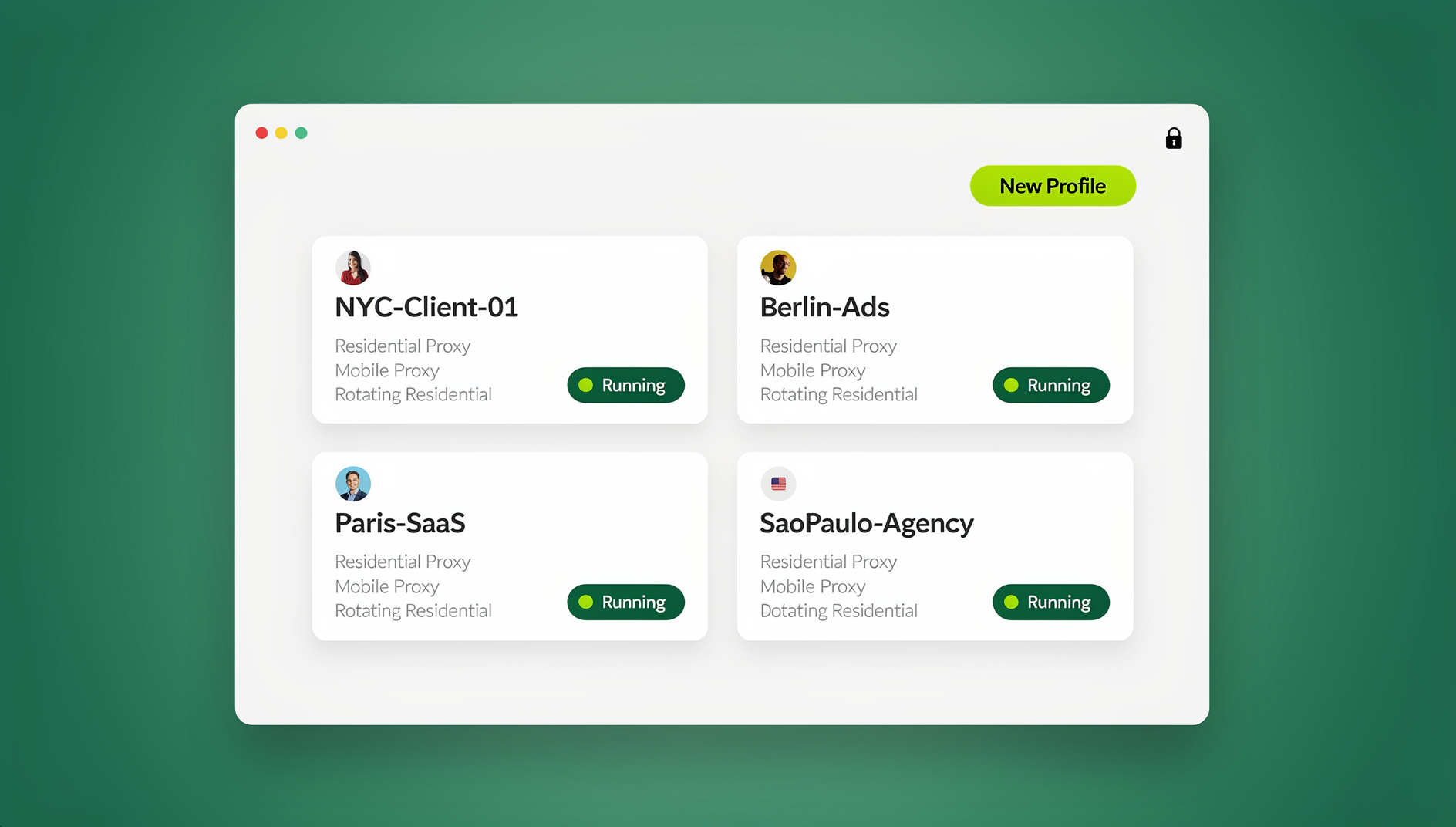
Send.win is a professional multi-login browser built to isolate web sessions. It separates cookies, local storage, and hardware fingerprints at the kernel level, presenting each browser profile as an entirely separate computer to web servers. This allows accountants to keep multiple client QuickBooks, Xero, and tax portal sessions open simultaneously in separate tabs without any conflicts.
Send.win offers two primary modes of operation to support accounting workflows:
- Sendwin Browser (the native desktop app): A downloadable client for Windows, macOS, and Linux that runs profiles locally. It utilizes your machine’s hardware for maximum performance and supports direct proxy configuration. This is the primary tool for daily operations, allowing you to switch between client portals instantly.
- Cloud Browser Sessions: A fully web-based environment where you launch and run isolated profiles directly in the cloud. This requires no local installation, allowing you to access client portals securely from any device while working remotely or visiting a client’s office.
Send.win offers simple, transparent pricing plans designed to scale with your firm, with a 7-day money-back guarantee on your first card purchase, so you can evaluate the tool in your actual workflow:
- Pro Plan ($19/mo, or $83.88/yr): Supports up to 150 isolated profiles, includes 5GB of proxy bandwidth, and provides full access to the desktop app and cloud browser. This is ideal for solo practitioners managing a growing client list.
- Team Plan ($49/mo, or $20.99/mo billed annually): Expands capacity to 500 isolated profiles, includes 20GB of proxy bandwidth, and provides 16 seats. This plan allows team members to share client profiles securely without exposing passwords, maintaining compliance with security regulations.
Send.win focuses on isolated browser profiles, each with its own cookies, storage, sessions, fingerprint settings and proxy, so you can keep client work separated without sharing one browser identity.
Implementation Guide: Transitioning to Multi-Service Software
To successfully transition your firm to a unified practice management setup, implement this structured five-phase rollout:
Phase 1: Define Service Line blue prints
Document every service your firm offers. For each service line, write down the workflow steps, standard billing rates, staff members assigned, and key regulatory deadlines. This becomes the configuration blueprint for your new software.
Phase 2: Build and Test Workflow Templates
Create templates for your primary service lines in your chosen platform. Start with your highest-volume service (such as monthly bookkeeping). Test the template on a small group of clients, refining the tasks and review gates based on actual staff feedback.
Phase 3: Configure Rate Cards and Billing Rules
Set up your rate cards in the billing system, defining rates for partners, managers, and staff. Configure billing schedules—hourly for advisory work, fixed-fee for bookkeeping, and milestone-based for tax returns. Test that invoices generate correctly from approved time entries.
Phase 4: Run Departmental Training and Rollout
Train your staff in departmental groups rather than all at once. Have the tax team focus on tax templates, while the bookkeeping team learns monthly close workflows. Run the new practice management system in parallel with your old tools for 30 days to ensure data accuracy.
Phase 5: Establish Utilization and Profitability Audits
Once the system is active, begin running monthly reports. Monitor utilization rates per staff member and evaluate the profitability of each service line. Use this data to adjust your pricing structures and reallocate staff resources to high-margin departments.
🏆 Send.win Verdict
Managing software features for managing multiple service lines in accounting firms successfully requires pairing a robust practice management platform like Karbon or Canopy with Send.win’s session isolation. Send.win isolates your client portal logins at the browser level, preventing session conflicts and security lockouts. With its high-performance Sendwin Browser desktop client and cloud browser sessions, Send.win provides professional-grade privacy and organisation at an affordable price.
Try the Send.win cloud demo — Preview it free for 3 minutes without signup, or 10 minutes a day with a free account, to secure your client logins and optimize your firm’s workflows.
Frequently Asked Questions
What are software features for managing multiple service lines in accounting firms?
These are built-in tools within accounting practice management software designed to tag, coordinate, and bill separate services (like tax, audit, and bookkeeping) in a single system. Key features include service line tagging, customizable workflow templates, multi-rate billing, utilization dashboards, and segmented profitability reporting.
Why do accounting firms need service line tagging?
Service line tagging allows firms to categorize every task, time entry, and invoice. This data feeds into segmented reporting, enabling partners to analyze which service lines generate the highest profit margins, which are over-staffed, and where capacity adjustments are needed to support firm growth.
Can one software platform manage tax, bookkeeping, and advisory?
For workflow coordination, time tracking, and client communication, yes—platforms like Karbon, Canopy, and Financial Cents can manage multiple service lines. However, the actual technical execution (tax preparation, valuation modeling) will still require specialized tools that operate alongside your practice management platform.
How does Send.win resolve session conflicts for accountants?
Send.win isolates browser sessions at the kernel level. Each profile has its own cookies and local storage. This allows you to keep multiple client QuickBooks, Xero, and bank portal sessions open in different tabs of the same window simultaneously, eliminating the need to log in and out repeatedly.
Is it secure to store client passwords in Send.win?
Send.win isolates all profile data locally (with the desktop client) and routes all synchronized cloud sessions through encrypted databases. Using Send.win allows team members to access client portals directly without needing to know or view the client’s actual password, maintaining strict security standards.
Does Send.win support custom scripts for accounting tasks?
Yes. Send.win keeps each profile’s cookies, storage, sessions and fingerprint separate, so you can manage multiple client profiles safely without sharing one browser identity.