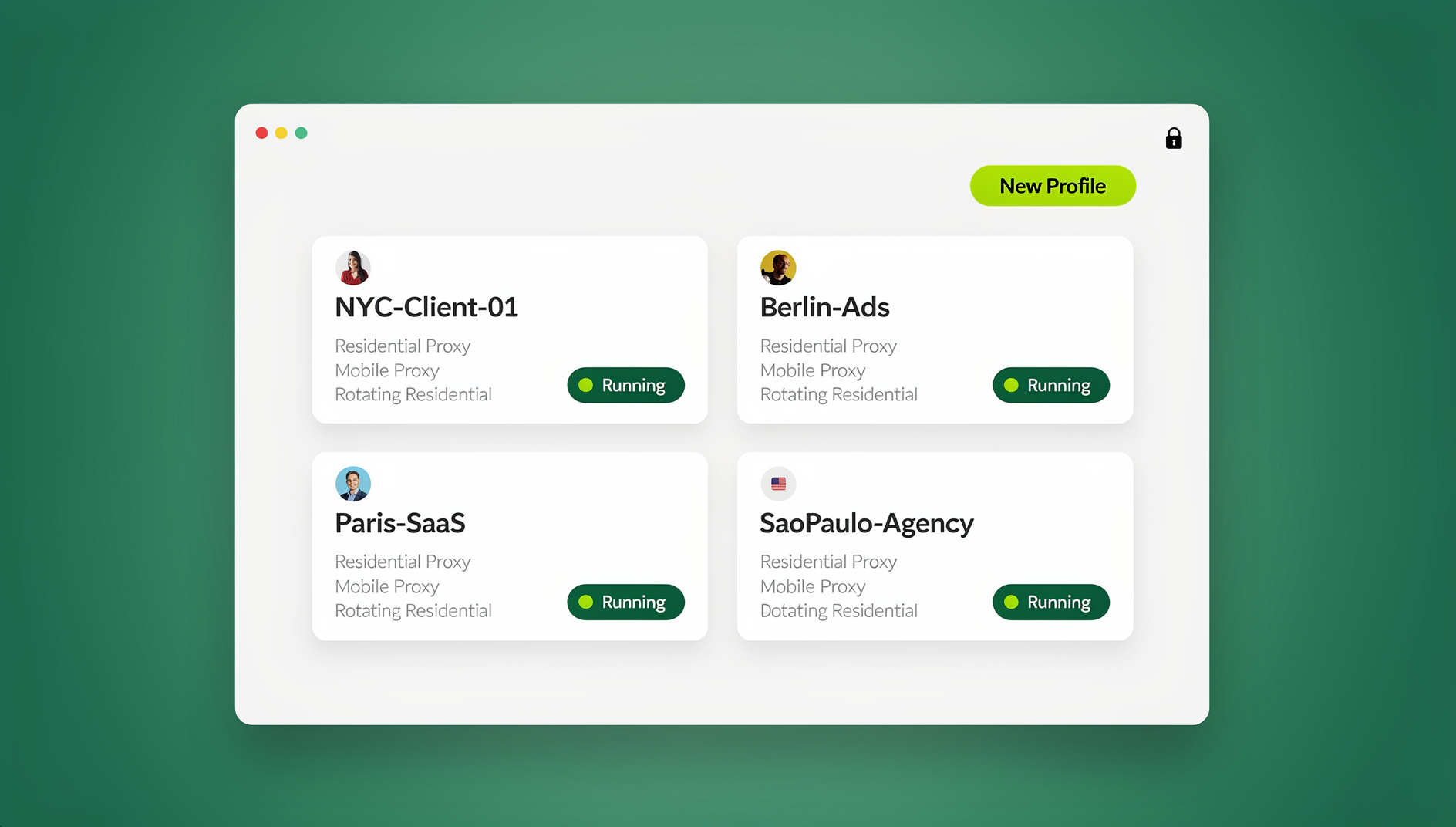
To successfully learn **how to manage multiple social media accounts for business**, you need a secure isolation tool like Sendwin Browser or cloud browser sessions to prevent platforms from linking your accounts. By segregating session cookies, device fingerprints, and IPs via dedicated proxies, you can manage hundreds of profiles without bans. Combining this with unified scheduling platforms like Hootsuite or Buffer creates a secure, highly scalable social media operation.
Why Business Multi-Account Management Is Different from Personal
When you are managing social media profiles for business, the stakes are significantly higher than personal use. A single mistake on a client’s page can damage a contracted business relationship or result in legal repercussions. In industries like finance, healthcare, and law, strict regulatory compliance (such as FINRA or HIPAA guidelines) must be maintained across all communications.
Furthermore, brand consistency is critical. Every visual asset, caption, and reply must align perfectly with brand guidelines. If a team member accidentally posts personal content to a business account, or if a security breach occurs, it can severely harm the company’s reputation. At scale, organizations manage dozens or hundreds of accounts, demanding enterprise-grade infrastructure rather than consumer-grade tools.
Using a professional cookie management tool is the first step toward building this infrastructure. It ensures that session data is containerized and prevents cookies from leaking between different client profiles, minimizing the risk of automated flags.
In addition to reputation, operational scale demands advanced scheduling and coordination. Business profiles often publish multiple times per day across various platforms, requiring detailed approval loops and localized time-zone scheduling. When managing this footprint manually, the probability of human error increases, highlighting the need for structured access control and containerized browsing environments.
The financial ramifications of account locks are also substantial. If an advertising account gets suspended because of cross-contamination, the client’s customer acquisition campaigns halt immediately. This results in lost revenue, wasted campaign momentum, and potential contract termination. Implementing isolated profiles is not just a productivity helper — it is a direct safeguard for your agency’s revenue streams.
The Technical Detection Mechanisms of Social Platforms
Modern social media networks employ advanced algorithms to track and link user profiles. They analyze a multitude of technical signals to determine if multiple accounts belong to the same operator:
- IP Address: Sharing the same IP address across different business pages is a common trigger for bans.
- Browser Fingerprint: Platforms track hardware markers, canvas hashes, WebGL parameters, and system fonts. Unlike basic chrome multi account setups that share these underlying fingerprints, true isolation is required to prevent linkage.
- Canvas and WebGL Signatures: Social media sites render invisible graphics to capture your GPU’s rendering characteristics, creating a unique hardware identifier.
- HTTP Headers: User-agent strings, accept-language headers, and request structures are cross-referenced to find patterns of coordinated control.
- Session Cookies: Residual cookies left in the browser can instantly link two accounts if you log out of one and log into another in the same window.
To protect your operations, utilizing a dedicated browser for ads management allows you to spoof these parameters and assign residential proxies. This makes each browser profile appear as a unique device operating from a distinct physical location.
These platforms also monitor TLS and HTTP/2 handshake signatures. Standard browsers leave unique markers during the network connection phase that allow platforms to profile your browser engine. By employing containerized browsers that modify these low-level network patterns, you add an extra layer of defense against automated device tracking.
Finally, WebRTC leaks can expose your true local IP address even if you are using a standard proxy setup. Send.win gives each profile its own isolated browser environment with its own proxy and fingerprint settings, so your browsing sessions stay separate and organised.
Datacenter proxies are often flagged by security algorithms because they belong to known hosting providers like AWS or DigitalOcean. Residential or mobile proxies, which route traffic through actual home or cellular networks, are highly recommended for high-trust accounts. Send.win supports smooth integration with premium proxy providers, letting you specify and rotate residential IPs per profile easily.
Establishing Your Content Production Pipeline
Content generation is often the most significant bottleneck in managing multiple social media profiles. The solution lies in building a structured, batched production workflow. By organizing your week into distinct phases, you can scale operations without sacrificing content quality.
Begin by defining content pillars for each account. These are core themes that align with the brand’s identity, such as educational guides, behind-the-scenes updates, product features, and customer testimonials. Having pre-defined pillars simplifies content scheduling and ensures a balanced mix of messaging.
Next, implement a weekly batch schedule. Dedicate specific days to research, graphic design, caption writing, client approval, and queue loading. When your production cycle is batched, creators can focus deeply on one task at a time, resulting in higher quality output and fewer scheduling errors.
For businesses that manage multiple digital channels, this system mirrors the structure required for running multiple amazon accounts. In both cases, strict separation of visual assets, credentials, and workflows is necessary to protect the business assets from unexpected suspensions.
Another crucial element of content pipeline management is asset localization. Different target markets require customized visuals and language nuances. A structured workflow ensures that localized versions of assets are loaded into the correct profile container, avoiding errors that could break brand consistency.
Leveraging shared libraries in design tools like Canva or Adobe Express helps you organize brand kits per client. This keeps fonts, colors, and logos segregated and ready to use, minimizing the chance that a designer places Client A’s logo on Client B’s graphic template. Integrating these tools into your weekly production cycle speeds up asset creation while ensuring quality.
Comparing Multi-Account Management Infrastructure
Before selecting your tools, evaluate the security and operational differences between the primary multi-account management strategies:
| Strategy | Security Level | IP Separation | Fingerprint Spoofing | Team Collaboration | Setup Overhead |
|---|---|---|---|---|---|
| Sendwin Browser | High (Isolated containers) | Yes (Proxy per profile) | Yes (Unique per profile) | Yes (Secure sharing) | Low |
| Native Profiles | Low (Shared fingerprint) | No | No | No | Low |
| Virtual Machines | Medium (Resource heavy) | Yes (Manual setup) | No (Default hardware) | Complex | High |
| Incognito Tabs | None | No | No | No | Low |
Team Access Control and Password Safety
Sharing login credentials across email, Slack, or password sheets is a major security vulnerability. If an employee leaves the company, or if a credential is leaked, every connected business account is put at risk. Furthermore, inputting verification codes from SMS messages creates operational friction.
Send.win solves this by allowing team administrators to share profile sessions with team members. When a session is shared, the employee can open the profile and access the social media accounts without ever seeing the password or requiring a 2FA code. This ensures complete control over brand assets.
This method also prevents platforms from flagging logins. Because the login cookies persist in the cloud browser session, the team member is not forced to re-authenticate, which eliminates the security alerts typically triggered by logging in from new devices.
Administrators can also assign granular roles to team members. For instance, you can grant read-only access to a client’s profile for auditing purposes or provide full posting permissions to a social media manager. This flexible access model ensures that security is maintained at every level of your agency’s operations.
Furthermore, when onboarding new employees or freelancers, you can grant them access to specific profile containers in seconds. If a contract ends or a worker is reassigned, you can revoke access to those profiles instantly from your Send.win dashboard without needing to change passwords on the active social platforms, saving your team hours of administrative work.
Implementing a Governance and Crisis Protocol
A comprehensive social media policy is necessary when managing multiple business pages. This policy should define clear guidelines on who has authority to post, what topics are restricted, how to handle negative comments, and how to maintain compliance with advertising regulations.
In addition, establish a crisis protocol in advance. If a brand faces a public relations issue or a security incident, your team must be able to pause all scheduled content across all accounts immediately. A centralized control dashboard allows you to pause active queues with one click and deploy pre-approved response templates.
By defining approval workflows, you add a layer of quality control. Posts drafted by content creators should be reviewed by an account manager or client representative before publication, ensuring that no unapproved or non-compliant content is posted live. Having a clear audit trail of approvals is essential for regulatory compliance.
Your governance strategy should also include regular reviews of third-party application permissions. Social media profiles often accumulate connected tools and widgets that pose security risks if they are compromised. Running an audit every quarter ensures that only trusted integrations retain access to your corporate profiles.
A crisis can also arise from technical platform failures. If Facebook Ads Manager goes down or experiences widespread bugs, your team must quickly determine which client campaigns are active and pause billing where necessary. Having isolated profiles allows you to log into each Ads Manager independently to confirm status and make real-time updates without delay.
Analytics, Reporting, and Continuous Optimization
To demonstrate value to clients or internal stakeholders, you need a robust reporting system. Tracking key performance indicators (KPIs) across multiple pages allows you to measure growth and optimize your content strategy. Focus on reach, engagement rates, click-through rates, and conversions.
Use unified analytics platforms to aggregate data from all channels into a clean dashboard. This allows you to generate PDF reports automatically and compare performance metrics between accounts. Reviewing this data weekly helps you identify which content pillars perform best and allocate ad spend effectively.
Continually optimizing your workflow includes rotating proxy IPs and updating your browser fingerprints. Platforms regularly update their detection algorithms, so using a tool that continuously updates its fingerprint library guarantees your business profiles remain undetected and secure.
As you scale your agency or enterprise marketing operations, maintaining technical isolation becomes the foundation of your success. When you apply this systematic approach to **how to manage multiple social media accounts for business**, you protect your clients’ digital footprints and ensure long-term business growth.
🏆 Send.win Verdict
Managing multiple social media accounts for business requires absolute technical isolation to avoid catastrophic account bans. Send.win delivers this isolation through its native desktop browser client and cloud browser sessions, ensuring separate cookie jars, hardware profiles, and IP proxy support for every brand account.
Try the Send.win cloud demo — Preview it free for 3 minutes without signup, or get 10 minutes a day with a free account, to secure your client social media accounts and protect your business.
Frequently Asked Questions
How do businesses manage multiple social media accounts?
Businesses typically use a combination of cloud-based multi-login browsers (like Send.win) for account isolation, scheduling platforms (like Hootsuite or Sprout Social) for content management, and analytics tools for performance tracking — all within a defined team workflow with clear access controls.
What is the best tool for managing multiple business social media accounts?
For complete business-grade management, a combination of Send.win (account isolation and team access), Hootsuite or Sprout Social (scheduling and analytics), and a project management tool (Monday.com or ClickUp) covers all bases.
How do you keep client social media accounts separate?
Use isolated cloud browser sessions (Send.win) with dedicated proxies per client. Never use the same browser session, IP address, or payment method for different client accounts. Use Business Manager partner access rather than sharing credentials.
Is it worth hiring a social media manager for multiple accounts?
Yes — a skilled social media manager with the right tools can handle 10–20 accounts efficiently. As you scale beyond that, consider building a small team with specialized roles (content, community, analytics).
Does Send.win offer a desktop client?
Yes, the Sendwin Browser is a native desktop client that runs locally on Windows, macOS, and Linux. It provides high performance and allows you to run multiple isolated profiles concurrently.
Can I automate social media posting with Send.win?
No. Send.win has no automation interface: there is no API, SDK, headless mode or Selenium/Puppeteer/Playwright support on any plan.
What are the pricing plans for Send.win?
Send.win has no free trial. The Pro plan is $19/mo or $83.88/yr, and the Team plan is $49/mo or $251.88/yr, with team collaboration. The first card purchase is covered by a 7-day money-back guarantee, and the only free option is the cloud demo at https://send.win/demo-browser/.
By establishing a robust content pipeline and isolating your browser environments, you can scale your brand footprint securely. Knowing **how to manage multiple social media accounts for business** ensures that your agency remains safe, compliant, and ready to take on more clients without the fear of cascading bans.