If you need to manage multiple icloud accounts on a single device, the most efficient solution is using isolated browser profiles or a dedicated multi-account tool like the Sendwin Browser desktop client or cloud browser sessions. While Apple’s native setup restricts you to one primary iCloud account per system, isolated browser sessions allow you to run unlimited iCloud accounts concurrently without data leaks or constant password prompts.
The Multi-iCloud Struggle: Why Managing Several Apple IDs Is Hard
Apple’s ecosystem is world-renowned for its seamless user experience, but it is notoriously rigid when it comes to multi-accounting. Apple assumes that one physical device belongs to one human being who possesses exactly one Apple ID. However, modern professional life rarely fits into this simple box.
Whether you are a developer testing apps across different sandbox environments, a social media manager keeping client assets separate, or a freelancer separating business files from personal photos, you will eventually need to juggle more than one iCloud account. Doing this natively on Apple devices leads to several frustrating roadblocks:
- Device-Level Lockdowns: An iPhone, iPad, or Mac only allows you to sign into one primary iCloud account at a time for core system integration. This means your contacts, calendars, photos, and backups are tied to a single account.
- The Authentication Loop: Signing out of one account and signing into another triggers a flurry of verification checks. You must input passwords, wait for two-factor authentication (2FA) prompts, and re-verify your identity every single time you switch.
- Data Contamination Risks: When you sign out of an iCloud account on macOS or iOS, the operating system asks if you want to keep a copy of your data on the device. It is incredibly easy to accidentally merge contacts, bookmarks, or calendars from different accounts, leading to a disorganized mess.
- Sync Delays: Every time you switch accounts, your device must re-sync databases. For large photo libraries or iCloud Drive folders, this can take hours and consume massive amounts of internet bandwidth.
Standard Native Workarounds: What Apple Officially Allows
Apple does provide some built-in features to mitigate these issues, but each comes with heavy compromises.
Using Different Apple IDs for iCloud and Purchases
You can sign into one Apple ID for iCloud data (syncing contacts, notes, and photos) and another Apple ID for media and App Store purchases. This is helpful if you have a legacy iTunes account, but it does not solve the problem of needing two separate iCloud storage spaces or email accounts on the same device.
Family Sharing for Households
Family Sharing allows up to six accounts to share subscriptions, purchases, and an iCloud+ storage pool. While this is great for family members to keep their data private while sharing costs, it does not allow a single user to run and monitor multiple business accounts simultaneously on one device. It also does not support agency-level scaling where you might manage dozens of accounts.
macOS User Profiles
On a Mac, you can create separate user accounts under System Settings. Each macOS user profile can sign into a unique iCloud account. This provides clean isolation at the OS level. However, switching between user profiles is slow, closes your current workspace, and prevents you from viewing data from different accounts side-by-side.
The Web Dashboard Alternative: Accessing iCloud.com
A more flexible alternative is accessing iCloud services through a web browser at iCloud.com. The web dashboard provides access to Mail, Contacts, Calendars, Photos, iCloud Drive, Notes, Reminders, and Find My. This allows you to keep your primary iCloud account signed in natively on your Mac or PC, while accessing secondary accounts through a browser.
However, standard web browsers have a major limitation: they share cookies and local session data across all open tabs. If you log into a secondary iCloud account in one tab, you will automatically be logged out of your primary account in the other. To work around this in a standard browser, you must use private browsing sessions (Incognito mode). Unfortunately, Incognito tabs do not save your login state. As soon as you close the window, you are logged out and must repeat the tedious 2FA process during your next session.
Unifying Your Workflow: Local Profiles vs. Advanced Session Isolation
To bypass the limitations of native apps and standard browsing, professionals turn to session isolation technology. By sandboxing your browser data, you can keep multiple iCloud web sessions open concurrently without any cross-contamination.
Some users attempt to use standard Chrome profiles for this purpose. While Chrome profiles keep cookies separate, they are resource-heavy, and switching between multiple bulky browser windows can quickly clutter your desktop. They also lack advanced protections. A specialized Chrome multi-account management strategy can help organize basic profiles, but it does not offer fingerprint masking or centralized proxy management.
For true security, employing a dedicated cookie management tool is essential. This ensures that session cookies are stored in isolated containers. For users managing sensitive client data or running multiple business operations, this level of isolation is critical to prevent platform algorithms from linking and flagging your accounts.
How to Manage Multiple iCloud Accounts Concurrently with Send.win
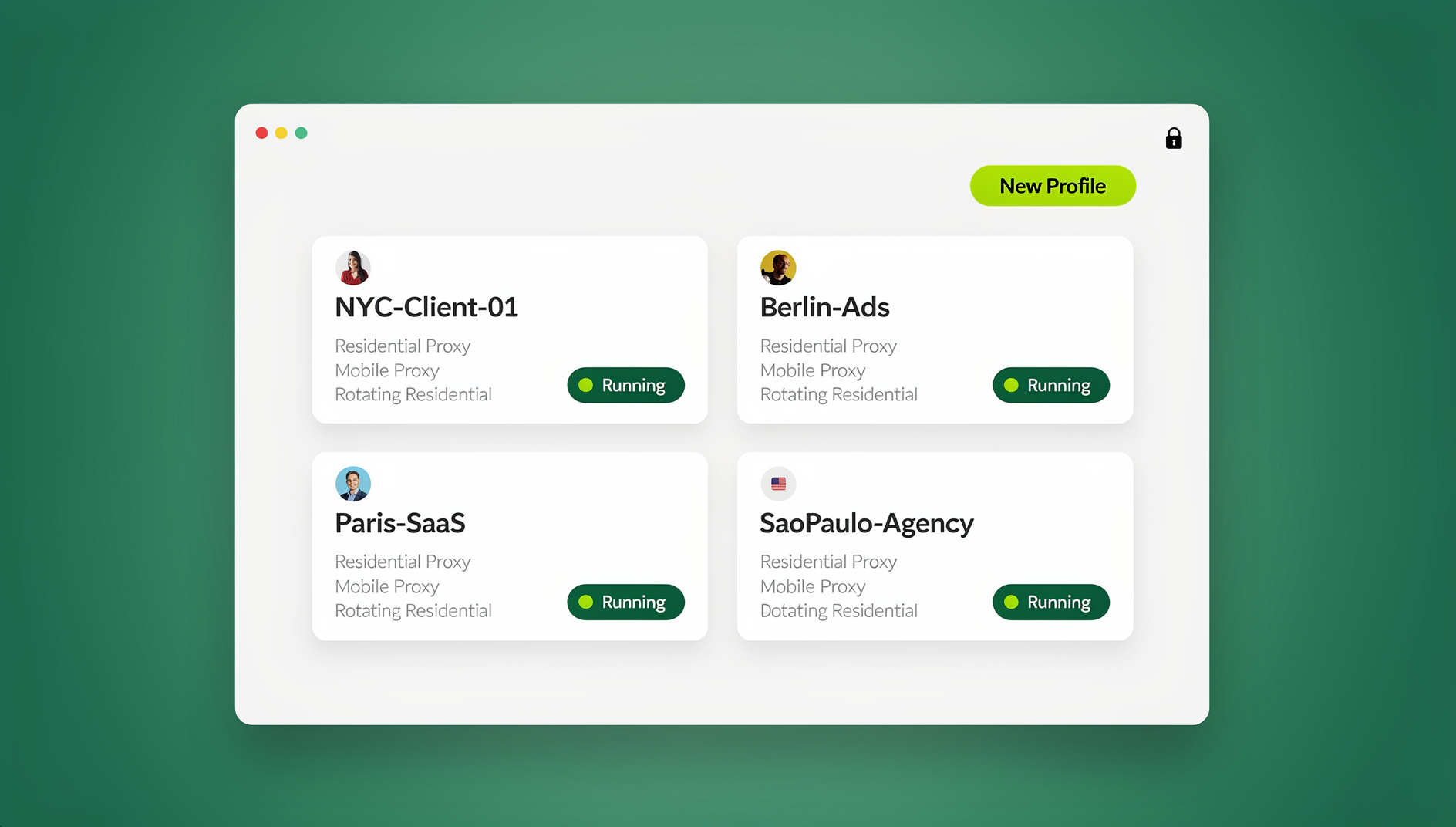
Send.win solves the multi-iCloud dilemma by providing isolated, lightweight browsing environments. You can run Send.win in two modes: the native desktop app (Sendwin Browser) for local profile running, or cloud browser sessions for zero-install access from any machine. Because Send.win operates without any browser add-ons, your setups remain lightweight and immune to security vulnerabilities associated with third-party software.
Here is how to set up your multi-iCloud workspace in Send.win:
- Create Separate Profiles: Open Send.win and create a dedicated profile for each iCloud account (e.g., “iCloud – Personal”, “iCloud – Business”, “iCloud – Client A”).
- Assign Proxies (Optional): If you are managing iCloud accounts that must appear to log in from different geographic locations, assign a unique proxy to each profile. This is especially useful for a browser for ads management setup where location matching is required.
- Log Into iCloud: Launch your profiles and log into iCloud.com on each. Input your password and complete the 2FA verification.
- Save Session State: Send.win automatically saves your session cookies and local storage. The next time you open the profile, you will bypass the login screen entirely, landing directly on your iCloud dashboard.
With this setup, you can arrange your Send.win tabs side-by-side. You can drag and drop files from your desktop into separate iCloud Drive windows, check emails across different iCloud mailboxes in real-time, and update notes on different accounts without ever signing out.
Optimizing Storage and Costs Across Multiple iCloud Accounts
Managing several accounts also means managing multiple storage quotas. Every free Apple ID comes with 5GB of iCloud storage, which fills up quickly. To optimize your storage and avoid unnecessary costs, use the following comparison table to understand the pricing plans for both iCloud and Send.win:
| Service / Plan | Pricing (Monthly / Annual) | Key Features |
|---|---|---|
| iCloud+ Free Tier | Free | 5 GB storage, basic email sync, limited web access. |
| iCloud+ 50GB | $0.99 / mo | 50 GB storage, Custom Email Domain, Hide My Email. |
| iCloud+ 200GB | $2.99 / mo | 200 GB storage, Family Sharing support for up to 6 members. |
| iCloud+ 2TB | $19 / mo | 2 TB storage, HomeKit Secure Video, full sharing features. |
| Send.win Pro Plan | $19 / mo ($83.88 / yr) | 7-day money-back guarantee on the first card purchase, isolated browser profiles with their own cookies, storage and fingerprint settings, no automation interface. |
| Send.win Team Plan | $49 / mo ($251.88 / yr) | 7-day money-back guarantee on the first card purchase, isolated browser profiles with their own cookies, storage and fingerprint settings, team seats, no automation interface. |
By leveraging Send.win’s Pro plan at $6.99/month on an annual basis, you can avoid upgrading multiple iCloud storage accounts. Instead of paying for premium iCloud plans for five different accounts, you can keep them on the free 5GB tier, access them simultaneously via Send.win, and use a shared primary cloud storage or local disk to archive large media assets.
Integrating iCloud with Professional Workflows
If your work involves managing e-commerce stores, client files, or advertising campaigns, organizing your iCloud accounts alongside other business profiles is key. For example, if you run multiple Amazon accounts, you can dedicate a specific Send.win profile to each client. Within that profile, you can open their specific Amazon seller portal, their business iCloud email, and their shared iCloud Drive folder. This keeps all client-related cookies, sessions, and log files completely segregated, removing the threat of cross-account linkage.
Additionally, remember these security best practices for multi-account management:
- Use Unique Passwords: Never reuse your master Apple ID password across different accounts. Use a secure password manager to generate random credentials for each iCloud profile.
- Configure Recovery Contacts: Since managing multiple accounts increases the risk of forgetting credentials, set up recovery contacts or print recovery keys for your most critical business accounts.
- Set Up App-Specific Passwords: If you must connect secondary iCloud email addresses to desktop clients like Outlook, generate app-specific passwords at appleid.apple.com to keep your main password secure.
🏆 Send.win Verdict
Managing multiple iCloud accounts doesn’t have to mean constant logouts and tedious verification screens. While Apple’s native environment is designed for single-account lock-in, Send.win’s isolated browser environments give you the flexibility to access unlimited iCloud dashboards simultaneously. With clean session containment, proxy integration, and persistent logins, you can streamline your multi-iCloud workflow in a single interface.
Try the Send.win cloud demo — run all your iCloud, social, and business accounts side-by-side in isolated browser profiles, each with its own cookies, storage and fingerprint settings.
Frequently Asked Questions
Can I merge two separate iCloud accounts into a single account?
No, Apple does not allow you to merge two different Apple IDs or iCloud accounts. You can manually copy data, such as dragging and dropping files or export-importing contacts, between accounts. However, the purchase histories, App Store licenses, and account storage databases will always remain separate.
How many iCloud accounts can I manage natively on a single device?
Natively, you can only sign into one primary iCloud account on iOS or macOS for system-level sync services. However, on macOS, you can create separate user login profiles to run different iCloud accounts in isolation, though switching between user accounts takes time and interrupts your workflow.
Does Send.win require a browser add-on or tool to operate?
No. Send.win does not use any browser add-ons or client modifications. It functions as a native desktop application called Sendwin Browser or as a zero-install cloud browser session. This ensures that your browsing environments remain secure, clean, and isolated from standard browser exploits.
Can I share iCloud storage between my business and personal accounts?
Yes, you can utilize Apple’s Family Sharing feature to share a single iCloud+ storage plan (like the 200GB or 2TB tier) with up to six different Apple IDs. Each account keeps its files and photos private, but they draw from the same shared storage pool, which helps cut subscription costs.
Can I use multiple iCloud email accounts simultaneously in the Apple Mail app?
Yes. You can add secondary iCloud accounts as IMAP email accounts in the native Mail app settings. However, this only syncs emails. It does not give you concurrent access to iCloud Drive files, shared folders, or reminders associated with those secondary accounts.
How can I copy files between different iCloud Drive accounts without downloading them locally?
You can create shared collaboration folders in iCloud Drive to link your accounts. Alternatively, you can open both iCloud Drive web interfaces in separate, isolated Send.win tabs side-by-side, allowing you to quickly manage and share files across your accounts from a single screen.
How does Send.win secure my iCloud logins and prevent session leaks?
Send.win isolates all browser cookies, local storage, cache, and hardware fingerprints per profile. This means if you have ten different iCloud profiles open, their sessions never touch or leak. This sandboxing prevents Apple’s login servers from linking your accounts or logging you out.
{
“@context”: “https://schema.org”,
“@type”: “FAQPage”,
“mainEntity”: [
{
“@type”: “Question”,
“name”: “Can I merge two separate iCloud accounts into a single account?”,
“acceptedAnswer”: {
“@type”: “Answer”,
“text”: “No, Apple does not allow you to merge two different Apple IDs or iCloud accounts. You can manually copy data, such as dragging and dropping files or export-importing contacts, between accounts. However, the purchase histories, App Store licenses, and account storage databases will always remain separate.”
}
},
{
“@type”: “Question”,
“name”: “How many iCloud accounts can I manage natively on a single device?”,
“acceptedAnswer”: {
“@type”: “Answer”,
“text”: “Natively, you can only sign into one primary iCloud account on iOS or macOS for system-level sync services. However, on macOS, you can create separate user login profiles to run different iCloud accounts in isolation, though switching between user accounts takes time and interrupts your workflow.”
}
},
{
“@type”: “Question”,
“name”: “Does Send.win require a browser add-on or tool to operate?”,
“acceptedAnswer”: {
“@type”: “Answer”,
“text”: “No. Send.win does not use any browser add-ons or client modifications. It functions as a native desktop application called Sendwin Browser or as a zero-install cloud browser session. This ensures that your browsing environments remain secure, clean, and isolated from standard browser exploits.”
}
},
{
“@type”: “Question”,
“name”: “Can I share iCloud storage between my business and personal accounts?”,
“acceptedAnswer”: {
“@type”: “Answer”,
“text”: “Yes, you can utilize Apple’s Family Sharing feature to share a single iCloud+ storage plan (like the 200GB or 2TB tier) with up to six different Apple IDs. Each account keeps its files and photos private, but they draw from the same shared storage pool, which helps cut subscription costs.”
}
},
{
“@type”: “Question”,
“name”: “Can I use multiple iCloud email accounts simultaneously in the Apple Mail app?”,
“acceptedAnswer”: {
“@type”: “Answer”,
“text”: “Yes. You can add secondary iCloud accounts as IMAP email accounts in the native Mail app settings. However, this only syncs emails. It does not give you concurrent access to iCloud Drive files, shared folders, or reminders associated with those secondary accounts.”
}
},
{
“@type”: “Question”,
“name”: “How can I copy files between different iCloud Drive accounts without downloading them locally?”,
“acceptedAnswer”: {
“@type”: “Answer”,
“text”: “You can create shared collaboration folders in iCloud Drive to link your accounts. Alternatively, you can open both iCloud Drive web interfaces in separate, isolated Send.win tabs side-by-side, allowing you to quickly manage and share files across your accounts from a single screen.”
}
},
{
“@type”: “Question”,
“name”: “How does Send.win secure my iCloud logins and prevent session leaks?”,
“acceptedAnswer”: {
“@type”: “Answer”,
“text”: “Send.win isolates all browser cookies, local storage, cache, and hardware fingerprints per profile. This means if you have ten different iCloud profiles open, their sessions never touch or leak. This sandboxing prevents Apple’s login servers from linking your accounts or logging you out.”
}
}
]
}