If you need to manage multiple iTunes accounts (now Apple IDs) on a single computer or device, you can configure a split-account setup separating iCloud from media purchases, set up Apple Family Sharing, or use isolated browser profiles to stream Apple Music across different accounts simultaneously. While Apple’s ecosystem is designed around a single-user paradigm, these strategies let you manage multiple iTunes accounts without losing access to your purchased music, apps, or subscriptions. Here is how to resolve this multi-account challenge.
The Core Conflict: Apple’s Single-User Philosophy vs. Multi-Account Reality
Apple’s corporate design philosophy has always been centered around the individual user. An Apple ID is envisioned as a singular digital identity, representing one person’s purchases, backups, preferences, and personal data. However, the operational reality for many developers, music industry professionals, and cross-border families requires them to manage multiple iTunes accounts simultaneously. When you operate across different regions, separate your professional and personal lives, or manage devices for multiple family members, Apple’s single-identity structure creates significant friction.
This challenge is particularly pronounced for users who have migrated between countries. Because iTunes and App Store catalogs are region-locked, you cannot download an application or purchase a song that is exclusive to the United States store if your Apple ID is set to the United Kingdom. To resolve this, users frequently create separate Apple IDs for different regional stores. Managing these profiles requires a solid understanding of how Apple handles local device authorization, DRM licensing, and cloud synchronization.
Moreover, Apple’s services are deeply integrated into its hardware. When you sign in to a secondary account on a device, Apple’s operating systems assume you are attempting to permanently switch users. This triggers automatic changes to your photos library, contact lists, and device backups, which can lead to data fragmentation or accidental deletion. Therefore, keeping these accounts isolated is critical to protecting your personal data integrity.
Understanding Apple ID and iTunes Account Separation
To manage multiple accounts effectively, you must understand the distinction between iCloud services and media purchase services. Although Apple unified these services under the umbrella term “Apple ID,” they run on separate authentication databases. This separation is the key to managing multiple profiles on a single iOS or macOS device without corrupting your personal data.
The two primary systems include:
- iCloud Accounts: These handle personal data synchronization, including photos, contacts, notes, reminders, Keychain passwords, and device backups. You should keep this account consistent on your device to prevent data fragmentation.
- Media & Purchases Accounts: These manage your licenses for music purchased via the iTunes Store, movie rentals, App Store downloads, Apple Books, and subscriptions like Apple Music or Apple Arcade. This is the account you can safely swap without affecting your personal iCloud files.
By configuring your devices to use separate identities for these two systems, you can achieve a practical middle ground. You maintain a stable personal iCloud backup while enjoying the flexibility of purchasing apps and media from multiple separate iTunes stores.
Method 1: Split-Account Configuration on iOS Devices
On iPhones and iPads, Apple natively permits you to run a split-account configuration. This setup allows you to use one Apple ID for iCloud services and a completely different Apple ID for App Store and iTunes purchases. This is highly beneficial for professionals who use a corporate Apple ID for work-related apps but want to access their personal media purchases on the same device.
To configure a split-account setup on iOS, follow these steps:
- Open the Settings application on your iPhone or iPad.
- Tap on your name at the top of the menu to access your Apple ID settings.
- Select “Media & Purchases” (formerly iTunes & App Store).
- Tap “Sign Out” to disconnect your primary account from media services (note: this will not sign you out of iCloud).
- Tap “Media & Purchases” again, and select the option to sign in with a different Apple ID.
- Enter the credentials for your secondary iTunes account.
Once completed, your device will sync contacts and backups to your primary iCloud account, while all music downloads, app purchases, and streaming libraries will pull from your secondary iTunes account. Note that local synchronization will happen automatically, meaning you do not have to worry about manually transferring files.
Method 2: Account Switching in macOS Music and TV Apps
With the release of macOS Catalina, Apple retired the classic iTunes application, splitting its functions into separate Music, TV, and Podcasts applications. On a Mac, you can manage multiple accounts by signing in and out of these individual applications.
To switch accounts in the macOS Music app:
- Launch the Apple Music application.
- Navigate to the top menu bar and select “Account”.
- Click “Sign Out” to terminate the current media session.
- Go back to the “Account” menu and select “Sign In”.
- Enter the username and password for your secondary Apple ID.
While this method allows you to access different purchased libraries, it has limitations. Downloaded music from your first account remains stored on your hard drive but cannot be played while signed into the second account if the files contain Digital Rights Management (DRM) protection. Furthermore, frequent account switching can occasionally trigger Apple’s 90-day device association lock, which prevents you from downloading purchases from a different Apple ID on that machine for three months. This restriction is hardcoded into Apple’s servers and cannot be bypassed by local troubleshooting.
Method 3: Apple Family Sharing for Household Consolidation
If your goal is to manage multiple iTunes accounts across family members or devices within the same household, Apple’s Family Sharing is the officially supported solution. This feature allows up to six distinct Apple IDs to share purchases and subscriptions without sharing login credentials or passwords.
When Family Sharing is enabled, the group organizer assumes responsibility for billing, and all purchases made by family members are charged to the organizer’s payment method. Shared services include iTunes Store purchases (movies, TV shows), App Store downloads, Apple Music family subscriptions, and shared iCloud storage plans. Each family member maintains their own private Apple ID, preserving their individual playlists, game progress, and personal photo libraries while enjoying access to a shared pool of purchased media. It is the safest way to consolidate media licensing costs within a single home.
Method 4: Managing Multiple Accounts via Browser-Based Players
For professionals who need to manage multiple streaming profiles or check regional store catalogs without affecting their local system configurations, web-based players provide an excellent alternative. Apple Music hosts a full-featured web player at music.apple.com, allowing users to log into their accounts inside a browser window.
By consulting a detailed Chrome multi-account guide, you can configure isolated browser profiles to run multiple Apple Music accounts side-by-side. For example, you can open one profile logged into a US Apple Music account and another logged into a Japanese account. To prevent Apple’s security systems from terminating your sessions due to cookie overlap, you should use a dedicated cookie management tool. This maintains distinct login states across your profiles, enabling you to stream music and manage account settings concurrently. It is highly efficient because it bypasses local software restrictions entirely.
Method 5: Running Multiple iTunes Profiles via Sandbox Isolation
In professional settings—such as music licensing agencies, app testing firms, or digital marketing companies—managing accounts across different geographical regions requires absolute isolation. Simply switching accounts in a standard browser can trigger automated security checks, as Apple’s algorithms monitor browser fingerprints, operating system details, and network configurations.
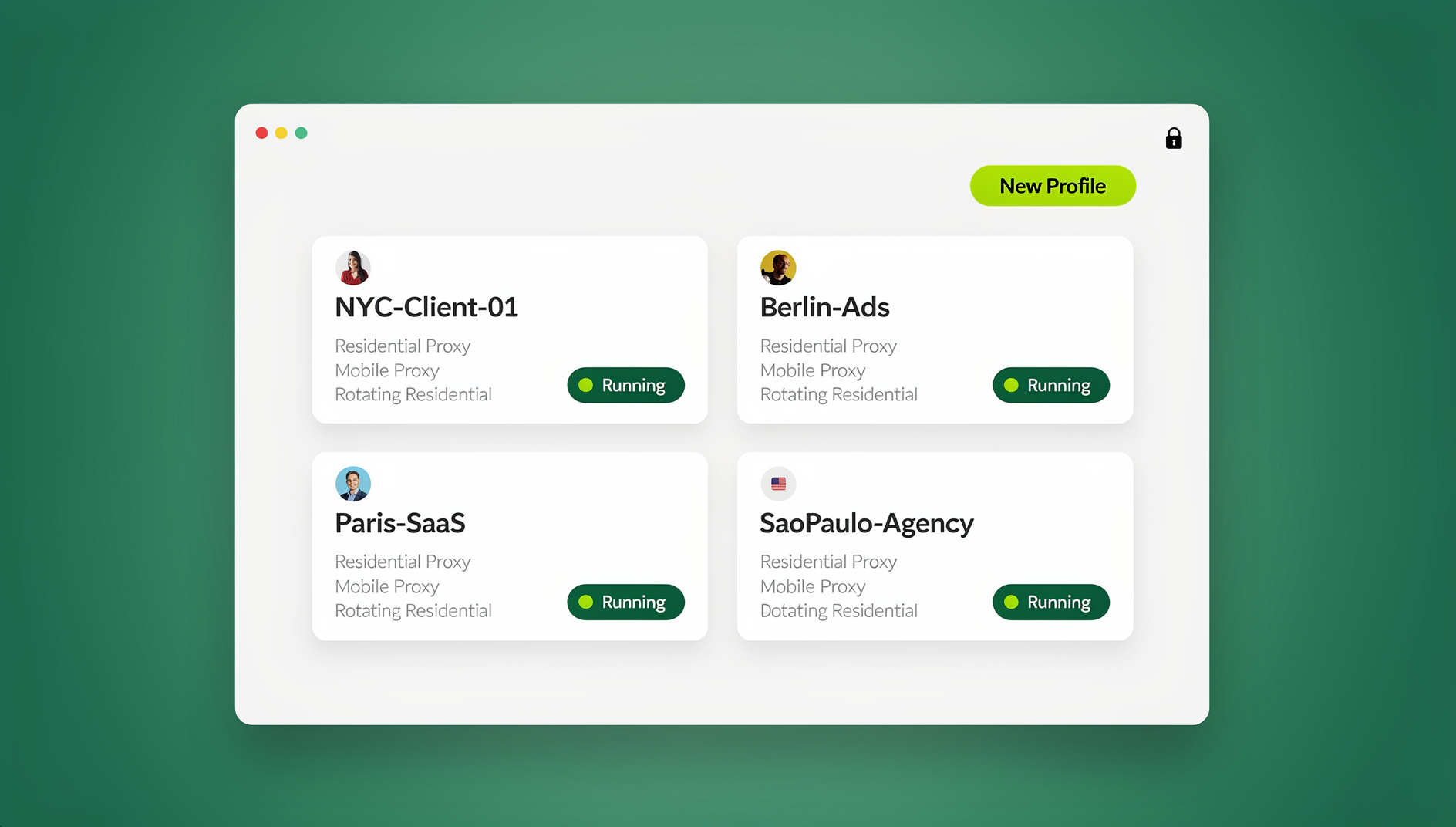
To achieve secure isolation, professionals use specialized multi-profile browsers. Similar to setting up a browser for ads management, you can run Sendwin Browser (our native desktop app) or cloud browser sessions to partition your digital identities. Each profile behaves as an independent physical machine with unique cookies, storage, and fingerprint parameters. For operators who manage sensitive online properties—analogous to businesses running multiple Amazon accounts—this sandboxed approach ensures that your media accounts remain completely isolated from one another, preventing security flags and lockouts.
iTunes Match vs. Apple Music Cloud Library for Multi-Account Users
For music lovers and professionals, navigating the differences between iTunes Match and Apple Music’s Cloud Library is essential when coordinating multiple accounts. Both services allow you to store your local music library in the cloud and stream it to any authorized device, but they operate under different licensing rules and database models. iTunes Match focuses strictly on matching your imported files with Apple’s DRM-free catalog, whereas Apple Music matches files and adds its entire streaming catalog to your library, which is protected by DRM.
When managing multiple Apple IDs, each account maintains its own independent cloud library. If you subscribe to Apple Music on your primary account but have years of rare, matched tracks on a secondary account’s iTunes Match subscription, you cannot directly combine these databases. To access all your tracks, you must download the physical files from your secondary account to your computer’s local storage, sign out of that media session, sign into your primary Apple Music account, and import those files. This process consolidates your physical library, allowing Apple Music’s Cloud Library to scan and upload the combined collection to your primary account.
Developer Provisioning and Multi-Account App Store Connect Access
Mobile application developers face unique challenges when managing multiple Apple identities. App Store Connect—the platform used to submit and manage iOS applications—requires developers to log in with Apple IDs that have specific team roles and provisioning privileges. Juggling personal developer accounts, corporate enterprise accounts, and freelance client accounts is a daily reality for iOS engineers.
Because Apple’s Xcode development environment and local keychain store certificates and profiles globally, developers frequently encounter provisioning conflicts. Signing into multiple developer accounts on the same machine can lead to certificate signing errors and invalid provisioning profiles. To resolve this, developers use separate user accounts on macOS or run isolated virtual machines for different client projects. When managing web-based App Store Connect tasks, using isolated browser profiles ensures that you can submit applications, manage test users via TestFlight, and audit sales reports across multiple client portals simultaneously without continuous authentication prompts or session conflicts.
The Regional iTunes Store Challenge and Solutions
Managing regional iTunes accounts presents unique payment and network challenges. Apple requires a valid payment method (credit card or local gift card) billing to an address inside the target country to change your store region. If you do not possess a local credit card, you cannot switch your account’s region natively.
To circumvent this, many international users maintain separate Apple IDs for each region. They fund these accounts using local iTunes gift cards purchased online. When accessing these regional stores, pairing your browser profiles with proxies that match the target country is highly recommended. This ensures that your network connection originates from the correct region, minimizing the risk of Apple flagging your account for suspicious activity during purchases or downloads.
Consolidating and Transferring Media Libraries
A common question among multi-account users is how to merge libraries from different Apple IDs. Unfortunately, Apple does not support direct library consolidation or purchase transfers. Any song, movie, or application purchased remains permanently bound to the purchasing Apple ID.
However, you can manually consolidate DRM-free music files. Music files purchased from iTunes after 2009 are DRM-free and can be copied from your computer’s media folder and imported directly into another account’s music library. For DRM-protected content (such as movies or older purchased tracks), you must keep the original Apple ID authorized on your computer. Each Apple ID can authorize up to five computers simultaneously, allowing you to play protected content from multiple accounts on a single machine, provided you sign in and authorize the computer for each account.
Additionally, users should keep in mind that cloud-based purchases are governed by Apple’s strict licensing terms. In the digital media landscape, you do not technically own the files you purchase; instead, you own a revocable license to access that media under a specific Apple ID. If an account is deactivated or locked due to a security violation, the licenses associated with that account are lost forever. This makes maintaining secure backups of your DRM-free purchases on local external drives highly advisable. Consolidating your offline files in a single, safe storage array prevents media loss if you ever lose access to one of your secondary Apple IDs. Furthermore, keeping a meticulous spreadsheet that maps which Apple ID was used for specific high-value purchases can save hours of troubleshooting if you need to re-authorize devices or resolve credential conflicts in the future.
🏆 Send.win Verdict
Managing multiple iTunes accounts and Apple IDs natively is a complex task due to Apple’s strict device locks and single-user philosophy. While split-account configurations work for iOS devices, managing multiple accounts—especially across different regions—on desktop requires complete session isolation. Send.win offers a seamless solution by letting you run unlimited, fully isolated browser profiles on our Sendwin Browser desktop client or via cloud browser sessions. Paid plans start at $19/mo (Pro) or $49/mo (Team), and your first card purchase is covered by a 7-day money-back guarantee. You can also try the free cloud demo at https://send.win/demo-browser/ to manage all your Apple media accounts safely.
Try the Send.win cloud demo — a 3-minute preview without signup (10 minutes a day with a free account), and streamline your Apple ID management.
Frequently Asked Questions
Can I merge two iTunes accounts or Apple IDs?
No, Apple does not allow you to merge two different Apple IDs. All purchases, playlists, subscriptions, and backups associated with each account will remain permanently separate, though you can share purchases using Family Sharing.
Can I use two Apple IDs on the same iPhone?
Yes, you can configure a split-account setup on iOS. You can sign into one Apple ID for iCloud features (backups, photos, contacts) and sign into a completely different Apple ID for Media & Purchases (iTunes, App Store, Apple Music).
How do I transfer iTunes purchases to another Apple ID?
Apple does not support transferring purchases between accounts. Any music, movies, or applications you buy are permanently locked to that specific Apple ID. To access them from another account, you must set up Family Sharing.
Is Family Sharing the best way to share purchases?
For households and families, yes, Family Sharing is the best method as it lets up to six members share music, movies, TV shows, and app purchases. For professional or cross-regional accounts, browser-based profile separation is more effective.
Can I access different regional iTunes stores?
Yes, but your Apple ID’s region determines which store you can browse. To access different regional iTunes catalogs, it is usually easiest to maintain separate regional Apple IDs rather than constantly changing your primary account’s region.
How many computers can I authorize with my iTunes account?
Each iTunes account can authorize up to five computers (Windows or Mac) at any one time. iOS devices (iPhones and iPads) do not count toward this computer authorization limit, but they have their own associated device limits.
Can I use Send.win to manage multiple iTunes web sessions?
Yes, you can run multiple independent web sessions of Apple Music or Apple ID management by setting up isolated profiles in Send.win. Each profile holds separate login cookies so you can monitor and stream across accounts simultaneously.