Managing multiple Skype accounts simultaneously requires separating your digital sessions, which you can easily achieve by using a dedicated multi-profile browser like Send.win or by signing into Skype Web across different browser profiles. While the official desktop client limits you to one active session, these methods keep your accounts isolated, preventing any notification overlap or security flags. In this guide, we will outline the best methods to manage multiple Skype accounts for business, client management, and personal communication.
Why Professionals Need to Manage Multiple Skype Accounts
Despite the massive expansion of enterprise communication platforms, Skype continues to serve as an indispensable bridge for millions of international business relations, freelancer agreements, and client support pipelines. The necessity to manage multiple Skype accounts typically arises from the professional imperative to maintain clear operational boundaries. Freelance professionals, virtual assistants, agency team members, and technical support representatives frequently need to divide their messaging personas. Juggling different client communication streams requires absolute separation; mixed messages or accidental cross-talk can compromise client relationships in an instant.
For example, a marketing consultant handling communications across multiple regions may require distinct Skype IDs to establish localized presence and manage contacts within different time zones. Similarly, helpdesk operators often oversee generic support accounts alongside their personal corporate accounts, necessitating simultaneous access to prevent missing high-urgency user requests. Because Skype is fundamentally tied to Microsoft’s personal identity infrastructure, it lacks native provisions for simple profile swapping, making external coordination essential.
Furthermore, maintaining discrete accounts protects your personal privacy. Mixing client chats with conversations involving friends and family members is a recipe for operational confusion. An accidental status update or an off-hours message sent to a corporate partner can erode trust in a second. By isolating these identities, you ensure that your professional image remains clean and that your client communications are organized in a structured manner.
Understanding Skype’s Underlying Identity Architecture
To successfully operate multiple Skype instances, one must first comprehend how Microsoft structures its account credentials. Historically, Skype accounts were standalone username-based profiles. Today, every Skype account is bound directly to a Microsoft Account (MSA). This integration means your Skype presence is inextricably linked with an Outlook address, OneDrive files, and Microsoft 365 services. Attempting to switch profiles within the Skype app triggers a cascade of session changes across other Microsoft services on your machine.
Furthermore, we must distinguish between personal Skype accounts and organizational profiles tied to Microsoft Teams or Skype for Business. Personal accounts utilize Microsoft’s consumer authentication servers, whereas enterprise accounts rely on corporate tenant policies. When you manage multiple Skype accounts, you are managing multiple separate Microsoft identities, each governed by its own cookies, authentication tokens, and security policies. Understanding this structure is crucial because it dictates why traditional login methods fail and why secure session isolation is required.
Additionally, Microsoft’s automated security systems monitor login activities closely. If you attempt to switch between three or four different Microsoft accounts on the same computer using a single browser, their fraud detection systems may interpret this as suspicious activity. This can result in your accounts being locked, requiring complex SMS verification or security code entries to regain access. Consequently, relying on simple sign-out and sign-in processes is not only inefficient but also represents a risk to your business continuity.
Method 1: Running Multiple Skype Desktop Instances on Windows and Mac
If you prefer using the native Skype desktop client, you can launch multiple instances simultaneously using advanced command-line arguments. In Windows, this is achieved by instructing the application to execute a secondary, isolated instance that ignores the primary running session.
To configure this on Windows, you must locate the target path of your Skype executable, create a shortcut on your desktop, and modify its properties. By appending the /secondary switch to the target command line, Windows forces Skype to launch as a separate process. The full command typically looks like this:
"C:\Program Files (x86)\Microsoft\Skype for Desktop\Skype.exe" /secondaryWhen you launch this modified shortcut, a fresh login screen will appear, permitting you to sign in with a different Microsoft credential. On macOS, achieving a similar setup requires running a Terminal command to execute the Skype binary inside a separate user environment or using the open command with the -n flag to launch a new instance. While this method allows you to run two desktop applications side-by-side, it is notorious for high RAM consumption, as each instance duplicates the underlying Electron framework footprint on your local operating system. It is also susceptible to updates, as Microsoft occasionally changes the path directories, breaking your custom shortcuts without warning.
Method 2: Combining the Desktop App with Skype Web Sessions
For users who want to avoid command-line configurations, a straightforward alternative is to combine the native desktop client with Skype Web. The web version of the service, accessible at web.skype.com, provides a nearly identical feature set, including voice calls, group chat management, and file sharing, all running within a browser viewport.
To execute this hybrid setup, follow these steps:
- Launch the Skype desktop client on your computer and log into your primary professional account.
- Open your default web browser and navigate to the web login portal.
- Log into your secondary Skype account.
- Allow the browser permission to display desktop notifications so you do not miss incoming chat alerts.
This layout operates independently because the browser storage (cookies and local storage) does not overlap with the desktop client’s data directory. While highly effective for managing exactly two accounts, this approach does not scale. Adding a third account requires either launching another browser or manipulating private windows, which do not persist sessions between reboots. This means you must enter your username, password, and two-factor authentication codes every morning, adding friction to your daily routine.
Method 3: Running Multiple Accounts via Web Browser Profiles
If your daily workflow involves managing three to six Skype accounts, utilizing separate browser profiles offers a more scalable option. Browsers like Google Chrome, Microsoft Edge, and Brave allow you to partition your browsing environments. Each profile functions as an isolated container with its own database of cookies, history, and cache storage.
By consulting a detailed Chrome multi-account guide, you can configure your browser to maintain distinct workspaces for every client or department. For Skype management, you would create a profile named “Skype – Client A” and another named “Skype – Client B”. Inside each workspace, you navigate to the web interface and sign in. Because the sessions are separated, you will remain logged into all accounts concurrently. However, this method has significant physical limitations; running half a dozen browser profiles simultaneously demands substantial memory allocations, often slowing down your computer’s performance during video calls. It also leads to a chaotic desktop screen filled with multiple open windows, making it difficult to locate specific chats quickly.
Method 4: The Best Solution: Isolated Multi-Profile Browsers
For agencies, customer support teams, and power users who need to scale their operations beyond simple browser workarounds, isolated multi-profile tools provide the ultimate solution. Standard browser profiles share the same underlying hardware profile, canvas fingerprints, and network configurations. Microsoft’s security protocols can link these profiles together, potentially prompting continuous CAPTCHAs, verification checks, or account suspensions due to suspicious login patterns.
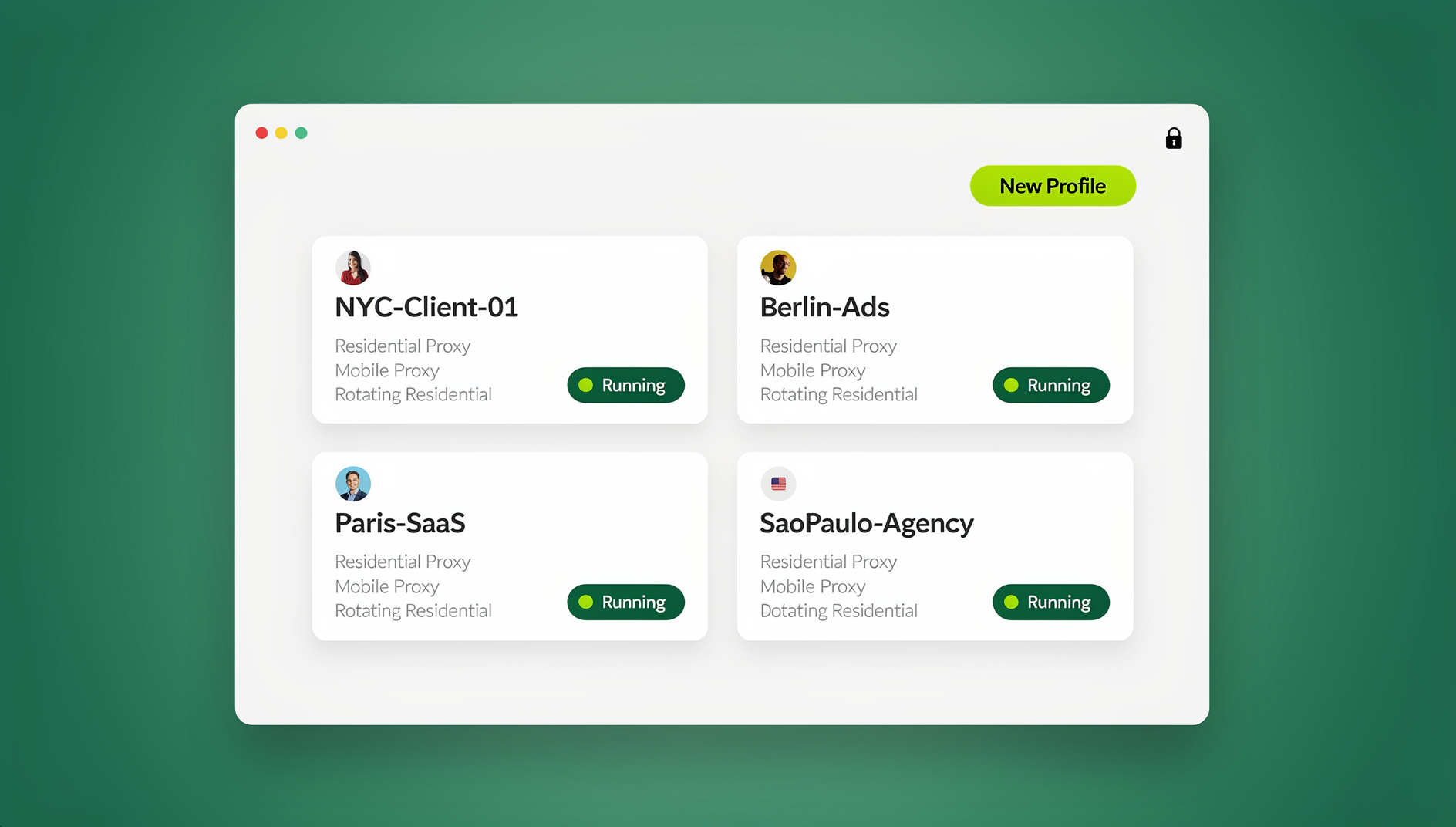
To overcome these restrictions, integrating a specialized cookie management tool and a sandboxed browser environment like Send.win is highly recommended. Send.win runs fully isolated browser profiles on its native desktop client or via cloud browser sessions, ensuring that every Skype session operates with a unique, consistent digital fingerprint. This means Microsoft’s security systems perceive each login as originating from a completely distinct physical machine, guaranteeing uninterrupted connectivity and enhanced account safety. Profiles are stored in the cloud, allowing you to access your active sessions from any device without reinstalling local applications.
Troubleshooting Audio and Video Routing Across Multiple Sessions
One of the most frequent technical hurdles when running multiple Skype instances simultaneously is device contention. Webcams, microphones, and speakers are hardware resources managed by your operating system, which typically grants exclusive control to a single application process at a time. When you attempt to join a call on your secondary Skype account while your primary account is active, you may encounter error messages indicating that your camera is already in use or that your microphone cannot be accessed.
To resolve hardware conflicts across sessions, you should configure your default communication devices. In the Windows Sound Control Panel or macOS Audio MIDI Setup, verify that your hardware is set to allow shared mode. This permits multiple software processes to capture microphone input simultaneously. For video routing, consider utilizing virtual camera software. Tools like OBS Studio or SplitCam allow you to capture your physical webcam feed once and route it as a virtual camera source to multiple Skype applications. This enables you to maintain active video feeds across two different accounts without triggering device blockages. Additionally, always make sure to mute the microphone on inactive sessions to prevent accidental feedback loops or audio bleeding during concurrent calls.
Managing Skype Credits, Subscriptions, and Regional Numbers
Financial management across multiple accounts is another operational challenge. Many businesses purchase Skype Numbers to establish local presence in various countries, allowing international customers to call a local landline that rings directly in their Skype application. If you operate five distinct regional accounts, you are managing five separate billing cycles, subscription fees, and calling credit balances. Microsoft does not provide a unified billing dashboard for separate consumer Microsoft Accounts, which means you must track invoices and payment methods individually.
To streamline billing, it is best practice to link each account’s payment to a centralized corporate credit card or use virtual cards with set monthly spend limits. This prevents accidental service disruptions if a payment fails. Furthermore, configure email billing notifications for each account to route to a shared administrative inbox. If you decide to deprecate a particular account, note that Skype Credits and subscriptions are non-transferable. You must cancel active subscriptions before their renewal dates and utilize any remaining credits, as Microsoft does not issue refunds for unused balances when accounts are closed or merged.
Comparing Skype Multi-Account Management Methods
| Management Method | Maximum Accounts | Setup Complexity | Memory Overhead | Session Persistence | Best Suited For |
|---|---|---|---|---|---|
| Desktop + Web | 2 Accounts | Very Low | Low | Excellent | Individual professionals needing separate personal/work chats |
| Desktop Client switches (/secondary) | 2-3 Accounts | Medium | Very High | Excellent | Users who prefer desktop notifications and native features |
| Standard Browser Profiles | 5-8 Accounts | Medium | High | Moderate | Small teams managing a few client communication channels |
| Send.win Isolated Profiles | Unlimited | Low | Very Low | Excellent | Agencies, call centers, and multi-tenant support teams |
Best Practices for Notification and Message Management
When operating multiple communication streams, avoiding human error is just as important as setting up technical boundaries. Sending a personal message to a high-profile corporate client, or mixing up conversation threads, can severely damage your professional reputation. To prevent these errors, you should implement strict organizational protocols across your workspaces.
First, customize each profile’s appearance. Use highly contrasting profile pictures and background themes for each Skype identity. For example, your personal profile could feature a standard headshot, while client-facing support profiles should use company logos or color-coded icons. Second, organize your notifications carefully. Ensure that browser notifications display the account name or client context in their headers. Third, utilize status messages strategically; setting active hours on your business profiles while keeping your personal profile active helps manage client expectations regarding your response times. Having clear boundaries also prevents client communication from spilling into your personal life during off-hours, ensuring a healthy work-life balance.
Security and Access Controls for Skype Teams
Security is a paramount concern when managing multiple Microsoft credentials. Because Skype accounts contain client communication history, contact records, and occasionally billing information, protecting them from unauthorized access is critical. Using weak, recycled passwords across multiple profiles invites security breaches that could compromise your entire client network.
Whether your team is managing communication channels or coordinating multiple Amazon accounts, securing your credentials should be your first priority. Implement a robust password manager to generate and store unique, high-entropy passwords for each Microsoft account. Furthermore, activate two-factor authentication (2FA) for every profile. By using a centralized authenticator app, you can store and organize 2FA tokens for all your accounts, ensuring that only authorized personnel can access critical communication channels. Regularly audit your logged-in devices in your Microsoft security settings to verify that no unauthorized computers maintain active sessions.
Scaling Skype Operations with Automation
For technical teams and customer support agencies, manual chat management can quickly become a growth bottleneck. Automating routine tasks—such as sending onboarding messages, forwarding call logs, or generating weekly chat reports—can save hours of manual labor. This is where API integrations become essential.
If you choose to run a specialized browser for ads management or multi-account organization, you can keep each account in its own isolated profile. Send.win’s Team and Pro plans give each profile its own cookies, storage, sessions and fingerprint settings, so profiles do not share one browser identity. This lets your team work with Skype Web profiles side by side while keeping each profile’s data separate. By organizing repetitive messaging steps, your customer support agents can focus on resolving complex technical queries rather than executing manual inputs.
🏆 Send.win Verdict
Managing multiple Skype accounts natively is hindered by session conflicts and security locks. While browser profiles and desktop command-line switches offer temporary workarounds, they consume heavy system resources and fail to isolate your hardware fingerprints. Send.win provides a comprehensive solution, enabling you to run unlimited Skype profiles in isolated sandboxes using either the Sendwin Browser (our native desktop app) or cloud browser sessions. With Pro plan features like separate cookies, storage and fingerprint settings per profile, you can organize your communication workflows in one clean environment.
Try the free Send.win cloud demo — a 3-minute preview without signup, or 10 minutes a day with a free account, and manage all your messaging profiles in one clean, secure environment.
Frequently Asked Questions
Can I run two Skype accounts on the same computer?
Yes, you can run two Skype accounts simultaneously on the same computer by using the desktop client for one account and web.skype.com in a web browser for the other. For three or more accounts, you will need to utilize browser profiles or a specialized multi-profile management tool.
Does Microsoft allow multiple Skype accounts?
Yes, Microsoft does not prohibit users from having multiple Skype accounts. However, each account must be linked to a unique email address or phone number, and all accounts must comply with Microsoft’s terms of service.
How do I switch between Skype accounts quickly?
The native Skype desktop client does not have a quick-switch option; you must log out and log back in to change accounts. To switch quickly, it is best to use web-based sessions running in separate, isolated browser profiles so they are all active at the same time.
Can I merge two Skype accounts?
No, Microsoft does not support merging Skype accounts. If you have two accounts and want to consolidate them, you must manually export your contact list from one account and add those contacts to the other.
Is it safe to manage multiple Skype accounts?
Yes, it is safe as long as you follow security best practices. Use unique, strong passwords for each account, set up two-factor authentication, and use isolated browser sessions to prevent login session leakage.
How do I manage notifications for multiple Skype accounts?
For web sessions, enable desktop notifications in each browser profile. You can also assign distinct notification sounds or utilize third-party aggregators that consolidate multiple chat clients into one interface.
Do I need a proxy to run multiple Skype accounts?
While Skype web does not strictly enforce IP separation, using proxies is highly recommended if you are managing accounts from different countries or client regions to ensure security and prevent account flagging.