The Challenge of Managing Multiple Google Accounts
To handle managing multiple Google accounts without constant re-authentication, you should use isolated browser profiles that preserve login sessions. Standard browsers force frequent logins or default account confusion, but dedicated multi-login browsers like Sendwin Browser or remote cloud browser sessions keep each Google account in its own secure, persistent container, completely eliminating the need to log in repeatedly.
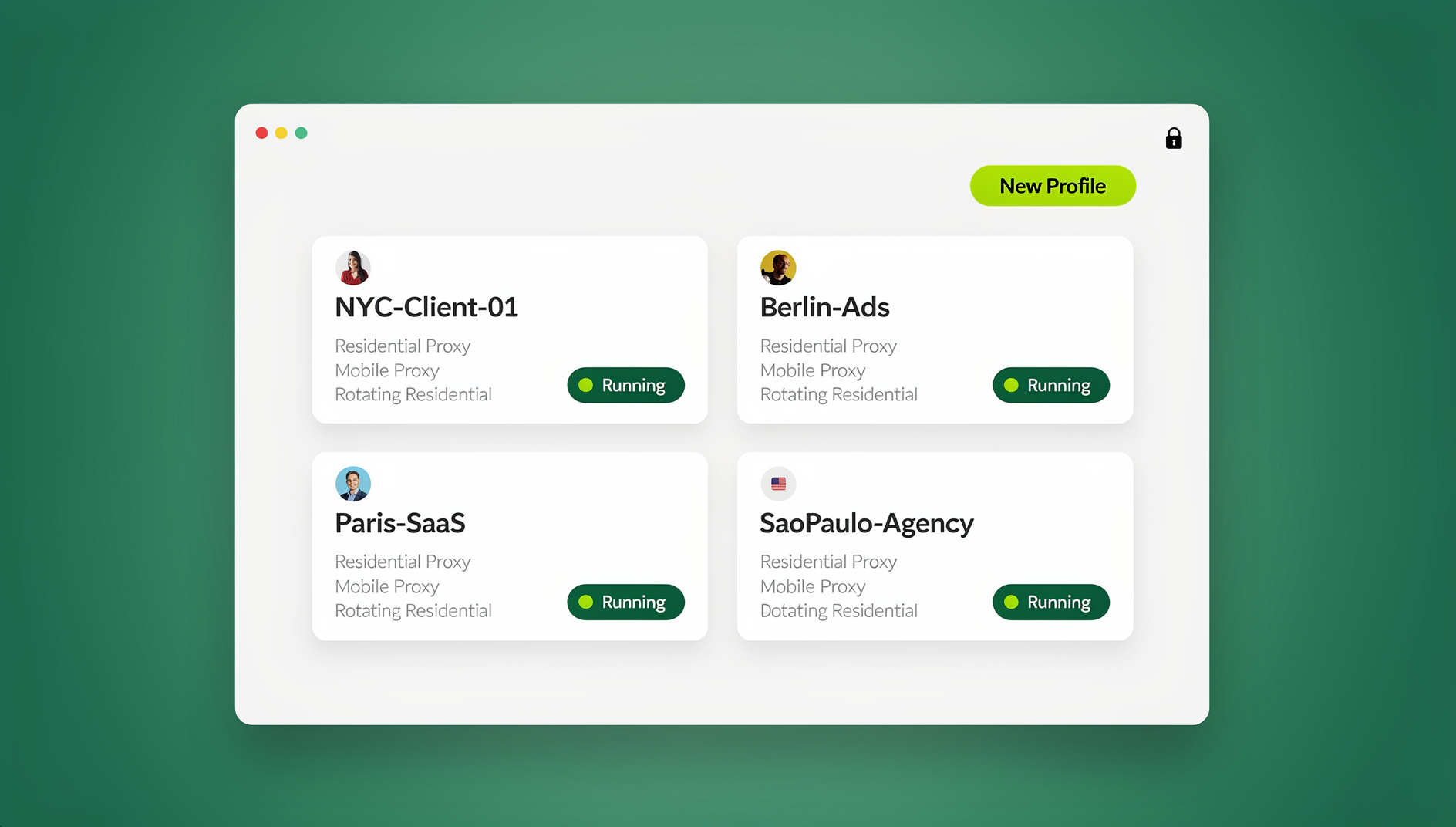
Google’s ecosystem has become the digital foundation for modern business. From Gmail and Google Drive to Google Ads, Analytics, Search Console, YouTube, and Google Business Profile, professionals interact with Google services dozens of times every day. However, for digital marketing agencies, e-commerce sellers, developers, and remote teams, managing just a single Google account is rarely enough. Success in these fields requires managing multiple Google accounts concurrently—often spanning dozens or even hundreds of separate profiles for different clients, brands, or projects. When a team attempts this in standard web browsers, they are met with friction. They face persistent security prompts, frequent session expirations, and the constant threat of account linking or suspension.
For modern professionals, agency owners, and digital marketers, managing multiple Google accounts is an everyday operational requirement. Imagine an agency account manager, Sarah, who is responsible for running advertising campaigns for five separate e-commerce clients. Each client has their own Google Ads dashboard, Google Analytics tracker, and Google Merchant Center portal. In a standard browser, Sarah must log in and out of these accounts, or attempt to keep multiple windows open. Within a short period, Google’s systems flag the unusual volume of logins from a single machine. The client accounts get restricted for “suspicious access patterns,” campaigns pause, and the agency’s reputation is damaged. Understanding why this happens and how to overcome it is essential for anyone looking to maintain a productive and secure workflow in 2026.
This comprehensive guide details the technical mechanisms behind Google’s security tracking, highlights the major flaws in conventional multi-account workarounds, and introduces the industry-standard solutions that allow you to manage your entire Google portfolio securely and seamlessly.
Why Google Forces Constant Re-authentication
Google employs some of the most sophisticated security and identity-tracking systems in the world. When you log into a Google account, Google doesn’t just check your username and password. It analyzes your entire login context to ensure that you are the legitimate owner of the account. This context includes your IP address, your geographical location, your internet service provider (ISP), and your device’s unique digital fingerprint. If Google detects any discrepancy in this context, it triggers defensive security measures. For example, if you switch between two Google accounts in the same browser, Google sees that the same device fingerprint and IP address are suddenly accessing different user databases. Google’s automated security systems view this as suspicious behavior, assuming that either an unauthorized user is attempting to access another account or a single user is trying to exploit Google’s services. To verify your identity, Google forces re-authentication via two-factor authentication (2FA), password prompts, or recovery email verifications.
Furthermore, standard browser cookies and local storage are shared across tabs. When you log into a second Google account in a new tab, the session data often overrides the first tab’s cookies. This results in session conflicts, causing you to be randomly logged out of your primary account or causing Google to default to the wrong account when you open a Google Doc or Google Drive link. This constant state of flux makes maintaining persistent login sessions impossible in a traditional browser setup.
Google’s tracking algorithms analyze several deep hardware and software markers, including:
- WebGL and Canvas Rendering: How your graphics card renders 2D and 3D shapes. Because every graphics card and driver combination has minute rendering variations, Google generates a unique hash from these tests to track your device.
- Font Enumeration: The complete list of fonts installed on your operating system.
- Audio Context: How your computer processes audio signals.
- Network Headers: Detailed information about your connection protocol, browser version, and OS.
When these markers remain identical while you cycle through different accounts, Google knows it is the same physical user on the same machine. This causes Google’s fraud detection engine to flag the accounts, triggering lockouts and requiring frequent passwords and SMS verifications to keep the sessions alive.
The Limitations of Conventional Multi-Account Methods
Faced with the challenge of managing multiple Google accounts, users typically turn to three conventional methods. While these methods are easily accessible, they each possess severe limitations that make them unsuitable for professional or high-volume workflows.
1. Google’s Built-in Account Switcher
Google provides a native account switcher in the top-right corner of its services, allowing you to click your profile picture and select “Add another account.” While this is convenient for managing two or three personal accounts, it is highly problematic for business use:
- Default Account Confusion: Google frequently defaults to the first account you logged into (Account #1). When you open a Google Drive link from an email, Google will often try to open it with Account #1, presenting an “Access Denied” page. This interrupts your workflow and leads to accidental files sharing with incorrect profiles.
- Account Limit: Google restricts simultaneous sign-ins to a maximum of 10 accounts in a single browser. If you manage 15 clients, you are forced to log out of some accounts just to access others.
- Zero Isolation: All accounts share the exact same browser fingerprint and IP address. Google easily links these accounts together behind the scenes, creating major compliance risks for agency owners.
2. Chrome Browser Profiles
Chrome allows users to create separate user profiles, each running in a separate window with its own bookmarks, history, and cookies. While this resolves cookie-override issues, it still falls short:
- Shared Hardware Fingerprint: Because Chrome profiles run on the same physical computer and OS, they share identical hardware identifiers, canvas hashes, WebGL configurations, and media device lists. Google’s algorithms can easily link all profiles to a single machine.
- Shared IP Address: Unless you configure complex local proxy routing, all Chrome profiles route traffic through your main local network IP. If one client account is flagged for an issue, Google may place restrictions on all other accounts sharing that IP address.
- Resource Exhaustion: Running 10 or more Chrome profiles simultaneously requires immense RAM and CPU power, causing local systems to lag and crash.
3. Firefox Multi-Account Containers
Firefox Multi-Account Containers allow you to isolate cookies to specific tabs, color-coding them to keep work and personal browsing separate. This provides decent cookie separation, but it fails to address the underlying tracking issues:
- No Fingerprint Isolation: Like Chrome profiles, Firefox containers do not mask your hardware fingerprint. Your canvas, audio, and WebGL footprints remain identical across every single container.
- Limited Scalability: Managing dozens of client accounts via Firefox tabs is visually cluttered and highly prone to human error, such as accidentally opening a client link in a personal container tab.
The Modern Solution: Dedicated Multi-Login Browsers
For professionals, the only viable way to manage multiple accounts without constant re-authentication is through dedicated multi-login browsers that utilize advanced session isolation. If you want to manage multiple Gmail accounts, you might have tried using an extension, but browser extensions often leak data between profiles, making dedicated multi-account browsers a much safer choice.
A multi-login browser works by creating sandboxed browsing environments for each individual profile. Each profile is treated as a completely separate device. This means that when you open Profile A, Google sees a Windows PC in New York. When you open Profile B, Google sees a macOS device in London. The cookies, local storage, cache, and browser fingerprints are fully isolated and persistent. This prevents Google from linking the profiles and ensures that your sessions remain active indefinitely.
Sendwin Browser vs. Cloud Browser Sessions
Send.win provides the leading solution for multi-account management by offering two distinct, real operational modes tailored to your specific workflow needs:
- Sendwin Browser (the native desktop app): This is a native application installable on Windows, macOS, and Linux. It runs profiles locally on your computer, each with its own cookies, storage, sessions, fingerprint settings and proxy. It gives you the fastest performance and direct control over proxy configurations.
- Cloud browser sessions: This mode allows you to spin up and run isolated browser profiles in the cloud without installing any local software. This is perfect for accessing your accounts on the go from any device, sharing profiles with team members, and ensuring zero resource usage on your local machine.
By using Send.win, your login sessions are saved securely to the cloud. When you close a profile and reopen it the next day—whether on the desktop app or in a cloud session—your session is restored exactly as it was. You remain logged in, eliminating the need to type passwords or trigger 2FA prompts repeatedly. This advanced session isolation is what keeps your operational risk at zero.
Moreover, Send.win keeps each profile isolated with its own cookies, storage, sessions, fingerprint settings and proxy, so you can manage hundreds of separate Google accounts in an organised way. Plans start on the Pro plan at $19/month (or $83.88/year), and the first card purchase is covered by a 7-day money-back guarantee.
Step-by-Step: How to Set Up Secure Google Accounts in Send.win
Setting up your Google accounts in Send.win is straightforward and takes only a few minutes. Follow these steps to ensure maximum security and persistence:
- Create a Profile: Open the Send.win dashboard. Create a new profile and assign it a descriptive name (e.g., “Client A – Gmail”). Select whether you want to run it via the native Sendwin Browser desktop app or via a cloud browser session.
- Configure Browser Fingerprint: Send.win automatically generates a natural, consistent browser fingerprint for the profile. This includes spoofing WebGL, canvas, audio, fonts, and user-agent details. Do not edit these manually unless you are an advanced user; the defaults are optimized to look like a standard retail computer.
- Bind a Dedicated Proxy: Input your proxy credentials. For Google accounts, high-quality residential proxies are strongly recommended. Ensure the proxy location matches the registered physical address of the Google account. This prevents location-based security flags.
- Launch the Profile and Log In: Open the profile. Navigate to Google and log in using your credentials. Pass any initial 2FA prompts. Once logged in, perform a few typical browsing actions (like checking email or searching on Google) to establish cookies.
- Close and Persist: Simply close the profile window. All session cookies and local storage are saved automatically to the cloud. The next time you open the profile, you will bypass the login page and land directly on your dashboard.
Best Practices for Managing Different Google Services
Different Google services have varying levels of security monitoring. Implementing specific workflows for each service is necessary when you want to manage multiple accounts easily.
Gmail Management
Gmail is highly sensitive to rapid IP switches. If you log into your Gmail account from an IP in Chicago and then five minutes later check it from an IP in Miami, Google will immediately lock the account. Always lock your Gmail profiles to consistent proxies. Additionally, avoid using third-party email aggregators that log in on your behalf from datacenter IPs, as this triggers automatic spam filters. Using Send.win’s session persistence ensures you stay logged in securely on a clean, dedicated residential IP.
Google Ads and Analytics
Google Ads is arguably the most aggressive monitoring environment in the Google ecosystem. Google actively tracks linked advertiser profiles to prevent payment evasion and policy violations. If you run multiple client ad campaigns, never manage them under a single personal account or Chrome profile. Each ad account must have its own dedicated Send.win profile and dedicated residential IP. This prevents “Suspicious Payment Activity” bans from cascading across all your clients.
Google Drive and Docs
Google Drive uses collaborative sharing settings. While you can share files between your accounts, avoid logging into all of them in the same browser window to access shared folders. Keep each account isolated, and only access the shared links within the specific profile bound to that account. This ensures Google doesn’t link the accounts via shared session cookies. Keep client documents strictly inside their designated profiles to maintain data privacy compliance.
YouTube and Google Business Profile
For content creators running multiple YouTube channels, or local SEO agencies managing Google Business Profiles for brick-and-mortar stores, profile isolation is critical. YouTube’s recommendation algorithms and monetization systems track user connections. If one channel is flagged for copyright or community guidelines, any linked channel under the same fingerprint or IP can face demonetization or suspension. Keeping them in separate Send.win cloud profiles ensures complete safety.
Advanced Security Measures for Account Protection
To ensure absolute security, professionals must implement additional protocols beyond browser isolation. Ensuring security when managing multiple Google accounts requires more than just separating cookies.
1. Proxy Management and Geolocation Matching
Google checks the alignment between your IP address geographical location and your browser’s internal timezone and WebRTC settings. If you use a proxy based in Paris, but your browser’s system timezone is set to Eastern Standard Time (EST), Google will flag this mismatch immediately. Send.win automatically syncs the profile’s internal timezone, WebRTC parameters, and language headers to match the proxy’s IP location, ensuring a flawless digital footprint. It is critical to use high-quality, sticky residential proxies rather than rotating proxies, as rotating proxies change your IP on every request, triggering Google’s security alarms.
2. Robust Two-Factor Authentication (2FA)
Never bypass 2FA, as it is your strongest defense against hacking. However, instead of using SMS-based 2FA—which requires maintaining multiple physical SIM cards and is vulnerable to SIM-swapping attacks—use authenticator apps (like Google Authenticator or Authy) and store the secret keys securely. Better yet, you can link your 2FA keys directly inside Send.win for quick, secure generation of verification codes during setup. This streamlines your login process while maintaining bank-level security.
3. Unique Recovery Details
A common mistake is using a single recovery email address or phone number for dozens of different Google accounts. Google uses recovery data as a primary signal to link accounts. If one account is banned for violating terms, Google’s systems will trace the recovery email and flag all associated accounts. Ensure every account has its own independent recovery email (e.g., using separate domain emails) and distinct phone numbers. This prevents a single account suspension from spreading throughout your entire network.
Comparing Google Multi-Account Strategies
To help you decide which approach fits your business, here is a detailed breakdown of the different multi-account management strategies:
| Management Method | Cookie Isolation | Fingerprint Masking | Proxy Bind Support | Login Session Persistence |
|---|---|---|---|---|
| Google Account Switcher | No (Shared) | No | No | Poor (Frequent conflicts) |
| Chrome User Profiles | Yes (Separate) | No (Shared hardware) | No (Requires global proxy) | Moderate (Local only) |
| Firefox Containers | Yes (Separate) | No (Shared hardware) | No (Requires complex configurations) | Moderate (Local only) |
| Send.win Browser / Cloud | Yes (Per-profile) | Yes (Consistent per-profile fingerprint) | Yes (Per-profile native) | Excellent (Cloud persistent) |
For agencies and professionals seeking to manage multiple Gmail accounts at once securely, relying on standard browser hacks is a recipe for disaster. Proper isolation is the only way to scale without constant re-authentication blocks.
🏆 Send.win Verdict
For professionals and agencies managing multiple Google accounts, standard browser profiles and built-in switchers represent a security risk and an operational bottleneck. Send.win offers complete session isolation and fingerprint protection through the native Sendwin Browser desktop app and remote cloud browser sessions, ensuring your Google Ads, Gmail, and Analytics profiles remain safe, persistent, and organized without the friction of constant re-authentication.
Try Send.win today — Plans start at $19/month (or $83.88/year on the Pro plan), and your first card purchase is covered by a 7-day money-back guarantee. You can also preview the cloud browser for free at the Send.win demo.
Frequently Asked Questions
How does Google detect that I have multiple accounts?
Google tracks your IP address, browser fingerprint, cookies, device identifiers, and even your search behavior. If these signals align, Google can easily link all of your accounts together. Using advanced metrics like WebGL hashes and canvas rendering profiles, their fraud engines create a clear map of your device regardless of which account you use.
Can I use Chrome profiles to manage multiple Google accounts safely?
While Chrome profiles isolate cookies and browsing history, they do not change your hardware-level browser fingerprint or your IP address. Google can still link your accounts using these shared identifiers, meaning a suspension on one profile can easily cross-contaminate and lock down your other business accounts.
Why do my Google accounts keep requesting re-authentication?
Google requires re-authentication if it detects a shift in your login environment, such as a change in your browser fingerprint, a new IP address location, or when your session cookies expire naturally. Keeping your browser fingerprint and IP proxy completely stable is the only way to prevent these repetitive alerts.
Does Send.win require me to download a browser extension?
No, Send.win does not have a browser extension. It is operated either via the native desktop app, Sendwin Browser, or through remote cloud browser sessions directly in your web browser. This ensures that no code is locally injected into your existing browser, providing far better isolation and performance.
Can I run Google automation tools on multiple accounts at once?
No. Send.win does not offer an automation interface — there is no API, SDK, headless mode or Selenium/Puppeteer/Playwright support on any plan. Instead, each profile keeps its own cookies, storage, sessions and fingerprint settings, so you can manage multiple accounts in an organised way.
Does Send.win offer a free trial for Google account management?
No, Send.win does not offer a free trial. Paid plans start at $19/month (or $83.88/year) for Pro, and the first card purchase is covered by a 7-day money-back guarantee. The only free option is the cloud demo, which gives you a 3-minute preview without signup, or 10 minutes a day with a free account.
Is it legal to manage multiple Google accounts?
Yes, it is entirely legal. Many businesses, agencies, and individuals manage multiple accounts for distinct projects, clients, or personal and work boundaries. As long as you do not violate Google’s Terms of Service regarding spam or fraud, running multiple profiles is a normal business practice.