What Is an Online Proxy Browser and Why Do You Need One?
An online proxy browser is a specialized web interface or client that routes traffic through an intermediary proxy server, allowing users to mask their IP address and secure their web activity. It is safe for managing multiple accounts only when configured as a fully isolated, containerized session that randomizes digital fingerprints; basic web proxies and shared add-on tools do not offer sufficient isolation, making dedicated desktop clients or isolated cloud sessions the only secure choice.
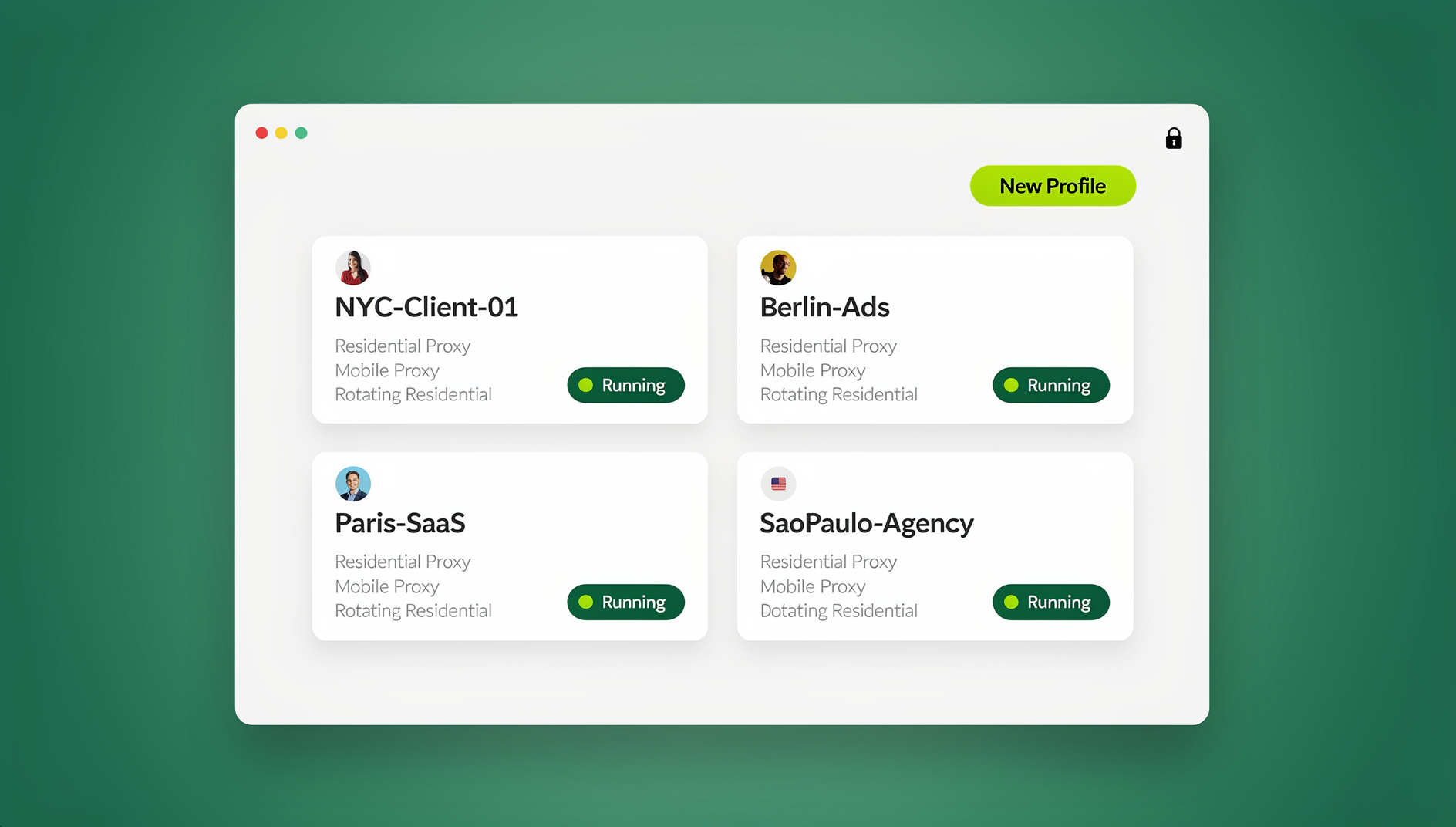

In 2026, the digital landscape presents significant hurdles for digital marketers, e-commerce sellers, and privacy-conscious users alike. Standard web browsers continuously leak identifiable information about your device, location, and operating habits. Every time you log into a platform, your browser transmits a digital fingerprint composed of your canvas rendering hashes, WebGL configurations, audio context profiles, system fonts, and exact IP addresses. If you attempt to operate more than one profile on platforms like Facebook, Amazon, or eBay using standard browsers, those profiles are quickly linked and banned. An online proxy browser serves as a primary defense by intercepting these connections and replacing your real IP with a proxy-sourced address.
However, security is not just about changing your IP address. While a basic web-based proxy redirects your HTTP requests, it does nothing to mask your browser’s internal identity signatures. If you are operating critical digital assets, you must look beyond basic tools and use advanced, isolated virtual systems. This guide details how online proxy routing operates, the fundamental risks associated with free tools, and why containerized browser architectures are necessary to guarantee true security and identity isolation.
Understanding the Mechanics of an Online Proxy Browser
To understand the safety of an online proxy browser, you must first examine how it processes web requests at a technical level. When you enter a URL into a standard browser, your computer makes a direct request to the host server, revealing your public IP address, internet service provider, and location. An online proxy browser adds an intermediate server to this chain, acting as an buffer between your device and the destination site.
When you navigate to a page, the browser forwards your request to the proxy server. The proxy server then requests the page content from the target website on your behalf. Once the proxy server receives the data, it transmits the code back to your local client. As a result, the target website only observes the IP address, geographic location, and network characteristics of the proxy server rather than your own. This basic redirection is effective for basic geographic bypasses, but it lacks the depth required to secure sensitive business accounts.
Advanced implementations enhance this routing by pairing it with active parameter spoofing. When the proxy server requests the website content, the proxy client dynamically alters header configurations, user-agent strings, and cookie headers. This ensures that the destination website does not receive conflicting signals, such as an IP address from Germany coupled with system language headers indicating a United States locale. A high-quality online proxy browser automates this synchronization to provide a coherent digital persona.
The Core Routing Protocols: SOCKS5, HTTP, and HTTPS
A professional online proxy browser relies on robust network protocols to manage traffic encryption and transmission. The most common protocols used in proxy networks are HTTP, HTTPS, and SOCKS5. Understanding the differences between these protocols is vital for maintaining account safety.
HTTP proxies are designed to interpret and filter web traffic. They are excellent for handling standard webpage requests and caching data, but they lack encryption, meaning that intermediate nodes can read the contents of your requests. HTTPS proxies address this vulnerability by applying an SSL/TLS encryption layer between your client and the proxy server. This ensures that sensitive data, such as usernames and passwords, cannot be intercepted during transit.
SOCKS5 represents a more versatile protocol. Unlike HTTP/HTTPS proxies, which only handle web traffic, SOCKS5 operates at a lower layer, routing any type of traffic, including TCP and UDP packets. This makes SOCKS5 ideal for running automation scripts, utilizing custom communication tools, or handling complex database queries. A premium online proxy browser supports all three protocols, allowing users to toggle between them based on their specific operational needs.
The Hidden Risks of Free Online Proxy Solutions
The appeal of free online proxy tools is undeniable, especially for startups or individual marketers operating on tight budgets. However, operating critical business assets through free proxy networks introduces severe security hazards that can compromise your accounts and sensitive personal data.
First, free proxy providers must cover their operational costs, and they frequently do so by logging and selling user browsing data. Since all your traffic routes through their servers, they can inspect, capture, and analyze your unencrypted data packets. A large portion of free proxies do not encrypt traffic between your device and the proxy server, exposing your credentials, payment details, and private conversations to potential interception. Some malicious proxy operators have even been caught executing man-in-the-middle attacks, injecting advertising scripts, or serving compromised download files to users.
Second, free proxies offer zero fingerprint isolation. While your IP address changes, your browser’s canvas fingerprint, WebGL signature, and screen resolution remain identical across all sessions. If you log into three separate e-commerce profiles using a free proxy, security algorithms will easily link those profiles together via their identical device signatures, leading to immediate suspension. Furthermore, free proxy networks utilize cheap datacenter IPs that are heavily blacklisted by modern security filters, triggering automatic CAPTCHA loops or security blocks the moment you attempt to connect.
How to Perform a Proxy Browser Setup for Maximum Security
If you choose to implement proxy routing for your accounts, executing a proper configuration is essential to avoid leaks. A successful proxy browser setup requires selecting high-quality residential proxies instead of cheap datacenter options. Residential IPs are associated with genuine household internet connections, making them look authentic to security systems.
To configure your system, you must input the proxy credentials (IP address, port, username, and password) into a dedicated profile manager. It is vital to ensure that your setup includes automatic DNS leak protection. If your browser resolves domain names using your local ISP’s DNS servers while routing HTTP traffic through the proxy, your actual location is leaked instantly. A secure proxy configuration forces all DNS resolution to occur at the proxy level, preventing these silent leaks from compromising your profiles.
Additionally, your setup must manage WebRTC configurations. WebRTC is a browser technology that facilitates real-time communication, but it bypasses standard proxy settings to retrieve your local network adapter’s real IP address. To prevent WebRTC leaks, your proxy manager must either disable WebRTC entirely or spoof the WebRTC IP address to match the proxy’s IP. Only when DNS and WebRTC leaks are fully blocked is your proxy setup secure enough for multi-account operations.
The Role of Browser Isolation Technology in Secure Browsing
While proxy routing hides your IP address, it does not prevent malicious scripts from executing on your local computer. To achieve maximum security, modern enterprises pair proxy routing with advanced browser isolation technology. This methodology takes a zero-trust approach to web safety by executing all web content in a remote sandbox rather than on the user’s local hardware.
Under this architecture, when you navigate to a website, the entire webpage—including JavaScript, HTML, and CSS—loads and executes inside a secure cloud container. The container renders the visual interface and streams the resulting pixels or sanitized DOM back to your local screen. If you visit a website containing zero-day exploits, malicious scripts, or ransomware, the malware executes inside the cloud container and cannot breach your local operating system. The moment you close your session, the cloud container is destroyed along with any malicious code.
This isolation is highly valuable for multi-account management. Because each session runs in its own distinct cloud container, cookies, local storage, and cache files are physically segregated. There is zero risk of data leaking between your accounts, preventing the cross-contamination that frequently causes account bans in traditional browsers.
Exploring Docker Browser Implementations for Sandbox Environments
For technical teams seeking custom, self-hosted sandbox environments, deploying an isolated Docker browser is a popular strategy. By running a headless or virtual desktop browser inside a Docker container, organizations can create disposable browsing environments that are easily managed via automated scripts.
A typical Docker configuration spins up a Chromium or Firefox instance within a Linux-based container. The visual output of the browser is forwarded to the user’s screen using technologies like Virtual Network Computing (VNC) or WebRTC. This setup allows developers and researchers to conduct threat analysis, QA testing, or web scraping within a completely controlled sandbox. If a session becomes slow or corrupted, the container is destroyed and a fresh instance is launched in seconds.
However, managing a custom containerized browser network requires substantial technical expertise and infrastructure investment. Teams must handle load balancing, proxy rotation, fingerprint spoofing, and persistent storage synchronization on their own. For most businesses, utilizing a pre-configured commercial service is more efficient than building and maintaining a custom containerized framework.
Application Isolation: Securing Corporate Assets
In addition to browser-level safety, organizations must implement robust application isolation to prevent system-wide compromises. This security strategy ensures that web-facing software cannot access local files, network resources, or administrative controls on the host machine.
If an employee accesses a phishing link or downloads a malicious file, application isolation prevents that threat from spreading to other corporate systems. The browser is restricted to a tight sandbox with limited permissions, preventing it from executing local command prompts or modifying system registry files. By combining application safety with secure online proxies, enterprises create a multi-layered defense system that protects corporate data from both external tracking and internal infiltration.
For digital marketing teams, this level of isolation is crucial. It ensures that client credentials, password vaults, and local files remain completely separated from the web sessions used to manage active ad profiles. This reduces the risk of credential theft and ensures compliance with strict data protection guidelines.
Online Proxy Browser vs. VPN: Key Differences for Multi-Account Safety
Many users confuse proxy browsers with Virtual Private Networks (VPNs). While both technologies mask your IP address and encrypt data in transit, they are designed for different use cases and offer varying levels of protection.
A VPN operates at the operating system level, routing all network traffic from your device—including background updates, email clients, and desktop applications—through an encrypted tunnel. This is excellent for securing your connection on public Wi-Fi networks, but it does not isolate individual web sessions. If you open three different tabs in a standard browser while connected to a VPN, all three tabs share the same IP address, cookies, and digital fingerprint. Security systems will instantly link these accounts together.
In contrast, a high-quality proxy browser operates at the session level. It allows you to assign a unique proxy IP address and a distinct digital fingerprint to each profile or tab. This session-level segregation makes a proxy browser far more effective for managing multiple social media or e-commerce accounts, as it prevents cross-contamination and ensures that each account appears to originate from a completely different device and location.
Evaluating Key Criteria for Professional Proxy Solutions
When selecting a professional proxy solution for your operations, you must evaluate several criteria to ensure long-term stability and security. First, the solution must integrate with premium residential or mobile proxy pools. Cheap datacenter IPs are flagged quickly by anti-bot algorithms, rendering your setups ineffective. Second, the platform must modify device characteristics such as canvas fonts, WebGL parameters, audio context, and navigator properties to match the proxy’s location. Third, cookies, local storage, and history must be securely saved in an encrypted format so you can log back into your profiles without triggering security checks. Finally, the tool should allow you to share isolated profiles with team members safely, without exposing raw login credentials or risking linking accounts.
Send.win meets all of these criteria by providing a comprehensive platform tailored for multi-account operators. With transparent pricing, users can choose between the Pro plan at $19/month ($83.88/year) and the Team plan at $49/month ($251.88/year). The first card purchase is covered by a 7-day money-back guarantee, and there is no free trial. The Team plan provides 500 profiles and 16 user seats, offering a robust infrastructure for scaling businesses.
🏆 Send.win Verdict
For users seeking a secure and highly reliable online proxy browser, Send.win offers a superior solution. By combining isolated cloud browser sessions with native desktop tools, Send.win provides seamless multi-profile management and per-profile fingerprint settings. This ensures your online identities remain clean, isolated, and completely secure from tracking.
Try Send.win free today — protect your digital identity and manage multiple profiles safely.
Frequently Asked Questions
What is an online proxy browser?
An online proxy browser is a web-based client or software application that routes your internet connection through a proxy server, masking your original IP address and shielding your location from destination websites.
Can websites detect when I use an online proxy browser?
Basic web proxies are easily identified via blacklisted datacenter IPs and WebRTC leaks. However, professional platforms like Send.win pair premium residential IPs with per-profile fingerprint settings and session isolation.
How does a proxy browser differ from a virtual private network (VPN)?
A VPN encrypts all network traffic at the system level under a single IP address. A proxy browser provides session-level isolation, allowing you to run multiple profiles simultaneously, each with a unique proxy IP and digital fingerprint.
Is a free online proxy browser safe for banking or online shopping?
No, free proxy browsers are highly insecure. They often log user traffic, expose passwords, and lack basic encryption. For sensitive financial or business operations, you should always use a trusted, paid service with a clear privacy policy.
What is session isolation in a proxy browser?
Session isolation is a security process that separates the cookies, local storage, and digital fingerprints of individual browser tabs or profiles. This prevents data from leaking between sessions, ensuring that accounts are never linked.
Does a proxy browser protect against browser fingerprinting?
Basic proxies only mask your IP address. Professional proxy solutions like Send.win give each profile its own consistent browser fingerprint, including canvas, WebGL, fonts, and device configurations, to block tracking.
How do I choose the best online proxy browser for my business?
Look for a service that offers a desktop client or isolated cloud sessions, supports residential proxy integration, provides comprehensive fingerprint protection, allows secure session sharing, and features transparent subscription pricing.