The best Send.win alternatives in 2026 split into two camps: session-isolation tools like Send.win that sandbox each login in its own encrypted profile without heavy fingerprint spoofing, and traditional antidetect browsers like Multilogin, GoLogin, and AdsPower that lean on deep Canvas/WebGL fingerprint control instead. This guide ranks eight options on isolation, proxy support, team features, automation, and pricing so you can match the tool to your actual workflow.
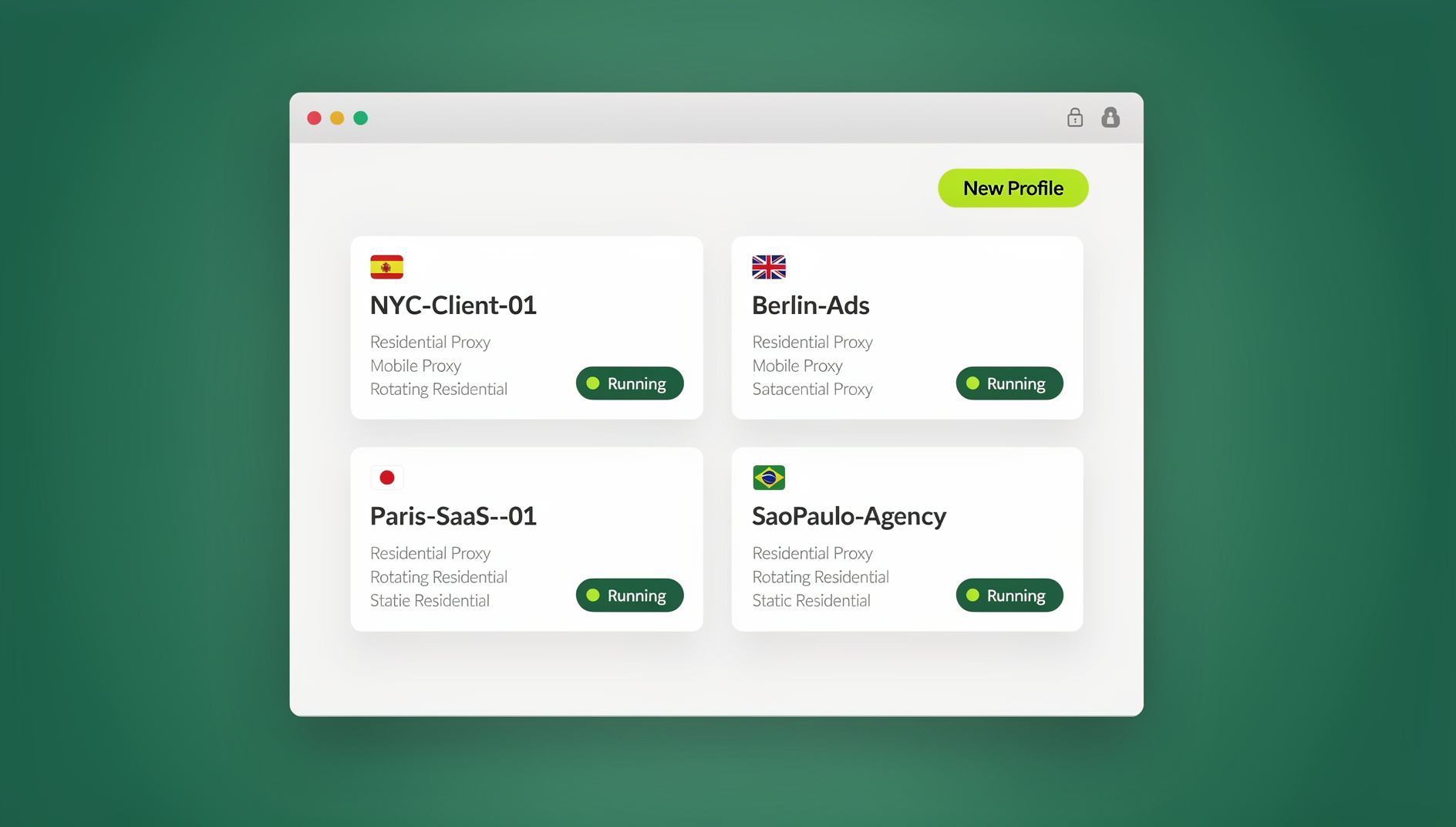
Multi-account work is now routine across SEO, paid ads, marketplaces, brand protection, QA, and research. What varies is how a tool keeps those accounts separate — and undetectable to each other. Some tools isolate; others spoof. Neither approach is universally “better,” but they solve different problems, and picking the wrong one wastes money and creates unnecessary risk.
Why people search for “Send.win alternatives” (and how to choose wisely)
Two broad strategies dominate this category:
- Isolation-first tools (like Send.win) focus on sandboxed sessions you can run locally or in the cloud and share with teammates, plus per-session proxies. This avoids heavy, brittle spoofing while keeping unrelated logins totally separate — cookies, cache, and local storage never cross between profiles.
- Antidetect browsers emphasize fingerprint management (Canvas, WebGL, audio, fonts, timezone, and more) and give deep control over what a site “sees,” combined with profile storage, proxy assignment, team controls, and automation APIs. Examples: Multilogin, GoLogin, AdsPower, Kameleo, Octo Browser, Incogniton, Dolphin Anty, and Undetectable.
Before picking a lane, it helps to understand what’s actually being fingerprinted and why “more spoofing” isn’t automatically safer — sites correlate dozens of signals (GPU, audio stack, fonts, locale, device quirks), and naive randomization on canvas fingerprinting can look more suspicious than a consistent, real browser profile that simply never shares state with other accounts.
How we evaluated these tools
Every tool below was scored on the same six factors:
- Session isolation and stability — do profiles or sessions actually stay separate, and does the browsing experience hold up under daily use?
- Fingerprint controls — Canvas, WebGL, audio, fonts, timezone, and how consistently they’re applied.
- Proxy support — per-profile or per-session proxy assignment for clean geo-targeting.
- Team and sharing features — seats, workspaces, and revocable access.
- Automation — support for Selenium, Puppeteer, Playwright, or a documented local/REST API.
- Pricing transparency — what you actually pay at each tier, not just a marketing headline number.
A friendly reminder: use these tools to stay organized and secure — not to violate a platform’s terms of service. Send.win in particular is built around compliant, isolation-first workflows rather than aggressive spoofing, and that framing runs through this whole list.
Quick comparison: 8 Send.win alternatives at a glance
| Tool | Best for | Core approach | Automation | Starting price |
|---|---|---|---|---|
| Send.win | Isolation-first teams, cloud + desktop flexibility | Session isolation, per-session proxies | No | $19/mo or $83.88/yr |
| Multilogin | Enterprise profile volumes | Fingerprint spoofing | REST API (RPM tiers) | ~$79/mo |
| GoLogin | Profiles per dollar, cloud launches | Fingerprint spoofing + cloud | REST API | ~$24-49/mo |
| AdsPower | No-code RPA, ad/social teams | Fingerprint spoofing | RPA + Local API | Free tier; paid varies |
| Kameleo | Fingerprint R&D, mobile emulation | Deep Canvas/mobile spoofing | Local API + SDKs | Free tier; ~€45/mo Startup |
| Octo Browser | Large profile ceilings | Fingerprint spoofing | API automation | ~€10/mo Lite |
| Incogniton | Solo operators, small agencies | Fingerprint spoofing | REST API + Selenium/Puppeteer | ~$19.99/mo |
| Dolphin Anty | Budget starter teams | Fingerprint spoofing | Selenium/Puppeteer/Playwright | ~$10/mo Starter |
| Undetectable | Local/cloud profile flexibility | Fingerprint spoofing | API + docs | Dynamic (local vs. cloud) |
Antidetect pricing above reflects publicly listed tiers and changes often — always confirm current numbers on the vendor’s own pricing page before buying. Send.win’s numbers are current as of this writing; there is no free trial, but the first card purchase is covered by a 7-day money-back guarantee, and you can preview the cloud browser free at the demo.
The 8 best Send.win alternatives in 2026
1) Multilogin
Best for: established teams that need enterprise-grade profile volumes, granular fingerprint control, and dedicated vendor support.
Multilogin popularized profile-based multi-accounting at scale. Plans include large numbers of browser profiles, proxy support, team workspaces, and a REST API with request-per-minute limits that scale by tier. It’s a mature, well-documented product, but the tradeoff is complexity: keeping every spoofed signal (Canvas, user agent, OS, GPU) internally consistent takes real configuration effort, and getting it wrong can make a profile look more suspicious than a plain, unspoofed browser.
Pricing snapshot (monthly): Botanist — up to 100 profiles, around $79; Hydra — up to 300 profiles, around $189; Colossus — up to 1,000 profiles, around $399. Annual discounts are available.
2) GoLogin
Best for: teams that want a lot of profiles per dollar, cloud launches, and a clearly documented REST API.
GoLogin offers a limited free plan (a handful of profiles) and value-focused paid tiers. Highlights include cloud browsing, cloud launches, profile sharing, and a REST API with visible rate limits per plan, plus companion mobile apps. It’s a reasonable middle ground if you want antidetect-style spoofing without Multilogin’s enterprise price tag.
Pricing snapshot (monthly): Professional tier runs roughly $24-49; Business roughly $49-99; Enterprise and Custom tiers scale higher, with annual plans typically discounted around 50%.
3) AdsPower
Best for: no-code RPA automation and large-scale social/ads teams that want built-in tooling rather than a separate scripting stack.
AdsPower bundles RPA, a Local API, Chrome/Firefox-based stealth browsers, profile sharing, and team permissions in one package. It also offers a free tier with a couple of profiles, which makes it easy to trial before committing. The dynamic, currency-dependent pricing UI means you’ll want to check the in-app total for your seat count rather than relying on a marketing page number.
4) Kameleo
Best for: advanced fingerprint research, mobile emulation (Android and iOS), and developer-led automation.
Kameleo publishes deep research on browser fingerprinting and ships both desktop and emulated mobile browser profiles. It offers a Local API and SDKs for Python, JavaScript, and C#, plus Selenium/Puppeteer/Playwright support, with concurrency scaling significantly on Business and Enterprise tiers. This is the pick if your work genuinely requires mobile-device fingerprint modeling, not just desktop profiles.
Pricing snapshot (monthly, EUR): Free tier covers 2 concurrent browsers; Startup runs around €45 for 10 concurrent; Business around €225 for 100 concurrent; Enterprise around €1,125 for 1,000 concurrent.
5) Octo Browser
Best for: teams that need very large profile ceilings, straightforward API access, and predictable multi-seat pricing.
Octo’s tiers scale up to tens of thousands of profiles, list team member counts per plan, and include API automation from the Base tier upward. Longer commitments (3, 6, or 12 months) typically unlock better discounts, so it rewards teams that can commit rather than pay month to month.
Pricing snapshot (monthly, EUR): Lite around €10 (a handful of profiles); Starter around €29 (dozens of profiles); Base around €79 (hundreds of profiles, API included); Team and Advanced tiers scale further with more seats and API throughput.
6) Incogniton
Best for: solo operators and small agencies that want a clean UI, API access, and a low entry price.
Incogniton’s starter package typically begins with a generous free trial period before dropping to a smaller free allotment, with inexpensive upgrades from there. Paid tiers add Selenium/Puppeteer integration, a REST API, team seats, and a cookie collector for warming profiles. It’s approachable for someone managing a handful of accounts without a dedicated ops team.
Pricing snapshot (monthly, USD): Starter Plus around $19.99 (dozens of profiles); Entrepreneur around $29.99; Professional around $79.99 (with multiple seats); Custom tiers scale to hundreds of profiles and more seats.
7) Dolphin Anty
Best for: budget-friendly starts with clear tiers and broad automation support baked in from the lowest paid plan.
Dolphin lists Selenium, Puppeteer, and Playwright support across its plan comparisons and offers a clear progression from a low-cost starter tier to Enterprise. Volume and term discounts are visible up front, which makes budgeting easier than some competitors’ dynamic pricing pages.
Pricing snapshot (monthly, USD): Starter from around $10 (dozens of profiles, add-ons for more); Base around $89; Team around $159; Enterprise from around $299 with custom, effectively unlimited profile counts.
8) Undetectable
Best for: people who want to choose between local and cloud profile storage on a per-need basis, backed by an active knowledge base.
Undetectable clearly explains the difference between local profiles (stored on your device) and cloud profiles (stored on vendor infrastructure), which is genuinely useful for multi-device access and team handoffs. Pricing is dynamic — you configure local vs. cloud storage and set the number of users/sessions you need, so it’s worth checking the live calculator rather than a fixed number.
When to choose Send.win instead
If your priority is compliant isolation, flexible deployment, and simplicity over constant fingerprint tuning, Send.win is worth putting on the shortlist — and it’s worth being precise about what it actually is, since this is where a lot of comparison posts get vague. Send.win gives you two distinct ways to work, not one:
- Sendwin Browser — a native, downloadable desktop app for Windows, macOS, and Linux. It’s local-first: your profiles and session data live on your machine for native speed and offline use, while encrypted cloud sync keeps everything backed up and available if you switch computers.
- Cloud browser sessions — sessions that run entirely on Send.win’s infrastructure with zero local install. Nothing executes on your device; usage is metered by cloud browsing time, which is ideal for a disposable check, a suspicious link, or handing a one-off session to someone who shouldn’t need to install anything.
Both modes share the same core mechanics: every profile or session gets its own cookies, cache, and local storage, plus an optional dedicated proxy, so unrelated logins never share network identity or storage. For teams weighing this against a classic antidetect setup, this comparison of Send.win versus multi-login browsers walks through the practical tradeoffs in more depth.
Send.win has no automation interface: there is no API, SDK, headless mode or Selenium, Puppeteer, or Playwright support on any plan. You work with the same isolated profiles manually in the desktop app.
Pricing is straightforward: Pro is $19/mo or $83.88/yr and Team is $49/mo or $251.88/yr, and the first card purchase is covered by a 7-day money-back guarantee.
| Plan | Monthly | Billed annually | Profiles | Proxy bandwidth | Seats | |
|---|---|---|---|---|---|---|
| Pro | $19/mo | $6.99/mo | 150 | 5GB | Included | 1 |
| Team | $49/mo | $20.99/mo | 500 | 20GB | Included | 16 |
If that matches your goals — and you’d rather avoid constant profile maintenance — Send.win belongs on your shortlist alongside, not necessarily instead of, the browser profile managers above.
Real-world playbooks that actually work
Playbook 1: Multi-region SEO and SERP QA
- Spin up three isolated sessions (say, US, UK, and DE) each with its own proxy attached.
- Run the same queries and capture SERPs or ad placements without any cookie bleed between regions.
- Share a revocable session link with a reviewer for spot checks — no passwords required.
Playbook 2: Ad creative approvals without account sprawl
- Keep a client’s ad account and a test account open in separate isolated tabs at the same time.
- For antidetect stacks, assign distinct profiles with matched timezone, OS, and user agent, plus stable proxies, then save the setup to a team workspace for reuse (Multilogin, GoLogin, AdsPower, and Octo all handle this well).
Playbook 3: Marketplace and e-commerce QA at scale
- Use an automation API to warm cookies or pre-load carts with Selenium, Puppeteer, or Playwright.
- Distribute runs across profile concurrency or cloud launches, throttling to your plan’s API limits — GoLogin, AdsPower, Kameleo, Dolphin Anty, Incogniton, and Octo all offer documented paths for this.
Buying guide: pick by use case
If you value stability over spoof-everything
Choose Send.win — cloud or local isolation, per-session proxies, easy sharing, minimal tuning, and quick onboarding for teams.
If you need deep fingerprint control
Pick Kameleo (Canvas research, mobile emulation) or Multilogin (enterprise profile volumes). Keep Canvas, user agent, and OS signals aligned or the spoofing works against you.
If you want a lot of profiles for less
Consider GoLogin (aggressive pricing, cloud features, documented API limits) or Octo (large profile ceilings with API access).
If you want no-code RPA
AdsPower ships RPA, a Local API, and team tooling out of the box, without requiring a developer to wire up automation.
If you’re solo or a small team on a budget
Incogniton and Dolphin Anty both offer low entry prices with clear upgrade paths and built-in automation options.
If you need flexible local or cloud profile storage
Undetectable provides both, with API docs and active help content for switching between them as needed.
Automation is table stakes across this whole category now — whether you’re running Selenium, Puppeteer, or Playwright, it’s worth understanding how sites actually detect scripted browsers before you build a workflow around any of these tools, since misconfigured automation can undermine even the best isolation or spoofing setup, as covered in this breakdown of Selenium browser fingerprint detection. And whichever direction you go, per-session or per-profile proxies matter more than a blanket VPN for consistent geolocation — see this roundup of the best proxy browsers for options that pair well with any tool on this list.
🏆 Send.win Verdict
If your daily reality is SEO checks, ads QA, e-commerce operations, or secure research, and you value stability, sharing, and speed over constant fingerprint maintenance, Send.win is the easier and more compliant path: session isolation via a native desktop app or zero-install cloud sessions, per-session proxies, and separate cookies, storage and fingerprint settings per profile. If your work genuinely demands deep spoofing and custom device modeling, shortlist Kameleo or Multilogin instead — and consider GoLogin, Octo, Incogniton, or Dolphin Anty if you’re balancing price against scale.
Try the Send.win cloud demo — a 3-minute preview without signup, 10 minutes a day with a free account.
FAQ
What exactly is a “Send.win alternative”?
It’s any tool that solves the same underlying problem — keeping multiple accounts or logins separate — whether it does so through session isolation like Send.win, where each profile keeps its own cookies, storage and fingerprint, or through fingerprint spoofing like Multilogin, GoLogin, or AdsPower.
Is Send.win a browser profile manager like Multilogin or GoLogin?
Not exactly. Send.win is a browser profile manager that emphasizes session isolation, per-session proxies, and easy sharing over heavy Canvas/WebGL spoofing, which makes it simpler to maintain and generally more compliant for teams that don’t need aggressive fingerprint manipulation.
Do these tools work with Selenium, Puppeteer, or Playwright?
Most of the tools on this list support at least one of these frameworks. Kameleo, AdsPower, Dolphin Anty, Incogniton, and Octo list explicit automation support. Send.win does not: it has no API, SDK, headless mode or Selenium, Puppeteer, or Playwright support on any plan, so its isolated profiles are driven manually.
Is Send.win a desktop app, a cloud service, or both?
Both, by design. Sendwin Browser is a native, downloadable desktop app for Windows, macOS, and Linux with local-first storage and encrypted cloud sync. Cloud browser sessions run entirely on Send.win’s servers with no local install, metered by cloud browsing time, for situations where you don’t want anything touching your own device.
Do I still need a VPN if I use one of these tools?
Not for per-session location control. A proxy attached per profile or per session is usually more precise for consistent geolocation than routing your entire machine through a VPN. A VPN is still a reasonable option for general network privacy, but it’s a separate concern from account isolation.
Which alternative is best for a solo operator on a tight budget?
Incogniton and Dolphin Anty both have low entry-level pricing with room to grow. If you don’t need heavy fingerprint spoofing at all, Send.win’s Pro plan at $19/mo or $83.88/yr covers 150 profiles, which is often enough for a solo operator managing several accounts.
How much does Send.win cost compared to these alternatives?
Send.win Pro is $19/mo or $83.88/yr with 150 profiles and 5GB of proxy bandwidth. Team is $49/mo or $251.88/yr with 500 profiles, 20GB of bandwidth, and 16 seats. There is no free trial, but the first card purchase is covered by a 7-day money-back guarantee, which is worth comparing against the free tiers and entry plans of the antidetect options above.
Which tool offers the deepest fingerprint spoofing controls?
Kameleo and Multilogin lead on granular Canvas, WebGL, and device-level spoofing, including mobile emulation on Kameleo. If your workflow genuinely requires that level of control, they’re the strongest picks on this list; if it doesn’t, isolation-first tools like Send.win typically get the job done with far less ongoing configuration.
Conclusion: pick the right tool, not just an alternative
If your day-to-day is SEO checks, ads QA, e-commerce operations, or secure research, and you value stability, sharing, and speed, stick with isolation-first: Send.win delivers session isolation via a native desktop app or cloud sessions, per-session proxies, and one-click sharing. If your work demands fine-grained spoofing and custom device modeling, shortlist Kameleo (Canvas and mobile) or Multilogin (enterprise profile volumes). To balance price against scale, look at GoLogin, Octo, Incogniton, or Dolphin Anty, and consider AdsPower if you want built-in RPA. Undetectable is worth a look when configurable local-versus-cloud storage matters most.
Want the simplest path to clean, compliant multi-login work? Try Send.win to open isolated sessions — on desktop or in the cloud — with per-session proxies, in minutes.