Quick answer to the ixbrowser vs sendwin question: pick ixBrowser if budget is everything — its forever-free plan and roughly $3.99/mo Professional tier are genuinely usable for hobby projects and tiny setups. Pick Sendwin if your accounts have real value: for $6.99/mo billed annually you get 150 profiles, 5GB of built-in residential proxy bandwidth, an automation API, cloud browser sessions, and no daily usage caps — with a 30-day free trial and no credit card required.
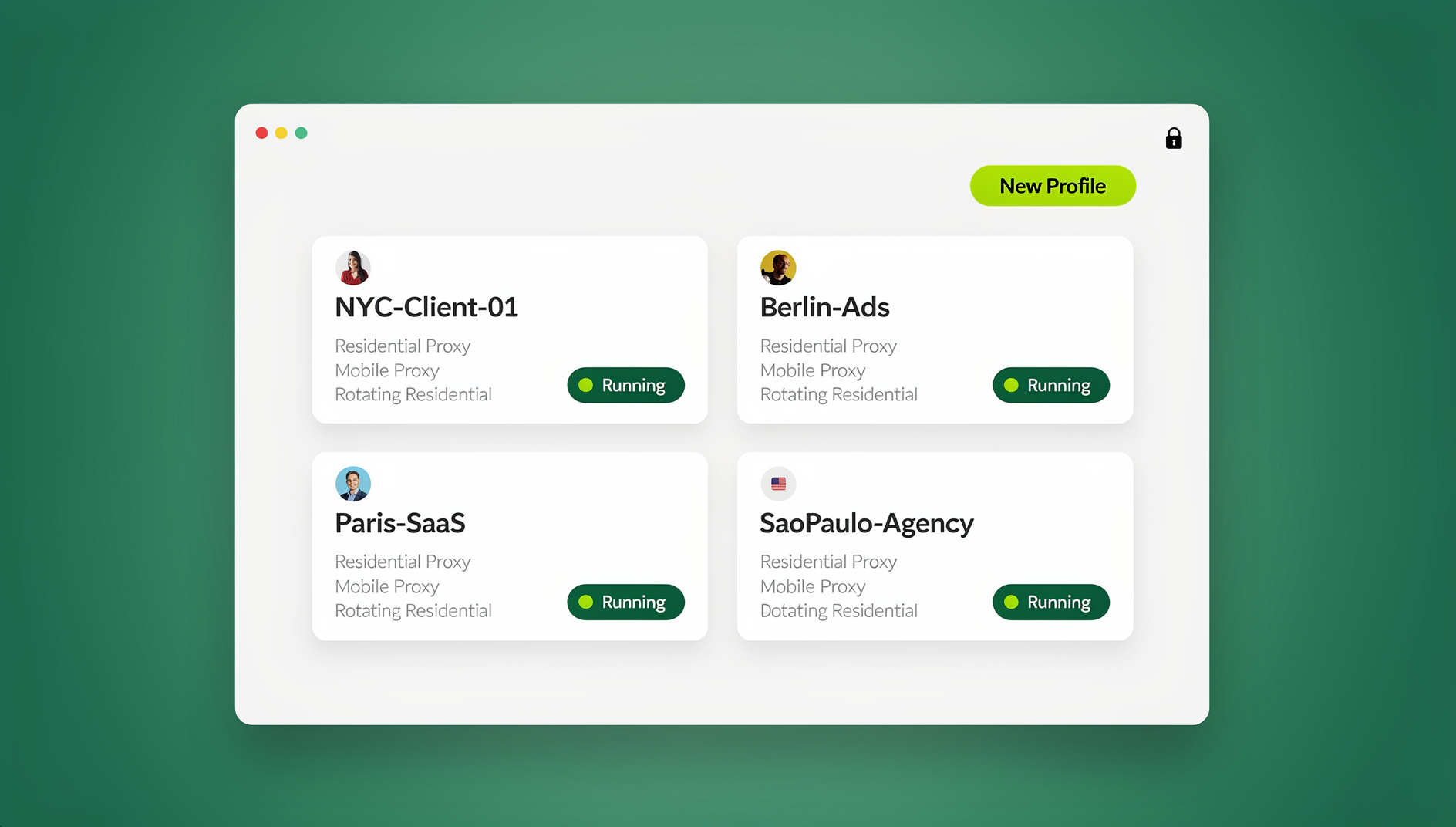
“Free” is ixBrowser’s headline feature, and it is also its cleverest piece of marketing. The free plan advertises unlimited profiles, but it meters your day — about 10 profile creations and 100 profile opens per day, as of this writing — and it ships without any proxies at all. That means the true cost of running ixBrowser seriously is rarely zero. This comparison walks through exactly where each tool wins, what the fine print costs you, and which one deserves your accounts.
ixBrowser vs Sendwin: TL;DR comparison
| ixBrowser | Sendwin | |
|---|---|---|
| Best for | Hobbyists and tiny setups testing the waters | Operators whose accounts earn real money |
| Entry price | Free; Professional ~$3.99/mo (as of this writing) | $6.99/mo billed annually ($9.99 month-to-month) |
| Profiles included | Unlimited totals, but ~10 creations and ~100 opens per day on the free plan | 150 (Pro) or 500 (Team), with no daily open or creation caps |
| Proxies | Not included — bring your own | 5GB residential bandwidth included, auto-configured per profile |
| Automation | RPA template marketplace (no-code); API on paid tiers | Local Automation API for Selenium, Puppeteer, and Playwright |
| Free option | Yes — forever free, with daily limits and 2 seats | No free tier |
| Trial | The free plan effectively is the trial | 30 days, full features, no credit card required |
Fingerprint quality: proven consistency vs “good enough”
Every antidetect browser lives or dies on one thing: whether the profiles it generates look like real, distinct, internally consistent devices. Your browser fingerprint is the combination of canvas rendering, WebGL, fonts, screen metrics, timezone, language, and WebRTC data that platforms use to recognize a device — and the fastest way to get flagged is not a “bad” fingerprint but a contradictory one, like a German residential IP paired with a Chicago timezone and an English-US locale.
ixBrowser builds isolated Chromium-based profiles with configurable fingerprint parameters, and for low-stakes work it does the job. The honest caveat is that its fingerprint engine has a less proven reputation at scale than premium tools. Most of the public evidence for ixBrowser comes from small setups — a handful of accounts on mid-tier platforms — rather than from operators running hundreds of aged, high-value accounts through aggressive detection systems. Its documentation on how fingerprints are generated and maintained is also comparatively thin, which matters when a platform tightens its checks and you need to understand what changed.
Sendwin’s approach is to remove the most common self-inflicted failure entirely: every profile automatically matches its timezone, locale, and WebRTC behavior to the proxy exit it uses. You do not manually align settings and hope; the coherence is enforced by default. Neither vendor (nor any competitor) publishes independently verifiable head-to-head detection data, so the practical difference comes down to this: Sendwin engineers consistency into the workflow, while ixBrowser leaves more of that responsibility with you — which is fine until the day it isn’t.
Pricing: what “free” really costs
ixBrowser’s pricing is its strongest card, so let’s give it a fair hearing. As of this writing, the free plan includes unlimited total profiles with daily limits of roughly 10 profile creations and 100 profile opens, plus 2 team seats. The Professional plan runs about $3.99/mo and lifts those limits to around 100 creations and 1,000 opens per day with 20 seats, and a Business tier sits at about $19/mo with roughly 500 creations and 5,000 opens per day. Check ixBrowser’s pricing page for current numbers, since these tiers shift periodically.
| Plan | Price (as of this writing) | What you get |
|---|---|---|
| ixBrowser Free | $0 | Unlimited total profiles; ~10 creations/day; ~100 opens/day; 2 seats; no proxies included |
| ixBrowser Professional | ~$3.99/mo | ~100 creations/day; ~1,000 opens/day; 20 seats; no proxies included |
| ixBrowser Business | ~$19/mo | Higher limits for larger operations; no proxies included |
| Sendwin Pro | $19/mo, or $6.99/mo billed annually | 150 profiles; 5GB residential proxy bandwidth included; Automation API; cloud browser sessions; no daily caps |
| Sendwin Team | $49/mo, or $20.99/mo billed annually | 500 profiles; 20GB bandwidth; 16 seats; Automation API; profile sharing |
Now the part the pricing page doesn’t show: ixBrowser includes zero proxy bandwidth on every plan. Residential proxies from reputable third-party providers typically cost several dollars per gigabyte, so a “free” ixBrowser setup pushing even a modest amount of traffic through purchased proxies often lands at or above Sendwin’s $6.99/mo all-in price — except you’re also doing the vendor research, the payment management, and the proxy quality control yourself. Sendwin’s add-on rates are flat and published: $6/GB for extra bandwidth and $0.05 per extra profile beyond your plan. We ran this bundled-versus-BYO math across the whole budget segment in our roundup of the cheapest antidetect browsers, and the pattern holds: sticker price and operating cost are different numbers.
The daily caps deserve the same scrutiny. One hundred profile opens per day sounds generous until you do real work with it. Run 30 accounts and touch each one twice a day, and you’ve spent 60 opens before a single retry, crash, or “let me just check that account again” moment. Automation burns through opens even faster, because scripts retry failed sessions without sentimentality. The cap doesn’t stop hobby use — that’s why the free tier is genuinely good for hobbyists — but it quietly meters exactly the kind of daily, repetitive, at-scale usage that antidetect browsers exist for. Sendwin has no equivalent meter: your ceiling is your profile count, not a daily allowance.
Automation and API
Credit where due: ixBrowser’s RPA template marketplace is a genuine differentiator. Non-coders can grab prebuilt automation templates — warm-ups, posting routines, browsing patterns — and run them without writing a line of JavaScript. If you cannot code and don’t want to learn, this is the most approachable automation story in the budget segment, and Sendwin has nothing directly equivalent. ixBrowser also exposes an API on its paid tiers for those who script their own flows.
Sendwin takes the developer-first route: a local Automation API that plugs into the standard tooling — Selenium, Puppeteer, and Playwright all connect to Sendwin profiles, so existing scripts and frameworks port over with minimal changes. If you’re new to that workflow, our step-by-step guide to using Puppeteer with an antidetect browser shows exactly how the connection works. The structural advantage is what’s absent: no daily open cap sitting under your scheduler. On ixBrowser, automation lives inside the daily meters — a 100-open fuel tank on the free tier (which does not include API access as of this writing) and 1,000 on Professional, roomier but still a number you have to architect around. On Sendwin, your cron jobs don’t ration themselves.
Verdict for this round: no-code users get more out of the box with ixBrowser; anyone scripting at scale gets a cleaner, uncapped foundation with Sendwin.
Proxies and network
This is the widest gap in the entire comparison. ixBrowser ships with no proxies on any plan. You source them, you vet them, you rotate them, you pay for them, and you configure each profile to use them — and if a proxy provider sells you recycled, flagged IPs, that’s your problem to diagnose. For experienced operators with an established proxy stack, this is a manageable chore. For everyone else it’s a second procurement project with its own failure modes, bolted onto the tool you bought to simplify your life.
Sendwin includes residential proxy bandwidth in every plan — 5GB on Pro, 20GB on Team — and wires it in automatically: each profile’s timezone, locale, and WebRTC configuration is matched to its proxy exit without manual setup. For account-management workflows, which sip bandwidth at a few megabytes per session, 5GB covers a lot of month. The honest caveat: bandwidth-heavy work like media-rich scraping can exceed the included allowance, and overage runs $6/GB, so high-volume scrapers should do their own math — at extreme volumes, BYO bandwidth can pencil out cheaper. For the core use case of running many authenticated accounts safely, included-and-integrated beats bring-your-own on both cost and error rate.
Team features
ixBrowser is surprisingly generous here for the price: 2 seats on the free plan and around 20 seats on the ~$3.99/mo Professional tier, as of this writing. If you’re a small crew that just needs shared access to a profile pool and you’re disciplined about the daily caps (which are shared pool-wide across your usage), that’s real value — genuinely more seats per dollar than almost anything else on the market.
Sendwin’s Team plan ($49/mo, or $20.99/mo annually) includes 16 seats, 500 profiles, and 20GB of bandwidth, and its collaboration model is built around a specific safety property: teammates share profiles, not passwords. A team member gets a working browser session for an account without ever seeing the credentials behind it, which matters the moment you work with contractors or offboard someone. Combined with cloud sync, the whole team sees consistent profile state across devices. If your team is judged purely on seats-per-dollar, ixBrowser wins; if it’s judged on how safely you can delegate access to accounts that matter, Sendwin’s model is the more grown-up one.
Cloud access and sync
Sendwin comes in two modes: the Sendwin Browser, a native desktop app for Windows, macOS, and Linux, and cloud browser sessions, which run your profiles on Sendwin’s infrastructure with no install at all — useful when you’re on a machine you don’t control, onboarding a teammate who shouldn’t install anything, or running sessions you don’t want tied to local hardware. Cloud browsing time is metered monthly (an honest limitation worth knowing), and profiles sync across devices, so your desktop and cloud sessions stay consistent.
ixBrowser, as of this writing, is a desktop application. Your profiles live where the app is installed, and there is no equivalent of spinning up a session in the cloud from a browser tab. For a solo operator on one machine this may never matter; for anyone who works across devices, travels, or provisions teammates remotely, it’s a structural gap rather than a missing checkbox.
Ease of use
ixBrowser is easy to start — arguably the easiest in the category. There’s no purchase decision to agonize over: install, sign up, create profiles, done. The interface is straightforward and the RPA marketplace gives beginners something useful to run on day one. The friction shows up later: documentation and support are thinner than what mature rivals offer, so when something behaves oddly — a fingerprint mismatch, a proxy leak, a platform checkpoint — you’ll spend more time in community threads and less time in official docs.
Sendwin’s ease-of-use story is about defaults rather than onboarding tricks: because proxies are built in and timezone/locale/WebRTC matching happens automatically, the classic beginner mistakes are hard to make. The 30-day trial (no card) means “easy to start” doesn’t require a purchase either. The fair counterpoint: Sendwin’s community and third-party ecosystem are smaller than those of decade-old incumbents, so there are fewer tutorials, templates, and forum answers floating around than a tool like Multilogin has accumulated. Both tools are approachable; ixBrowser optimizes for minute one, Sendwin for month one.
Pros and cons
ixBrowser pros
- Unbeatable entry price — the forever-free plan is genuinely usable for small, low-stakes setups
- Professional tier at ~$3.99/mo (as of this writing) is among the cheapest paid plans anywhere
- RPA template marketplace gives non-coders real automation without writing scripts
- Up to ~20 seats on a very cheap plan — strong seats-per-dollar value
- Very easy to install and start using
ixBrowser cons
- Daily creation and open caps meter real work — 100 opens/day disappears fast with dozens of accounts plus retries
- No proxies included on any plan; sourcing and managing them is your job and your cost
- Fingerprint quality has a less proven reputation at scale than premium tools
- Thinner documentation and support
- Desktop only — no cloud sessions
Sendwin pros
- 5GB of residential proxy bandwidth included on Pro — no separate proxy procurement
- No daily open or creation caps; usage is limited by profile count, not a meter
- Automatic timezone, locale, and WebRTC matching to each proxy exit
- Local Automation API that works with Selenium, Puppeteer, and Playwright
- Cloud browser sessions plus cloud sync across devices
- Profile sharing with teammates without exposing passwords
- 30-day free trial with no credit card required
Sendwin cons
- No free-forever tier — after the 30-day trial, you pay
- Smaller community and ecosystem than decade-old incumbents
- Cloud browsing time is metered monthly
- Bandwidth beyond the included allowance costs $6/GB, so heavy scrapers should budget for it
Which should you pick?
Pick ixBrowser if…
- You’re a hobbyist or running a tiny setup (a handful of low-stakes accounts) and want to spend $0 while testing the waters
- You already own a proxy stack you trust and enjoy managing it
- You want no-code automation via RPA templates rather than scripted pipelines
- Your daily activity comfortably fits inside the open/creation caps — and will stay there
Pick Sendwin if…
- Your accounts generate real income and a ban costs more than a year of subscription fees
- You want proxies, fingerprint coherence, and profile management handled by one tool and one bill
- You run daily, repetitive work across dozens of accounts and refuse to architect around a usage meter
- You script with Puppeteer, Selenium, or Playwright, or need cloud sessions and safe team sharing
The pattern to notice: ixBrowser’s ideal user is testing whether multi-account work is worth doing at all, and for that experiment, free is the right price. Sendwin’s ideal user has already answered that question and is now protecting something. If you’re also weighing the premium incumbents in that second camp, our Sendwin vs Multilogin breakdown covers how Sendwin stacks up against the most established name in the space.
🏆 Send.win Verdict
ixBrowser is the best free antidetect browser for hobbyists — that’s a real compliment, and if your accounts are disposable, take the free plan and run. But “free” carries operating costs: daily caps that meter serious work, proxies you must buy and manage separately, and fingerprints with less proof at scale. Sendwin’s $6.99/mo covers all of it — 150 profiles, 5GB of auto-matched residential proxy bandwidth, an uncapped Automation API, and cloud sessions — which makes it the cheaper tool per unit of actual work, and the safer home for accounts that pay your bills.
Try Send.win free today — 30 days, every Pro feature, proxies included, no credit card. Run it beside ixBrowser and let your accounts pick the winner.
Frequently Asked Questions
Is ixBrowser really free forever?
Yes — the free plan has no time limit, and that’s genuine. What it does have are daily meters: as of this writing, roughly 10 profile creations and 100 profile opens per day, with 2 team seats, and no proxies included on any plan. So “free forever” is accurate for the license, but running it seriously still means paying for third-party proxies and living inside the daily caps.
How Send.win Helps With Ixbrowser Vs Sendwin
Send.win is an antidetect browser built for exactly this kind of work — every profile is a clean, isolated identity:
- Isolated profiles – unique fingerprint, separate cookies and storage per profile
- Stealth engine – canvas, WebGL, fonts, and audio spoofed at the engine level
- Desktop app + cloud sessions – native app for Windows, macOS, and Linux, or run profiles in the cloud with no install
- Built-in residential proxies – with automatic timezone, locale, and WebRTC matching
- Team features – share logged-in profiles with teammates without sharing passwords
Try the instant cloud browser demo — no install, no signup — or download the desktop app. The 30-day free trial needs no credit card, and paid plans start at $6.99/month billed annually (see pricing).
What do ixBrowser’s daily limits actually mean in practice?
The 100-opens-per-day cap is the one that bites. Managing 30 accounts with two sessions each uses 60 opens before any retries, crashes, or extra checks — and automation scripts consume opens faster than humans do. The ~$3.99/mo Professional tier raises the ceiling to around 1,000 opens per day, which is workable for mid-sized setups, but your workflow still has to be designed around a meter. Sendwin has no daily open or creation caps at all.
Does Sendwin have a free plan?
No — and that’s Sendwin’s most obvious drawback next to ixBrowser. Instead, it offers a 30-day free trial with full Pro features and no credit card required, which is long enough to run a real month of work before deciding. After the trial, Pro costs $19/mo, or $6.99/mo billed annually.
Does either tool include proxies?
Only Sendwin. Every Sendwin plan bundles residential proxy bandwidth (5GB on Pro, 20GB on Team) with automatic timezone, locale, and WebRTC matching, and extra bandwidth costs $6/GB. ixBrowser includes no proxy bandwidth on any tier — you buy, configure, and manage proxies from third-party providers yourself, which is usually the largest hidden cost in an ixBrowser setup.
Which is better for automation with Puppeteer or Selenium?
Sendwin, for scripted automation: its local Automation API connects to Selenium, Puppeteer, and Playwright, and there are no daily open caps throttling your scheduler. ixBrowser counters with something different — an RPA template marketplace that lets non-coders run prebuilt automations — so if you can’t code and don’t plan to, ixBrowser’s no-code option is the more approachable of the two.
Can I run profiles in the cloud with ixBrowser or Sendwin?
Only with Sendwin. Alongside its native desktop app for Windows, macOS, and Linux, Sendwin offers cloud browser sessions that run profiles on its infrastructure with no installation, plus cloud sync across devices; cloud browsing time is metered monthly. ixBrowser is a desktop application only, as of this writing.
Which is better for teams?
It depends on what “better” means. ixBrowser offers more seats per dollar — around 20 seats on a ~$3.99/mo plan, as of this writing. Sendwin’s Team plan ($20.99/mo billed annually) includes 16 seats, 500 profiles, and 20GB of bandwidth, and lets teammates use shared profiles without ever seeing account passwords — a safety property that matters as soon as contractors or offboarding enter the picture.
Is ixBrowser safe for valuable accounts?
Plenty of small operators use it without incident, but its fingerprint engine has a less proven track record at scale than premium tools, its docs are thinner when something goes wrong, and BYO proxies add a failure point that’s entirely on you. For disposable or experimental accounts, that risk profile is fine. For accounts with real revenue attached, most operators are better served by a tool that controls the whole chain — fingerprint, proxy, and their coherence — which is the core argument for Sendwin in this matchup.