Here is the short answer to the sendwin vs octo browser question: choose Octo Browser if you run a funded media-buying team that needs real-device fingerprints, near-instant Chromium updates, and enterprise headroom — and can absorb €29 per month for 30 profiles with no proxies or API included. Choose Sendwin if you want the practical 90% of that capability at a fraction of the price: 150 profiles for $19 per month with residential proxy bandwidth already included. For most solo operators and small teams, the value math settles this one fast.
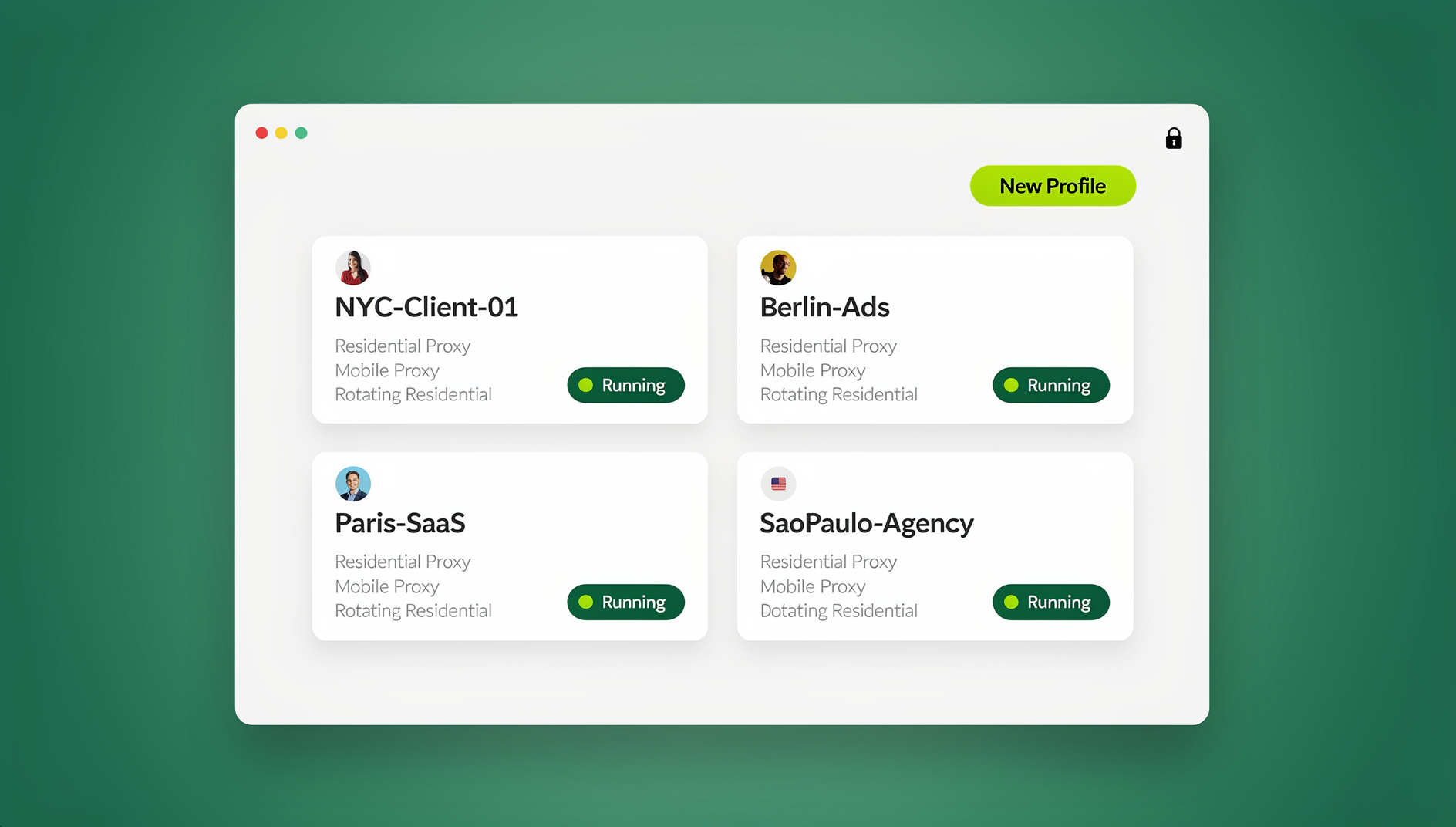
Both tools solve the same core problem: running many separate accounts from one machine without platforms linking them together. Octo Browser has built its reputation at the premium end of the market and is a fixture on professional media-buying floors. Sendwin competes by delivering the essentials — believable fingerprints, built-in residential proxies, an automation API, and cloud access — at a price that makes sense below enterprise scale. For the wider market context, our roundup of the best antidetect browser picks for 2026 covers the whole field; this article is the direct head-to-head.
TL;DR: Octo Browser vs Sendwin at a Glance
If you only read one thing, read this table. It captures the entire dynamic of this matchup: Octo Browser is a premium tool engineered for teams that treat account infrastructure as a serious budget line, while Sendwin compresses the same core toolkit into a package that costs less per month than a coffee subscription — proxies included.
| Octo Browser | Sendwin | |
|---|---|---|
| Best for | Funded media-buying teams that need premium fingerprints and enterprise scale | Solo operators and small teams who watch cost per profile |
| Entry price | Lite around €10/mo for ~3 profiles; realistic entry is Starter at €29/mo, as of this writing | Pro at $19/mo, or $6.99/mo billed annually |
| Profiles included | 30 (Starter, €29) up to 100,000 (Advanced, €329) | 150 (Pro) or 500 (Team) |
| Proxies | Not included — bring your own from a third-party provider | 5GB–20GB residential bandwidth included, auto-configured per profile |
| Automation | API access from the Base tier (€79/mo) upward | Automation API on every plan; works with Selenium, Puppeteer, Playwright |
| Free option | No meaningful free tier | No free-forever tier |
| Trial | No free trial listed on its pricing page | 30 days free, no credit card required |
Fingerprint Quality: Octo’s Premium Reputation vs Sendwin’s Automatic Consistency
Antidetect browsers live or die on fingerprint quality. Every site you visit reads dozens of signals — canvas rendering, WebGL output, installed fonts, audio context, screen metrics, timezone — and combines them into a browser fingerprint that identifies your device even with cookies cleared. If two “separate” accounts share a fingerprint, or one profile presents a fingerprint that looks synthetic, platforms will connect or flag them.
Octo Browser’s reputation here is genuinely strong, and it would be dishonest to pretend otherwise. Its fingerprints are sourced from real devices, which means the parameter combinations your profiles present actually exist in the wild rather than being statistically plausible fabrications. Octo is also known for shipping Chromium kernel updates very quickly after each Chrome release — a detail professionals care about, because running an outdated browser version is itself a red flag to detection systems. Add video-stream masking, which helps profiles survive video-based verification checks, and you can see why professional media-buying teams trust Octo with high-stakes ad accounts.
Sendwin’s approach is less about exotic premium signals and more about automatic consistency. Every profile gets a coherent, distinct fingerprint, and because residential proxies are built into the product, Sendwin automatically matches the timezone, locale, and WebRTC behavior of each profile to the IP address it uses. That last part matters more than most buyers realize: a technically flawless fingerprint paired with a mismatched timezone or a leaking WebRTC address is what actually gets accounts banned in day-to-day multi-accounting. Sendwin closes the most common failure mode by default, with zero configuration.
Honest verdict: if your work involves adversarial, high-value environments — aggressive ad-platform moderation at agency scale, for instance — Octo’s real-device sourcing and rapid kernel updates justify paying a premium. For e-commerce sellers, social media managers, and affiliate operators, Sendwin’s automatically consistent fingerprints are more than sufficient, and the built-in proxy matching removes the human error that causes most detections in practice.
Pricing: Where the Gap Becomes a Canyon
Pricing is where this comparison stops being close. As of this writing, Octo Browser’s official pricing page lists a Lite tier at €10 per month for 3 profiles, with the realistic professional entry point being Starter at €29 per month for 30 profiles. From there it scales to Base at €79 per month for 200 profiles (the first tier with API access), Team at €169 for 600 profiles and 6 seats, and Advanced at €329 for up to 100,000 profiles with unlimited team members. Annual billing applies an automatic discount of 63% on Pro (57% on Team). Sendwin’s Pro plan costs $19 per month — or $6.99 per month billed annually — and includes 150 profiles plus 5GB of residential proxy bandwidth. The Team plan runs $49 per month ($20.99 annual) with 500 profiles, 20GB of bandwidth, and 16 seats.
| Plan | Monthly price | Profiles | Approx. cost per profile |
|---|---|---|---|
| Octo Lite | €10 | 3 | ~€3.33 |
| Octo Starter | €29 | 30 | ~€0.97 |
| Octo Base | €79 | 200 | ~€0.40 |
| Octo Team | €169 | 600 | ~€0.28 |
| Octo Advanced | €329 | 100,000 | Negligible at full use |
| Sendwin Pro | $19 | 150 | ~$0.07 |
| Sendwin Team | $49 | 500 | ~$0.06 |
Run the cost-per-profile math and the gap is stark. Octo Starter works out to roughly €0.97 per profile — about thirteen times Sendwin Pro’s seven cents. Octo’s per-profile rate only turns competitive on the Advanced tier, where a 100,000-profile ceiling makes the metric almost meaningless — but getting there means committing €329 every month. And remember that every euro above buys the browser only: proxy service is a separate purchase on top of any Octo plan, while every Sendwin plan ships with residential bandwidth included. If you outgrow Sendwin’s included limits, overflow pricing is linear rather than a forced tier jump — $0.05 per extra profile and $6 per extra gigabyte.
One more practical note for North American buyers: Octo prices in euros. The dollar amount on your card statement moves with the exchange rate and may carry foreign-transaction fees, which makes budgeting slightly less predictable. Sendwin bills in flat USD.
Automation and API: Both Deliver, One Charges Less for It
Octo Browser includes API access from its Base tier (€79/month) upward, and it is a capable implementation — professional teams routinely wire Octo into their farm-management and ad-ops tooling, and the fast kernel updates mean automated sessions keep looking like current Chrome. No complaints here; automation support is part of why pros choose Octo.
Sendwin includes its Automation API on both Pro and Team plans. It is a local API that launches and drives your profiles programmatically, and it works with the three ecosystems that matter: Selenium, Puppeteer, and Playwright. Your script attaches to a running profile and inherits its full fingerprint and proxy configuration automatically, so automated traffic is indistinguishable from your manual sessions. If you are new to this workflow, our step-by-step tutorial on using Puppeteer with an antidetect browser walks through the whole setup in about fifteen minutes.
The practical difference is the entry cost of automation. With Sendwin, API access starts at $19 per month alongside 150 profiles and included proxy bandwidth — everything a scraping or account-management script needs in one bill. With Octo, API access starts at the €79-per-month Base tier, before you have bought the proxies your scripts will route through. If automated multi-account work on a budget is the goal, this category tilts hard toward Sendwin.
Proxies and Network: Sendwin’s Biggest Structural Advantage
This section decides more real-world outcomes than fingerprints do. Octo Browser does not include proxies on any plan. You source your own from third-party providers, vet their IP quality, manage rotation, and paste connection strings into each profile. Reputable residential bandwidth typically costs several dollars per gigabyte on the open market, so the true monthly cost of an Octo setup is the plan price plus a proxy bill that often rivals it — and the operational burden of managing two vendors falls on you.
Sendwin builds residential proxies directly into the product: 5GB of bandwidth per month on Pro, 20GB on Team, and $6 per gigabyte beyond that. Because the proxy layer and the browser come from one system, Sendwin automatically aligns each profile’s timezone, locale, and WebRTC behavior with its assigned IP. There are no connection strings to paste, no rotation schedules to babysit, and no way to accidentally launch a profile through the wrong exit node — the mistake that quietly kills more accounts than any fingerprint flaw.
The fair caveat: heavy scraping workloads can burn through included bandwidth, so high-volume users should budget for add-on gigabytes when comparing totals. Even then, the all-in arithmetic almost always favors having the proxy layer bundled, coordinated, and covered by a single invoice.
Team Features: Unlimited Seats vs Included Seats
Credit where it is due: Octo Browser’s €329 Advanced tier allows unlimited team members, which is genuinely valuable for agencies — a 25-person media-buying floor can operate on a single subscription without per-seat charges, which partially offsets the sticker price at that scale. Below it, seats are tiered: the €169 Team plan includes 6 members as of this writing. Unlimited seating at the top is a real differentiator, and it is a major reason Octo holds the enterprise end.
Sendwin’s Team plan includes 16 seats at $49 per month, alongside 500 profiles and 20GB of bandwidth. Its standout collaboration feature is profile sharing without password sharing: teammates get working access to an account’s browser profile — cookies, sessions, fingerprint, and proxy — without ever seeing the underlying credentials. For agencies managing client accounts, that is a meaningful security and offboarding win. For most teams of two to sixteen people, Sendwin covers everything needed at a fraction of Octo’s price; if your organization runs 30+ operators, Octo’s Advanced tier with unlimited seats starts earning its premium.
Cloud Access and Sync: Two Different Philosophies
Sendwin ships in two modes. The first is the Sendwin Browser, a native desktop application for Windows, macOS, and Linux. The second is cloud browser sessions: you can run any profile in the cloud with nothing installed at all, which is useful on a borrowed laptop, a locked-down office machine, or when a teammate needs quick access from anywhere. All profiles sync through the cloud across devices, so a session you start at the office is waiting for you at home. The honest limitation: cloud browsing time is metered monthly, so treat cloud sessions as a flexibility layer rather than an unlimited remote rig.
Octo Browser’s workflow centers on its desktop application, which is where its polish and performance reputation were earned. For teams whose operators all work from provisioned machines, that model is perfectly fine. But if your workflow involves switching devices, onboarding freelancers quickly, or reaching an account from hardware you do not control, Sendwin’s no-install cloud sessions solve a problem the traditional desktop-only model simply does not address.
Ease of Use: The On-Ramp Matters
Octo Browser is a polished, professional tool, and experienced operators praise its stability. The friction is at the front door: Octo’s pricing page lists no free trial as of this writing, so evaluating it means paying — either €10 for a Lite month capped at 3 profiles, or €29 for Starter. After purchase, you still need to source and configure proxies before your first profile is genuinely usable. None of this deters a professional team; all of it deters a newcomer trying to validate a workflow.
Sendwin’s on-ramp is the opposite. The 30-day trial requires no credit card, the desktop app installs in minutes (or you can start a cloud session with no install at all), and because proxies, timezone, locale, and WebRTC settings are configured automatically, your first profile works correctly out of the box. A beginner can go from download to running their second Etsy shop or fifth ad account in an afternoon, not a working day of proxy shopping and configuration.
Octo Browser Pros and Cons
Pros
- Fingerprints sourced from real devices — top-tier authenticity reputation
- Very fast Chromium kernel updates after each Chrome release
- Unlimited team members on the top Advanced tier (6 seats on Team)
- Video-stream masking for video-based verification scenarios
- Trusted by professional media-buying teams for high-stakes accounts
- API access included from the Base tier upward
Cons
- Expensive: €29/month buys 30 profiles with no proxies and no API at the realistic entry tier, as of this writing
- No meaningful free tier, and no free trial listed on its pricing page
- Proxies not included on any plan — a second vendor and a second bill
- EUR pricing introduces exchange-rate drift and possible card fees for USD buyers
Sendwin Pros and Cons
Pros
- 150 profiles for $19/month — roughly $0.07 per profile
- 5GB–20GB of residential proxy bandwidth included, with automatic timezone, locale, and WebRTC matching
- Automation API included at the entry price; works with Selenium, Puppeteer, and Playwright
- Native desktop app for Windows, macOS, and Linux plus no-install cloud browser sessions
- Profile sharing with teammates without sharing passwords
- 30-day free trial with no credit card required
- Cheap linear overflow: $0.05 per extra profile, $6 per extra GB
Cons
- No free-forever tier — after the 30-day trial you pick a paid plan
- Smaller community and third-party ecosystem than decade-old incumbents
- Cloud browsing time is metered monthly rather than unlimited
Which Should You Pick?
Pick Octo Browser if you run a media-buying agency or large account farm where a banned ad account costs thousands, your headcount is high enough that the Advanced tier’s unlimited seats offset the plan price, and your budget comfortably absorbs €79–€329 per month plus a separate proxy bill. Its real-device fingerprints, video-stream masking, and rapid kernel updates are built precisely for that adversarial, high-stakes environment, and at 200–600+ profiles its per-profile pricing becomes at least rational.
Pick Sendwin if you are a solo operator, freelancer, or small team running anywhere from five to five hundred accounts and you care about cost per profile. You get 150 profiles, included residential proxies, and a full automation API for $9.99 — less than the exchange-rate noise on an Octo invoice — plus 30 days to verify it works for your platforms before paying anything. The trial makes this a genuinely risk-free test, which is not something Octo currently offers.
If you are still shortlisting, it is worth seeing how Sendwin fares against a closer-priced rival too — our Sendwin vs GoLogin comparison covers that matchup in the same honest detail.
🏆 Send.win Verdict
Octo Browser is a genuinely premium antidetect browser, and funded media-buying teams that need real-device fingerprints and unlimited seats will not regret it. For everyone else, the math is brutal: €29 buys 30 profiles at Octo with no proxies and no API access, while $9.99 buys 150 profiles at Sendwin with residential bandwidth, automatic fingerprint-to-IP matching, and an automation API included. Sendwin delivers the practical 90% of Octo’s capability at a fraction of the effective cost.
Try Send.win free today — 150 profiles, built-in residential proxies, and the full Automation API, free for 30 days with no credit card required.
Frequently Asked Questions
Is Octo Browser better than Sendwin?
In two specific areas, yes: Octo’s fingerprints are sourced from real devices, and its Advanced tier’s unlimited team seats suit very large organizations. In value terms, no — Sendwin includes 150 profiles, residential proxy bandwidth, and an automation API for $19/month, while Octo’s €29 Starter tier covers 30 profiles with no proxies and no API access. Most solo operators and small teams get everything they need from Sendwin.
How Send.win Helps With Sendwin Vs Octo Browser
Send.win is an antidetect browser built for exactly this kind of work — every profile is a clean, isolated identity:
- Isolated profiles – unique fingerprint, separate cookies and storage per profile
- Stealth engine – canvas, WebGL, fonts, and audio spoofed at the engine level
- Desktop app + cloud sessions – native app for Windows, macOS, and Linux, or run profiles in the cloud with no install
- Built-in residential proxies – with automatic timezone, locale, and WebRTC matching
- Team features – share logged-in profiles with teammates without sharing passwords
Try the instant cloud browser demo — no install, no signup — or download the desktop app. The 30-day free trial needs no credit card, and paid plans start at $6.99/month billed annually (see pricing).
Does Octo Browser have a free trial?
Octo Browser’s pricing page lists no free trial as of this writing, and its Lite tier (€10/month for 3 profiles) is the cheapest way to test it. Sendwin takes the opposite approach: a full-featured 30-day free trial with no credit card required.
How much cheaper is Sendwin per profile?
Octo Starter works out to roughly €0.97 per profile (€29 for 30 profiles), while Sendwin Pro is about $0.07 per profile ($19 for 150) — a thirteenfold difference at entry level, before Octo’s separate proxy bill is counted. Octo’s per-profile rate only becomes competitive on the €329 Advanced tier, which is enterprise-level spend.
Do I need to buy proxies separately with these tools?
With Octo Browser, yes — no plan includes proxies, so budget for a third-party provider on top. With Sendwin, no — Pro includes 5GB and Team includes 20GB of residential bandwidth per month, automatically matched to each profile’s timezone, locale, and WebRTC settings, with extra bandwidth at $6/GB.
Can I automate both browsers with Puppeteer or Selenium?
Yes, though the entry points differ. Octo includes API access from its €79/month Base tier upward as of this writing. Sendwin’s local Automation API works with Selenium, Puppeteer, and Playwright and is included from $19/month, making it the cheaper route into browser automation by a wide margin.
Which is better for a large agency?
Honestly, often Octo. Its €329 Advanced tier pairs unlimited team members with a 100,000-profile ceiling, which fits organizations with dozens of operators. Sendwin’s Team plan ($49 for 16 seats, 500 profiles, and 20GB of bandwidth) is the stronger deal for small and mid-sized agencies up to about sixteen people.
Does Sendwin work on macOS and Linux?
Yes. The Sendwin Browser is a native desktop application for Windows, macOS, and Linux, and cloud browser sessions run from any machine with no installation at all — profiles stay synced across all of them.
Why is Octo Browser priced in euros, and does it matter?
Octo bills in EUR, so buyers paying with USD cards see totals that drift with the exchange rate and may incur foreign-transaction fees. It is a small factor, but it makes month-to-month budgeting less predictable than Sendwin’s flat USD pricing of $19 (Pro) or $29.99 (Team).