What Is Playwright Browser Fingerprint Spoofing?
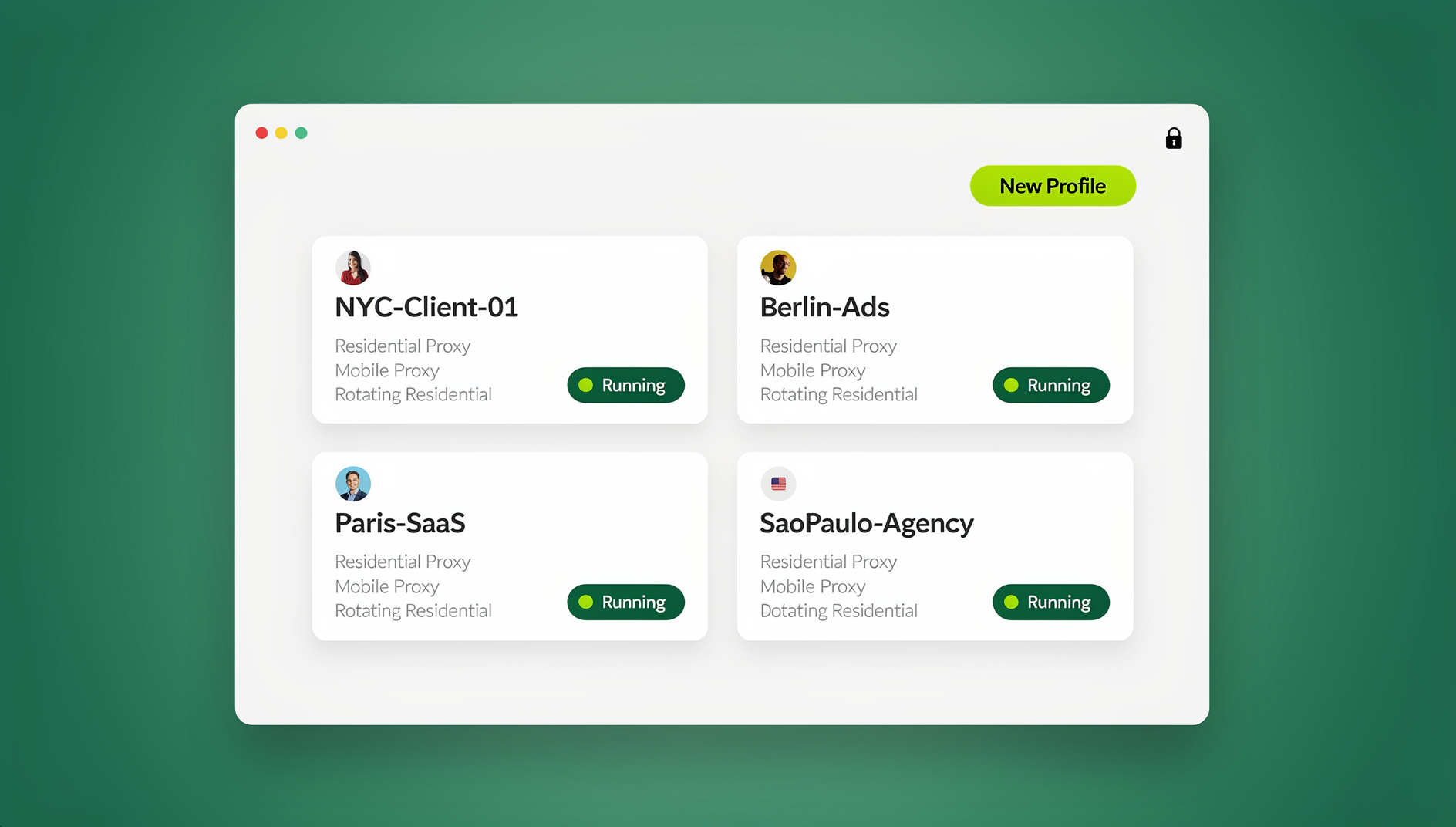
Playwright browser fingerprint spoofing is the practice of overriding the browser properties that websites read to identify you — user agent, viewport, WebGL renderer, canvas output, timezone, locale, and navigator values — using Playwright’s context options and script injection APIs. While Playwright exposes more spoofing surface than Selenium or Puppeteer, manual spoofing still leaves gaps that sophisticated anti-bot systems exploit. This tutorial walks through every spoofable vector with working code, then shows where manual approaches break down and how a browser fingerprint-aware browser profile manager like Send.win keeps each profile’s cookies, storage and fingerprint settings separate.
Fingerprint Vectors Playwright Exposes
Before writing any code, you need to understand exactly which fingerprint signals Playwright can and cannot control. Here’s the complete map:
| Fingerprint Vector | Playwright Control Level | API |
|---|---|---|
| User Agent | Full | browser.newContext({ userAgent }) |
| Viewport / Screen Resolution | Full | browser.newContext({ viewport }) |
| Timezone | Full | browser.newContext({ timezoneId }) |
| Locale / Language | Full | browser.newContext({ locale }) |
| Geolocation | Full | browser.newContext({ geolocation }) |
| Color Scheme | Full | browser.newContext({ colorScheme }) |
| Navigator Properties | Partial (via script injection) | page.addInitScript() |
| Canvas Fingerprint | Partial (noise injection) | page.addInitScript() |
| WebGL Renderer/Vendor | Partial (override strings) | page.addInitScript() |
| AudioContext | Partial (noise injection) | page.addInitScript() |
| Fonts | None | OS-level dependency |
| WebRTC Local IP | None (without extensions) | Requires browser flag or extension |
| TLS/JA3 Fingerprint | None | Determined by browser binary |
| HTTP/2 Settings Frame | None | Determined by browser binary |
The “None” entries are critical — they represent vectors that no amount of JavaScript injection can change, because they operate below the page-level APIs that Playwright controls.
Method 1: Context Options for Basic Spoofing
Playwright’s browser.newContext() accepts several fingerprint-relevant options natively. This is the cleanest and most reliable spoofing layer.
// basic-context-spoofing.js
const { chromium } = require('playwright');

(async () => {
  const browser = await chromium.launch({ headless: false });

  const context = await browser.newContext({
    // User agent — match a real, current Chrome version
    userAgent: 'Mozilla/5.0 (Windows NT 10.0; Win64; x64) AppleWebKit/537.36 (KHTML, like Gecko) Chrome/126.0.0.0 Safari/537.36',

    // Viewport — use a common resolution, not an odd size
    viewport: { width: 1920, height: 1080 },

    // Screen size — sets screen.width and screen.height
    screen: { width: 1920, height: 1080 },

    // Timezone — must match your proxy's location
    timezoneId: 'America/Chicago',

    // Locale — affects Accept-Language header and JS APIs
    locale: 'en-US',

    // Geolocation — latitude/longitude matching the timezone
    geolocation: { latitude: 41.8781, longitude: -87.6298 },
    permissions: ['geolocation'],

    // Color scheme preference
    colorScheme: 'light',

    // Device scale factor
    deviceScaleFactor: 1,

    // Whether it reports as a mobile device
    isMobile: false,
    hasTouch: false,
  });

  const page = await context.newPage();
  await page.goto('https://browserleaks.com/javascript');

  // Verify the spoofed values
  const timezone = await page.evaluate(() => Intl.DateTimeFormat().resolvedOptions().timeZone);
  const language = await page.evaluate(() => navigator.language);
  const screenW = await page.evaluate(() => screen.width);

  console.log('Timezone:', timezone);   // America/Chicago
  console.log('Language:', language);    // en-US
  console.log('Screen:', screenW);      // 1920

  await page.waitForTimeout(10000);
  await browser.close();
})();
These options modify the browser at the context level, meaning every page opened in this context inherits the spoofed values. They work reliably because Playwright controls them through the Chrome DevTools Protocol (CDP) rather than JavaScript overrides — the values are set before any page script runs.
Method 2: Navigator Property Overrides via addInitScript
For properties not covered by context options — like navigator.hardwareConcurrency, navigator.deviceMemory, and navigator.platform — use page.addInitScript() to inject overrides before any page JavaScript executes.
// navigator-overrides.js
const { chromium } = require('playwright');

(async () => {
  const browser = await chromium.launch({ headless: false });

  const context = await browser.newContext({
    userAgent: 'Mozilla/5.0 (Macintosh; Intel Mac OS X 10_15_7) AppleWebKit/537.36 (KHTML, like Gecko) Chrome/126.0.0.0 Safari/537.36',
    viewport: { width: 1440, height: 900 },
    locale: 'en-US',
    timezoneId: 'America/Los_Angeles',
  });

  // Override navigator properties before any page script runs
  await context.addInitScript(() => {
    // Hardware concurrency (CPU cores)
    Object.defineProperty(navigator, 'hardwareConcurrency', {
      get: () => 8,
    });

    // Device memory (GB)
    Object.defineProperty(navigator, 'deviceMemory', {
      get: () => 8,
    });

    // Platform — must match the user agent
    Object.defineProperty(navigator, 'platform', {
      get: () => 'MacIntel',
    });

    // Max touch points — 0 for desktop, 5+ for mobile
    Object.defineProperty(navigator, 'maxTouchPoints', {
      get: () => 0,
    });

    // Connection info
    if (navigator.connection) {
      Object.defineProperty(navigator.connection, 'effectiveType', {
        get: () => '4g',
      });
      Object.defineProperty(navigator.connection, 'downlink', {
        get: () => 10,
      });
      Object.defineProperty(navigator.connection, 'rtt', {
        get: () => 50,
      });
    }

    // Battery API — return a realistic object
    navigator.getBattery = async () => ({
      charging: true,
      chargingTime: 0,
      dischargingTime: Infinity,
      level: 1.0,
      addEventListener: () => {},
      removeEventListener: () => {},
    });

    // Plugins — Chromium headless has empty plugins array
    Object.defineProperty(navigator, 'plugins', {
      get: () => {
        const plugins = [
          { name: 'Chrome PDF Plugin', filename: 'internal-pdf-viewer', description: 'Portable Document Format' },
          { name: 'Chrome PDF Viewer', filename: 'mhjfbmdgcfjbbpaeojofohoefgiehjai', description: '' },
          { name: 'Native Client', filename: 'internal-nacl-plugin', description: '' },
        ];
        plugins.length = 3;
        return plugins;
      },
    });

    // Languages array — must match the locale context option
    Object.defineProperty(navigator, 'languages', {
      get: () => ['en-US', 'en'],
    });
  });

  const page = await context.newPage();
  await page.goto('https://browserleaks.com/javascript');

  const props = await page.evaluate(() => ({
    cores: navigator.hardwareConcurrency,
    memory: navigator.deviceMemory,
    platform: navigator.platform,
    plugins: navigator.plugins.length,
    languages: navigator.languages,
  }));

  console.log('Navigator properties:', props);
  await page.waitForTimeout(10000);
  await browser.close();
})();
The Consistency Problem
Notice how the user agent says Macintosh and the platform override says MacIntel — these must match. A user agent claiming Windows with a platform reporting MacIntel is an instant red flag. This consistency requirement extends across every spoofed property: a mobile user agent with maxTouchPoints: 0 is contradictory. Eight CPU cores with 2GB of device memory is implausible. Manually maintaining these cross-property relationships at scale is where most DIY spoofing setups fail.
Method 3: Canvas Fingerprint Noise Injection
Canvas fingerprinting works by drawing invisible graphics and reading back the pixel data — subtle rendering differences between GPUs, drivers, and OS font renderers produce unique hashes. Injecting noise into the readback functions alters the hash without visibly changing rendered content. For a deeper understanding of how this technique is used in tracking, see our guide on how to bypass anti-bot detection.
// canvas-spoofing.js
const { chromium } = require('playwright');

(async () => {
  const browser = await chromium.launch({ headless: false });
  const context = await browser.newContext({
    viewport: { width: 1920, height: 1080 },
  });

  await context.addInitScript(() => {
    // Store original methods
    const originalToDataURL = HTMLCanvasElement.prototype.toDataURL;
    const originalToBlob = HTMLCanvasElement.prototype.toBlob;
    const originalGetImageData = CanvasRenderingContext2D.prototype.getImageData;

    // Seed-based noise function for consistency within a session
    const seed = 0.12345678; // Change this per profile
    let noiseIndex = 0;

    function pseudoRandom() {
      noiseIndex++;
      const x = Math.sin(seed * noiseIndex) * 10000;
      return x - Math.floor(x);
    }

    // Override getImageData to inject subtle pixel noise
    CanvasRenderingContext2D.prototype.getImageData = function (x, y, w, h) {
      const imageData = originalGetImageData.call(this, x, y, w, h);
      const data = imageData.data;

      // Only modify a small percentage of pixels
      for (let i = 0; i < data.length; i += 4) {
        if (pseudoRandom() < 0.01) { // 1% of pixels
          // Shift RGB values by -1, 0, or +1
          data[i] = Math.max(0, Math.min(255, data[i] + Math.floor(pseudoRandom() * 3) - 1));
          data[i + 1] = Math.max(0, Math.min(255, data[i + 1] + Math.floor(pseudoRandom() * 3) - 1));
          data[i + 2] = Math.max(0, Math.min(255, data[i + 2] + Math.floor(pseudoRandom() * 3) - 1));
        }
      }

      return imageData;
    };

    // Override toDataURL to use the noisy getImageData
    HTMLCanvasElement.prototype.toDataURL = function (...args) {
      if (this.width === 0 || this.height === 0) {
        return originalToDataURL.apply(this, args);
      }

      const ctx = this.getContext('2d');
      if (ctx) {
        // Force a read-modify-write cycle to inject noise
        const imageData = ctx.getImageData(0, 0, this.width, this.height);
        ctx.putImageData(imageData, 0, 0);
      }

      return originalToDataURL.apply(this, args);
    };

    // Override toBlob similarly
    HTMLCanvasElement.prototype.toBlob = function (callback, ...args) {
      const ctx = this.getContext('2d');
      if (ctx && this.width > 0 && this.height > 0) {
        const imageData = ctx.getImageData(0, 0, this.width, this.height);
        ctx.putImageData(imageData, 0, 0);
      }

      return originalToBlob.call(this, callback, ...args);
    };
  });

  const page = await context.newPage();
  await page.goto('https://browserleaks.com/canvas');
  await page.waitForTimeout(15000);
  await browser.close();
})();
Why Canvas Noise Alone Isn’t Enough
Canvas noise injection changes the fingerprint hash, but sophisticated detectors don’t just check the hash — they analyze the pattern of noise. If every pixel shift is uniform or follows a predictable PRNG, that itself becomes a detectable signal. Real GPU rendering differences produce correlated noise across specific pixel regions (font subpixel rendering, GPU rounding), not random scatter. Anti-bot services like Kasada and DataDome specifically look for synthetic noise patterns.
Method 4: WebGL Fingerprint Spoofing
WebGL fingerprinting reads the GPU renderer and vendor strings, supported extensions, and shader precision formats. Spoofing the strings is straightforward; spoofing the rendering behavior is not.
// webgl-spoofing.js
const { chromium } = require('playwright');

(async () => {
  const browser = await chromium.launch({ headless: false });
  const context = await browser.newContext({
    viewport: { width: 1920, height: 1080 },
  });

  await context.addInitScript(() => {
    // Target GPU to impersonate
    const SPOOFED_VENDOR = 'Google Inc. (NVIDIA)';
    const SPOOFED_RENDERER = 'ANGLE (NVIDIA, NVIDIA GeForce RTX 3060 Direct3D11 vs_5_0 ps_5_0, D3D11)';

    // Override WebGL getParameter
    const originalGetParameter = WebGLRenderingContext.prototype.getParameter;
    WebGLRenderingContext.prototype.getParameter = function (param) {
      // UNMASKED_VENDOR_WEBGL
      if (param === 0x9245) return SPOOFED_VENDOR;
      // UNMASKED_RENDERER_WEBGL
      if (param === 0x9246) return SPOOFED_RENDERER;
      // MAX_TEXTURE_SIZE — must be plausible for the claimed GPU
      if (param === 0x0D33) return 16384;
      // MAX_RENDERBUFFER_SIZE
      if (param === 0x84E8) return 16384;
      // MAX_VIEWPORT_DIMS
      if (param === 0x0D3A) return new Int32Array([32768, 32768]);

      return originalGetParameter.call(this, param);
    };

    // Override WebGL2 as well
    if (typeof WebGL2RenderingContext !== 'undefined') {
      const originalGetParameter2 = WebGL2RenderingContext.prototype.getParameter;
      WebGL2RenderingContext.prototype.getParameter = function (param) {
        if (param === 0x9245) return SPOOFED_VENDOR;
        if (param === 0x9246) return SPOOFED_RENDERER;
        if (param === 0x0D33) return 16384;
        if (param === 0x84E8) return 16384;
        if (param === 0x0D3A) return new Int32Array([32768, 32768]);

        return originalGetParameter2.call(this, param);
      };
    }

    // Override the debug extension directly
    const originalGetExtension = WebGLRenderingContext.prototype.getExtension;
    WebGLRenderingContext.prototype.getExtension = function (name) {
      const ext = originalGetExtension.call(this, name);
      if (name === 'WEBGL_debug_renderer_info' && ext) {
        return ext; // The getParameter override handles the values
      }
      return ext;
    };
  });

  const page = await context.newPage();
  await page.goto('https://browserleaks.com/webgl');

  const webglInfo = await page.evaluate(() => {
    const canvas = document.createElement('canvas');
    const gl = canvas.getContext('webgl');
    const ext = gl.getExtension('WEBGL_debug_renderer_info');
    return {
      vendor: gl.getParameter(ext.UNMASKED_VENDOR_WEBGL),
      renderer: gl.getParameter(ext.UNMASKED_RENDERER_WEBGL),
    };
  });

  console.log('WebGL:', webglInfo);
  await page.waitForTimeout(10000);
  await browser.close();
})();
The Rendering Consistency Problem
You can lie about the GPU name, but you can’t change how the actual GPU renders triangles. WebGL fingerprinting doesn’t just read the vendor string — it draws specific 3D scenes and hashes the output pixels. An RTX 3060 produces subtly different rendering artifacts than an Intel Iris Xe. Claiming to be an RTX 3060 while your actual GPU renders like integrated Intel graphics is a detectable inconsistency that advanced fingerprinters exploit.
Method 5: Full Spoofing Script — All Vectors Combined
Here’s a consolidated script that applies all the spoofing techniques together:
// full-fingerprint-spoof.js
const { chromium } = require('playwright');

// Profile configuration — change these per identity
const PROFILE = {
  userAgent: 'Mozilla/5.0 (Windows NT 10.0; Win64; x64) AppleWebKit/537.36 (KHTML, like Gecko) Chrome/126.0.0.0 Safari/537.36',
  viewport: { width: 1920, height: 1080 },
  screen: { width: 1920, height: 1080 },
  timezoneId: 'America/New_York',
  locale: 'en-US',
  platform: 'Win32',
  hardwareConcurrency: 12,
  deviceMemory: 16,
  maxTouchPoints: 0,
  canvasNoiseSeed: 0.87654321,
  webglVendor: 'Google Inc. (NVIDIA)',
  webglRenderer: 'ANGLE (NVIDIA, NVIDIA GeForce RTX 4070 Direct3D11 vs_5_0 ps_5_0, D3D11)',
};

(async () => {
  const browser = await chromium.launch({ headless: false });

  const context = await browser.newContext({
    userAgent: PROFILE.userAgent,
    viewport: PROFILE.viewport,
    screen: PROFILE.screen,
    timezoneId: PROFILE.timezoneId,
    locale: PROFILE.locale,
    colorScheme: 'light',
    deviceScaleFactor: 1,
  });

  await context.addInitScript((profile) => {
    // --- Navigator overrides ---
    Object.defineProperty(navigator, 'hardwareConcurrency', { get: () => profile.hardwareConcurrency });
    Object.defineProperty(navigator, 'deviceMemory', { get: () => profile.deviceMemory });
    Object.defineProperty(navigator, 'platform', { get: () => profile.platform });
    Object.defineProperty(navigator, 'maxTouchPoints', { get: () => profile.maxTouchPoints });
    Object.defineProperty(navigator, 'languages', { get: () => ['en-US', 'en'] });

    // --- Plugins (mimic real Chrome) ---
    Object.defineProperty(navigator, 'plugins', {
      get: () => {
        const p = [
          { name: 'Chrome PDF Plugin', filename: 'internal-pdf-viewer', description: 'Portable Document Format' },
          { name: 'Chrome PDF Viewer', filename: 'mhjfbmdgcfjbbpaeojofohoefgiehjai', description: '' },
          { name: 'Native Client', filename: 'internal-nacl-plugin', description: '' },
        ];
        p.length = 3;
        return p;
      },
    });

    // --- WebDriver flag removal ---
    Object.defineProperty(navigator, 'webdriver', { get: () => false });

    // --- Canvas noise ---
    const origGetImageData = CanvasRenderingContext2D.prototype.getImageData;
    let idx = 0;
    function noise() {
      idx++;
      const x = Math.sin(profile.canvasNoiseSeed * idx) * 10000;
      return x - Math.floor(x);
    }
    CanvasRenderingContext2D.prototype.getImageData = function (sx, sy, sw, sh) {
      const data = origGetImageData.call(this, sx, sy, sw, sh);
      for (let i = 0; i < data.data.length; i += 4) {
        if (noise() < 0.01) {
          data.data[i] = Math.max(0, Math.min(255, data.data[i] + Math.floor(noise() * 3) - 1));
        }
      }
      return data;
    };

    // --- WebGL spoofing ---
    const origGetParam = WebGLRenderingContext.prototype.getParameter;
    WebGLRenderingContext.prototype.getParameter = function (p) {
      if (p === 0x9245) return profile.webglVendor;
      if (p === 0x9246) return profile.webglRenderer;
      return origGetParam.call(this, p);
    };
    if (typeof WebGL2RenderingContext !== 'undefined') {
      const origGetParam2 = WebGL2RenderingContext.prototype.getParameter;
      WebGL2RenderingContext.prototype.getParameter = function (p) {
        if (p === 0x9245) return profile.webglVendor;
        if (p === 0x9246) return profile.webglRenderer;
        return origGetParam2.call(this, p);
      };
    }

    // --- AudioContext noise ---
    const origCreateAnalyser = AudioContext.prototype.createAnalyser;
    AudioContext.prototype.createAnalyser = function () {
      const analyser = origCreateAnalyser.call(this);
      const origGetFloat = analyser.getFloatFrequencyData.bind(analyser);
      analyser.getFloatFrequencyData = function (arr) {
        origGetFloat(arr);
        for (let i = 0; i < arr.length; i++) {
          arr[i] += (noise() - 0.5) * 0.001;
        }
      };
      return analyser;
    };
  }, PROFILE);

  const page = await context.newPage();

  // Test the complete spoofing setup
  await page.goto('https://browserleaks.com/javascript');
  console.log('Check browserleaks.com to verify all vectors...');
  await page.waitForTimeout(30000);
  await browser.close();
})();
Where Manual Spoofing Breaks Down
Even with every method above applied perfectly, manual Playwright spoofing has fundamental blind spots that modern anti-bot systems exploit:
TLS Fingerprinting (JA3/JA4)
Every browser negotiates TLS connections with a unique pattern of cipher suites, extensions, and elliptic curves. This produces a JA3 or JA4 hash that identifies the browser binary — not the JavaScript environment. Playwright uses Chromium, and its TLS fingerprint says “Chromium automated by Playwright” regardless of any JavaScript overrides. Anti-bot services from Cloudflare, Akamai, and PerimeterX check JA3 hashes before your page scripts even load.
HTTP/2 Settings Frame
Similar to TLS fingerprinting, the HTTP/2 SETTINGS frame sent during connection setup reveals the browser’s networking stack identity. Headless Chromium’s SETTINGS differ from regular Chrome, and no JavaScript API can change this — it’s determined by the browser binary itself.
Override Detection via Property Descriptors
Anti-bot scripts check whether navigator properties have been overridden by examining property descriptors, prototype chains, and function toString() output. A naive Object.defineProperty override can be detected by:
// How anti-bot scripts detect your overrides
const descriptor = Object.getOwnPropertyDescriptor(navigator, 'hardwareConcurrency');

// Real browser: descriptor is undefined (inherited from prototype)
// Spoofed: descriptor exists with a getter function
if (descriptor && descriptor.get) {
  console.log('SPOOFED — property was overridden on the instance');
}

// Check if the getter is native code
if (descriptor && descriptor.get && !descriptor.get.toString().includes('[native code]')) {
  console.log('SPOOFED — getter is not native');
}
Cross-Signal Inconsistencies
Maintaining consistency across 50+ fingerprint vectors is nearly impossible manually. Common mistakes include user agent claiming Chrome 126 but the navigator.appVersion leaking a different version, screen resolution not matching common devices at the claimed DPI, GPU renderer claiming a discrete GPU on a device reporting 4GB memory, and timezone offsets not matching the Intl.DateTimeFormat output.
Font Enumeration
Websites detect installed system fonts by measuring the rendered width of text in each font and comparing against a known fallback. The set of installed fonts is OS and machine-specific. Playwright cannot add or remove system fonts — this is an operating system-level property that sits below any JavaScript API.
How Send.win Profiles Keep Fingerprints Consistent
Instead of fighting these limitations with fragile JavaScript patches, you can use a Send.win profile that handles fingerprint management natively. Send.win’s Sendwin Browser desktop app gives each profile its own consistent browser fingerprint, so profiles do not share one browser identity. For more on how automation tools interact with fingerprinting, see our Selenium browser fingerprint guide.
Why CDP Integration Beats Manual Spoofing
| Vector | Manual Playwright Spoofing | Send.win |
|---|---|---|
| User Agent | ✅ Context option | ✅ Managed per profile |
| Canvas | ⚠️ Noise injection (detectable) | ✅ Hardware-level spoofing |
| WebGL | ⚠️ String override only | ✅ Full renderer simulation |
| TLS/JA3 | ❌ Cannot change | ✅ Real browser binary |
| HTTP/2 Settings | ❌ Cannot change | ✅ Real browser binary |
| Fonts | ❌ OS-level | ✅ Managed font list |
| Navigator Props | ⚠️ Detectable overrides | ✅ Native values |
| WebRTC Leak | ❌ Needs extension | ✅ Built-in protection |
| Proxy Integration | Manual per-context | ✅ Per-profile with bandwidth |
| Session Persistence | Must save/load manually | ✅ Automatic across sessions |
| Cross-Signal Consistency | Manual (error-prone) | ✅ Auto-validated |
Send.win is available on both the Pro plan ($19/month, or $83.88/year) and the Team plan ($49/month, or $251.88/year). Send.win has no automation interface — no API, SDK, headless mode or Selenium/Puppeteer/Playwright support on any plan. Each profile keeps its own consistent browser fingerprint, so profiles do not share one browser identity.
Best Practices for Playwright Fingerprint Spoofing
1. Match Every Cross-Signal
If your user agent says Windows, your platform must say Win32, your fonts must be Windows fonts, and your GPU renderer should reference Direct3D. Build profile objects that encode these relationships explicitly rather than setting each property independently.
2. Use Realistic Value Combinations
Don’t invent fingerprint values. Collect real fingerprint samples from actual browsers on actual hardware (sites like BrowserLeaks, CreepJS, and FingerprintJS expose the exact values). Use those as templates for your spoofed profiles.
3. Persist Identity Across Sessions
Changing your fingerprint on every visit is as suspicious as having no fingerprint at all. Real users have stable fingerprints that only change when they update their browser or OS. If you’re using raw Playwright, save your profile configuration and reuse it across sessions. With Send.win, persistence is automatic — each profile maintains its identity indefinitely.
4. Don’t Forget the Network Layer
A perfect JavaScript fingerprint means nothing if your IP address is a known datacenter, your TLS fingerprint says “headless automation,” or your DNS requests resolve through a server in a different country than your claimed timezone. The network layer is where most amateur spoofing setups get caught.
5. Test Against Real Detection Services
Don’t just check BrowserLeaks. Test your setup against actual anti-bot services: Cloudflare’s bot management, DataDome, Kasada, PerimeterX, and FingerprintJS Pro. Each uses different detection vectors, and passing one doesn’t guarantee passing another.
🏆 Send.win Verdict
Manual Playwright fingerprint spoofing is educational and works against basic detection, but it fundamentally cannot address TLS fingerprinting, font enumeration, HTTP/2 settings, or the deep rendering inconsistencies that modern anti-bot systems check. A Send.win profile keeps its own consistent browser fingerprint, so profiles do not share one browser identity. Send.win is available on the Pro plan ($19/mo, or $83.88/yr) and the Team plan ($49/mo, or $251.88/yr).
Try the Send.win cloud demo — a 3-minute preview without signup, 10 minutes a day with a free account. The first card purchase is covered by a 7-day money-back guarantee.
Frequently Asked Questions
Can Playwright fully spoof a browser fingerprint?
No. Playwright can spoof user agent, viewport, timezone, locale, geolocation, and — via script injection — navigator properties, canvas output, and WebGL strings. However, it cannot change TLS/JA3 fingerprints, HTTP/2 settings frames, installed system fonts, or the actual GPU rendering behavior. These lower-level vectors require either a modified browser binary or a purpose-built antidetect browser.
Is Playwright better than Puppeteer for fingerprint spoofing?
Playwright offers slightly more built-in context options (screen size, color scheme, device scale factor) and supports multiple browser engines (Chromium, Firefox, WebKit). For fingerprint spoofing specifically, both have similar limitations — neither can change TLS fingerprints or font enumeration. Playwright’s cross-browser support is useful for testing, but most production spoofing targets Chromium since it matches real Chrome.
Does setting navigator.webdriver to false actually work?
It prevents the simplest detection check, but modern anti-bot systems use dozens of other signals. They check for automation-specific JavaScript globals, CDP protocol artifacts, missing browser features, and behavioral patterns (instant page loads, no mouse movement, perfect click coordinates). Removing the webdriver flag is necessary but nowhere near sufficient.
What is the CDP endpoint in Send.win?
When you launch a profile in the Sendwin Browser desktop app, it keeps its own consistent browser fingerprint, so profiles do not share one browser identity. Send.win has no automation interface — no API, SDK, headless mode or Selenium/Puppeteer/Playwright support on any plan.
How does Send.win handle canvas and WebGL fingerprinting differently from script injection?
Script injection intercepts JavaScript API calls and modifies return values — the actual rendering still happens on your real GPU. Send.win keeps each profile’s browser fingerprint consistent at the browser engine level, so the rendered output matches the profile’s own GPU identity. This means a WebGL rendering test produces pixel data matching that profile’s GPU, not just matching vendor/renderer strings.
Do I need the Pro or Team plan for Playwright automation?
Send.win is available on the Pro plan ($19/month, $83.88/year) and the Team plan ($49/month, $251.88/year). Send.win has no automation interface — no API, SDK, headless mode or Selenium/Puppeteer/Playwright support on any plan. The first card purchase is covered by a 7-day money-back guarantee.
Can I run Playwright against Send.win cloud browser sessions?
Send.win offers cloud browser sessions that run profiles without requiring the desktop app. Cloud sessions are designed for manual access from any device without local installation — ideal for checking accounts on the go. Send.win has no automation interface — no API, SDK, headless mode or Selenium/Puppeteer/Playwright support on any plan.
What anti-bot systems can detect manual Playwright spoofing?
Most commercial anti-bot solutions — including Cloudflare Bot Management, DataDome, Kasada, PerimeterX/HUMAN, and Akamai Bot Manager — check TLS fingerprints and behavioral signals that manual JavaScript spoofing cannot address. FingerprintJS Pro specifically looks for property descriptor anomalies that indicate script-based overrides. The level of detection varies, but any service checking below the JavaScript layer will catch manual Playwright spoofing.
Browser Fingerprint Management With Send.win
Send.win pairs isolated, fingerprint-managed browser profiles with a cloud browser that runs on Send.win’s servers in the EU, so your work stays in profiles that keep their own separate cookies, storage and fingerprint:
- Isolated profiles – each with its own fingerprint, cookies, and storage
- Built-in residential proxies – with automatic timezone, locale, and WebRTC matching
- Desktop app for Windows, macOS & Linux – plus cloud sessions when you don’t want a local install
Try the instant cloud browser demo — no install, straight from your browser. Then compare plans: paid plans from $19/month, and the first card purchase is covered by a 7-day money-back guarantee.