The best way to manage multiple marketplace accounts without triggering security suspensions is to utilize isolated browser profiles paired with dedicated proxies for each storefront. While inventory systems sync catalog data, a secure multi-login browser like Send.win separates cookie states and device fingerprints. This prevents platforms from linking independent merchant profiles, enabling safe operations on Amazon, eBay, and Walmart from a single machine.
The Multi-Marketplace Boom and Its Operational Risks
E-commerce has evolved beyond a single storefront. Today, running a successful online business means selling across multiple channels to diversify revenue, target different customer demographics, and hedge against sudden account restrictions. A merchant who sells exclusively on one marketplace is highly vulnerable to unexpected changes in search algorithms, policy updates, or category restrictions. Operating on Amazon, eBay, Walmart, and Etsy simultaneously shields your brand from complete reliance on a single platform. If one storefront faces a temporary review or algorithmic dip, the remaining channels sustain your cash flow and operations.
However, managing multiple accounts across these major platforms introduces a massive risk: automated system correlation. Marketplaces invest millions of dollars into sophisticated fraud-detection algorithms. These systems track the device signatures, connection data, and browser configurations of anyone logging into their seller consoles. If the systems detect that two separate merchant profiles are being operated from the same hardware or connection, they will flag both accounts. Unless you have explicit corporate authorization or are using distinct legal entities, this often leads to immediate, site-wide seller suspensions that are notoriously difficult to appeal. To protect your businesses, you must implement technical measures that prevent platforms from linking your stores.
In addition, automated platforms often flag accounts that share common registration data, billing addresses, or connection paths. Even a brief crossover—such as logging into Store A and Store B from the same browser on your home computer—can trigger a permanent ban. This makes manual account switching in standard browsers a high-risk activity that can ruin your entire business operation in seconds.
Understanding Marketplace Fingerprinting and IP Tracking
When you log into a seller dashboard, the marketplace does not just check your username and password. Its security scripts analyze a series of data points known collectively as your digital fingerprint. This profile includes details that are unique to your setup, such as:
- IP Address: Your network identifier. Connecting to two stores using the same IP address tells the platform that they are originating from the same physical location.
- HTTP Headers: Metadata sent by your browser, including your User-Agent, language settings, and accept-encoding parameters.
- Canvas and WebGL Fingerprints: Unique patterns generated when your browser renders graphics. These patterns are highly specific to your graphics card and system drivers.
- System Fonts: The collection of fonts installed on your operating system, which is queried to create a unique system signature.
- Cookies and Local Storage: Small text files that websites save to your browser to identify you. If cookies from Store A contaminate the session of Store B, the connection is instantly made.
E-commerce teams often rely on a specialized cookie management tool to handle session data, but basic tools fail to mask deeper browser fingerprints. If you try to switch accounts by simply clearing cookies or opening a private browsing tab, the underlying hardware fingerprints remain identical, exposing your link to the marketplace’s security scripts. The automated filters flag this correlation immediately, assuming a single operator is managing multiple stores covertly.
Furthermore, websites look at your TCP/IP packet parameters, operating system kernel quirks, and browser client hints. These combined elements create a highly accurate profile that makes user tracking trivial. To operate safely, you must change every layer of this digital signature for each independent account.
Why Standard Browser Setups Fail to Protect Sellers
Many sellers attempt to bypass these tracking systems using standard browser setups, believing that separate profiles are enough to keep accounts safe. Let’s look at why these common approaches are inadequate for e-commerce security:
Although you can create separate user setups locally, a chrome multi account management strategy still exposes shared network and hardware details to platforms. Because all profiles share the same computer components, their graphics processing signatures, media device lists, and operating system attributes remain identical. The marketplace’s algorithms can match these patterns and link the accounts together within seconds.
Furthermore, running multiple stores inside a standard browser environment means sharing the same network interface card. Without complex, specialized configurations, every profile connects through your router’s default IP address. If one of your accounts gets restricted or suspended for any reason, the platform flags the IP address. Consequently, every other storefront associated with that same IP address faces immediate review, potentially paralyzing your entire business. This is why professionals implement a dedicated browser for ads management and storefront control to completely isolate active sessions. Standard tools simply cannot provide the hardware-level masquerading required to deceive modern fraud-prevention systems.
How True Browser Isolation Protects E-Commerce Accounts
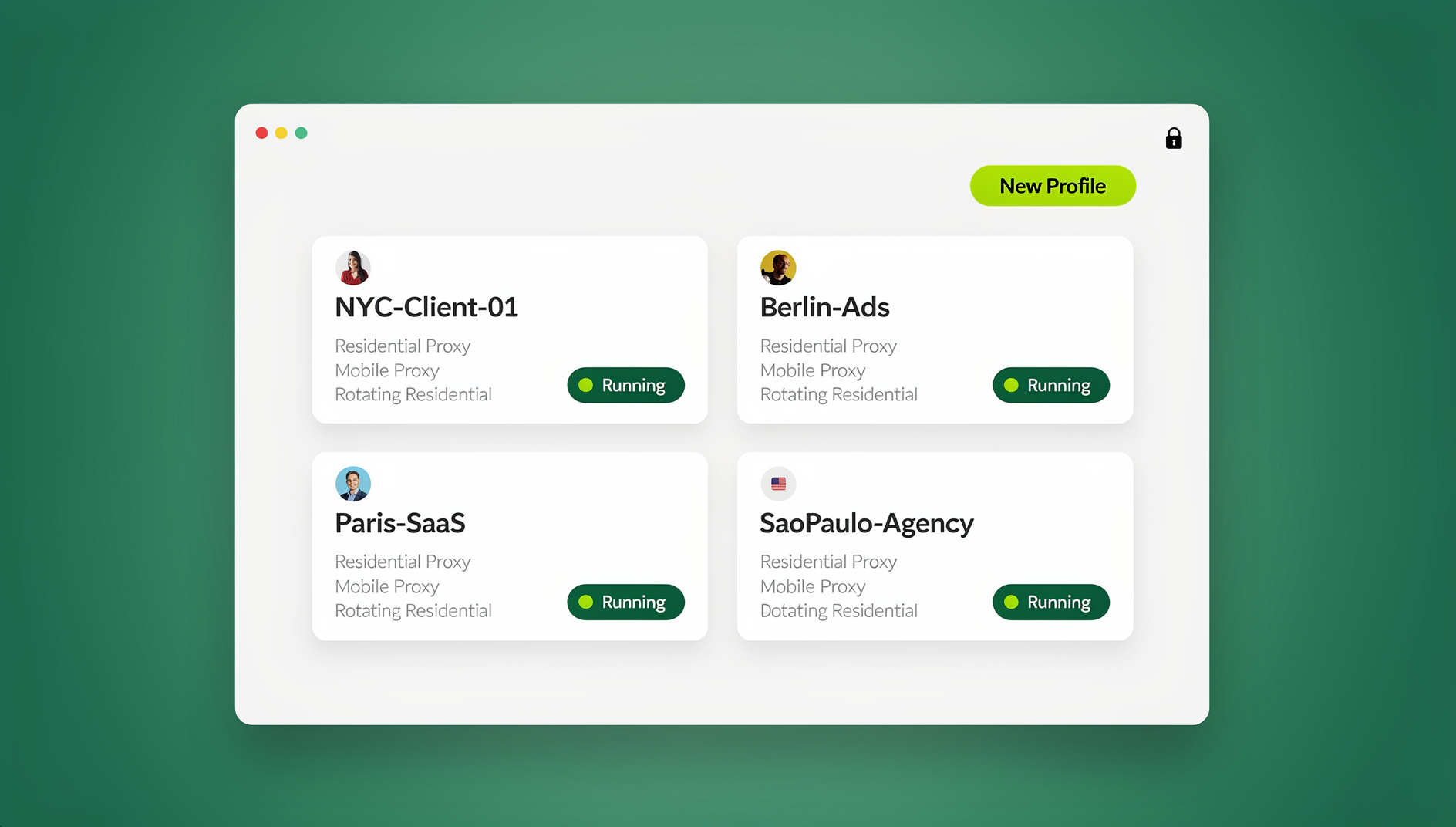
The only way to guarantee account safety is through true browser isolation. Rather than trying to hide your details, an anti-detect browser alters your digital fingerprint, making each profile appear to be a completely different device connecting from a separate location. This approach creates distinct sandboxed environments, each with its own:
- Isolated cookie storage that never shares data between profiles.
- Spoofed graphics card information, screen resolutions, and font lists.
- Unique User-Agent strings matching the simulated operating system.
- Dedicated proxy settings, routing your traffic through a clean residential IP address.
By using this technology, a merchant can open their Amazon Seller Central dashboard, their eBay Hub, and their Walmart store side-by-side in separate windows. Each window functions as if it were running on an independent laptop located in a different city. The marketplace’s detection tools see distinct, legitimate users, eliminating the risk of link-based suspensions. This level of technical protection is crucial for protecting your commercial assets.
For example, managing multiple Amazon accounts requires a clear separation of business entities and technical setups. Pairing isolated profiles with clean residential proxies is the best way to ensure that Amazon never links your stores, allowing you to run separate brand lines without policy violations.
Additionally, modern browser sandboxing ensures that local database storage, IndexedDB caches, and service workers are completely segregated. This prevents tracking scripts from reading leftover session state from other accounts, which is a common cause of accidental correlation flags.
Inventory Sync vs. Technical Session Isolation
It is important to understand the difference between listing management software and browser isolation tools. Multi-channel listing tools (like Sellbrite, Linnworks, or Listing Mirror) are designed to sync your inventory, manage product listings, and centralize orders. They connect to marketplaces via APIs. However, they do not help you when you need to log in directly to your seller dashboards to answer customer queries, adjust campaign parameters, or monitor account health. For those tasks, you must connect via a browser. The table below outlines how these two categories of tools work together in a professional e-commerce stack:
| Feature | Multi-Channel Listing Tools | Browser Isolation Software (Send.win) |
|---|---|---|
| Primary Function | Centralizes product listings, inventory quantities, and incoming orders across channels. | Isolates browsing contexts, cookies, and digital fingerprints for direct dashboard logins. |
| How It Connects | Uses developer API tokens to communicate with marketplace databases. | Provides isolated browser profiles for manual tasks, each with its own cookies, storage, sessions and fingerprint settings. |
| Security Risk Mitigated | Overselling inventory, stockouts, and manual pricing errors. | Account linkage, IP flags, and digital fingerprint correlations. |
| Dashboard Management | Cannot open seller panels directly; limited to API-supported features. | Allows simultaneous access to seller dashboards in separate isolated profiles. |
| Typical Cost | Varies by volume, often costing hundreds of dollars per month. | Low monthly subscription starting at $19/month (or $6.99/month annually). |
Operational Best Practices for Managing Multiple Stores
To scale your multi-account e-commerce business successfully, you must establish rigid operational rules. Follow these guidelines to minimize risk:
- Use Clean Residential Proxies: Never use cheap datacenter proxies. Marketplaces flag datacenter IPs because they are commonly associated with server farms and automated scrapers. Use static residential proxies to get a clean, stable IP that mimics a real home internet connection. This ensures your connection appears natural and doesn’t trigger security flags.
- Keep Your Legal Entities Separate: If you are managing multiple stores on the same marketplace, use separate business entities (LLCs), separate bank accounts, and distinct credit cards for each. Even if your technical isolation is perfect, linked payment methods will bridge your accounts. Ensure that you have separate utility bills and official business registrations for each brand.
- Establish Standard Operating Procedures (SOPs): Train your team to open the correct Send.win profile for each task. Designate clear naming conventions (e.g., “eBay Store A – Main,” “Amazon Store B – Customer Service”) to avoid confusing storefronts. Document these steps to guarantee consistency across all operational workflows.
- Isolate Email Addresses: Never use a master email address to access separate merchant stores. Set up unique, custom-domain email addresses for each storefront and access them within their respective isolated profiles. This prevents email header leaks from exposing your accounts.
- Avoid Direct Cross-Linking: Do not link your different stores together through direct links, public partnerships, or shared supplier agreements that are visible on the front end. Maintain complete separation in your branding, customer service channels, and corporate profiles.
Send.win: The Ultimate Marketplace Management Solution
Send.win is built to handle the complexities of multi-account e-commerce management. Unlike other tools that require extensive technical configurations, Send.win offers a streamlined interface that lets you create, save, and launch isolated profiles in seconds. Send.win provides two primary modes of operation to fit your workflow:
- Sendwin Browser (Desktop Client): A high-performance native application for Windows, macOS, and Linux that runs profiles locally on your computer, using your local hardware resources for maximum speed and responsiveness. This is the recommended client for daily merchant operations.
- Cloud Browser Sessions: Run profiles entirely in the cloud without installing any desktop software. You can access your profiles and active sessions from any device, including tablets and mobile phones. This is ideal for checking store health while on the go.
Send.win offers a simple, predictable pricing structure that makes it highly accessible for growing e-commerce businesses. You can preview the platform with the free cloud demo (a 3-minute preview without signup, 10 minutes a day with a free account). From there, you can choose the plan that best fits your scale:
- Pro Plan: Priced at $19/month (or $83.88/year when billed annually). This plan includes 150 isolated profiles and 5GB of proxy bandwidth.
- Team Plan: Priced at $49/month (or $251.88/year when billed annually). The Team plan includes 500 isolated profiles, 20GB of proxy bandwidth, and 16 seats for team collaboration.
By implementing Send.win into your operational framework, you keep each marketplace presence in its own isolated browser profile. You can assign dedicated credentials, manage stock checks, and handle your customer service pipelines with separate cookies, storage and fingerprint settings per profile.
🏆 Send.win Verdict
Managing storefronts on multiple platforms requires keeping login sessions separate so that automated detection systems do not flag your seller accounts. While inventory listing tools aggregate your stock, Send.win provides the technical isolation needed for direct seller panel management. By running the native Sendwin Browser or using cloud browser sessions, you get absolute session isolation, persistent logins, and a choice of premium proxies, keeping your e-commerce operations secure.
Try the Send.win cloud demo — Preview the platform free to manage all your seller profiles securely in one place.
Frequently Asked Questions
What is the best way to manage multiple marketplace accounts?
The best way is to combine a multi-channel inventory sync tool for managing product listings with a secure multi-login browser like Send.win to manage your direct seller dashboard logins. This dual setup ensures that your logistics are automated while your login credentials, session cookies, and digital device fingerprints are safely isolated, preventing account correlation.
Can Amazon detect if I log into multiple seller accounts on the same computer?
Yes, Amazon has highly sophisticated device fingerprinting scripts that analyze hardware configurations, canvas rendering, fonts, and IP history. If you log into separate accounts using a standard browser or simple incognito windows, Amazon will link the profiles, which can result in the suspension of all associated stores.
Why are residential proxies necessary for multi-account management?
Residential proxies route your traffic through IP addresses assigned to real households by local internet service providers. This makes your connection look like a legitimate home user. Datacenter IPs, by contrast, are easily identified as server traffic and are heavily monitored or auto-flagged by major e-commerce platforms.
Does Send.win require installing a separate browser client?
You can run profiles through our cloud browser sessions directly inside your current web browser, which requires no installation. However, for maximum performance, local execution, and advanced fingerprint customization, we recommend downloading the Sendwin Browser, which is our native desktop client for Windows, macOS, and Linux.
Is it possible to share seller profiles with team members without revealing passwords?
Yes, Send.win’s Team plan allows you to share active browser sessions and profiles with team members or virtual assistants. They can access the seller dashboard directly with the active session cookies already loaded, meaning you never have to share the raw passwords or trigger multi-factor authentication checks.
Can I automate tasks on my e-commerce storefronts using Send.win?
Send.win does not offer an automation interface: there is no API, SDK, headless mode or Selenium/Puppeteer/Playwright support on any plan. Storefront management is done manually within isolated browser profiles.
How much does it cost to use Send.win?
Send.win has no free trial. Paid plans start at $19/month ($83.88/year) for the Pro plan with 150 profiles, and the first card purchase is covered by a 7-day money-back guarantee. The Team plan, which supports 500 profiles and 16 team seats, costs $49/month ($251.88/year). The only free option is the cloud demo at https://send.win/demo-browser/.