What Is an Etsy Stealth Account?
An Etsy stealth account is a second seller account run with its own identity, IP address, and browsing environment so Etsy’s fraud-detection systems can’t connect it to an existing store. Sellers reach for this after a suspension freezes their main shop, when they want a second brand that doesn’t dilute the first, or when they need to test a new niche before committing real inventory. Handled carelessly, it gets both shops banned; handled with proper isolation, it can run for years without issue.
Etsy’s terms generally cap sellers at one account, but the platform does permit multiple shops when each is a genuinely distinct business with its own products and branding. The hard part isn’t the policy — it’s Etsy’s detection stack, which cross-references IP addresses, device fingerprints, payment details, and even product photography and writing style to spot accounts that share an owner.
This guide covers why sellers create stealth accounts, exactly how Etsy links them, a step-by-step setup process, the tools that make isolation realistic, and the risks worth weighing before you start.
Why Sellers Create Etsy Stealth Accounts
Recovering From an Unfair Suspension
Etsy’s automated moderation isn’t perfect. Sellers get permanently suspended over misfiled DMCA claims, algorithmic false positives, or minor policy misunderstandings — and Etsy’s appeals process is notoriously slow to respond. For a seller whose income depends on their shop, waiting weeks for a reply that may never come isn’t realistic, so many start fresh with a new account instead.
Business Diversification
A seller running a vintage clothing store and a custom jewelry line may want two separate storefronts purely for branding — each targets a different buyer, and cramming both under one account waters down the identity of each.
Market Testing
Before investing heavily in a new product category, sellers use a second account to gauge real demand without risking the reviews and search ranking their primary store has already built. If the test line underperforms, it can be quietly wound down without a single negative review or refund ever touching the established shop’s reputation — a far cheaper way to validate an idea than launching it under a store that took years to rank.
Geographic Expansion
Some sellers run one account for domestic orders and another tuned for international buyers, with separate shipping policies, currency display, and pricing strategy for each market.
How Etsy Detects Linked Accounts
Browser Fingerprinting
Etsy collects dozens of data points about the device viewing the page — screen resolution, installed fonts, WebGL renderer string, canvas hash, timezone, and language settings. If two accounts present an identical fingerprint, Etsy flags them as linked regardless of what email or name is on file.
IP Address Tracking
Logging into two accounts from the same IP is the single most obvious linking signal — and that includes not just your home connection but your phone’s mobile network and any VPN server you’ve routed through.
Cookie and Storage Analysis
Cookies and local storage persist identifiers across sessions, and some tracking methods survive a standard “clear cookies” cleanup. Without full session isolation, traces from one account can leak into the next login.
Payment and Identity Correlation
A shared bank account, credit card, PayPal email, phone number, or shipping address between two shops creates a hard link that no amount of browser-level cleverness can undo.
Behavioral and Content Analysis
Etsy’s models also compare selling patterns, listing structure, product photography style, and writing voice across shops — two stores that “sound” the same are a red flag even with clean technical separation.
Step-by-Step Guide to Creating an Etsy Stealth Account
Step 1: Build a Genuinely Separate Identity
- New email address — a fresh inbox from a provider you haven’t used for your main account (ProtonMail, Tutanota, or a new Gmail)
- Separate phone number — a prepaid SIM or VoIP number with no tie to your existing identity
- Distinct name and address — different registration details than your primary shop
- Independent payment method — a separate bank account and payout processor with zero overlap
Step 2: Isolate the Browsing Environment
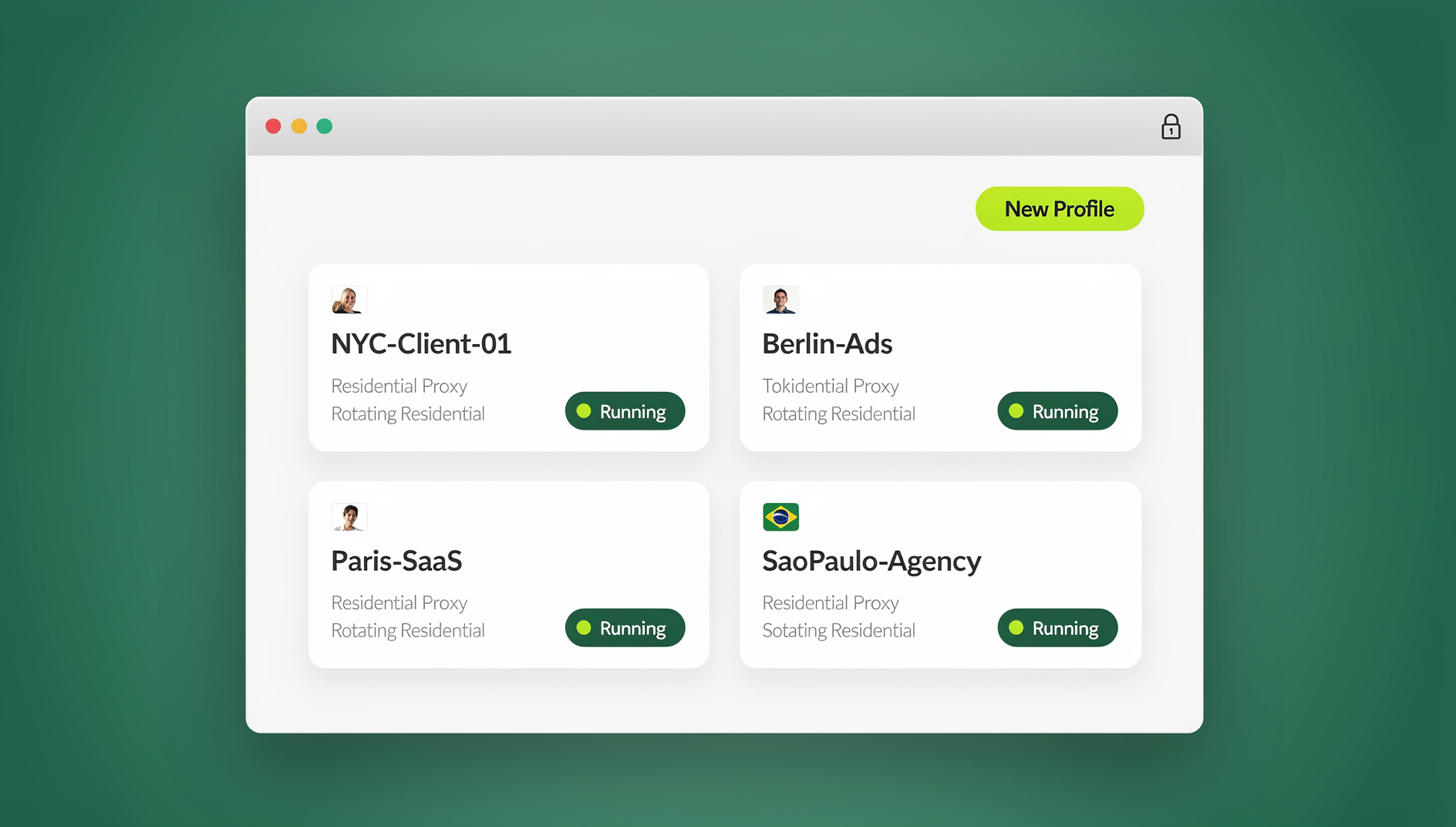
This is where most stealth attempts fall apart. You need complete fingerprint and session isolation, not just a second browser profile. A cloud browser session handles this by giving each account its own remote environment — its own canvas and WebGL signature, its own residential proxy in a plausible location, and its own cookies and local storage that never touch your main machine.
Send.win runs each profile this way: because the session executes on a remote server rather than your laptop, each profile keeps its own separate cookies, storage and sessions. Session data for each account stays contained — the kind of session isolation that stops cookies or cached identifiers from crossing over. If you’d rather keep everything on your own machine instead of in the cloud, Sendwin Browser (the native desktop app) applies the same per-profile isolation locally, with each profile getting its own fingerprint and proxy assignment.
Step 3: Warm Up the Account
- Days 1-3: Browse Etsy as a buyer would — favorite items, follow shops, browse a few relevant categories
- Days 4-7: Complete the shop profile — banner, logo, shop policies, About section
- Days 8-10: List 3-5 products with original photography and unique descriptions
- Days 11-14: Add listings gradually, roughly 2-3 per day, rather than uploading a full catalog on day one
Step 4: Differentiate the Store
- Different photography style — distinct backgrounds, lighting, and angles from your other shop
- A different writing voice — vary sentence structure and formatting so descriptions don’t read as templated
- Distinct branding — separate logo, color palette, and banner design
- Separate social presence — a dedicated Instagram/Pinterest account per shop rather than one account promoting both
Step 5: Maintain Operational Discipline
- Never open the stealth account from your primary browser or device fingerprint
- Don’t reuse printers, shipping labels, or carrier tracking logins across shops
- Avoid mentioning one shop while messaging customers from the other
- Use separate shipping addresses or fulfillment services where possible
Essential Tools for an Etsy Stealth Account
| Tool Category | Purpose | Examples |
|---|---|---|
| Isolated browser | Fingerprint isolation and session separation per account | Send.win, GoLogin, Multilogin |
| Residential proxy | A unique, geographically plausible IP per account | Bright Data, Smartproxy, IPRoyal |
| Email provider | A separate inbox per account | ProtonMail, Tutanota, new Gmail |
| Payment processor | Independent payout method | Payoneer, separate PayPal |
| Phone verification | A unique number per account | Prepaid SIM, Google Voice |
What Does Running an Etsy Stealth Account Actually Cost?
Beyond the tools listed above, budget for the recurring costs of keeping two identities apart: a residential proxy subscription (typically billed by bandwidth, not a flat fee), a second payout processor account, and the time cost of the 10-14 day warm-up period where the shop generates no real revenue. None of this is expensive in absolute terms — most sellers spend well under $50/month on isolation infrastructure — but it’s a real ongoing cost, not a one-time setup fee, and it’s worth factoring in before deciding a stealth account is the right move versus registering a second shop with Etsy directly.
Etsy’s Official Policy on Multiple Accounts
Etsy does allow sellers to run more than one shop under certain conditions:
- Each shop must offer genuinely distinct products
- Each shop must independently comply with all Etsy policies
- Shops must not exist to circumvent an enforcement action against another account
If your situation fits these conditions, contacting Etsy support to register the additional shop openly is always the safer route when it’s actually available to you — it avoids the entire fingerprinting cat-and-mouse game described above.
Risks and Precautions
Account Suspension
If Etsy detects that your new account is linked to a previously suspended one, the new account is typically suspended immediately too — along with any active listings, pending orders, and stored funds.
Financial Risk
Etsy can hold funds for up to 180 days following a suspension. Money already spent on inventory and listing fees for the stealth shop could be tied up for months.
Legal Considerations
Registering an account with fabricated identity details can raise separate legal questions depending on your jurisdiction and how the account is used. If you’re unsure, talk to a business attorney before proceeding — this guide isn’t legal advice.
Similar Approaches on Other Platforms
The isolation techniques above aren’t Etsy-specific — they carry over to most marketplaces that watch for duplicate sellers:
- eBay stealth accounts — our eBay stealth selling guide follows a similar methodology with extra attention to PayPal linking
- Amazon multiple accounts — Amazon’s detection is generally considered even stricter, so isolation has to be tighter still
- Running several Etsy shops legitimately — if your goal is above-board diversification rather than evasion, our guide to running multiple Etsy accounts covers the disclosed, policy-compliant version of this setup
Whichever platform you’re on, the underlying discipline is the same: separate identity, separate payment, and genuine multi-account management rather than reusing the same browser profile for everything.
🏆 Send.win Verdict
An Etsy account lives or dies on isolation quality — one shared IP or leftover cookie is enough to link it back to your main shop. Send.win’s cloud browser sessions give each account its own fingerprint, proxy, and storage without ever touching your local machine, and Sendwin Browser offers the same per-profile isolation if you’d rather run things locally. Either way, that’s the real work; nothing about the account itself gets easier without it.
Try the free Send.win cloud demo — no signup required.
Frequently Asked Questions
How long do Etsy stealth accounts typically last?
With proper setup — isolated browser environment, unique fingerprint, independent identity and payment — a stealth account can run indefinitely. Most detections happen within the first 30 days, and almost always trace back to a setup mistake like a shared IP address or overlapping payment details rather than anything Etsy discovers later.
Can I use a VPN instead of a residential proxy?
It’s riskier. VPN IP ranges are frequently shared among hundreds of users and get flagged as a pattern on their own, independent of your account activity. A residential proxy routes traffic through a real home internet connection, which is far less likely to trip Etsy’s IP-reputation checks.
What happens if my stealth account gets suspended?
Both the stealth account and any account it’s linked to can be suspended. Funds are typically held for up to 180 days. Recovering usually means starting over completely — new identity, new payment method, new browsing environment, new IP — since the previous setup is now flagged.
Do I need a separate computer for my Etsy stealth account?
Not if you’re using a cloud-based isolated browser. A cloud browser session runs on a remote server, so your local machine’s fingerprint is never exposed to Etsy in the first place — you don’t need dedicated hardware just to keep two shops apart. A proper multi-login browser setup handles that separation for you.
Is it worth creating an Etsy stealth account?
It depends on your situation. If you were a legitimate seller unfairly suspended and your income disappeared with the shop, it may be your most realistic option. If you’re trying to dodge consequences for a genuine policy violation, the financial and legal downside usually outweighs the benefit — and the legitimate multi-shop route above is worth checking first.
Can Etsy detect a stealth account through my product listings?
Yes. Identical products with identical photos and descriptions across two shops can be caught by visual-similarity and text-matching systems, independent of any IP or device link. Different photography, unique descriptions, and distinct branding aren’t optional — they’re part of the isolation, not just marketing.
Does using a residential proxy alone guarantee my accounts stay separate?
No. A proxy hides your IP, but if the two accounts still share the same browser cookies, canvas fingerprint, or payment method, Etsy can link them through any of those other signals. Proxies and browser-level isolation need to work together, not one instead of the other.
Can I run an Etsy stealth account from my phone’s browser?
Technically yes, but mobile browsers typically offer less control over fingerprint details like canvas rendering and font lists, and switching between apps on one device makes it easier to accidentally cross-contaminate sessions. A dedicated isolated browser environment, whether cloud-based or the desktop app, gives more reliable separation than juggling tabs on a phone.