Every time you load a webpage, your device broadcasts a small trail of identifying information — your IP address, your rough location, your ISP, and sometimes far more. Advertisers use it to build profiles, websites use it to enforce geo-restrictions, and bad actors use it to target attacks. A proxy server is one of the oldest and most practical tools for taking control of that trail, and it’s still one of the most misunderstood.
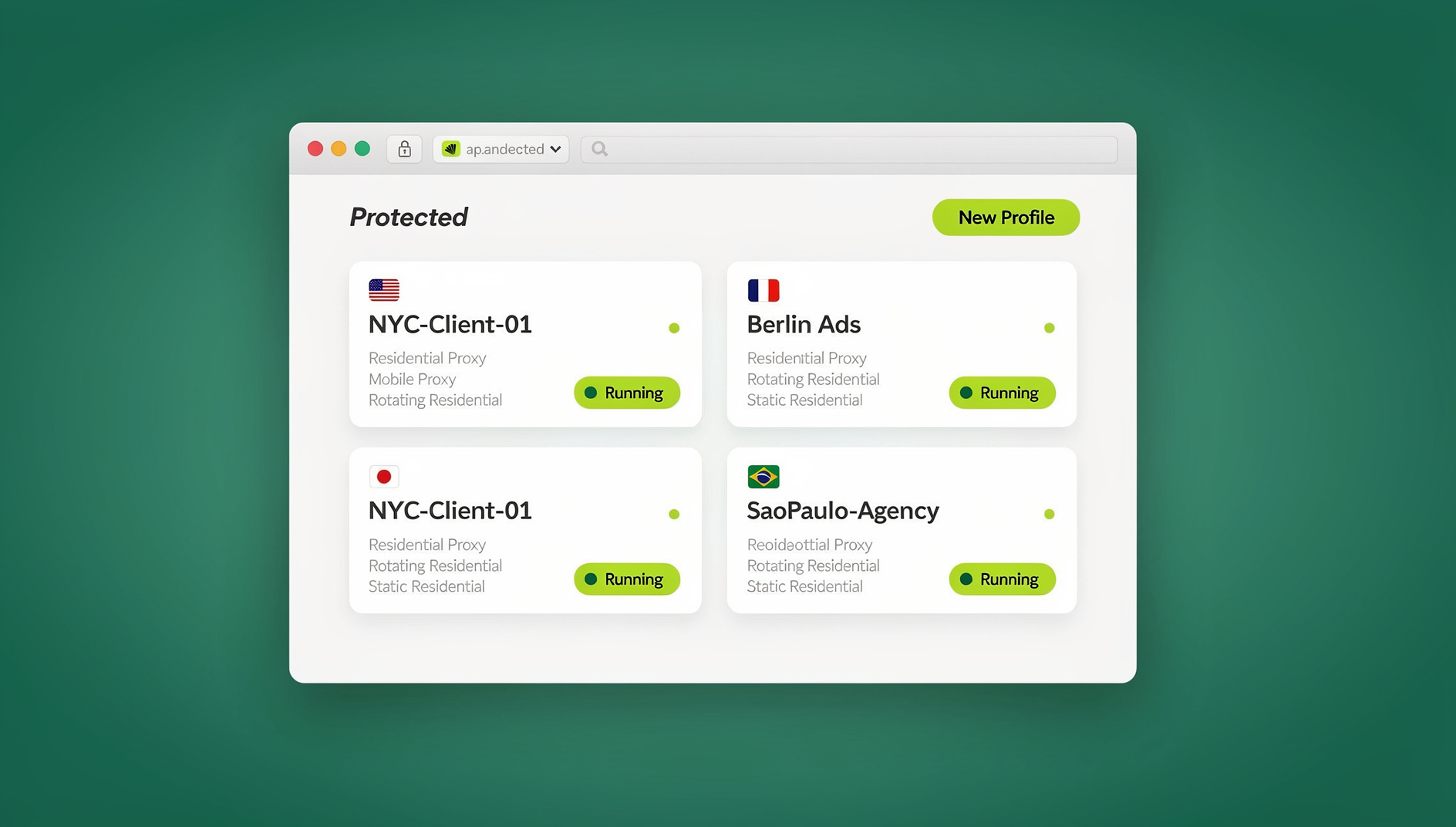
This guide breaks down exactly what a proxy does, how it protects (and doesn’t protect) your privacy, how it compares to a VPN, and how modern tools like Send.win combine proxies with full browser fingerprint isolation to close the privacy gaps a proxy alone leaves open.
What Is a Proxy Server and How Does It Work?
A proxy server is a gateway that sits between your device and the internet. Instead of connecting directly to a website, your request first travels to the proxy server, which forwards it on your behalf, receives the response, and passes it back to you. From the website’s point of view, the request came from the proxy’s IP address — not yours.
That single mechanism is the source of almost every privacy benefit a proxy provides:
- IP masking — the destination site sees the proxy’s IP, not your real one.
- Location spoofing — if the proxy is located in a different country or city, sites believe you’re browsing from there.
- Traffic routing control — network administrators (or you) can apply rules about what gets requested, blocked, or logged.
- Request filtering — many proxy services block known malicious domains, trackers, and ad servers before the request even leaves the proxy.
Proxies operate at the network layer, which makes them lightweight and fast — but it also means a basic proxy only changes what a website sees about where your traffic came from. It does nothing, by itself, about what your browser reveals once the connection is established. We’ll come back to that limitation later, because it’s the single most important thing people get wrong about proxy-based privacy.
Proxy vs. VPN vs. Tor: What’s the Real Difference?
Proxy, VPN, and Tor all get lumped into “ways to hide your IP,” but they work very differently under the hood. Picking the wrong one for your use case is a common mistake.
| Feature | Proxy Server | VPN | Tor |
|---|---|---|---|
| Encrypts traffic | Usually no (unless HTTPS is already used) | Yes, full tunnel encryption | Yes, layered (onion) encryption |
| Hides your IP | Yes | Yes | Yes |
| Speed | Fast — minimal overhead | Moderate — encryption adds latency | Slow — traffic bounces through 3+ relays |
| Per-app / per-profile control | Yes — can be set per browser session | Usually system-wide | Browser-only (Tor Browser) |
| Good for multi-account management | Yes, especially with unique IPs per profile | Limited — one IP for everything | No — shared exit nodes get flagged |
| Protects against browser fingerprinting | No | No | Partially (uniform Tor Browser fingerprint) |
The practical takeaway: a VPN is a good default for general privacy on a single device. A proxy is the better tool when you need different, controllable IPs for different browsing sessions — which is exactly the case for anyone running multiple accounts, doing research, managing ads, or handling client work across separate identities. For a deeper breakdown of when each makes sense for marketing and multi-account use cases, see our proxy vs VPN comparison.
How a Proxy Server Protects Your Online Privacy
A proxy earns its place in a privacy stack for several concrete reasons:
1. It Breaks the Link Between Your Real IP and Your Activity
Your IP address is one of the strongest identifiers on the web. It’s used for ad targeting, geolocation, and — on many platforms — silent account-linking (if two “different” accounts log in from the same IP, the platform may flag them as connected). Routing traffic through a proxy severs that direct link.
2. It Reduces Passive Tracking
Advertising networks and analytics scripts build profiles largely from IP address, device signals, and browsing patterns. A proxy interrupts the IP portion of that profile, especially when you rotate IPs or use a different proxy per session/profile.
3. It Can Filter Malicious Content Before It Reaches You
Many commercial proxy services maintain blocklists of known malware domains, phishing sites, and ad servers, filtering requests before they ever reach your browser.
4. It Unlocks Geo-Restricted Access
Content, pricing, and even entire platforms are often restricted by region. A proxy located in the right country lets you access region-locked content or test how your own site/ads appear to users elsewhere.
5. It Prevents Rate-Limiting and IP-Based Blocks
Sites that throttle or ban repeated requests from a single IP (common for research, scraping, or managing several accounts) treat proxy-routed traffic as coming from separate, unrelated sources — as long as the proxies themselves are clean and not shared with abusive traffic.
Types of Proxies Explained
Not all proxies offer the same level of privacy or trustworthiness. Here’s how the main categories compare:
| Proxy Type | Source of IP | Trust Level with Sites | Best For |
|---|---|---|---|
| Datacenter | Cloud/hosting providers | Lower — easier to detect as non-residential | Speed-sensitive, low-risk tasks |
| Residential | Real ISP-assigned home IPs | High — looks like a genuine user | Account management, ad verification, e-commerce |
| Mobile | Carrier (4G/5G) IPs | Highest — rarely blocked | Social media, app-heavy platforms |
| ISP (Static Residential) | ISP-registered but hosted | High and stable | Long-term, consistent sessions |
| Rotating | Any of the above, IP changes per request/interval | Varies | High-volume browsing, scraping |
| Static | Any of the above, fixed IP | Varies | Persistent account sessions that need a consistent IP |
For anyone managing accounts or profiles long-term, static residential or ISP proxies are generally the safest choice — a consistent IP per profile mimics how a real person actually browses, while a different IP for each profile keeps identities separated. Datacenter and IPv6 proxies also come with tradeoffs worth understanding; our IPv6 vs IPv4 proxy comparison covers which protocol suits which use case.
What a Proxy Can’t Protect You From
This is the part most “proxy = privacy” articles skip, and it’s the reason experienced users pair a proxy with something more. A proxy changes your IP address. It does not change:
- Browser fingerprint — your canvas rendering, WebGL signature, fonts, screen resolution, timezone, and dozens of other passive signals that uniquely identify your browser even behind a fresh IP.
- WebRTC leaks — many browsers can leak your real IP address through WebRTC calls, completely bypassing your proxy unless it’s explicitly blocked. See our WebRTC leak protection guide for how this happens and how to stop it.
- Cookies and local storage — if you’re logged into the same browser profile across “different” identities, cookies will link them regardless of IP.
- Login and behavioral correlation — typing patterns, session timing, and account metadata can still connect activity across a proxy.
In other words: a proxy hides where your traffic comes from, but a fingerprinting-aware platform can still tell who is browsing based on everything else your browser exposes. This is exactly why proxies work best as one layer of a broader privacy setup rather than a complete solution on their own.
Why Proxies Alone Aren’t Enough for Multi-Account Privacy
If your goal is simply “don’t let one ad network build a profile of me,” a proxy plus a privacy-respecting browser is often sufficient. But if your goal is managing multiple accounts, client profiles, or ad accounts without them being linked, silently flagged, or banned together, you need both pieces working together:
- A unique, clean IP per profile (what a proxy provides).
- A unique, isolated browser fingerprint per profile (what a proxy does not provide on its own).
This is the gap that browser profile managers like Send.win are built to close — pairing proxy assignment with genuine fingerprint isolation, profile by profile.
How Send.win Combines Proxies With Fingerprint Isolation
Send.win is a browser profile manager built for exactly this scenario. Instead of a single browser identity you patch with a proxy, Send.win gives every profile its own isolated environment:
- A unique browser fingerprint per profile — canvas, WebGL, fonts, timezone, and other signals are generated independently for each profile, not shared across your whole browser.
- Built-in proxies or your own — attach Send.win’s built-in residential/datacenter proxy pool to a profile, or plug in your own proxy credentials (host, port, username, password).
- WebRTC and leak protection baked in — profiles are configured to prevent the real-IP leaks that undermine a “naked” proxy setup.
- Team sharing — share specific profiles or sessions with teammates without ever handing over the underlying passwords or proxy credentials.
- A native Desktop app — Send.win ships a genuine desktop client for Windows, macOS, and Linux, so profiles run as real, isolated local browser instances rather than something bolted onto your everyday browser.
How to Add a Proxy to a Send.win Profile: Step-by-Step
- Install and open the Send.win Desktop app (Windows, macOS, or Linux) or log into your Send.win dashboard.
- Create a new profile/session — give it a name relevant to the account or task it will be used for.
- Open the profile’s proxy settings and choose between Send.win’s built-in proxy pool (pick a country/region) or “custom proxy.”
- For a custom proxy, enter the host, port, and (if required) username/password credentials from your proxy provider.
- Run the built-in connection test to confirm the IP resolves correctly and the proxy is live before you start browsing.
- Save and launch the profile — the assigned proxy and the profile’s unique fingerprint now travel together every time you open that session.
- Repeat per profile so every account or identity gets its own IP-and-fingerprint pairing, never a shared one.
For teams that need this done at scale rather than one profile at a time, Send.win lets you assign proxies and spin up isolated sessions profile by profile — useful for QA testing, monitoring, or any repeatable workflow that needs a clean identity every run. Our step-by-step walkthrough on how to add a proxy to any session covers the dashboard flow in more detail with screenshots.
Best Practices for Maximizing Privacy With a Proxy
- Match proxy type to platform sensitivity — use residential or mobile proxies for social media and e-commerce platforms that actively detect datacenter IPs.
- Keep one proxy per identity — never share a single proxy across accounts you want to keep separate.
- Pair the proxy with fingerprint isolation — an IP change alone won’t stop fingerprint-based tracking.
- Match timezone and locale to the proxy’s location — a mismatched timezone is a common giveaway that something’s off.
- Block WebRTC leaks at the browser level, not just the network level.
- Test before you rely on it — confirm your visible IP and DNS resolution actually match the proxy before starting sensitive work.
- Rotate stale proxies — an IP that’s been flagged by a platform stays flagged; don’t keep reusing it.
- Use HTTPS everywhere — a proxy doesn’t encrypt your traffic by default, so encrypted connections still matter.
Common Mistakes That Undermine Proxy Privacy
| Mistake | Why It Hurts You | Fix |
|---|---|---|
| Using a free public proxy | Often logs traffic, injects ads, or is already blacklisted | Use a reputable paid provider or a built-in pool with a real SLA |
| Sharing one proxy across many accounts | Platforms link accounts sharing an IP | One clean proxy per identity/profile |
| Ignoring WebRTC | Leaks your real IP even with a proxy active | Use a browser/profile with WebRTC leak protection enabled |
| Same browser fingerprint across profiles | Fingerprint alone can re-link “separate” accounts | Use isolated, unique fingerprints per profile |
| Never testing the connection | A misconfigured proxy can silently fail back to your real IP | Always run a leak/IP test after setup |
🏆 Send.win Verdict
A proxy is a genuinely useful privacy tool for masking your IP, unlocking geo-restricted content, and separating traffic across accounts — but on its own it leaves browser fingerprinting, WebRTC leaks, and cookie-based tracking completely untouched. Send.win closes that gap by pairing proxy assignment (built-in or your own) with a unique, isolated fingerprint for every profile, backed by a native Desktop app for Windows, macOS, and Linux.
Try the Send.win cloud demo — a free 3-minute preview without signup, and see how proxy plus fingerprint isolation actually protects your privacy.
Frequently Asked Questions
Does a proxy server really hide my IP address?
Yes. When you connect through a proxy, the website you visit sees the proxy’s IP address instead of yours. However, misconfigurations or WebRTC leaks can still expose your real IP unless leak protection is explicitly enabled.
Is a proxy the same as a VPN?
No. A proxy reroutes and masks your IP but typically doesn’t encrypt your traffic, while a VPN encrypts your entire connection through a secure tunnel. Proxies are generally faster and easier to assign per browser profile, which makes them better suited to multi-account management.
Can a website still track me if I use a proxy?
Yes, through browser fingerprinting, cookies, and login behavior — none of which a proxy changes. That’s why privacy-conscious users combine a proxy with fingerprint isolation rather than relying on the proxy alone.
What’s the difference between residential and datacenter proxies?
Residential proxies use IPs assigned by real internet service providers to home users, so they look like genuine traffic and are harder for platforms to detect. Datacenter proxies come from cloud hosting providers — they’re faster and cheaper but more easily flagged by sites that actively screen for non-residential IPs.
Do free proxies protect my privacy?
Generally, no. Many free proxy services log your traffic, inject their own ads, or resell your bandwidth — which works against the privacy you’re trying to gain. A reputable paid provider or a built-in pool from a trusted tool is a safer choice for anything sensitive.
How do I use a proxy with Send.win?
Create a profile in the Send.win Desktop app or dashboard, open its proxy settings, and either select a built-in proxy location or enter your own custom proxy credentials. Run the connection test, save, and launch — the proxy and that profile’s unique fingerprint apply together every time you open it.
Can I use a proxy with browser automation tools like Selenium or Playwright?
No. Send.win has no automation interface — no API, SDK, headless mode or Selenium/Puppeteer/Playwright support on any plan. Proxy assignment and fingerprint-isolated profiles are managed through the Send.win app itself.
Will a proxy stop my accounts from getting linked or banned?
A clean, unique proxy per account significantly reduces the risk of IP-based linking, but it won’t stop linking caused by shared browser fingerprints, cookies, or behavioral patterns. For genuine account separation, pair a unique proxy with a unique, isolated browser fingerprint per profile.