Client Chaos? How Agencies Manage Multiple Accounts Efficiently
Agencies solve the bottleneck of how agencies manage multiple client accounts efficiently by standardizing their workflows, utilizing collaborative agency tools, and implementing isolated browser profiles to prevent login friction and security bans. By separating client sessions, agencies can run campaigns smoothly without administrative blockages. Below is the comprehensive guide on scaling client account management without operational chaos.
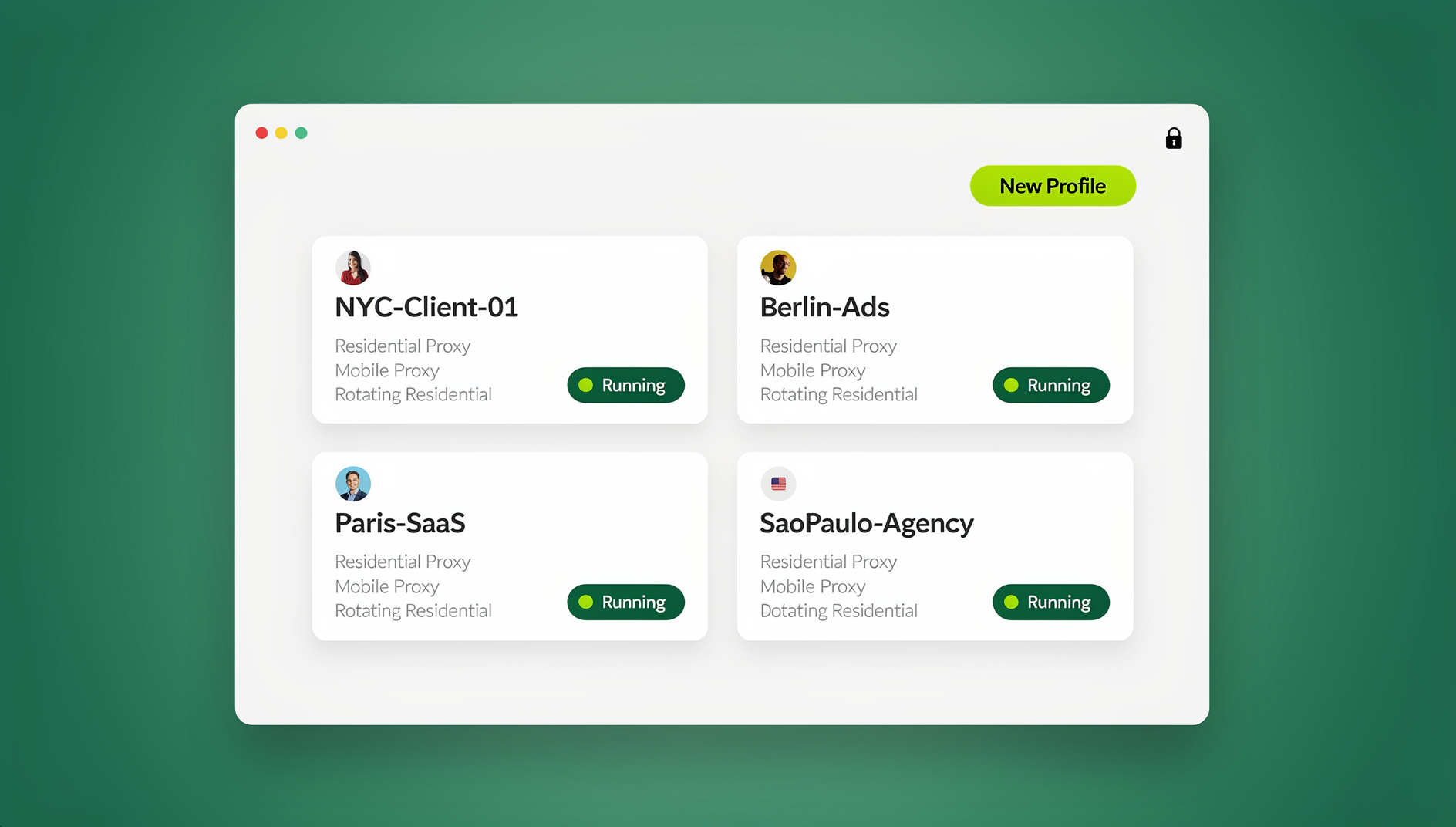
The Challenge of Multi-Client Account Scaling
For any digital marketing or advertising agency, growth is double-edged. On one hand, securing new clients increases revenue and builds the agency’s portfolio. On the other hand, onboarding more clients introduces exponential complexity. When you manage three clients, you can keep their schedules, logins, and campaigns in your head. But when that number grows to fifteen, fifty, or more, standard processes break down. Suddenly, team members are logging in and out of different accounts, client credentials get lost, and campaigns are delayed due to unexpected security flags.
The primary barrier to scaling is not the creative work or the strategic planning—it is the operational overhead. Without a robust system to handle access control, task delegation, and campaign monitoring, your agency will experience “scaling friction.” This friction leads to human errors, missed deadlines, high team churn, and eventually, client dissatisfaction. Understanding the mechanics of how to organize your workspace, secure your profiles, and automate repetitive tasks is what separates high-growth agencies from those that remain stuck in administrative chaos.
When trying to establish secure access to client assets, using a dedicated cookie management tool is critical. Standard browsers share cache databases and session variables across windows, which leads to login conflicts and security alerts.
Key Areas of Operational Friction for Modern Agencies
To scale your agency operations, you must first identify where your team is losing time and running into blockages. Most agencies experience friction in three main categories:
Security and Platform Access Control
Getting access to client advertising profiles, social media handles, and analytics dashboards is the first major hurdle of the onboarding process. Many clients are not tech-savvy and struggle to navigate platform settings to assign partner roles. Out of frustration, they often share their raw usernames and passwords via email or messaging apps. This is a massive security risk. Furthermore, logging into these accounts from a new location or device triggers security checks, two-factor authentication (2FA) prompts, and temporary account locks, halting your team’s workflow.
Collaboration and Task Management
When multiple specialists (e.g., designers, copywriters, media buyers) work on the same client, communication can easily break down. If tasks are assigned via emails, Slack messages, or verbal requests, deliverables will be missed. Furthermore, tracking who is responsible for each aspect of a client’s campaign becomes impossible for project managers, leading to a lack of accountability and uneven workloads across your team.
Reporting and Performance Audits
Clients expect regular updates on their campaign performance. However, manually logging into every platform, copying data into spreadsheets, and formatting custom PDF reports consumes dozens of hours every month. This manual reporting loop is one of the biggest productivity leaks in agencies. It takes your highly paid specialists away from strategic optimization and forces them into data entry tasks.
For teams looking to optimize their workflow, exploring a Chrome multi account configuration can provide some initial organization, but it lacks the advanced fingerprint masking needed for enterprise-grade security.
Standardizing the Onboarding and Offboarding Processes
Standardization is the foundation of efficiency. Your team should never guess what steps to take when a new client signs a contract or when an old contract terminates. Developing clear, documented playbooks ensures consistency and prevents critical steps from being skipped.
An optimized client onboarding playbook should be divided into structured phases:
- Information Gathering: Use a standardized questionnaire to collect brand guidelines, design assets, target audience details, and key business goals.
- Asset Access Request: Instead of asking for passwords, send clients a step-by-step PDF or video guide showing them how to add your Business Manager as a partner or assign access via platform-native agency dashboards.
- Workspace Configuration: Set up a dedicated client folder in your project management tool, allocate a separate container profile in your browser, and assign team members with specific roles (Admin, Member, Viewer).
- Kickoff Meeting: Review expectations, establish communication guidelines, define success metrics, and set the reporting schedule.
Similarly, an offboarding playbook ensures that your agency’s access is clean and secure when a relationship ends. This includes removing your team’s permissions from the client’s assets, transferring ownership of any graphics or scripts created during the campaign, and archiving project data for future reference.
Building the Ultimate Agency Tech Stack
Standardized processes must be supported by the right software stack. High-efficiency agencies rely on a suite of tools designed to streamline collaboration, secure access, and automate reporting:
| Stack Layer | Software Type | Recommended Tools | Agency Benefit |
|---|---|---|---|
| Access Layer | Isolated Browser Environment | Send.win | Prevents profile bans, organizes profiles, enables team sharing |
| Project Management | Task & Workflow Coordination | monday.com, Asana, ClickUp | Tracks tasks, sets deadlines, manages team workloads |
| Communication | Internal & Client Chat | Slack, Microsoft Teams, Loom | Reduces internal emails, enables async video updates |
| Reporting Layer | Automated Analytics Dashboards | Google Looker Studio, AgencyAnalytics | Collects campaign data automatically, generates clean client reports |
| Asset Management | Design & File Storage | Google Workspace, Canva, Figma | Centralizes creative assets, facilitates design approvals |
Choosing a dedicated browser for ads management is the single most important decision for protecting your advertising accounts. Standard browsers do not mask your hardware details, leaving your agency vulnerable to association bans if one client account faces a suspension.
Security Protocols: Preventing Profile Association Bans
When your team logs into multiple client accounts from the same office network or machine, they leave a shared digital footprint. Advertising and social platforms (such as Facebook, Google, LinkedIn, and TikTok) use sophisticated tracking technologies to monitor login patterns. They analyze cookies, IP addresses, WebRTC leaks, Canvas fingerprints, font configurations, and operating system identifiers to link accounts together.
If one of your client’s accounts is flagged or disabled for a policy violation, the platform’s security algorithms will investigate the login fingerprint. If they detect that the same fingerprint is being used to manage other accounts, they may suspend those accounts as well. This association ban can destroy your agency’s reputation and halt your clients’ business campaigns in an instant.
Similar to managing multiple Amazon accounts, keeping each workspace isolated is mandatory. To prevent association bans, you must implement strict security protocols:
- Use Isolated Browser Profiles: Never log into different client profiles using standard browser windows or Chrome user profiles, as they share hardware details.
- Assign Dedicated Proxies: Use high-quality residential or mobile proxies that match the geographic location of your clients. This makes the platform view the login as coming from the client’s home city rather than your agency’s office.
- Enable Two-Factor Authentication: Require all team members to use 2FA for all client accounts. Store the backup codes in a secure, shared password manager.
Automating Reporting and Workflows for Efficiency
Automating administrative tasks is the key to scaling your agency without needing to hire a massive team. By setting up automated systems, you free up your specialists to focus on optimizing client campaigns. Here are the top areas to implement automation:
- Automated Data Integration: Connect your advertising and social media accounts to a central reporting platform (like Google Looker Studio or AgencyAnalytics) using connectors. This eliminates the need to manually export CSV files and copy data into spreadsheets.
- Scheduled Report Delivery: Configure your reporting dashboards to automatically send weekly or monthly reports directly to your clients’ emails. Write a template cover message that updates the client on high-level achievements, and schedule the delivery.
- Recurring Task Templates: In your project management tool, create templates for recurring agency workflows (e.g., weekly content creation, monthly campaign audits). Set the tool to automatically generate and assign these tasks to team members on a recurring schedule.
- API-Driven Campaign Management: For developer-focused agencies, utilizing local APIs allows you to connect scripts directly to your browser profiles, enabling automatic campaign monitoring, budget checking, and ad rotation across dozens of profiles simultaneously.
How Send.win Powers Efficient Agency Management
Send.win is built to address the operational and security challenges faced by digital marketing agencies. It acts as the security and access layer of your tech stack, giving your team a safe, organized way to access all client accounts without password friction or association risks.
Send.win offers two modes of operation: the Sendwin Browser (a native desktop app for high-performance profile containment on local machines) and cloud browser sessions (which run profiles in the cloud, allowing team members to access client workspaces from any location without needing local software installation). Because each profile stores its cookies, session cache, and browser fingerprints in separate containers, your client accounts remain completely isolated.
Additionally, Send.win keeps each profile’s cookies, storage, sessions and fingerprint settings separate, so developer-focused teams can organise routine work across dozens of client accounts. With plans starting at $19/mo or $83.88/yr for the Pro plan and $49/mo or $251.88/yr for the Team plan, and the first card purchase covered by a 7-day money-back guarantee, Send.win provides enterprise-grade isolation at an accessible price point.
Frequently Asked Questions
How many client accounts can one account manager manage?
On average, an account manager can handle 5 to 10 clients efficiently, depending on the complexity of the services provided. If your agency utilizes standardized processes and automated tools, this number can increase without hurting campaign quality.
What is the safest way to get login access to a client’s social media accounts?
The safest way is to request access via the platform’s partner or business settings (such as Meta Business Manager or Google Ads Manager). If direct credentials are required, use an enterprise password manager to share access without exposing the raw password to team members.
Should agencies use password managers to store client credentials?
Yes, agencies should use secure password managers to store client details. These platforms encrypt data, generate strong passwords, and allow admins to share access with specific team members without revealing the credentials, protecting client assets.
How do agencies prevent client accounts from being blocked by platforms?
Agencies prevent blocks by using isolated browser profiles, assigning unique residential proxies for each client location, strictly following the platforms’ terms of service, avoiding aggressive automated actions, and ensuring all billing details are valid.
What is the difference between an antidetect browser and a proxy?
A proxy mask your IP address and changes your geographic location, while an antidetect browser alters your hardware and browser fingerprints (such as Canvas, Audio, WebGL, and screen resolution). Both are required to keep accounts completely separate.
How often should agencies send performance reports to clients?
Standard agencies send reports once a month, with a high-level summary email sent bi-weekly. Premium clients may require weekly updates. Setting up automated Looker Studio dashboards allows clients to view their live data whenever they want, reducing update requests.
How does Send.win help agencies manage multiple client accounts efficiently?
Send.win isolates all browser cookies, session histories, and local cache databases into separate containers. By modifying your hardware fingerprint details (such as Canvas, Audio, and WebGL), Send.win makes platforms view each profile as a different physical device, preventing association bans.
🏆 Send.win Verdict
Solving how agencies manage multiple client accounts efficiently is the key to scaling your digital marketing business. Send.win provides the technical separation your agency needs to run campaigns with separate cookies, storage and fingerprint settings per profile. Whether you choose the native desktop client (Sendwin Browser) or cloud browser sessions, your team can collaborate securely on client workspaces from any location. Secure your client accounts with our Pro plan at $19/mo or $83.88/yr, or our Team plan at $49/mo or $251.88/yr, with the first card purchase covered by a 7-day money-back guarantee.
Try the free Send.win cloud demo today — secure your client logins and scale your agency with complete confidence.
Conclusion
Managing multiple client accounts efficiently is the lifeblood of a growing agency. By standardizing your onboarding processes, building a specialized tech stack, and automating routine administrative tasks, you eliminate the operational bottlenecks that block scaling. However, all these efficiencies are worthless if your client accounts are suspended due to digital footprint correlation. Implementing secure access protocols using isolated browser profiles and residential proxies is mandatory to protect your agency’s business assets and client relationships. Tools like Send.win give your team the secure workspace needed to log in, collaborate, and manage multiple campaigns with total confidence. With the right security foundation in place, your agency is ready to scale smoothly and profitably.