Why Sharing a Password Is the Wrong Way to Share an Account
Every team eventually hits the same wall: a client needs access to the ad account, a virtual assistant needs to post to the Instagram profile, a new hire needs to log into the shared Netflix or Canva subscription. The default move is to paste a password into Slack or a spreadsheet — and that’s exactly where things go wrong. Shared passwords get forwarded, saved in browser autofill on someone else’s laptop, reused across other sites, and left active long after the person who needed them has moved on. There’s no record of who used what, no way to revoke access without changing the password for everyone, and no way to limit access to “just today” or “just this one site.”
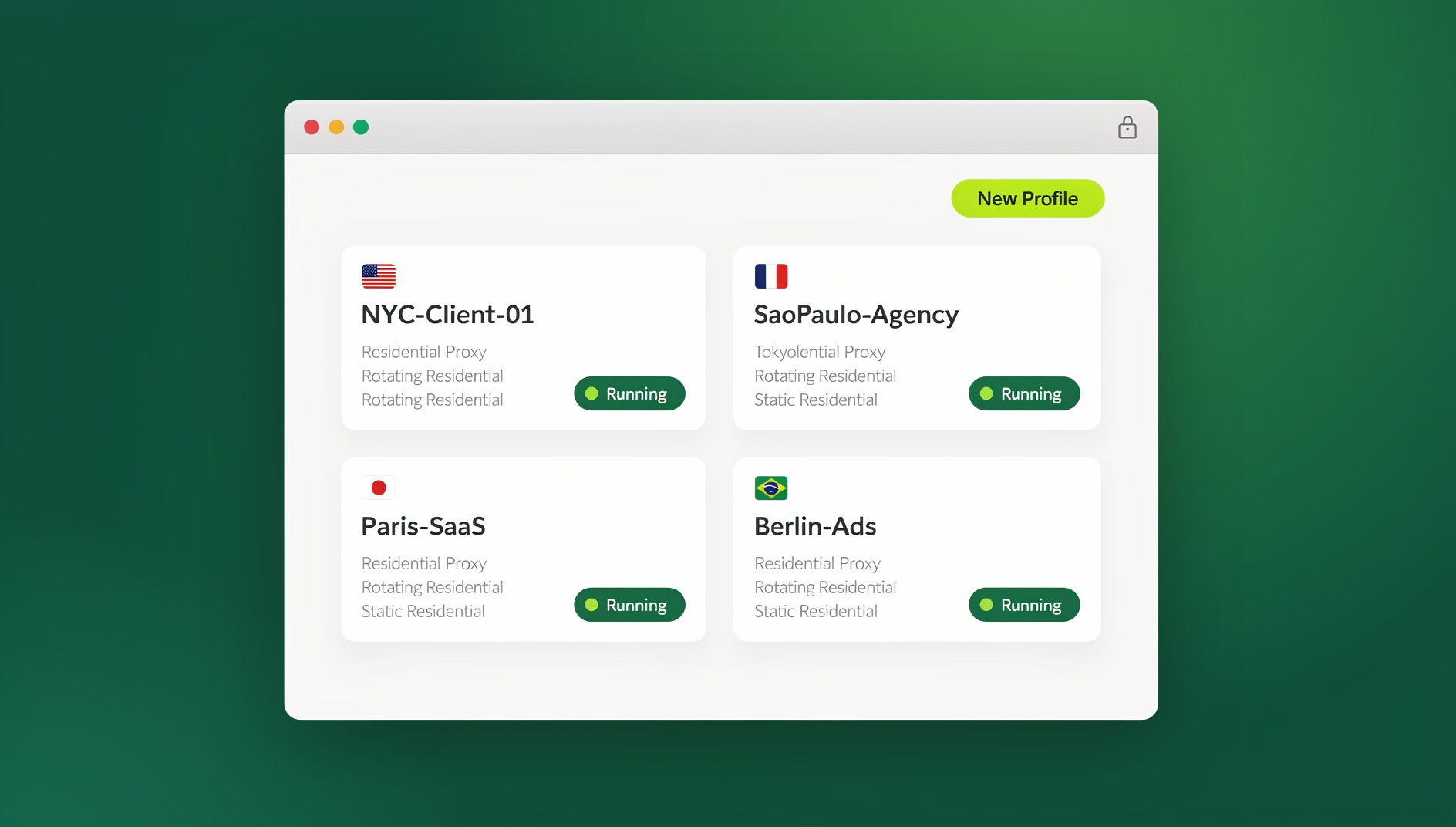
Send.win solves this with session sharing — a feature that lets you hand someone working access to an account without ever showing them the password. You share the logged-in session itself, set an expiry if you want one, and revoke it instantly whenever you need to. This guide walks through exactly how it works in 2026, including the desktop app and the mobile-friendly workflow.
What “Sharing a Session” Actually Means
When you log into a website, your browser stores a bundle of cookies, tokens, and local storage data that together prove “this browser is logged in as this user.” That bundle is the session. Normally it’s tied to one browser, one device, one person — the only way to hand it to someone else is to either share the password (so they can create their own session) or literally hand over your device.
Send.win gives every account its own isolated browser profile, complete with its own cookies, fingerprint, and (optionally) its own proxy. Because the session lives inside that profile rather than inside your personal browser, Send.win can package it up and share it with another Send.win user directly — no password required, no risk of it leaking into the wrong hands. The recipient opens the shared profile and is instantly logged in, exactly as if they’d typed the credentials themselves, except they never see them.
How to Share a Session in Send.win: Step-by-Step
Sharing takes under a minute once you know where the option lives. Here’s the full walkthrough, whether you’re using the native desktop app or running a session entirely in the cloud.
Step 1: Open Send.win and Find the Session
Launch Send.win — either the native desktop app for Windows, macOS, or Linux, or a cloud browser session that needs no install at all. The desktop app is the recommended route for anyone sharing sessions regularly, since it keeps profiles running independently of any single browser window and makes team management noticeably smoother. Locate the profile or session you want to hand off in your dashboard list.
Step 2: Open the Sharing Menu
Click the three-dot menu next to the session and select “Share.” This opens the sharing panel where you control exactly what gets shared and with whom.
Step 3: Choose What to Share
You can share the entire profile or scope it down to specific sites within that profile — useful when a profile has multiple logged-in services but you only want to hand over access to one of them (say, sharing just the Facebook Ads login from a profile that also holds Gmail and a payment dashboard).
Step 4: Enter the Recipient’s Email
Type the email address of the teammate, client, or contractor you’re sharing with. They’ll need a Send.win account of their own — this is what makes the “no password” model possible, since access is granted account-to-account rather than credential-to-credential.
Step 5: Set a Time Limit (Optional but Recommended)
This is the part a shared password can never do. Instead of granting access forever, set exactly how long the recipient can use the session — five minutes for a quick task, a few hours for a project, or unlimited if it’s a permanent team member. When the timer runs out, access disappears automatically. No follow-up message needed, no forgotten revocation.
Step 6: Hit Share
Confirm and you’re done. The session appears in the recipient’s Send.win dashboard, ready to open. They get full working access to the account inside an isolated, fingerprinted profile — and at no point does a password cross the wire.
| Step | Action | What It Controls |
|---|---|---|
| 1 | Open the session’s three-dot menu | Selects which profile to share |
| 2 | Click “Share” | Opens the sharing panel |
| 3 | Pick specific sites (optional) | Scopes access to just what’s needed |
| 4 | Enter recipient email | Grants access to a specific Send.win account |
| 5 | Set duration | Auto-expires access — 5 minutes to unlimited |
| 6 | Confirm share | Session appears instantly in recipient’s dashboard |
Sharing With a Whole Team, Not Just One Person
Individual shares are great for one-off access, but agencies and larger teams usually want something closer to role-based sharing. Send.win’s team workspaces let you group sessions into shared folders that every team member with the right permission level can open — so instead of re-sharing the same profile to five people one at a time, you drop it into a team space once. If you manage a growing team, our walkthrough on how to share sessions to a team covers the group-permission side of this in more depth, including how to set view-only versus full-control access per member.
This matters most for agencies running client ad accounts, e-commerce teams juggling multiple store logins, and remote teams where staff rotate in and out of projects regularly. Instead of resetting a password every time someone leaves, you simply revoke their session access — the underlying account credentials never change and never need to.
Session Sharing vs. Other Ways to Hand Off Account Access
There’s more than one way to give someone access to an account you own. Here’s how they actually compare once you factor in security, revocability, and effort.
| Method | Password Exposed? | Revocable Instantly? | Time-Limited? | Audit Trail |
|---|---|---|---|---|
| Sharing the password directly | Yes | No — must change password everywhere | No | None |
| Password manager shared vault | Yes, in decrypted form on use | Partial — depends on tool | No | Limited |
| Screen-sharing your own session | No, but requires you present live | Yes, but only while you’re online | Yes, manually | None |
| Send.win session sharing | No — never transmitted | Yes, one click | Yes, built-in expiry | Per-session sharing log |
The gap becomes obvious once you’ve been burned by option one or two: a departing contractor who still has the Netflix password, a client who accidentally locks your team out after changing a “shared” password, or a VA who reuses your Gmail password on a site that later gets breached. None of that happens with session sharing, because the password itself is never handed over in the first place.
Who Actually Uses This — Real Scenarios
- Agencies: Grant a freelance media buyer temporary access to a client’s ad account for the length of a campaign, then let it expire automatically when the contract ends.
- E-commerce teams: Share a Shopify or marketplace login with a new VA without giving them the account password they could use to change payout details.
- Families: Give a family member access to a shared streaming or subscription account without a group chat full of passwords getting passed around.
- Remote teams: Onboard a new hire onto every tool they need in minutes, and offboard them just as fast when they leave — no mass password reset required.
- Support and IT teams: Give a support contractor short-lived access to a customer’s dashboard to troubleshoot an issue, with the access window closing automatically after the ticket is resolved.
Teams already comfortable managing several logins per platform will find this pairs naturally with the broader workflow covered in our multi-login browser guide — session sharing is really just the collaborative layer on top of the isolated-profile model that makes multi-account management safe in the first place.
Sharing Sessions Across Your Team
If your team runs workflows across many accounts, manually opening a shared session every time doesn’t scale. Send.win’s Team plan gives multi-seat team workspaces, so each teammate works in their own isolated browser profile — with its own cookies, storage, sessions and fingerprint settings — while shared sessions stay available to the people who need them, without anyone touching a password or re-implementing login flows.
In practice this means a script can spin up a browser instance pointed at a shared session, run its task (posting content, pulling data, checking account status), and close out — all while the underlying credentials stay exactly where they’ve always been: nowhere near the script, the server, or any config file. For teams building internal tools around account management, this closes the loop between “who has access” and “what automated processes are allowed to touch.”
How Send.win Keeps Shared Sessions Secure
Handing off access safely depends on more than just hiding the password. A few things happen under the hood that make session sharing genuinely secure rather than just convenient:
- Isolated fingerprints per profile. Each shared session runs inside its own unique browser fingerprint, so the platform on the other end (Facebook, Amazon, Gmail, whatever it is) doesn’t see a suspicious login from an unfamiliar device — the fingerprint travels with the profile, not the person.
- Built-in proxy support. Sessions can be tied to a consistent proxy location, which matters when a platform flags logins from new IP addresses or geographies as risky.
- Encrypted transfer. Session data moves between accounts over encrypted channels — it’s never emailed, pasted, or stored anywhere a screenshot or copy-paste could leak it.
- Granular expiry. Because access can be capped in minutes, the exposure window for any single share is as small as the task actually requires.
- One-click revocation. If a share was a mistake, or the recipient no longer needs access, cutting it off doesn’t require touching the account’s real credentials at all.
This is the same isolation model covered in our session isolation deep dive — sharing is safe precisely because each session was already siloed before it was ever shared.
Revoking or Managing an Active Share
Changed your mind, or the task is done early? Revoking access is as fast as granting it:
- Open the session in your Send.win dashboard.
- Click the three-dot menu and select “Manage Shares” (or “Share” again, depending on your version).
- Find the recipient in the list of active shares.
- Click “Revoke” — access disappears immediately, even if their timer hadn’t expired yet.
Because nothing about the underlying account changes when you revoke, you can re-share the same session to someone else a minute later without any cleanup. This is the workflow behind our broader guide to sharing accounts without passwords, which covers team-wide access policies in more detail if you’re rolling this out beyond a single session.
Common Mistakes to Avoid
- Sharing unlimited access by default. Get in the habit of setting a duration unless the recipient is a permanent team member — it costs nothing and closes off a lot of risk.
- Forgetting to scope down multi-site profiles. If a profile holds several logged-in services, double-check you’re sharing only the ones the recipient actually needs.
- Not auditing active shares periodically. Old shares to former contractors or past clients pile up quietly — a monthly check of who currently has access is worth the five minutes it takes.
- Mixing personal and shared profiles. Keep dedicated profiles for anything you plan to share so you’re never accidentally exposing unrelated logged-in accounts.
- Skipping the desktop app for heavy sharing workflows. Cloud browser sessions work fine for occasional shares, but teams sharing sessions daily get a smoother experience — and better background reliability — from the native desktop app.
🏆 Send.win Verdict
If you’re still sharing passwords over Slack, email, or a spreadsheet, session sharing is the single easiest security upgrade you can make this week. Send.win lets you hand off working account access in a few clicks, cap exactly how long it lasts, and revoke it instantly — all without your teammates, clients, or contractors ever seeing a real password. Add the Desktop app for daily team workflows and the Team plan for multi-seat workspaces, and you’ve got a complete, auditable way to collaborate on shared accounts without the usual security trade-offs.
Try Send.win today — plans start at $19/mo, and your first card purchase is covered by a 7-day money-back guarantee. You can also preview it free in the cloud demo and share your first session in under a minute.
Frequently Asked Questions
Does the person I share a session with need a Send.win account?
Yes. Session sharing works account-to-account, which is exactly what makes it possible to skip passwords entirely — access is granted to a specific Send.win user’s email, not to anyone who happens to have a link or a password.
Can I limit how long someone has access to a shared session?
Yes. When you share a session, you can set a specific duration — anywhere from a few minutes to unlimited — and access is automatically cut off once that window closes, with no manual follow-up required.
Will the recipient ever see the actual account password?
No. Session sharing transfers the logged-in session itself, not the credentials behind it. The recipient gets working access to the account without ever seeing the username or password.
What happens if I revoke access early?
Revoking a share takes effect immediately, even if the original time limit hadn’t run out yet. The recipient loses access on their next attempt to use the session, and the underlying account credentials are completely unaffected.
Can I share just one site from a profile that has multiple accounts logged in?
Yes. The sharing panel lets you choose specific sites within a profile rather than sharing the entire profile, so you can hand over access to exactly what’s needed and nothing more.
Is there a native app, or is this only a cloud-based tool?
Send.win offers both. You can run sessions entirely in the cloud with zero install, or use the native Sendwin Browser desktop app for Windows, macOS, and Linux, which is built for teams who manage and share sessions regularly and keeps profiles running independently of any one browser window.
Can I automate session sharing or access with scripts?
Send.win does not offer an automation interface — there is no API, SDK, headless mode or Selenium/Puppeteer/Playwright support on any plan. Shared sessions are driven through the desktop app and the cloud browser instead.
What does Send.win cost if I want to use this for a team?
Send.win has no free trial. The Pro plan is $19/mo (or $83.88/yr) for individual users managing multiple profiles, while the Team plan is $49/mo (or $251.88/yr) and includes multi-seat team workspaces. The first card purchase is covered by a 7-day money-back guarantee, and the only free option is the cloud demo at https://send.win/demo-browser/.