How Do You Manage Multiple AdWords Accounts Safely and Efficiently?
To securely manage multiple adwords accounts without triggering account restrictions or experiencing cookie conflicts, agencies should use a Google Ads Manager Account (MCC) for centralized client access and billing, combined with a multi-profile session isolation browser like Send.win. While the MCC handles campaign structures, isolated browser profiles ensure that cookies, IP addresses, and browser fingerprints remain separate for each client console. Below, we explain the setup workflows, organization strategies, and session protection methods required for managing AdWords portfolios.
For digital marketing agencies, running search engine advertising is a core business. As your agency adds new clients, the number of individual advertising profiles you oversee will grow. Juggling keyword bidding, negative keyword sweeps, ad copy testing, and budget pacing across multiple client portfolios without a structured workflow is inefficient and risks security issues. A single mistake could lead to cross-account conflicts or campaign downtime.
Managing AdWords at scale requires understanding how Google’s security systems track account managers. When an agency logs into multiple client accounts from a single browser session, Google’s algorithms analyze digital footprints, cookie data, and login patterns. Understanding these risks is crucial to protecting your agency and your client campaigns in 2026. Without proper guardrails, managing accounts can trigger security alerts and lead to automated bans.
The Technical Architecture of Google’s Multi-Account Tracking
Before implementing a multi-account setup, it is helpful to understand the underlying technology of browser sessions and tracking. Google uses advanced tools to detect coordinate advertising activity across devices.
Cookie Management and Profile Association
Standard web browsers store cookies and session variables in a shared local directory. When you switch between AdWords accounts in different tabs of the same browser window, the browser shares session states. This leads to authentication conflicts, automatic sign-outs, or cross-contaminates identity cookies. Google’s security systems can detect these shared session cookies, linking unrelated advertiser accounts together.
For professional marketers seeking complete cookie isolation across client environments, setting up a specialized session isolation system using a Cookie Management Tool Complete Guide 2026 is highly recommended. This ensures that cookie jars remain isolated, preventing Google from linking unrelated advertiser accounts.
Geographic Location and IP Consistency
Google monitors the network location of every account login. If an agency manager logs into a London-based client account, and minutes later logs into a Berlin-based client account from the same IP address, Google’s fraud detection systems will flag this as suspicious. It suggests that the account credentials have been compromised, triggering security challenges and multi-factor authentication (MFA) prompts. In some cases, this can lead to automated account suspensions.
To avoid geographical flags, digital managers should assign unique proxies to their client sessions. Using dedicated residential proxies routes your connection through a real home in the client’s home city, keeping your login completely organic. This is highly effective when managing overseas clients.
Device and Browser Fingerprinting
Beyond cookies and IP addresses, ad platforms use browser fingerprinting. They analyze your screen resolution, operating system, canvas rendering, installed fonts, and hardware specifications to build a unique profile of your device. If dozens of client accounts are managed from the exact same device fingerprint, Google may link those accounts under a single entity. If one client faces a policy violation and suspension, other linked accounts could face secondary restrictions.
Traditional browser profiles do not hide this data. Google’s scrapers query canvas render profiles and device lists to see if the same machine controls dozens of advertiser accounts. Using session environments that customize these indicators is the only way to shield your workstation from profile mapping.
Official Setup: Configuring Google Ads Manager Accounts (MCC)
Google’s official framework for multi-account administration is the Manager Account, formerly known as My Client Center (MCC). This is free to create and provides a central dashboard for your agency.
Step-by-Step MCC Setup
- Navigate to the official Google Ads Manager Accounts setup page.
- Click the button to create a new manager account.
- Provide your business name or agency identity.
- Select your primary business type: “Manage other people’s accounts” (for agencies) or “Manage my own accounts” (for multi-brand portfolios).
- Choose your billing country, timezone, and reporting currency.
- Click submit to complete the setup process.
Linking Client Accounts to Your MCC
To link an existing client account to your MCC, you must initiate a link request:
- Log into your MCC and select the Accounts tab from the sidebar.
- Click the blue + button and choose Link existing account.
- Enter the client’s 10-digit Google Ads Customer ID (formatted as xxx-xxx-xxxx).
- Click Send Invitation.
- The client must accept the link from the Access and Security section of their own dashboard.
If you are trying to handle multiple logins across various platforms, a standard Chrome Multi Account Multi Account Management Guide 2026 approach might help you organize standard profiles, but it does not support deep proxy integrations or session sharing among team members. Combining the MCC with dedicated session isolation tools is the industry standard.
Standardizing Your Multi-Account Campaign Workflows
An agency managing multiple client accounts must standardize its daily and weekly workflows to ensure consistent performance. Without structure, optimizations are missed.
Daily Ad Health Checks
Every morning, account managers should execute a rapid health check across their assigned client profiles:
- Budget Utilization: Check that campaigns are pacing correctly and not hitting daily caps prematurely.
- Disapproved Ads: Check for automatic creative disapprovals, which can halt campaigns.
- Payment Flags: Ensure that no client billing accounts have failed charges or credit card issues.
- Conversion Tracking: Verify that conversions are reporting correctly and no tags are broken.
Weekly Optimization Cadence
Beyond daily checks, a structured weekly cadence keeps campaigns performing at their best:
| Day | Focus Area | Operational Tasks |
|---|---|---|
| Monday | Performance Auditing | Analyze week-over-week conversion trends, identify budget shifts. |
| Tuesday | Search Term Review | Add negative keywords, expand bidding on top-performing search queries. |
| Wednesday | Creative Testing | Upload new responsive search ad variants, pause underperforming copy. |
| Thursday | Bid Adjustments | Optimize Smart Bidding targets (CPA/ROAS), adjust manual device modifiers. |
| Friday | Reporting & Comms | Compile client dashboards, send performance summaries, prep for next week. |
Resolving Browser Context Conflicts with Session Isolation
While the MCC handles campaign management, agencies frequently need to access individual client Google ecosystems. This includes Google Merchant Center for shopping feeds, Google Tag Manager for conversion codes, and Google Analytics for landing page reports. Running these assets requires logging in as the client, which brings us back to the browser conflict issue.
Selecting the right Browser For Ads Management Browser Isolation Guide 2026 is essential for separating client histories. Running each client account in a completely sandboxed session provides security and peace of mind.
Similar to handling multiple retail stores, as explained in our guide on running Multiple Amazon Accounts Multi Account Management Guide 2026, ads management requires careful isolation of profiles. This is where Send.win provides a secure solution.
Advanced Scaling: Automation and Scripting Across Portfolios
As your client portfolio expands, managing budget pacing and bids manually becomes a challenge. Utilizing automation keeps your accounts performing without requiring constant manual adjustment.
Cross-Account AdWords Scripts
Google Ads Scripts allow developers to execute JavaScript routines across all sub-accounts. You can write scripts that audit Quality Score changes daily, report broken links, or alert managers via email if CPC bids spike. MCC-level scripts let you apply these rules globally, ensuring that small accounts receive the same level of oversight as high-budget profiles. This is highly effective for agencies scaling past twenty accounts.
Smart Bidding Configurations
Google’s automated bidding algorithms leverage machine learning to optimize bids at the auction level. Strategies like Maximize Conversions and Target ROAS adjust bids in real-time based on user intent signals. While Smart Bidding reduces manual workload, it depends on clean conversion data. Ensuring that your tracking tags are working across all profiles is a key task for managers.
Access Controls and Agency Security Standards
Handling client credentials and financial information requires high security. Implementing team permissions prevents unauthorized changes and protects client data from potential leaks.
Role-Based Access Delegation
Never share root Google account logins with employees. Assign specific access roles within the MCC: Admin permissions for agency leadership, Standard permissions for account managers, and Read-only access for analysts. This limits the risk of accidental account deletions or changes to billing credentials, protecting client data from unauthorized access.
Handling Authentication for Remote Teams
Remote teams often face issues with multi-factor authentication (MFA). If an account manager logs in from a new location, Google sends a security challenge to the client’s phone, delaying access. When team members work in isolated session environments like Send.win, cookie sessions remain active, keeping them logged in securely without constantly triggering verification checks. This maintains both security and user productivity.
How Send.win Secures Your Multi-Client Ads Operations
Send.win is built to address the exact operational risks that digital marketing agencies face. It replaces complex, insecure client management habits with a streamlined, secure platform.
Instead of relying on fragile web browser add-ons that only mask cookies, Send.win offers two complete modes to isolate profiles:
- Sendwin Browser Desktop Client: A native application for Windows, macOS, and Linux that runs isolated profiles locally on your computer. This provides maximum speed, desktop integration, and hardware performance.
- Cloud Browser Sessions: A zero-install option where browser profiles run on remote, secure cloud servers. This lets you access your clients’ ad dashboards from any device—even a tablet or mobile phone—without saving any data locally.
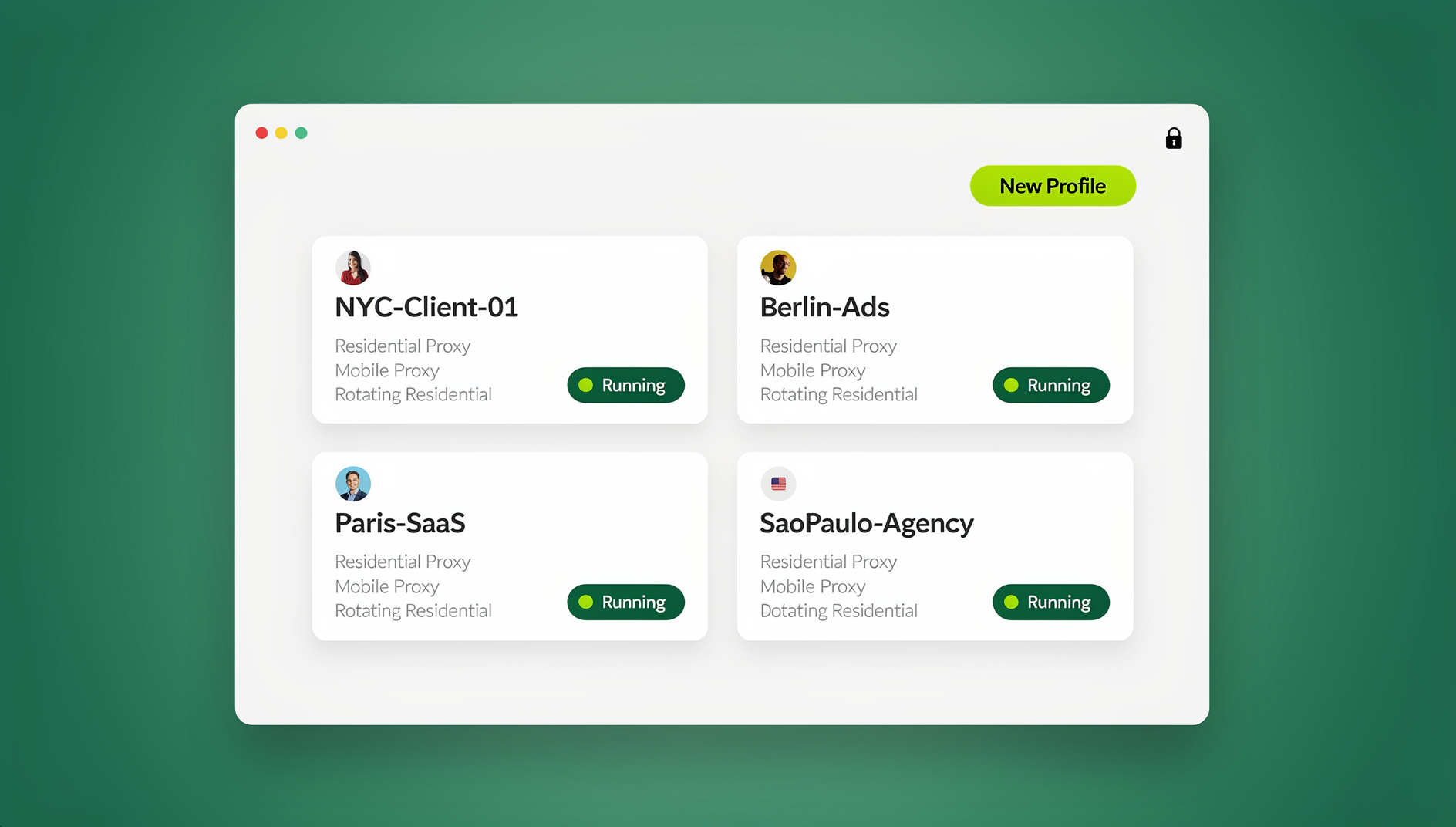
By using Send.win, each client account runs in a completely separate container. Each profile keeps its own cookies, storage and consistent browser fingerprint, and matches geographical locations using proxy integration, while keeping logins persistent. This eliminates repetitive multi-factor authentication (MFA) prompts and prevents accidental cross-contamination.
🏆 Send.win Verdict
Managing multiple AdWords accounts requires absolute session isolation to avoid security alerts and account linking. Send.win provides the ultimate multi-profile browser environment, offering both a native desktop client and secure cloud browser sessions that protect your agency’s assets while keeping operations smooth and secure.
Try Send.win free today — protect your client accounts and streamline your ad management workflow.
Frequently Asked Questions
Can Google suspend all client accounts if one gets restricted?
Yes. If Google detects that multiple accounts are connected through shared cookie states, matched IP addresses, or identical browser fingerprints, a suspension on one account for a policy violation can trigger a chain reaction that restricts all other linked profiles.
What is the benefit of a Google Ads Manager Account (MCC)?
An MCC allows you to view performance metrics across all client accounts in a single dashboard, set up consolidated billing to pay for multiple clients on one invoice, and delegate role-based access to your team members without sharing raw client passwords.
How does Send.win prevent Google from linking client accounts?
Send.win isolates all cookies, local storage, and cache files within separate profile containers. It also customizes the browser fingerprint (user-agent, audio context, canvas, etc.) and integrates with dedicated proxies so that each profile appears as a separate physical user in a distinct location.
Does Send.win require a local installation?
Send.win offers two modes: a native Sendwin Browser desktop application for local execution, and cloud browser sessions that run on remote servers and do not require any local installation, letting you manage your campaigns securely from any web browser.
Can I automate tasks across multiple Google Ads profiles with Send.win?
No. Send.win does not offer an Automation API, SDK, headless mode or Selenium, Puppeteer or Playwright support on any plan.
How does the 7-day money-back guarantee work for Send.win?
Send.win has no free trial. The first card purchase is covered by a 7-day money-back guarantee, and you can preview the cloud browser for free at the demo (a 3-minute preview without signup, 10 minutes a day with a free account), letting you test profile isolation and proxy integrations.
What are the pricing details for Send.win plans?
The Pro plan is priced at $19 per month or $83.88 per year, and the Team plan is $49 per month or $251.88 per year.
Is it possible to share client sessions with my agency team?
Yes, the Team plan allows you to securely share specific browser profiles with other team members. This lets coworkers access a client’s Google console without sharing the password or triggering new login location alerts.