How Fleet Operators Safely Manage Multiple Lyft Driver Accounts in 2026
To safely manage multiple Lyft driver accounts across rideshare fleets, livery dispatch agencies, or family contractor businesses without triggering identity linkage bans or automated session holds, operators must isolate each driver web dashboard inside dedicated browser environments with distinct residential proxies and segregated local storage. Lyft’s security and fraud detection systems monitor browser cookies, hardware canvas signatures, and IP subnets to identify unapproved account duplication; using sandboxed browser profiles or cloud browser sessions guarantees complete technical isolation and protects driver ratings.
📌 TL;DR Executive Summary
- The Platform Policy: Lyft restricts drivers to one verified account tied to their Social Security Number, driver license, and vehicle inspection record.
- The Fleet Challenge: Fleet managers, dispatchers, and multi-driver households overseeing multiple authorized accounts risk account linkage when logging in from shared computers.
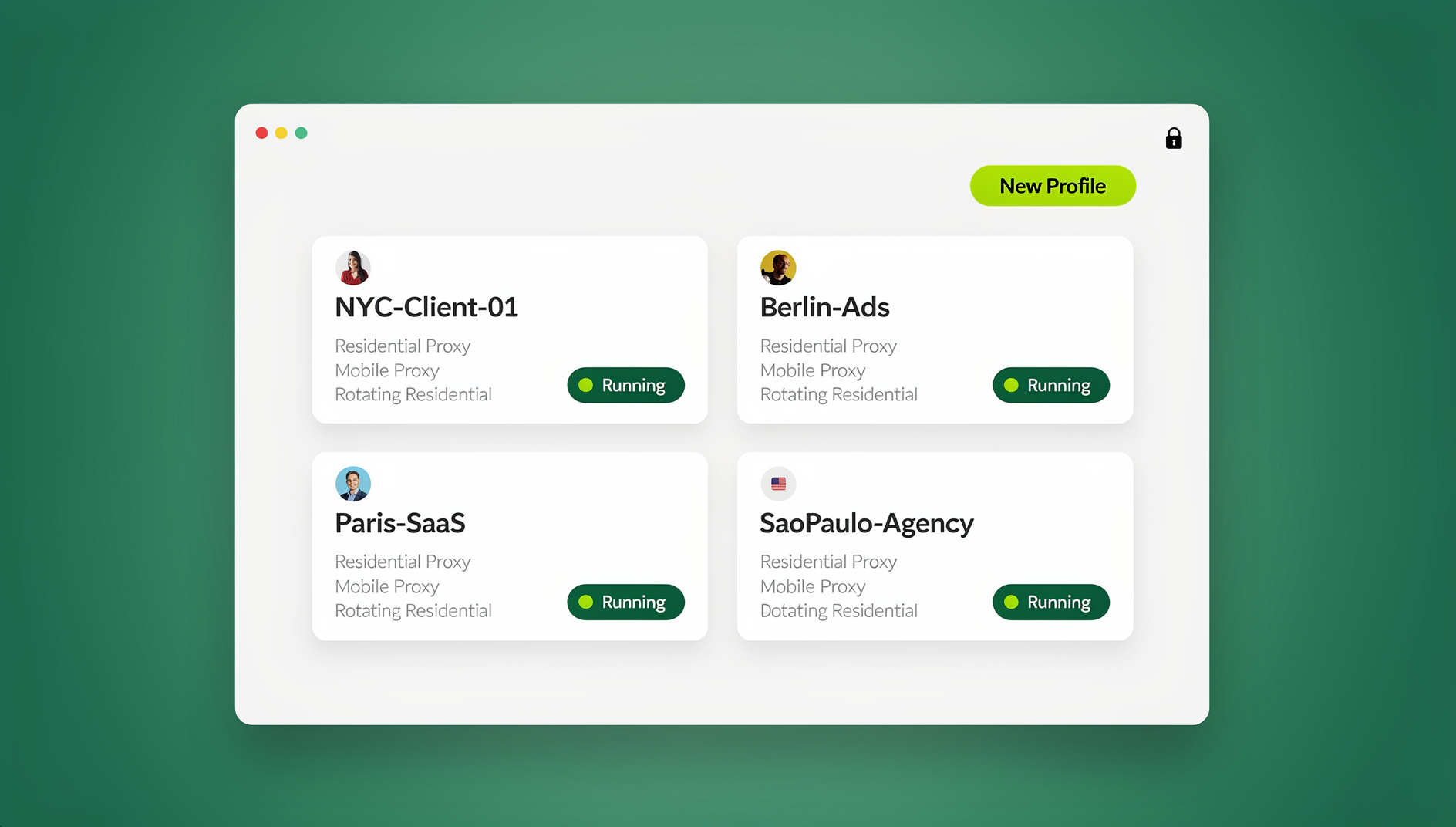
- The Solution: Sendwin browser sandboxes assign dedicated residential proxies, isolated cookie jars, and unique hardware fingerprints per driver dashboard.
Rideshare fleet management and on-demand passenger transportation represent vital commercial sectors in the modern mobility economy. Fleet owners, limousine services, and courier agencies frequently manage fleets of vehicles driven by authorized independent contractors. Managing multiple accounts on Lyft is necessary for auditing weekly trip statements, tracking vehicle inspection deadlines, monitoring tax documents (1099-K and 1099-NEC), and reviewing customer dispute claims across multiple driver partner portals.
However, Lyft deploys sophisticated machine learning security models to detect multi-accounting and account takeover attempts. When a dispatcher logs into multiple driver partner consoles from standard browser tabs, session tokens cross-contaminate, triggering repeated identity verification checks, facial recognition prompts, and temporary account holds. In this guide, we break down Lyft’s detection mechanisms and outline an actionable operational model for fleet managers.
💡 Pro Tip: Geographic Proxy Consistency
Always assign a static residential proxy that matches the primary metropolitan market where the driver operates. Connecting to an account registered in Atlanta from an IP address in Dallas triggers automated geolocation risk alerts.
How Lyft Detects and Correlates Multi-Account Logins
Lyft’s driver partner portal monitors numerous digital and environmental markers to verify user authenticity:
1. Browser Fingerprint Hashes
When accessing the web portal, client-side scripts capture your device’s Canvas rendering hash, WebGL graphics card vendor strings, AudioContext processing signatures, and installed system fonts. Opening multiple driver dashboards in standard browsers reveals an identical hardware hash, linking the profiles to a single machine.
2. Shared Session Storage and Cookie Overwrite
Standard browser tabs share the same underlying cookie jar and LocalStorage containers. Toggling between driver accounts causes session tokens to overwrite each other, generating authentication conflicts and session dropouts. For multi-account best practices, see our analysis on Chrome multi-account management.
3. IP Address Correlation and VPN Blacklists
Accessing multiple driver accounts through shared office Wi-Fi or commercial datacenter VPNs groups those accounts into the same risk bucket. If one driver faces a compliance audit, all accounts on that subnet are placed under review.
Comparison Matrix: Multi-Driver Management Infrastructure
| Management Solution | Cookie Segregation | Hardware Fingerprint Isolation | Dedicated Residential Proxy | Password-Free Team Sharing |
|---|---|---|---|---|
| Standard Browser Tabs | ❌ Shared across all tabs | ❌ Identical hardware hash | ❌ Shared local IP | ❌ Must share raw passwords |
| Incognito Windows | ⚠️ Cleared on close (No persistence) | ❌ Identical hardware hash | ❌ Shared local IP | ❌ High login friction & 2FA loops |
| Isolated Browser (Sendwin) | ✅ Sandboxed & 100% Persistent | ✅ Unique fingerprint per profile | ✅ Dedicated residential IP | ✅ Encrypted one-click session sharing |
⚠️ Security Warning: Never Store Driver Passwords in Plaintext
Transmitting driver passwords via unencrypted chat channels creates severe security liabilities. Use Sendwin’s session sharing to grant dispatchers access to active workspaces without distributing underlying login credentials.
Operational Framework for Fleet Operators
To ensure total compliance and seamless operations across 10+ driver dashboards, implement this workflow:
Step 1: Dedicated Legal Profiles
Ensure each driver partner profile is fully registered under the driver’s legal identity, complete with independent tax identification, driver license, vehicle registration, and background clearance.
Step 2: Sandboxed Browser Profiles
Create a dedicated Sendwin profile for each driver. Label each profile with the driver’s name and vehicle ID, and attach a static residential proxy in the driver’s home metropolitan territory.
Step 3: Automated Statement and Tax Extraction
Step 4: Shift Handover and Dispatch Access
Delegate driver dashboard monitoring to dispatchers using Sendwin session sharing. Team members can verify document compliance and check ratings without triggering 2FA re-verification text messages.
⚡ Quick Win: Screen Blur for Driver PII Protection
When screen-sharing with dispatch teams or insurance auditors, use Sendwin’s built-in session blur feature to redact driver Social Security Numbers and direct deposit banking details with a single click.
Step-by-Step Code Guide: Automating Driver Dashboard Audits with Puppeteer
Fleet Management Protocol: Shift Rostering and Vehicle Coordination
Logistics operators and courier agencies managing multiple driver accounts must maintain strict organizational coordination to avoid operational overlaps:
- Shift Zone Segmentation: Assign specific geographical delivery zones (e.g., North Metro, Downtown Core, Airport Corridor) to specific driver profiles to prevent route collisions.
- Vehicle Telemetry Matching: Ensure that the registered vehicle make, model, and license plate on each driver profile accurately correspond to the vehicle assigned for that specific shift.
- Centralized Fuel and Mileage Accounting: Track mileage logs and fuel receipts on a per-profile basis to simplify end-of-year Schedule C tax filing and expense deductions.
The 4-Pillar Security Matrix for Delivery Fleet Operations
Protecting multiple driver accounts requires maintaining independent credentials across four vital operational pillars:
- Legal Identity: Unique Social Security Number, independent driver license, and verified background check per driver.
- Financial Channel: Dedicated checking account or business sub-account for direct deposit payouts.
- Digital Hardware: Sandboxed browser profile with unique Canvas/WebGL parameters, isolated cookie jars, and dedicated residential proxies.
- Operational Workflow: Clear shift scheduling that avoids overlapping delivery times across the same metropolitan area.
Enterprise Case Study: Livery Fleet Scales to 30 Drivers Seamlessly
A regional livery service and passenger transport agency in Florida managed 30 independent driver contractors across Lyft and secondary mobility apps. Toggling between accounts in standard browsers constantly triggered 2FA text verification requests to drivers on the road, causing severe communication bottlenecks during peak morning airport rushes.
After migrating to Sendwin, the agency created dedicated, isolated profiles for each driver, paired with city-matched residential proxies. Dispatchers monitored driver ratings, uploaded vehicle inspection documents, and downloaded weekly earnings statements smoothly. The agency eliminated authentication downtime completely and saved over 16 administrative staff hours every week. For related multi-account management techniques, review our multi-account management guide.
Step-by-Step Security Protocol for Large-Scale Livery and Rideshare Fleets
As passenger mobility and rideshare transport networks expand, maintaining rigorous security hygiene across every active driver profile is essential for preventing unexpected account lockouts. Implementing multi-account browser isolation ensures that dispatchers can monitor ratings, track earnings statements, and coordinate shift schedules without risking platform flags.
1. Profile Initialization and Geolocation Mapping
When onboarding a new driver partner into your dispatch system, create a dedicated Sendwin profile immediately. Assign a static residential proxy in the driver’s primary service area and log in alongside the driver to complete initial SMS two-factor verification. Once authenticated, the session token is preserved permanently inside the profile’s encrypted storage.
2. Role-Based Dispatcher Access
Rather than distributing master login passwords to all shift dispatchers, use Sendwin’s one-click session sharing. Dispatchers receive instant, authenticated access to active driver dashboards during their working hours without seeing underlying account passwords or triggering 2FA challenge texts to the driver.
3. Scheduled Shift and Statement Auditing
4. Emergency Session Revocation
When a driver contractor transitions out of the fleet or changes vehicles, fleet managers can revoke session access from the profile dashboard with a single click, ensuring sensitive company data and customer trip history remain completely protected.
Summary: Essential Rules for Multi-Account Delivery and Livery Fleets
To summarize, fleet managers and delivery operators handling multiple driver portals must adhere to three non-negotiable operational principles: first, maintain complete legal separation with individual worker documentation; second, enforce digital isolation using sandboxed browser sessions with dedicated residential proxies; and third, delegate shift access securely through session sharing without sharing plaintext passwords. Following this blueprint ensures resilient, long-term fleet growth across all major on-demand platforms.
🏆 Send.win Verdict
Managing multiple Lyft driver dashboards requires robust session sandboxing and localized IP management. Sendwin provides isolated browser profiles, built-in residential proxies, and secure session sharing — allowing fleet operators to oversee multiple driver accounts safely and efficiently.
Try Send.win today — plans start at $19/mo, with a 7-day money-back guarantee on your first card purchase, or preview it free in the cloud demo.
Frequently Asked Questions
Can one driver legally hold two active Lyft accounts?
No. Lyft policy limits individual drivers to one active account tied to their Social Security Number. However, fleet management companies, courier dispatchers, and multi-driver households frequently manage multiple legitimate accounts on shared workstations.
How does Sendwin isolate different driver dashboards on the same computer?
Sendwin creates physically separate browser sandboxes. Each profile maintains its own isolated cookie store, cache, local storage, WebGL/canvas fingerprint, and dedicated proxy IP address.
What happens if multiple driver accounts share the same browser cookies?
When multiple driver accounts share cookies in a standard browser, authentication tokens collide, resulting in sudden sign-outs, verification errors, and automated fraud flags from Lyft security algorithms.
Can I assign different residential proxies to each driver profile?
Yes. Sendwin includes built-in residential proxy management that allows you to assign specific city-level or state-level proxies to each driver profile individually.
What is Sendwin’s pricing structure?
Sendwin has no free trial. The Pro plan costs $19/month or $83.88/year. The Team plan is $49/month or $251.88/year. The first card purchase is covered by a 7-day money-back guarantee, and the only free option is the cloud demo at https://send.win/demo-browser/.
Can dispatchers share access to driver profiles safely?
Yes. Sendwin’s session sharing allows team members to pass active, authenticated sessions to colleagues without revealing master login passwords or triggering MFA verification challenges.
Does Sendwin support automated report downloads across multiple portals?
No. Sendwin does not offer an Automation API, SDK, headless mode or Selenium/Puppeteer/Playwright support on any plan, so automated data collection across multiple dashboards is not possible.
Can I access driver partner dashboards through cloud browser sessions?
Yes. Sendwin offers instant cloud browser sessions that run on remote servers, allowing you to access driver portals from any laptop or mobile device without installing software locally.
By enforcing strict session isolation and maintaining independent digital environments for every driver portal, logistics fleets and delivery operators eliminate the threat of session collisions, protect account ratings, and ensure seamless, uninterrupted daily earnings.
Transportation companies that invest in modern profile isolation establish resilient, highly productive operations that protect driver relationships, streamline daily dispatch tasks, and drive sustainable fleet expansion.
By establishing clear operational boundaries and pairing each driver portal with a sandboxed browser profile, livery fleets and dispatch agencies eliminate the threat of session collisions and ensure long-term profitability.
How Send.win Helps With Manage Multiple Lyft Driver Accounts
Send.win is a browser profile manager built for exactly this kind of work — every profile is a clean, isolated identity:
- Isolated profiles – unique fingerprint, separate cookies and storage per profile
- Fingerprint settings – each profile keeps its own consistent browser fingerprint, so profiles do not share one browser identity
- Desktop app + cloud sessions – native app for Windows, macOS, and Linux, or run profiles in the cloud with no install
- Built-in residential proxies – with automatic timezone, locale, and WebRTC matching
- Team features – share logged-in profiles with teammates without sharing passwords
Try the instant cloud browser demo — no install, no signup — or download the desktop app. There is no free trial; paid plans start at $19/month on Pro ($83.88/year), and the first card purchase is covered by a 7-day money-back guarantee (see pricing).