Streamlining PPC Operations and Minimizing Ban Risks
For agencies and media buyers, managing multiple adwords accounts efficiently requires using either a Google Ads Manager Account (MCC) for dashboard-level control or Sendwin Browser to isolate logins. Running multiple accounts under different client identities requires robust session isolation to prevent Google from linking and suspending your profiles. Below, we explain the setup process, automation scripts, and fingerprinting protection needed for safe management.
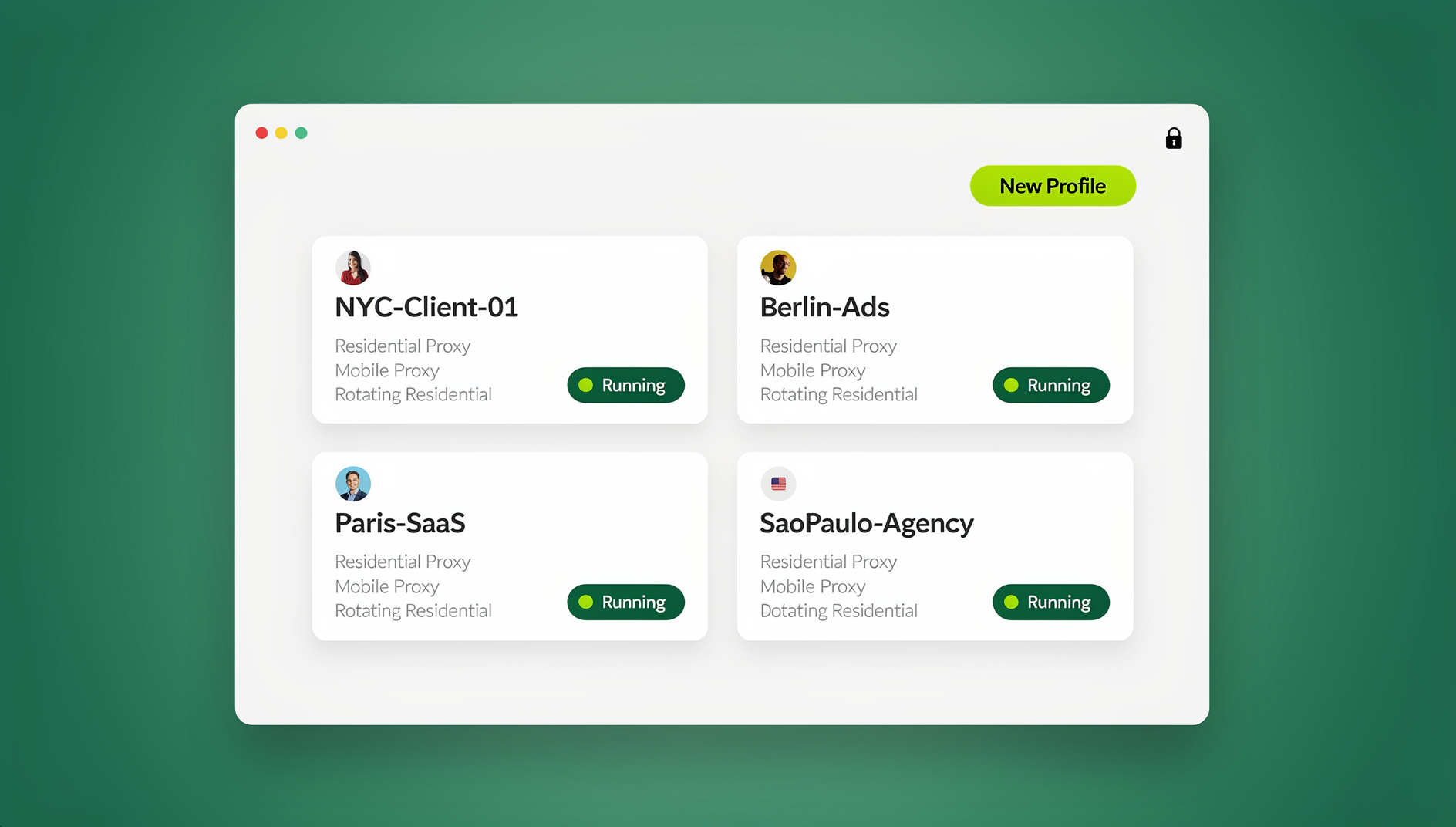
Operating several Google Ads profiles is standard practice for digital marketing agencies, media buying firms, and in-house marketing divisions managing diverse product lines. However, the technical execution of this task is fraught with operational risks. Google’s advertising network is highly sensitive to policy compliance, payment integrity, and security footprints. If a single advertising profile is flagged for a minor policy issue, and Google links that profile to your other client accounts through shared browser cookies or matching hardware details, your entire portfolio could face a suspension. This makes understanding how to isolate and scale your operations of paramount importance.
Setting Up a Google Ads Manager Account (MCC)
The starting point for any marketer handling more than one campaign dashboard is the Google Ads Manager Account, formerly known as My Client Center (MCC). This is Google’s official administration console designed to consolidate multiple ad accounts under a single login. An MCC does not merge the accounts; instead, it acts as an umbrella that links to individual customer IDs.
With a Manager Account, you gain several essential operational capabilities:
- Consolidated Dashboard: View high-level performance metrics, such as impressions, clicks, conversions, and ad spend, across all linked properties in a single screen.
- Linked Billing: Set up monthly invoicing and consolidate payment terms across multiple clients, reducing the administrative burden of managing individual credit cards.
- Access Management: Invite team members to your Manager Account and assign them specific permissions (Admin, Standard, or Read-Only) across specific client dashboards.
- Cross-Account Assets: Create shared negative keyword lists and conversion tracking pixels that can be applied to all child accounts instantly.
To set up an MCC, navigate to the official Google Ads Manager Accounts landing page, log in with a clean agency email, and select “Create a Manager Account”. From there, you can request access to your clients’ existing accounts by inputting their ten-digit Customer ID. The client will receive an approval request in their dashboard, which keeps them in control of their own data ownership. Once linked, the manager can switch between different client dashboards with a single click, eliminating the need to log out and back in.
The Limitations of MCC and the Risk of Fingerprint Linking
While an MCC is an indispensable tool for reporting and high-level campaign adjustments, it is not a complete security solution. Operating entirely within a single standard browser, even with an MCC, exposes your agency to significant security risks. If you log into your MCC using a normal Chrome tab, all of your client profiles share your local machine’s cookies, cache, local storage, and physical IP address.
Google’s security systems do not just monitor the ads you write; they track the behavioral and hardware signals of the manager behind the keyboard. If one client account suffers a billing dispute or a sudden suspension for advertising a restricted product, Google’s automated systems will trace the admin login back to your specific device fingerprint and IP. This digital trail can result in “associated account suspensions”, where other healthy client accounts managed by the same team are flagged or blocked. This is a common hazard when managing multiple accounts for clients without isolating the digital identities of each workspace. Without separating these environments, you run the risk of losing your entire client roster due to a single policy violation.
Isolating Digital Footprints for Every Client Account
To eliminate the risk of cross-contamination, professional media buyers isolate the browser environment for each client account they manage. This means that instead of loading client dashboards in standard tabs, each client gets a dedicated, isolated browser session. An isolated session behaves like a separate physical computer, complete with its own operating system details, canvas signatures, font lists, and browser cookies.
When you open an isolated profile, the session isolation tool spoof the hardware signatures so that Google sees a unique, natural user profile. If you run a client account based in London, you can pair that profile with a residential proxy located in London. To Google’s security systems, the login looks like a local business owner logging in from their office. This geographic consistency is critical for preventing security alerts, especially when managing international client campaigns. This level of browser hygiene is similar to the strict measures required when running multiple amazon accounts, where minor footprint leaks lead to immediate store suspensions. By establishing isolated digital environments, you ensure that client activity is restricted to its own independent container.
Comparing AdWords Management Workflows
To optimize performance and minimize risks, agencies must evaluate different management workflows. While basic profiles offer quick access, they lack the multi-level protection of professional isolation tools. The table below outlines how standard options compare to dedicated security setups.
| Workflow Component | Standard Browser + MCC | Chrome Profiles | Sendwin Browser + MCC |
|---|---|---|---|
| Cookie Separation | Shared (One Session) | Isolated (Local) | Isolated (Sandboxed) |
| Fingerprint Masking | None (Device Leaked) | None (Hardware Leaked) | Full Spoofing (Canvas, WebGL) |
| Proxy IP Matching | None (Single IP) | Manual Configuration | Automatic Per Profile |
| Team Access Security | Shared Passwords | No Cloud Sync | Password-free Session Sharing |
Debugging Common AdWords Policy Flag Triggers
PPC managers frequently encounter account suspensions that seem completely random. Google’s machine-learning threat models are highly aggressive, and once a flag is triggered, getting a human to review the appeal is incredibly difficult. Understanding the main vectors of these automatic triggers allows you to build a proactive defense:
- Destination Mismatch and Ad Redirects: Google requires the display URL domain to match the landing page domain exactly. If you use third-party tracking links that route users through multiple intermediate redirect hops before landing on the client’s page, Google’s crawling systems may flag the ad for destination mismatch or circumvention of systems. Running client campaigns through isolated profiles with matching geolocations ensures that you can check landing pages exactly as local crawlers see them.
- Suspicious Payment Activity: This is one of the most common reasons for instant account blocks. If you use an agency credit card to set up billing for a new client account, and that card’s billing name does not match the account owner’s legal entity, the account will be flagged. Furthermore, if that same agency card is linked to another ad account that was suspended in the past, all accounts utilizing that card will be immediately terminated. Keep billing methods strictly separated.
- IP Address Volatility and Security Flags: Logging into the same AdWords dashboard from a residential connection in Chicago, and then having a team member log in ten minutes later from a mobile connection in Manila, triggers a high-severity security alert. Google flags the session for unauthorized hijacking, forcing password resets and suspension checks. Static IP mapping per profile prevents this variance.
Scale with the Sendwin Automation API
For large-scale media agencies running hundreds of Google Ads accounts, manual campaign management becomes a significant bottleneck. Advanced agencies use automation frameworks like Puppeteer, Playwright, or Selenium to execute bulk bid adjustments, upload keywords, and pull custom reports programmatically. However, running automation scripts directly on a standard browser often triggers bot detection systems, leading to blocked requests and flagged accounts.
The Pro plan of Sendwin Browser provides a powerful local Automation API that allows you to connect your automated scripts to fully spoofed browser profiles. The scripts execute actions within a natural, fingerprint-protected environment. Google sees human-like interactions on a real browser, reducing script block rates to near zero. Because the Automation API is available on the Pro plan ($19/mo, or $6.99/mo annually) as well as the Team plan, small-to-medium agencies can access enterprise-grade automation features without paying enterprise prices. This API support enables you to automate your campaigns at scale while maintaining maximum security across all your active accounts.
To use this, make sure you configure your scripts to link to the profile’s local port, ensuring that all traffic goes through the assigned proxy and inherits the spoofed digital fingerprints of that profile. This creates a secure, automated loop for multi-account management. Automated operations can run 24/7 without manual supervision or device lockout risks.
Improving Your Team’s Remote Access Workflows
Sharing login details with employees or virtual assistants is a security nightmare. Every time a new team member logs in from a different computer or a new geographical location, Google’s security systems flag the activity as suspicious. This leads to endless recovery questions, 2FA prompt loops, and temporary account locks. It slows down team productivity and creates friction in daily campaign adjustments.
Using a collaborative best browser for multiple accounts allows you to store the active login session in the cloud. You can grant team members access to specific profiles without ever showing them the client’s master password. The employee simply opens the profile and starts working within the active session. If an employee leaves the agency, you can revoke their session access instantly in your Send.win dashboard without needing to reset all client passwords. This workflow is crucial for companies operating complex safe multi-store operations or handling multiple sensitive client profiles. It creates a seamless bridge between security and team collaboration.
Best Practices for Multi-Account AdWords Management
To run your multi-account Google Ads agency securely and efficiently, follow these technical protocols:
- Isolate Client Assets: Ensure that each client account has its own independent payment profile, Google Ads conversion pixel, and landing page domain. Do not share domains or cards across different clients, as this links their legal and financial footprints.
- Utilize Dedicated IP Addresses: Route each client browser session through a dedicated residential or static proxy. Avoid sharing the same proxy IP across multiple clients to prevent geographic anomalies that trigger verification sweeps.
- Schedule Automated Audits: Set up MCC-level scripts to scan all client landing pages daily for 404 errors, ensuring you aren’t wasting budget on broken links or expired promotion pages.
- Implement Least Privilege Access: Only grant Admin access to team members who absolutely need it for billing or user management. Keep other team members on Standard or Read-Only levels to avoid accidental settings changes.
🏆 Send.win Verdict
Managing multiple AdWords profiles without browser session isolation is a high-risk strategy that can lead to associated account bans. Send.win isolates each client environment, protecting your client portfolio from cross-contamination risks.
Try Send.win free today — Unlock the Pro plan starting at just $6.99/mo (annual plan) with a 30-day free trial.
Frequently Asked Questions
What is an MCC in Google Ads?
An MCC, or Manager Account, is a centralized dashboard provided by Google that allows advertisers to link and manage multiple individual Google Ads (formerly AdWords) accounts using a single login credential.
Can Google suspend all my ad accounts if one gets banned?
Yes. If Google detects that multiple ad accounts are linked to the same physical device, payment method, or IP address, a suspension on one account can trigger “associated suspensions” across your entire client portfolio.
How does Send.win isolate different client accounts?
Send.win creates independent, sandboxed browser profiles. Each profile has its own isolated cookies, local storage, and custom hardware fingerprints, making it impossible for Google to link the accounts together.
Is the Automation API available on the Pro plan?
Yes. Send.win provides access to the local Automation API on the Pro plan ($19/mo, or $6.99/mo billed annually) as well as the Team plan, enabling programmatic control with Puppeteer, Playwright, or Selenium.
How do I manage client ad accounts without password sharing?
You can use Send.win cloud browser sessions. By logging in once and sharing the active session link with your team, they can manage campaigns and bids without ever knowing the client’s actual password.
Can I use datacenter proxies for Google Ads?
Datacenter proxies are not recommended because they belong to hosting companies. Google can easily identify them and flag the accounts. You should use high-quality residential or static clean proxies instead.
How long is the Send.win free trial?
Send.win offers a 30-day free trial with no credit card required. You can test isolated profiles and the cloud sync functionality to verify that it meets your agency’s security requirements.
Does Send.win support team member seats?
Yes. The Team plan ($49/mo, or $20.99/mo billed annually) includes up to 16 team seats, allowing you to share profiles, manage access permissions, and collaborate securely across all client accounts.