Why Managing Multiple Glassdoor Accounts Requires Rigorous Profile Isolation
To safely manage multiple glassdoor accounts across diverse employer portals, staffing clients, or brand reputation dashboards, teams must use isolated browser profiles with dedicated cookies, storage, and network parameters. Attempting to switch between multiple employer logins in standard browsers triggers automated verification lockouts, identity linking across client profiles, and session drops. Multi-account browser platforms like Send.win isolate every portal in sandboxed environments, preventing cross-contamination.
📌 TL;DR Executive Summary
- Core Takeaway: Managing multiple Glassdoor employer and client profiles within standard browser tabs causes security checkpoint triggers and session leakage.
- Key Risk/Challenge: Glassdoor links accounts via shared cookies, browser fingerprinting, and rapid IP telemetry changes, risking immediate employer verification lockouts.
- Recommended Solution: Use Sendwin Browser’s isolated containers and cloud sessions to maintain separate environments with dedicated credentials, proxy binding, and instant switching.
For recruitment marketing agencies, HR consultancies, and corporate brand management firms, Glassdoor is a cornerstone channel for talent acquisition and workplace reputation. Agency consultants regularly oversee employer branding, respond to company reviews, analyze competitor salary benchmarks, and manage active job listings on behalf of dozens of corporate clients. However, operating across multiple corporate entities on Glassdoor presents unique security, operational, and architectural friction.
Unlike standard social media channels that offer straightforward multi-brand switching, Glassdoor enforces strict authentication and identity verification safeguards. When an agency professional attempts to access multiple employer centers from a single workstation using standard browser sessions, the platform’s anti-abuse filters detect anomalies in session behavior, device signatures, and network origins. Understanding how to managing multiple accounts with true separation is vital to avoiding administrative lockouts and maintaining business continuity.
The Technical Architecture Behind Glassdoor Verification and Security Telemetry
To protect the integrity of workplace reviews and prevent fraudulent employer claims, Glassdoor deploys sophisticated telemetry across its web properties and integrated community platforms like Fishbowl. When navigating between client dashboards, standard browsers leave persistent forensic markers that link separate sessions together.
Glassdoor’s security architecture inspects client-side variables across multiple distinct layers:
- Session Cookies & Auth Tokens: Glassdoor utilizes persistent authentication tokens, cross-domain session cookies, and local storage keys to track active sessions. When logging out of one employer account and logging into another within the same browser, orphaned session fragments frequently persist, causing authentication collisions and session corruption.
- IP Telemetry & Geo-Velocity: Repeatedly logging into geographically dispersed corporate accounts from a single static IP address or sudden IP jumps signals shared administrative access or automated bot activity. If an account manager accesses a Chicago client and five minutes later accesses a London client from the same IP, detection algorithms raise fraud flags.
- Hardware & Browser Fingerprinting: Canvas rendering data, WebGL hashes, AudioContext profiles, and navigator properties identify individual browser instances regardless of incognito browsing modes. These hardware hashes remain constant across normal browser windows.
- Employer Verification Checkpoints: Glassdoor routinely verifies that an account manager has an official corporate email domain (e.g., @clientcompany.com). If multiple employer accounts with distinct domain verifications share identical fingerprint signatures, security algorithms flag the profiles for manual audit.
- Cross-Platform Community Graph (Fishbowl): Glassdoor closely links employer profiles with Fishbowl industry bowls and worker community feeds. Shared browser storage can inadvertently correlate anonymous employee discussions with agency administrative access.
The Core Operational Challenges for Agencies and HR Consultancies
When employer branding teams scale their client roster, relying on manual login routines or basic browser profiles creates severe operational bottlenecks and security risks.
1. Verification Lockouts and Employer Re-Verification Loops
When Glassdoor’s security system flags anomalous multi-login activity, it places the employer profile into a restricted state pending re-verification. Re-verifying often requires submitting corporate documentation, business licenses, or re-authenticating through official work email addresses. For an external agency, requesting client executives to repeatedly re-verify access creates friction, damages client trust, and halts review management workflows.
2. Accidental Identity Cross-Contamination
Agency staff members often maintain personal Glassdoor accounts for industry research alongside client employer profiles. In an un-isolated browser, session bleed can cause an HR specialist to inadvertently post an official employer response or internal review under the wrong client brand or a personal account. Reversing an accidental public posting can be complicated and professionally embarrassing.
3. Two-Factor Authentication (2FA) and Session Expiration Headaches
Repeatedly logging out of one client to access another invalidates active session cookies, forcing team members to request fresh 2FA codes, SSO re-authorizations, or magic links every time they switch accounts. In a fast-paced agency managing 15 to 30 accounts daily, this credential juggling wastes hours of billable time each week.
4. Team Collaboration Bottlenecks and Credential Distribution Risks
Distributing raw client login credentials via spreadsheets or shared password managers exposes client organizations to unauthorized access and security breaches. When team members leave the agency, offboarding requires changing credentials across dozens of client portals and updating every internal stakeholder.
How Browser Isolation Solves Glassdoor Multi-Account Management
The only reliable method to manage multiple glassdoor accounts without triggering security alerts is complete environment sandboxing. Rather than attempting to clear cookies or toggle incognito windows, modern agencies use multi-login isolation containers.
Browser isolation partitions every account into an independent digital container equipped with its own:
- Sandboxed Cookie Jars: Cookies, local storage, indexedDB, and cache files are strictly isolated per profile, preventing session bleed between client dashboards.
- Unique Fingerprint Customization: Each browser profile maintains consistent hardware and operating system parameters, preventing platforms from correlating disparate client accounts.
- Dedicated Network Routing: By pairing each profile with dedicated proxy browsers configuration, traffic for Client A originates from Client A’s regional proxy, while traffic for Client B routes through a separate, dedicated IP.
- Persistent Session State: Profiles maintain active logins across system restarts, allowing account managers to resume work immediately without re-entering credentials.
Step-by-Step Guide: Managing Glassdoor Accounts with Send.win
Send.win provides a robust platform designed specifically for multi-account management, offering both the native Sendwin Browser desktop application (available on Windows, macOS, and Linux) and zero-install cloud browser sessions. Here is how agencies can establish a clean, risk-free Glassdoor management infrastructure.
Step 1: Create Dedicated Profiles for Each Employer Brand
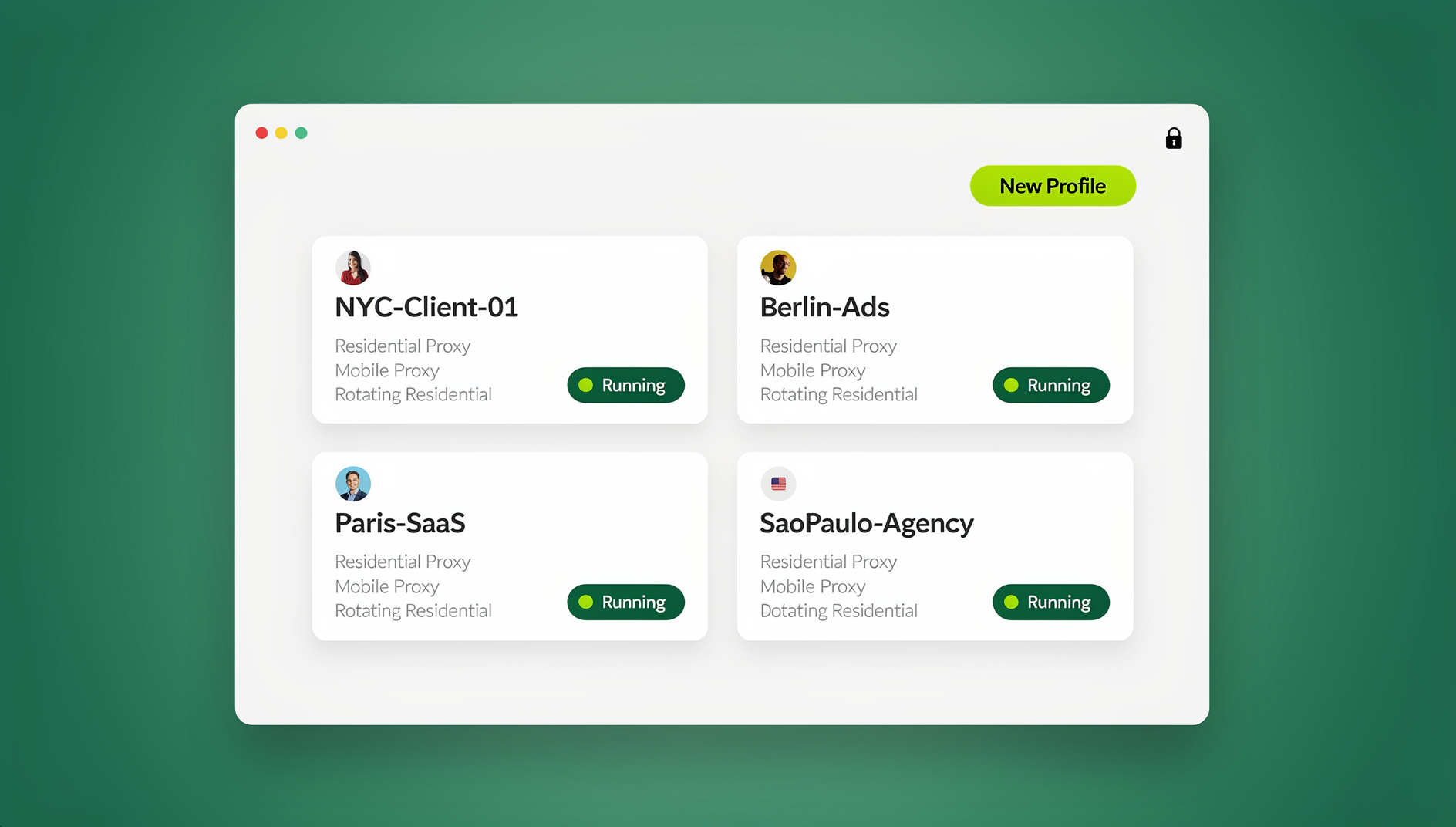
Launch the Sendwin Browser desktop client and create a new profile container for each corporate client (e.g., “Glassdoor – Acme Corp”, “Glassdoor – TechStart Inc”). Each container acts as a completely separate browser environment with its own isolated file system and storage database.
Step 2: Assign Residential or Dedicated Proxies
Within the profile settings, configure dedicated proxy credentials for each profile. For agency clients located in specific metropolitan areas, assign regional static residential proxies matching the client’s geographic footprint. This ensures Glassdoor’s security systems observe consistent, legitimate regional traffic.
Step 3: Authenticate and Save Persistent Sessions
Open the isolated profile, navigate to Glassdoor’s employer portal, and log in with the client-specific credentials. Complete initial 2FA verification. Because Send.win preserves session storage and cookie state permanently, you will remain logged in across sessions without triggering unexpected verification challenges.
Step 4: Organize Accounts Using Tags, Workspaces, and Custom Notes
Group profiles by account manager, client tier, or geographic region using Send.win’s tagging system. Team leads can easily organize 50+ employer dashboards across various agency departments while keeping workflows streamlined. You can also append internal account notes directly to profiles, recording response guidelines, key client contacts, and review escalation protocols.
Step 5: Share Profile Access with Team Members Securely
When delegating review response tasks to junior copywriters or HR contractors, agency administrators can share active profile sessions directly through Send.win’s team sharing features. Team members access the authenticated Glassdoor employer center without needing direct visibility of the master login credentials or client passwords.
Comparison of Multi-Account Methods for Glassdoor
The following table outlines how different multi-account management approaches compare across security, efficiency, and platform risk:
| Management Method | Session Isolation | Fingerprint Separation | Proxy Support | Verification Risk |
|---|---|---|---|---|
| Standard Browser (Logout/Login) | None (High Bleed) | Identical | System IP Only | Very High |
| Incognito / Private Tabs | Temporary Only | Identical | System IP Only | High |
| Chrome / Edge Profiles | Basic Cookie Separation | Shared Hardware Hash | Requires Extensions | Moderate |
| Send.win Isolated Profiles | Full Sandboxing | Fully Masked & Unique | Native Per-Profile Binding | Extremely Low |
Automating Glassdoor Review Ingestion and Brand Monitoring
Modern employer branding agencies do not merely respond to reviews manually; they maintain real-time monitoring pipelines to capture new employee feedback, salary data submissions, and interview ratings as soon as they appear online. Doing this across 20+ corporate clients manually is time-prohibitive.
Send.win is a browser profile manager for professionals and teams, with paid plans: Pro at $19/mo or $83.88/yr, and Team at $49/mo or $251.88/yr. Each isolated browser profile keeps its own cookies, storage, sessions, fingerprint settings and proxy. Send.win has no automation interface: no API, SDK, headless mode or Selenium/Puppeteer/Playwright support on any plan.
By using Send.win’s isolated browser profiles, each with its own cookies, storage, sessions, fingerprint settings and proxy, agencies can organise their work across multiple accounts:
- Launch specific client profiles on a scheduled basis without manual intervention.
- Extract newly published company reviews, rating distributions, and candidate interview sentiment.
- Pipe incoming review text into internal Slack channels, Microsoft Teams, or CRM ticketing systems for rapid brand response.
- Draft standardized review response templates for human approval without exposing raw session credentials to automated scripts.
- Benchmark competitor CEO approval ratings and workplace culture scores across multiple industry verticals.
- Generate executive summary reports comparing client ratings against industry benchmarks over quarterly intervals.
Because automation runs inside fully configured, authenticated profile containers, requests appear as standard user navigation, maintaining comprehensive safe browsing compliance and bypassing repetitive CAPTCHA walls.
Navigating Glassdoor Platform Updates and Identity Policies
In recent platform updates, Glassdoor has placed stronger emphasis on verified user engagement and integration with workplace community networks. This evolving ecosystem means administrative actions undergo stricter behavioral scrutiny.
When operating multiple corporate portals, agencies should recognize how these platform shifts affect day-to-day operations:
- Enhanced Employer Identity Verification: Glassdoor increasingly cross-references email domain ownership with corporate registration records. Ensuring agency administrative profiles utilize assigned client sub-domains prevents automated trust downgrades.
- Automated Review Moderation Triggers: Submitting multiple employer responses in rapid succession across different client brands from identical network hops can trigger spam moderation queues. Spacing review updates across dedicated profile schedules ensures normal posting cadence.
- Cross-Platform Community Feeds: Discussions across Fishbowl feeds and Glassdoor company profiles are increasingly synchronized. Sandboxed profiles prevent accidental engagement with community threads under administrative corporate credentials.
Best Practices for Agency Workflow Security and Team Collaboration
Scaling a multi-client employer branding operation requires combining robust technical tooling with disciplined operational hygiene. Adhering to these established guidelines protects client data and ensures long-term operational stability.
1. Enforce Role-Based Access Controls
Assign specific client profiles to dedicated account executives. Restrict administrative profile modifications to senior team managers while granting operational team members session-only access. This principle of least privilege limits the risk of accidental configuration changes or credential exposure.
2. Avoid Simultaneous Dual Logins from Different Continents
If your agency operates a distributed remote team, ensure team members in different time zones do not open the same client profile simultaneously from conflicting IP locations. Glassdoor tracks geo-velocity anomalies; opening a session in New York while another team member is active in London within five minutes triggers security flags.
3. Maintain Dedicated Email Aliases for Agency Access
When clients grant agency access, request dedicated agency manager accounts (e.g., [email protected]) rather than sharing a single executive’s personal credentials. Log in to that dedicated account exclusively within its designated Send.win profile container.
4. Leverage Cloud Browser Sessions for On-the-Go Audits
When account managers need to quickly check review dashboards or verify urgent notifications from mobile devices or external laptops, Send.win’s cloud browser sessions allow immediate, zero-install access. The cloud environment executes the profile securely without saving local data or exposing corporate credentials to public networks.
5. Implement Systematic Review Response Approval Workflows
Maintain an internal content review pipeline before publishing official employer feedback. Junior writers draft responses within internal ticketing systems, and account leads log in through their dedicated Send.win client containers to submit official approved statements, ensuring strict brand quality control.
🏆 Send.win Verdict
Managing dozens of Glassdoor employer portals without profile isolation exposes agencies to frequent verification lockouts, cross-account contamination, and operational disruption. Send.win is a browser profile manager for professionals and teams, combining native desktop apps for Windows, macOS and Linux, isolated browser profiles with their own cookies, storage, sessions and fingerprint settings, per-profile proxy assignment, and a cloud browser that runs on Send.win’s server in the EU. With Pro at $19/mo or $83.88/yr and Team at $49/mo or $251.88/yr, Send.win helps employer branding teams keep their accounts and sessions organised.
Try the Send.win cloud demo — a 3-minute preview without signup, or 10 minutes a day with a free account.
Frequently Asked Questions
Can I manage multiple Glassdoor employer accounts in standard Google Chrome?
While you can theoretically switch between accounts by logging in and out or using multiple Chrome user profiles, standard Chrome shares core hardware fingerprints and network interfaces. When managing multiple corporate accounts, Glassdoor’s security algorithms can correlate these signatures, leading to automated verification lockouts, CAPTCHA challenges, and session disconnects.
Does Glassdoor permit agencies to manage multiple employer profiles?
Yes, Glassdoor allows authorized third-party agencies and HR consultants to manage employer profiles on behalf of clients. However, each employer account must maintain distinct authentication credentials, and platform security systems enforce strict session integrity checks to verify authorized access.
How does Send.win prevent Glassdoor from linking separate client profiles?
Send.win operates dedicated container environments for each profile. Every container isolates cookies, cache, local storage, WebGL configurations, Canvas data, and network routes. Because no data or hardware hashes are shared between profiles, Glassdoor evaluates each session as an independent, legitimate workstation.
Can my team share Glassdoor employer sessions without sharing master passwords?
Yes. With Send.win’s team collaboration features on the Team plan ($20.99/mo annual, 16 seats), administrators can share authenticated profile sessions directly with colleagues. Team members open the isolated profile and manage the employer portal without ever viewing or entering the master client passwords.
What is the difference between Sendwin Browser and Cloud Browser Sessions?
The Sendwin Browser is a native desktop application available for Windows, macOS, and Linux, providing maximum local performance and custom proxy routing. Cloud browser sessions run profiles remotely on Send.win’s server in the EU through any standard web browser, requiring zero local software installation while preserving complete session isolation.
Do I need proxies to manage multiple Glassdoor accounts safely?
While profile isolation separates browser cookies and fingerprint data, assigning dedicated residential proxies matching each client’s corporate headquarters provides the highest level of security. It ensures IP telemetry aligns naturally with expected geographic access patterns, preventing location-based anomaly flags.
Can I automate review monitoring on Glassdoor using Send.win?
No. Send.win has no automation interface: no API, SDK, headless mode or Selenium/Puppeteer/Playwright support on any plan. Each profile keeps its own cookies, storage, sessions and fingerprint settings, so you can manage your isolated Sendwin Browser profiles manually.
What happens if a client revokes agency access on Glassdoor?
If a client updates their administrative team on Glassdoor, the specific Send.win profile for that client will simply reflect the logged-out state upon next launch. Other client profiles in your Send.win workspace remain completely unaffected and active.
How Send.win Helps With Manage Multiple Glassdoor Accounts
Send.win is a browser profile manager built for exactly this kind of work — every profile is a clean, isolated identity:
- Isolated profiles – unique fingerprint, separate cookies and storage per profile
- Fingerprint settings – each profile keeps its own consistent browser fingerprint, including canvas, WebGL, fonts, and audio settings
- Desktop app + cloud sessions – native app for Windows, macOS, and Linux, or run profiles in the cloud with no install
- Built-in residential proxies – with automatic timezone, locale, and WebRTC matching
- Team features – share logged-in profiles with teammates without sharing passwords
Try the instant cloud browser demo — no install, no signup — or download the desktop app. There is no free trial; paid plans start at $19/month, and the first card purchase is covered by a 7-day money-back guarantee (see pricing).