What Is a Remote Browser?
A remote browser is a web browser that runs on a secure cloud server rather than your local computer, streaming visual frames of the webpage back to your device. This architecture ensures that malware and tracking scripts execute entirely in the cloud, protecting your local system from security threats while providing isolated browsing sessions, fingerprint spoofing, and anonymous web access from any device without requiring local installations.
Every day, internet users and digital workers face persistent tracking, data leakage, and security risks. Standard web browsers run code directly on your local hardware, meaning that any malicious script, tracker, or zero-day browser exploit can access your computer’s filesystem or internal network. For businesses managing sensitive client accounts, marketing profiles, or financial systems, this local execution represents a major vulnerability. A remote browser changes this dynamic by moving the entire execution environment to a containerized instance in the cloud, leaving your local device entirely unaffected by web-based threats.
By routing and executing all web traffic remotely, these systems provide a secure buffer between the user and the web. This guide examines how remote browsers operate, explains the technical differences between rendering models, and explores why businesses are adopting cloud-based browsing solutions to protect their data, secure their identities, and manage multi-profile assets.
How Remote Browsers Work: Under the Hood
A remote browser functions as an intermediary layer that separates the presentation of a web page from its technical execution. When you click a link or enter a URL in a remote browser interface, the request is not processed by your local machine. Instead, it is sent to a virtual container or virtual machine hosted on a secure cloud server.
Once the remote server receives the request, it launches a virtual browser instance. This remote instance downloads the HTML, executes the JavaScript, resolves CSS styles, and renders the webpage. The server then captures the visual output of the rendered page, compresses it, and streams it back to your local client interface using low-latency streaming protocols. Your local device receives only a feed of pixels or sanitized DOM elements, while your keyboard inputs and mouse movements are sent back to the cloud server to interact with the virtual page.
This flow is entirely circular and occurs in real-time. Because the heavy rendering and execution occur on powerful cloud infrastructure, even complex, script-heavy websites load quickly, even when accessed from low-spec local devices. When you close the browser window, the remote container is immediately destroyed, wiping all temporary cookies, storage files, and tracking scripts from existence.
Rendering Architectures: Pixel Streaming vs. DOM Mirroring
To deliver a remote session, systems utilize one of two primary architectural approaches: Pixel Streaming or DOM Mirroring. Each method has distinct characteristics regarding security, performance, and bandwidth consumption.
| Approach | Description | Key Advantage | Key Limitation |
|---|---|---|---|
| Pixel Streaming | Renders the page entirely on the cloud server and streams visual frames to the user as a compressed video stream. | Maximum security; zero code runs on the user’s local device. | Requires higher bandwidth and introduces slight network latency. |
| DOM Mirroring | Sends the HTML and CSS to the client after sanitizing it, reconstructed by the local browser’s layout engine. | Low bandwidth usage and native, responsive browsing feel. | Slightly larger attack surface as code still executes locally. |
Pixel Streaming represents the gold standard for security-sensitive organizations. Because no code from the destination website ever reaches the user’s local browser, it is impossible for web-borne malware to infect the endpoint. DOM Mirroring, while highly efficient, requires trust in the sanitization engine to strip out malicious scripts before they are rendered locally.
Why Businesses and Individuals Need a Remote Browser
The adoption of remote browsing technology is driven by several critical security, privacy, and operational advantages. Below are the primary reasons organizations are transitioning away from local browsers:
1. Malware Containment and Vulnerability Protection
With local browsers, visiting a compromised website can result in silent drive-by downloads or exploit execution. A remote browser creates an air gap between your device and the web. If a website attempts to run malicious code, that code executes on the remote server, which is completely isolated from your corporate network. This makes remote browsers the most effective defense against zero-day browser exploits, ransomware, and drive-by malware attacks.
2. Identity Protection and Browser Fingerprint Spoofing
Websites use advanced tracking to identify your device’s canvas hashes, WebGL specifications, screen size, and system fonts. A remote browser replaces these local identifiers with the specifications of the cloud server. This makes it impossible for trackers to monitor your physical hardware, giving you true privacy and blocking cross-site tracking across your browsing profiles.
3. Multi-Account Profile Management
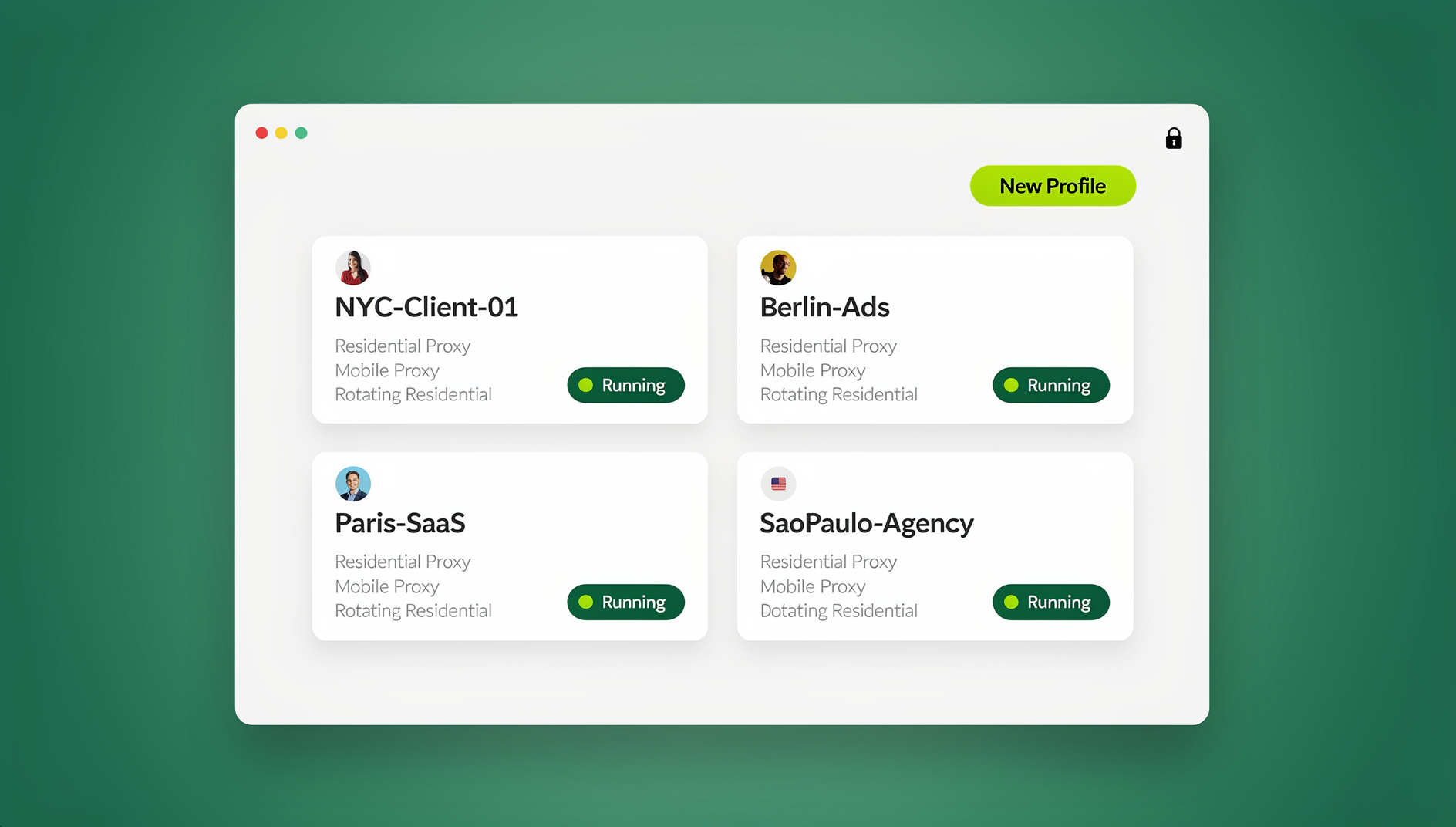
For digital marketing agencies and e-commerce sellers, operating multiple client profiles is essential. With a remote browser, each session runs in an isolated container with its own cookie jar, cache, and IP address. This complete separation prevents platforms from linking your business profiles together, reducing the risk of bans and account restrictions.
4. Cross-Device Accessibility and Performance
Because the web rendering runs on cloud infrastructure, you can access your persistent browsing sessions from any laptop, tablet, or mobile phone. Your tabs, login states, and configurations remain active in the cloud, allowing you to resume your work instantly from any location, without losing progress or setting up local profiles.
Comparison of Remote Browsing Protocols: WebRTC, VNC, and RDP
To establish a connection between the user’s local hardware and the remote cloud browser, platforms utilize different communication protocols. The choice of protocol affects screen refresh rates, network usage, and user interaction latency.
Virtual Network Computing (VNC) is a simple protocol that captures the visual screen buffer of the remote server and transmits it as raw pixels. VNC is easy to implement and works across all platforms, but it does not compress visual data efficiently, requiring substantial bandwidth to maintain high frame rates. Remote Desktop Protocol (RDP), developed by Microsoft, is more efficient. It optimizes rendering by transmitting individual visual elements rather than full screenshots. RDP is ideal for corporate environments, but it can introduce minor lag when rendering complex CSS layouts or high-definition video feeds.
WebRTC represents the modern standard for high-performance remote browsing. Originally designed for video conferencing, WebRTC uses advanced H.264 or VP9 compression to stream the browser screen as a low-latency video feed. This ensures smooth scrolling, instant mouse response, and fluid video playback, even on slower, high-latency mobile networks. Premium remote browsers integrate WebRTC to deliver a native browsing experience.
How Remote Browsing Prevents Data Exfiltration and Insider Threats
In addition to external threat protection, remote browser configurations provide security against internal data breaches and intellectual property leaks.
Because the entire browsing session takes place in a container managed by the corporate IT team, administrators can enforce strict policies regarding data movement. For example, they can block users from copying text from the remote browser session to their local clipboard, disable local screenshot features, and restrict file uploads to verified corporate cloud repositories. This is highly effective for financial institutions and health providers that must adhere to compliance laws regarding customer records, as it prevents employees from accidentally or maliciously downloading database records onto their personal devices.
Cost-Benefit Analysis: Running Local VM Farms vs. Cloud Browser Sessions
Organizations that manage dozens or hundreds of digital accounts often run local virtual machine (VM) farms to isolate their environments. However, maintaining local VM infrastructure comes with substantial hidden costs and operational complexity.
Local VMs require significant hardware resources, consuming huge amounts of RAM and CPU bandwidth. A team managing 50 accounts would need to operate multiple high-spec workstations to run these VMs simultaneously. Furthermore, administrators must manually install OS updates, handle driver crashes, and configure proxy connections on each VM. Transitioning to a managed cloud browser session solves these issues. All heavy processing runs on the provider’s cloud nodes, allowing team members to operate hundreds of isolated sessions from basic laptops, lowering operational costs and improving scalability.
Best Practices for Implementing a Remote Browser in Your Organization
To successfully integrate remote browsing within your business, your team should adhere to the following best practices:
- Implement Multi-Factor Authentication: Secure the central portal to prevent unauthorized access to your cloud browser dashboard.
- Coordinate Proxy Locations: Ensure that the proxy IPs assigned to your remote sessions match the geographical timezone and locale settings of your virtual browser profiles.
- Define Access Policies: Restrict file sharing, clipboard copying, and downloads based on role permissions to prevent leaks.
- Automate Session Cleansing: Set profiles to automatically clear cache and session data upon close for high-risk operations.
Implementing Remote Access and Infrastructure
To implement remote browsing securely, organizations must align their setup with comprehensive isolation practices. A secure deployment begins with a proper proxy browser setup, which routes each virtual browser container through dedicated residential or mobile proxies to ensure that your geographic footprint appears consistent and trustworthy.
At the core of this deployment is robust browser isolation technology, which manages the virtualization, streaming, and destruction of containers. Some technical teams choose to build custom setups using a self-hosted Docker browser image. While self-hosting offers customization, it demands substantial management effort to scale, optimize streaming latency, and prevent resource bottlenecks.
Furthermore, businesses must pair remote browsing with full application isolation. This ensures that the local client used to access the remote browser cannot interact with other local files or internal networks, establishing a zero-trust architecture that protects your company’s critical digital assets from cyber threats.
Send.win: The Modern Cloud Browser Solution
For teams seeking an easy-to-use, reliable remote browser, Send.win offers a comprehensive solution. By providing isolated cloud browser sessions that run instantly with zero installation required, Send.win allows users to access secure environments from any browser or device. With premium proxy integrations, fingerprint protection, and robust team collaboration features, Send.win makes secure remote browsing accessible for businesses of all sizes.
Send.win offers clear and transparent pricing options designed to fit different scaling requirements. There is no free trial; the only free option is the cloud demo at https://send.win/demo-browser/, a 3-minute preview without signup (10 minutes a day with a free account). Paid subscriptions include the Pro plan at $19/month ($83.88/year) and the Team plan at $49/month ($251.88/year), and the first card purchase is covered by a 7-day money-back guarantee. Send.win has no automation interface: no API, SDK, headless mode or Selenium/Puppeteer/Playwright support on any plan. The Team plan provides 500 profiles and 16 user seats, offering a robust infrastructure for scaling businesses.
🏆 Send.win Verdict
For users looking for a secure, fast, and feature-rich remote browser, Send.win delivers the ultimate solution. Offering cloud browser sessions with zero installation required, Send.win isolates your browsing activity and provides advanced fingerprint protection. Whether you are managing multiple accounts or isolating sensitive data, Send.win makes secure browsing effortless.
Try Send.win free today — secure your web access and run isolated profiles instantly.
Frequently Asked Questions
Is a remote browser the same as a VPN?
No. A VPN encrypts your traffic and changes your IP address, but websites still execute code directly on your local device. A remote browser executes all web code in the cloud, sending only visual frames to your machine.
How does a remote browser protect my local computer from malware?
Because all web content executes in the cloud, any malware or zero-day exploits are contained inside the virtual container and cannot reach your local filesystem or corporate network.
Can a remote browser replace a virtual private network (VPN)?
For web browsing safety, identity isolation, and fingerprint protection, a remote browser is far more effective. However, a VPN is still useful for encrypting system-wide traffic from non-browser applications.
Does using a remote browser slow down my internet connection?
Since the heavy rendering is done on cloud servers, page load times are often faster. However, because the visual feed is streamed to your device, you may experience a slight physical latency (20-80ms) depending on your network.
Can I manage multiple social media or e-commerce accounts using a remote browser?
Yes. Every remote session runs in a separate cloud container with its own cookies, storage, and IP address, preventing platforms from linking and suspending your profiles.
Are my passwords and login sessions secure within a remote browser environment?
Yes. Trusted remote browser platforms like Send.win encrypt all data in transit and at rest. Your sessions are isolated, and you can wipe your data at any time.
Do remote browsers require any local software installation?
No, cloud-based remote browsers run directly within your existing web browser. You simply log in, launch a session, and start browsing in a secure cloud container.