Can You Manage Multiple Upwork Freelancer Accounts Without Getting Banned?
You cannot safely manage multiple Upwork freelancer accounts under a single identity — Upwork enforces a strict one-person, one-account policy and permanently bans duplicates on detection. However, freelancer agencies have a legitimate path: Upwork’s Agency account structure lets you operate multiple specialist profiles under one umbrella, with each team member maintaining their own verified account. For agencies that need deeper isolation between client-facing profiles — or freelancers operating in gray areas — browser-level session separation using tools like Sendwin Browser prevents fingerprint and IP cross-contamination that triggers Upwork’s detection systems.
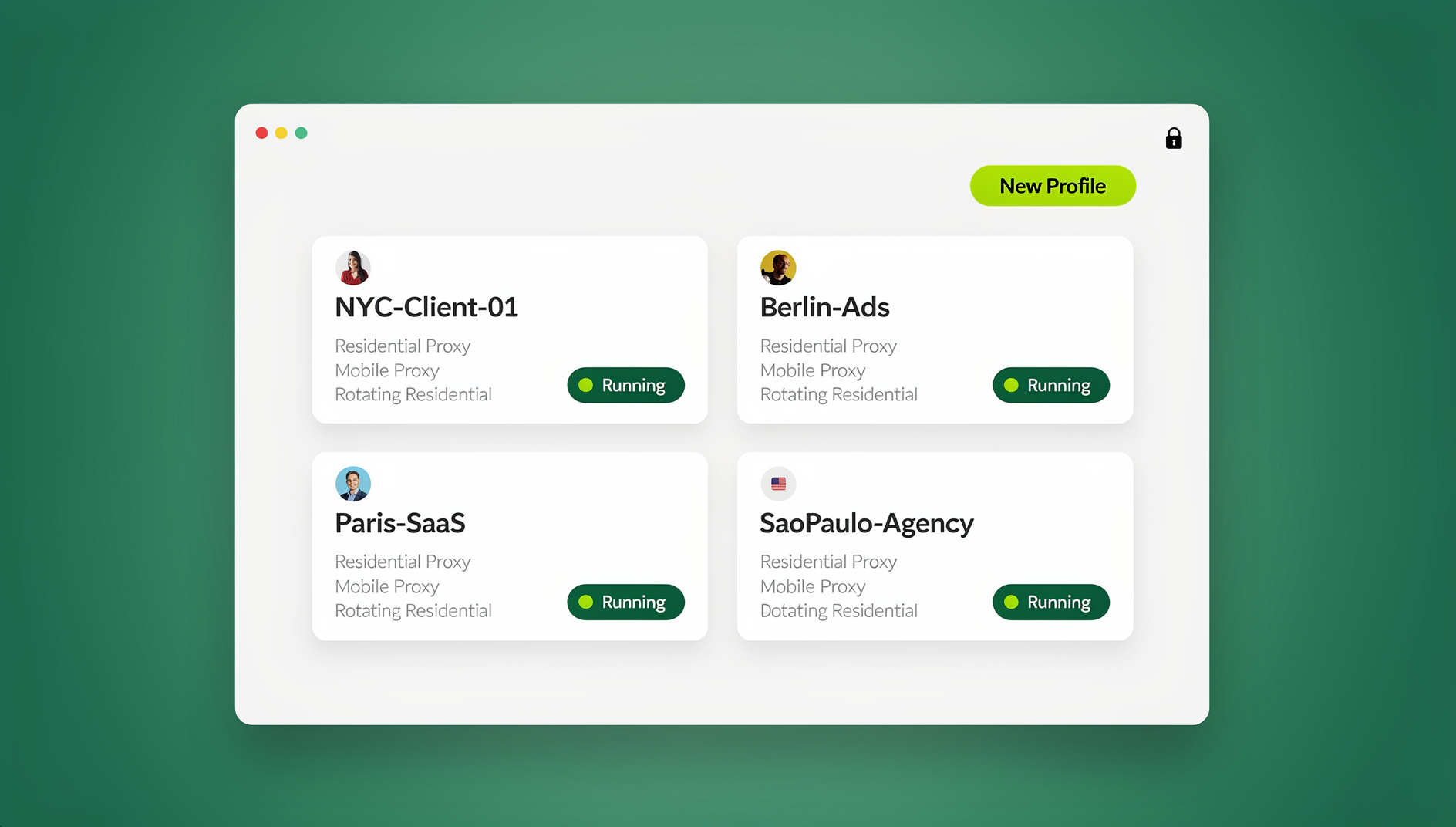
Upwork’s One-Account Policy: What It Actually Says
Upwork’s Terms of Service are unambiguous: “You may only maintain one account on Upwork.” This applies to freelancers, clients, and agencies. Unlike platforms that wink at multi-accounting, Upwork actively hunts for duplicates and treats them as a serious integrity violation.
The policy exists for good reasons from Upwork’s perspective:
- Review integrity — Multiple accounts let a freelancer abandon bad reviews and start fresh, which destroys the trust marketplace buyers rely on.
- Bid manipulation — Duplicate accounts can bid on the same job from different angles, giving an unfair advantage.
- Fee avoidance — Multiple accounts could theoretically be used to reset the sliding commission scale (20%/10%/5%).
- Identity verification — Upwork requires government ID verification; duplicate accounts undermine the KYC process.
Why Agencies and Teams Still Need Multiple Profiles
Despite the strict policy, there are completely legitimate reasons why a freelancing business needs multiple Upwork presences:
Specialized Service Profiles
An agency offering both web development and graphic design benefits from separate profiles optimized for each skill category. Clients searching for a React developer don’t want to sift through a portfolio full of logo designs. Specialized profiles convert better because they match client intent precisely.
Team Member Accounts
Each freelancer on your team should have their own verified Upwork account. This is Upwork’s intended model — individual team members build their own reputation, and the agency structure ties them together. The critical point: each person must use their own real identity and government ID.
Geographic Market Coverage
Upwork’s algorithm favors geographic relevance for certain job categories. An agency with team members in different countries can naturally serve clients who prefer local or timezone-aligned freelancers.
Client Confidentiality Requirements
Some enterprise clients require that their freelancer relationships remain siloed. An agency managing sensitive projects for competing companies may need strict separation between the team members assigned to each client.
How Upwork Detects Duplicate Accounts
Upwork’s detection is sophisticated and multi-layered. Understanding each method helps you avoid accidental triggers — especially when managing legitimate team member accounts from a shared office.
IP Address Tracking
The most straightforward check: two “unrelated” freelancer accounts logging in from the same IP address. In a shared office or co-working space, this is a legitimate scenario that still triggers automated review. Upwork’s system flags the correlation and may request an explanation — or simply suspend both accounts pending investigation.
Browser Fingerprinting
Upwork collects detailed browser fingerprint data including canvas rendering, WebGL hash, installed fonts, screen resolution, timezone, and navigator properties. Two accounts sharing an identical fingerprint are almost certainly the same person using the same device — and Upwork treats them accordingly.
Government ID and SSN Verification
Upwork requires identity verification for freelancers in most countries. US-based freelancers must provide their SSN for tax reporting (1099 forms). This is the hardest detection method to circumvent — and you shouldn’t try. Using someone else’s identity documents is fraud, full stop.
Device and Hardware Identifiers
Beyond browser fingerprinting, Upwork’s scripts may detect hardware-level identifiers: GPU model, CPU cores, available memory, and other system properties that persist across browser sessions.
Behavioral Analysis
Upwork’s machine learning models analyze typing patterns, proposal writing style, response times, active hours, and portfolio content. Two accounts that bid on similar jobs with similar proposals at similar times from similar locations face automated flagging.
Payment and Banking Links
Connecting the same bank account, PayPal, or payment method to multiple Upwork accounts creates an instant, permanent link. Even using the same billing address or tax ID creates a strong correlation signal.
The Consequences: What Happens When Upwork Catches You
Upwork doesn’t issue warnings for duplicate accounts. The enforcement ladder is steep:
| Violation | Consequence | Reversible? |
|---|---|---|
| Duplicate account detected | Both accounts suspended immediately | Rarely — requires identity proof and explanation |
| Account suspended during active contracts | Contracts frozen, client notified | Only if suspension is lifted |
| Earnings in escrow at time of ban | Funds held 90+ days | Eventually released, but with significant delays |
| Permanent ban | Blocked from creating any new account | No — Upwork’s ID verification prevents re-registration |
| Reputation damage | Clients informed of policy violation | No — visible to all past clients |
The permanent ban is especially devastating because Upwork uses government ID verification. Unlike platforms where you can create a new email and start over, Upwork’s identity checks mean a ban follows you permanently.
The Legitimate Path: Upwork Agency Accounts
Upwork provides a built-in solution for businesses that need multiple freelancer profiles: the Agency account. Here’s how it works and where it falls short.
How Agency Accounts Work
- One person creates the agency and becomes the agency owner
- Team members join with their own individual Upwork accounts (each verified with their own ID)
- The agency can bid on jobs on behalf of any team member
- Clients see the agency profile and can browse individual member portfolios
- Revenue flows through the agency, with configurable splits per member
Agency Account Limitations
Agency accounts solve the multi-profile problem legally, but they introduce operational challenges:
- Shared reputation — One team member’s bad review affects the agency’s overall Job Success Score
- Visibility into all contracts — Agency owners can see all team members’ active contracts, which may conflict with confidentiality requirements
- Commission structure — Upwork charges the same sliding commission (20%/10%/5%) on agency contracts
- Onboarding friction — Each team member must pass Upwork’s identity verification independently
- Limited profile specialization — The agency has one primary profile; individual member specialization is secondary in search results
Browser Isolation: The Technical Foundation for Safe Multi-Profile Management
Whether you’re running a legitimate Upwork agency or managing team members’ accounts from a shared office, browser-level session isolation prevents accidental cross-contamination that triggers Upwork’s detection systems.
What Browser Isolation Actually Does
True browser isolation creates a completely separate environment for each account:
- Cookies and sessions — Each profile has its own cookie jar. Logging into Upwork in one profile leaves zero traces in another.
- Fingerprint separation — Canvas rendering, WebGL hash, font enumeration, and hardware properties are unique per profile.
- Proxy binding — Each profile routes traffic through a dedicated IP address, eliminating IP overlap between accounts.
- Timezone and locale matching — The profile’s timezone and language settings automatically match the assigned proxy’s location.
- Storage isolation — LocalStorage, IndexedDB, and service workers are completely separated between profiles.
Why Regular Browser Profiles Aren’t Enough
Chrome profiles and Firefox containers separate cookies and browsing history, but they don’t mask the underlying hardware fingerprint. Two Chrome profiles on the same laptop share identical canvas rendering output, the same WebGL GPU hash, and the same font list. Upwork’s fingerprinting scripts see right through this — to them, it’s obviously the same device.
For reliable safe browsing across multiple accounts, you need fingerprint-level isolation that makes each profile appear to be a completely different machine.
Setting Up Send.win for Upwork Account Management
Sendwin Browser provides the technical isolation that Upwork account management demands. Here’s a practical setup for freelancer agencies:
Profile Configuration for Each Team Member
- Create a dedicated profile in Sendwin Browser for each team member’s Upwork account.
- Assign a unique residential proxy to each profile — ideally matching the team member’s declared location on their Upwork profile. If a team member claims to be in Austin, Texas, use an Austin-area residential IP.
- Set timezone and language to match the proxy location. Sendwin Browser auto-matches these to the proxy’s geolocation, but verify for accuracy.
- Bookmark Upwork within the profile so the team member always uses the correct profile for their account.
- Never cross-login — each team member should only ever access their own Upwork account from their dedicated profile.
Shared Office Scenarios
This is the highest-risk scenario: multiple Upwork freelancers working from the same physical location. Without isolation:
- All accounts share the same public IP address
- All accounts share the same hardware fingerprint
- Login timing correlations are obvious
With Sendwin Browser profiles, each team member’s traffic routes through a different proxy, presents a different fingerprint, and maintains separate sessions — even though they’re sitting at the same desk. This mirrors what Upwork would see from team members working remotely from different locations.
Cloud Browser Sessions for Remote Teams
For agencies with distributed teams, Send.win’s cloud browser sessions eliminate the need to install the desktop app on every team member’s machine. Each team member accesses their dedicated browser profile through the cloud — their fingerprint and session data live server-side, not on their local hardware. This is particularly useful for onboarding contractors who shouldn’t install agency software on personal devices.
Automation API for Agency Operations
Agencies managing 10+ Upwork accounts can use Send.win’s Automation API (Selenium, Puppeteer, or Playwright support) to automate routine tasks:
- Monitoring new job postings matching team members’ skills
- Tracking proposal status across accounts
- Pulling work diary screenshots for client reporting
- Automating timesheet submissions
The Automation API is available on both the Pro plan ($19/month) and Team plan ($49/month), making it accessible even for small agencies.
Pricing and Plan Recommendations for Freelancer Agencies
| Feature | Pro Plan | Team Plan |
|---|---|---|
| Monthly price | $19/mo ($6.99/mo annual — 63% off) | $49/mo ($20.99/mo annual — 57% off) |
| Browser profiles | 150 | 500 |
| Proxy bandwidth | 5GB | 20GB |
| Team seats | — | 16 |
| Automation API | ✅ | ✅ |
| Cloud browser sessions | ✅ | ✅ |
| Free trial | 30 days, no credit card | 30 days, no credit card |
Solo freelancers or small teams (2-3 people) will find the Pro plan more than sufficient. The Team plan becomes worthwhile at 4+ team members, where the 16 seats and 500 profiles provide room to scale without per-seat add-on costs.
Legal and ToS Considerations You Must Understand
This section matters. There’s a significant difference between what’s technically possible and what’s legally or ethically appropriate.
What Upwork’s ToS Actually Prohibits
- One person, multiple accounts — A single individual cannot maintain more than one freelancer account. Period.
- Identity misrepresentation — Using someone else’s ID, SSN, or credentials to create an account is fraud.
- Review manipulation — Creating accounts to leave fake reviews or inflate ratings violates multiple policies.
What’s Legitimate
- Agency accounts with multiple team members, each using their own verified identity
- Team members working from the same office, each on their own account — this is normal and expected
- Using browser isolation to prevent false positives when legitimate team members share infrastructure
- Managing client-facing profiles where each profile represents a real, ID-verified individual
The Gray Area
Some freelancers create a second account after abandoning their first due to bad reviews or rate changes. While understandable, this directly violates Upwork’s ToS and risks permanent banning of both accounts if detected. Browser isolation can prevent detection, but it doesn’t make the practice compliant with the platform’s rules. Proceed with full awareness of the risks.
Best Practices for Long-Term Upwork Account Safety
For Legitimate Agencies
- Use Upwork’s official Agency structure — It’s designed for exactly this use case.
- Ensure every team member has their own verified account — Never share login credentials.
- Isolate browser sessions for team members sharing physical office space to prevent false-positive detection.
- Document your team structure — If Upwork asks why multiple accounts access from the same IP, having an agency account with documented members is your best defense.
- Maintain consistent proxy locations — If a team member’s Upwork profile says “San Francisco,” their traffic should consistently come from San Francisco IPs.
For Solo Freelancers
- Stick to one account — Build your reputation rather than starting fresh.
- If your account has poor reviews, invest time in improving your profile and service quality rather than creating a duplicate.
- Use browser isolation if you also have a client account (hiring freelancers for your own projects) — Upwork allows separate freelancer and client accounts, but logging into both from the same browser can trigger false flags.
For agencies looking to understand the broader principles of managing multiple accounts across platforms, the core isolation techniques apply universally — separate fingerprints, separate IPs, and separate sessions for each identity.
🏆 Send.win Verdict
For freelancer agencies managing multiple Upwork team member accounts — especially from shared offices — Sendwin Browser eliminates the fingerprint and IP overlaps that trigger Upwork’s duplicate detection. Each team member gets a fully isolated browser profile with unique fingerprint, dedicated proxy, and matched timezone. The Team plan at $20.99/month (annual) supports 16 seats and 500 profiles, covering agencies of any size.
Try Send.win free today — 30-day trial, no credit card. Set up isolated profiles for your entire Upwork team in minutes.
Frequently Asked Questions
Will Upwork ban me for having two freelancer accounts?
Yes. Upwork’s policy explicitly prohibits one person maintaining multiple freelancer accounts. If detected, both accounts are suspended immediately, and the ban is typically permanent. Upwork uses government ID verification, so creating a new account after a ban is nearly impossible.
Can an agency have multiple Upwork freelancer profiles?
Yes, through Upwork’s official Agency account structure. The agency itself has a profile, and each team member maintains their own individual account verified with their own identity. This is Upwork’s intended model for multi-freelancer businesses and is fully compliant with their ToS.
Does Upwork track browser fingerprints?
Yes. Upwork collects canvas rendering data, WebGL hashes, font lists, screen resolution, timezone, and other browser attributes to build a composite fingerprint. Two accounts sharing an identical fingerprint are flagged as potential duplicates for investigation.
Can two freelancers safely use Upwork from the same office?
It’s risky without precautions. Two accounts logging in from the same IP with the same browser fingerprint looks like one person with two accounts to Upwork’s system. Using isolated browser profiles with dedicated proxies per account — especially with an antidetect browser like Sendwin Browser — makes each session appear to come from a different location and device.
What’s the difference between an Upwork Agency account and individual accounts?
An Agency account is a wrapper that ties multiple individual freelancer accounts together under a business entity. The agency can bid on jobs, manage contracts, and handle billing centrally. Individual accounts within the agency still maintain their own profiles, reviews, and Job Success Scores. The key benefit is legitimacy — Upwork explicitly supports this structure.
Can I use a VPN to manage multiple Upwork accounts?
A VPN changes your IP but doesn’t change your browser fingerprint. Two accounts with different IPs but identical fingerprints still get flagged. You need both IP separation (via proxies) and fingerprint isolation (via an antidetect browser) for reliable multi-account management.
How does Upwork’s identity verification prevent duplicate accounts?
Upwork requires government-issued photo ID and, for US freelancers, a Social Security Number for tax reporting. This data is cross-referenced across all accounts. Submitting the same ID or SSN on a second account triggers immediate detection. There is no technical workaround for this — each account must belong to a genuinely different person.
Is browser isolation enough to safely run multiple Upwork accounts?
Browser isolation handles the technical detection vectors: fingerprints, cookies, IP addresses, and session data. However, Upwork also uses identity verification (government ID, SSN), behavioral analysis, and portfolio content similarity. Browser isolation is a necessary component but not sufficient on its own — each account must also have its own verified identity, unique payment methods, and distinct work history.
How Send.win Helps With Manage Multiple Upwork Freelancer Accounts
Send.win is an antidetect browser built for exactly this kind of work — every profile is a clean, isolated identity:
- Isolated profiles – unique fingerprint, separate cookies and storage per profile
- Stealth engine – canvas, WebGL, fonts, and audio spoofed at the engine level
- Desktop app + cloud sessions – native app for Windows, macOS, and Linux, or run profiles in the cloud with no install
- Built-in residential proxies – with automatic timezone, locale, and WebRTC matching
- Team features – share logged-in profiles with teammates without sharing passwords
Try the instant cloud browser demo — no install, no signup — or download the desktop app. The 30-day free trial needs no credit card, and paid plans start at $6.99/month billed annually (see pricing).