
The Scaling Challenge of Charitable Planning
To discover how financial advisors manage multiple daf accounts efficiently, wealth managers rely on unified donor portals, centralized CRM integrations, and secure session isolation tools like Send.win. By maintaining separate digital identities, advisors can manage donor-advised funds across Fidelity, Schwab, and community foundations simultaneously without security conflicts. Here is how modern advisory firms scale their philanthropic operations while keeping client data protected.
Donor-Advised Funds (DAFs) have grown at an extraordinary rate over the past decade, establishing themselves as the preferred charitable giving vehicle for high-net-worth households across the United States. With total assets under management in DAFs surpassing $230 billion, financial advisors are tasked with incorporating these structures into comprehensive financial plans. But while setting up a single DAF for a client is simple, coordinating and executing transactions across dozens of client accounts represents a massive operational challenge. Financial advisory firms must develop structured systems to ensure that philanthropic capital is managed efficiently, tax deductions are captured accurately, and client assets grow productively before they are granted to charity.
Wealth management practices that fail to streamline their administrative workflows often find themselves bogged down by manual operations. Advisors and their support teams waste countless hours logging in and out of different sponsoring organizations’ portals, resetting forgotten passwords, handling multi-factor authentication (MFA) requests, and manually compiling performance reports. In this comprehensive guide, we will analyze the structure of DAF accounts, outline the primary sponsor platforms, detail five core management strategies, and explain how advanced digital workspaces allow wealth management firms to scale their charitable planning services without increasing administrative overhead.
Understanding DAF Account Architecture and Administrative Rights
Before implementing management strategies, it is necessary to understand how Donor-Advised Funds are structured legally and operationally. A DAF is a charitable investment account established at a sponsoring organization, which is a public charity. When a client contributes cash, mutual funds, or appreciated securities to a DAF, they receive an immediate federal tax deduction. However, because the contribution is irrevocable, the assets belong to the sponsoring organization. The client retains advisory privileges to recommend how the assets are invested and how grants are distributed to registered 501(c)(3) organizations.
For a financial advisor to manage these accounts, the client must grant them formal authorization. This is typically done by naming the advisor as an authorized agent on the DAF account. Sponsoring organizations offer different tiers of advisor access, including:
- Inquiry Access: Allows the advisor to view account balances, transaction histories, and grant statuses, but does not allow them to execute trades or recommend grants.
- Full Advisory Privileges: Empowers the advisor to manage the investment allocation within the DAF and submit grant recommendations on behalf of the client.
- Liaison Access: Enables the advisor’s support staff to handle administrative forms, contribution processing, and correspondence, while leaving final grant approvals to the client or primary advisor.
Managing these different levels of authorization across a diverse client base requires meticulous tracking. Wealth management firms must maintain clear records of which advisors and associates have access to specific client DAFs, ensuring compliance with both internal policies and regulatory standards.
The Sponsoring Organization Advisor Portal Landscape
Most Donor-Advised Funds in the United States are held by three types of sponsoring organizations: national sponsors, community foundations, and single-issue charities. Each type of sponsor utilizes a different technology infrastructure, presenting distinct administrative demands for advisors.
National Sponsoring Organizations
National sponsors, such as Fidelity Charitable, Schwab Charitable, and Vanguard Charitable, hold the largest share of DAF assets. Because of their scale, they offer dedicated advisor portals designed to centralize account management. For example, the Fidelity Advisor Platform and Schwab Advisor Services integrate DAF accounts directly into the advisor’s primary workstation. This integration allows advisors to monitor DAF balances alongside traditional brokerage accounts, IRAs, and trust structures.
Community Foundations
Community foundations focus on localized philanthropy. While they offer deep expertise in local community needs, their technology portals are often less sophisticated than those of national sponsors. Advisors managing DAFs across multiple regional community foundations must navigate unique, legacy web interfaces that often lack multi-account dashboards. This requires advisors to log into each foundation’s site individually, creating significant administrative friction.
Single-Issue Sponsoring Organizations
Single-issue sponsors, such as religious federations, university foundations, or environmental trusts, focus on specific missions. They often utilize niche software platforms that do not integrate with standard wealth management tools. Managing multiple accounts across these diverse sponsoring organizations requires a secure, flexible digital workspace that can maintain active sessions across completely different hosting environments.
5 Core Strategies for Managing Multiple DAF Accounts
To prevent administrative bottlenecking, wealth management firms should implement these five core strategies for multi-account DAF management.
1. Implementing Financial Aggregation and CRM Tracking
Advisors should avoid relying solely on the sponsoring organizations’ portals to monitor client accounts. Instead, DAF accounts should be integrated into the firm’s central Customer Relationship Management (CRM) system, such as Salesforce Financial Services Cloud, Redtail, or Wealthbox. By syncing DAF balances to the CRM, advisors can view a client’s total net worth and philanthropic history in one centralized profile. This makes it easier to coordinate charitable planning with estate planning and tax strategies.
2. Standardizing Investment Management Across Client Portfolios
When clients contribute assets to a DAF, the funds should not sit in low-yield money market pools unless they are scheduled for distribution. Advisors should design standard investment models for DAF accounts, matching the investment allocation to the client’s grant timeline. For active annual givers, a conservative model containing short-duration bonds is appropriate. For legacy builders who plan to pass the DAF to their children, an aggressive equity-focused model will maximize tax-free growth, resulting in more charitable capital over time.
3. Optimizing Contribution Timing and Asset Types
Coordinating contributions across multiple client DAFs requires systematic tax planning. Advisors should evaluate which clients would benefit from “charitable bunching” — contributing multiple years of donations into a DAF in a single tax year to exceed the standard deduction threshold. Additionally, advisors should prioritize contributing appreciated non-cash assets, such as real estate, private business stock, or cryptocurrency, rather than cash. This strategy allows clients to bypass capital gains taxes while receiving a full fair-market-value deduction.
4. Establishing Structured Grant-Making Workflows
To manage grants efficiently, advisors should establish standard operational calendars. Rather than processing grants on an ad-hoc basis whenever a client calls, firms should schedule quarterly or semi-annual grant review cycles. During these windows, support staff can aggregate client requests, verify the active 501(c)(3) status of the recipient charities, and process the distributions in batches. This reduces administrative overhead and minimizes the risk of processing errors.
5. Utilizing Session Isolation to Manage Sponsor Portals
Maintaining active logins across different sponsor portals is one of the most persistent issues for wealth management associates. If an associate attempts to open Fidelity Charitable and Schwab Charitable advisor dashboards in the same web browser, session cookie conflicts can trigger automatic logouts or authentication loops. Managing these portals traditionally requires clearing browser cookies constantly or using different browser setups.
To overcome this, advisory firms are adopting advanced session isolation. By using a secure cookie management tool, support teams can isolate web identities and maintain persistent sessions for every DAF sponsor. Rather than relying on basic setups that do not support multi-tenant security, firms can use a dedicated chrome multi account structure to segment advisor dashboards. This ensures that client data remains isolated, preventing cross-site scripting risks and credential leaks.
Compliance, IRS Regulations, and Fiduciary Responsibilities
Managing charitable assets requires strict adherence to Internal Revenue Service (IRS) regulations. Advisors must ensure that all contributions and grants comply with tax laws to protect their clients from penalties. Key regulatory considerations include:
- AGI Deductibility Limits: Cash contributions to public DAFs are deductible up to 60% of the donor’s Adjusted Gross Income (AGI), while appreciated asset contributions are capped at 30% of AGI. Excess deductions can be carried forward for up to five years.
- Prohibited Grant Benefits: DAF grants cannot be used to secure personal benefits for the client, such as event tickets, charity auction items, or school tuition. Sponsoring organizations will reject grants that provide a tangible benefit to the donor.
- Pledge Fulfillment Restraints: IRS rules generally prohibit DAF grants from being used to satisfy legally binding personal pledges. Advisors must consult with clients before they sign pledge agreements to ensure that the fulfillment is structured correctly.
Advisors also have a fiduciary responsibility to monitor the financial health and operational integrity of the sponsoring organizations they recommend. This involves checking the sponsors’ administrative fees, investment performance, and processing timelines annually. Standardizing this review process ensures that clients receive maximum value from their philanthropic vehicles.
Advanced Digital Workspace Solutions for Advisory Firms
To execute these strategies seamlessly, wealth management teams need a secure, enterprise-grade digital environment. Modern browser security is designed to restrict multi-account operations, making it difficult for administrative teams to manage different client environments. This is where specialized workspace software becomes essential. Using a secure browser for ads management highlights how browser isolation keeps accounts separated. This is highly relevant because financial advisors require similar, bank-grade isolation when handling client assets across different platforms. Just as digital teams manage multiple campaigns, advisors must manage client environments without risk of data cross-contamination.
To understand the difference, consider how other industries handle account segregation. For instance, online retailers who manage multiple amazon accounts rely on fingerprint masking to prevent account linkages. Wealth management firms face similar security challenges; they must prevent their local workstation profiles from linking unrelated client accounts in the eyes of sponsor security systems. By isolating each client’s digital profile, advisors protect their operations from automated security flags and access blocks.
Sponsoring Organization Advisor Portal Comparison
The table below summarizes the technical and operational differences across the major DAF sponsoring platforms available to financial advisors in 2026.
| Sponsor Portal | Primary Audience | Technology Integration | Investment Customization | Administrative Access Control |
|---|---|---|---|---|
| Fidelity Charitable | National / Retail | High (Fidelity Advisor) | Pre-selected pools | Granular agent permissions |
| Schwab Charitable | National / Retail | High (Schwab Advisor) | Custom portfolios (AUM > $250k) | Batch grant processing |
| Vanguard Charitable | National / Institutional | Moderate | Low-cost Vanguard pools | Liaison access supported |
| National Philanthropic Trust | Independent / Foundations | API-driven options | Highly customizable | Multi-advisor access |
| Community Foundations | Local / High-Net-Worth | Low (Legacy systems) | Custom local impact pools | Varies by location |
Modern Workspace Integration with Send.win
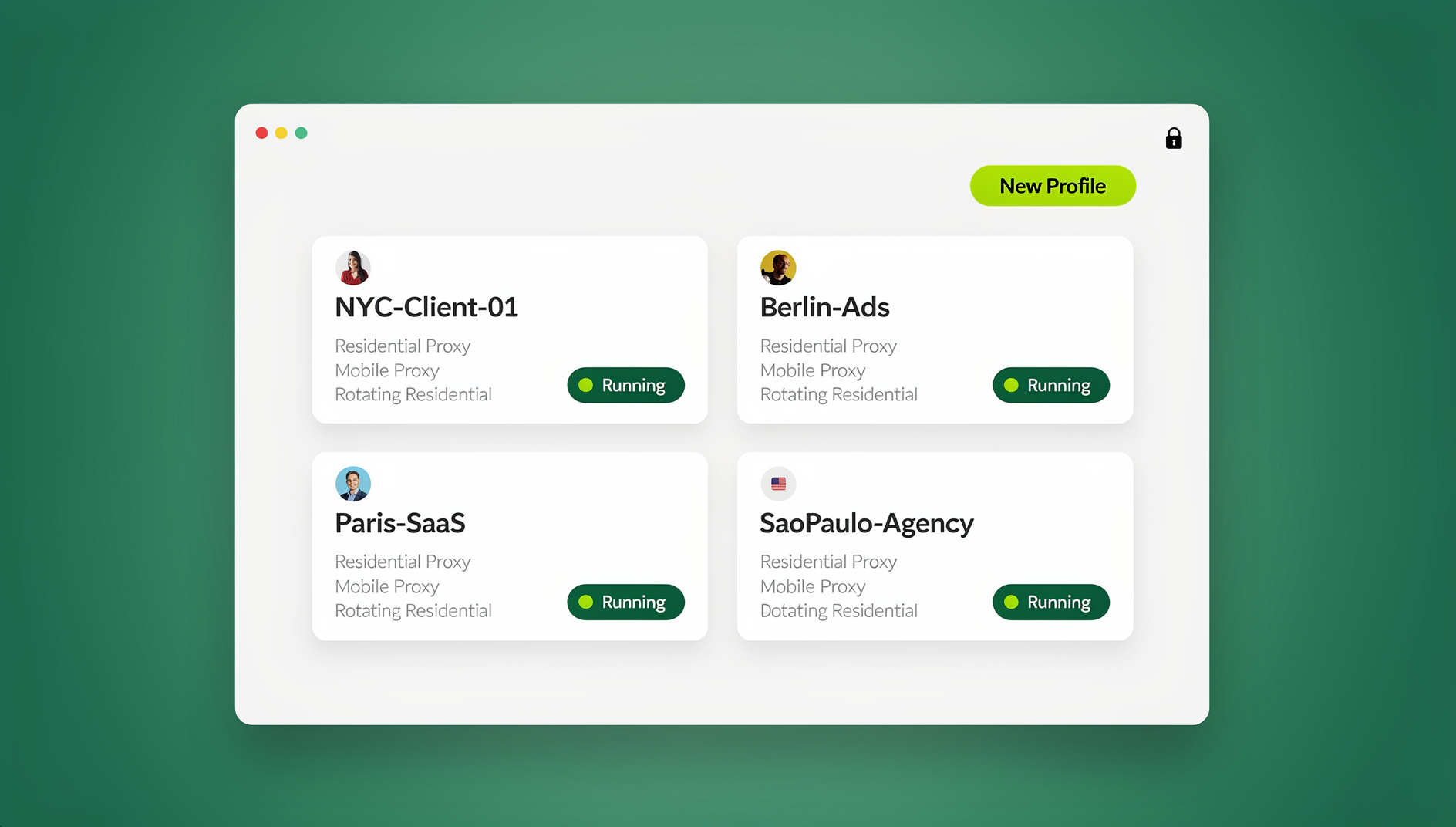
Wealth management firms can eliminate the operational friction of portal management by integrating Send.win into their standard technology stack. Send.win is a professional multi-login browser that isolates digital environments at the cookie and session levels. It provides two operational modes:
- Sendwin Browser: A native desktop app for Windows, macOS, and Linux that runs isolated browser profiles locally with hardware acceleration, offering maximum performance and security.
- Cloud Browser Sessions: A zero-install solution that runs browser profiles in secure cloud environments, allowing advisors to access client dashboards securely from any workstation, tablet, or mobile device.
By creating a dedicated browser profile for each DAF sponsoring portal, advisors can stay logged in simultaneously without cookie contamination. This saves hours of administrative time, streamlines client meetings, and keeps sensitive financial data secure. Paid plans start at $19/month (or $83.88/year) for the Pro plan, providing an affordable solution for growing wealth management practices.
🏆 Send.win Verdict
Managing multiple DAF accounts across different platforms can lead to severe session conflicts and operational bottlenecks. Send.win resolves this challenge by providing isolated browser profiles through the Sendwin Browser desktop client and cloud browser sessions, allowing your advisory team to maintain secure, concurrent logins for all sponsor portals without data leakage or session timeouts.
Try the Send.win cloud demo — Preview it free for 3 minutes without signup, or 10 minutes a day with a free account, to unify your client workflows and secure your financial planning operations.
Frequently Asked Questions
How do financial advisors manage multiple DAF accounts efficiently?
Financial advisors manage multiple DAF accounts efficiently by integrating them into their central CRM (like Salesforce or Wealthbox), using portfolio management tools like Orion, and deploying isolated browser environments like Send.win to run multiple sponsor portals concurrently without login conflicts.
Are there limits to how many DAF accounts an advisor can manage?
No, there are no regulatory limits. However, manual portal management creates administrative bottlenecks. With modern multi-account management tools and structured workflows, a single advisor and their support staff can easily manage dozens of DAF accounts.
How do advisors charge for DAF management?
Most advisors charge an AUM-based fee on DAF assets, incorporating them into the client’s overall billable portfolio. Other firms charge a flat hourly rate or a project fee specifically for comprehensive philanthropic planning and structuring.
Can a financial advisor recommend investments inside a client’s DAF?
Yes. When the client grants full advisory privileges to the advisor, the sponsoring organization allows the advisor to manage the investment pools, select mutual funds, or build custom portfolios for the client’s DAF assets.
What is the minimum balance required to open a DAF?
National sponsors like Fidelity and Schwab have eliminated minimum balance requirements for retail accounts. However, community foundations and custom institutional platforms may require minimums ranging from $5,000 to $25,000.
What happens to a client DAF if the advisor retires or leaves?
The DAF remains with the sponsoring organization. The client can designate a successor advisor from the same firm, assume full control themselves, or name a family member as the successor advisor to carry on their legacy.
How are DAF contributions reported for tax purposes?
The sponsoring organization issues a tax receipt immediately upon contribution. Because DAF contributions are irrevocable, clients do not need to report individual grants; they only report the initial contribution to the IRS on their annual return.