Why Agencies and Multi-Brand Teams Need Multi-Account GTM Solutions
To manage google tag manager multiple accounts efficiently, agencies and multi-brand businesses should use separate GTM accounts for each client and employ multi-profile browsers like Sendwin Browser. This setup allows developers to maintain independent, simultaneous logins across various Google accounts, avoiding credentials conflicts and cookie cross-contamination. This guide details how to structure GTM containers, configure workspaces, and automate tag deployment securely.
Google Tag Manager (GTM) has revolutionized the way marketing teams, web developers, and analytics professionals track user behavior. By allowing you to deploy tracking codes, conversion pixels, and analytics scripts without editing site code, GTM speeds up marketing workflows. However, as your client roster grows or your brand portfolio expands, managing GTM across multiple accounts becomes a primary point of friction. Agencies managing tracking for dozens of clients, or enterprises running GTM across various global markets, face unique management challenges.
Without a structured approach, team members waste hours switching between Google accounts, logging in and out of portals, and risking errors like deploying tags to the wrong container. Additionally, standard web browsers are not built to handle multiple active sessions across different Google accounts simultaneously. In this guide, we will cover the best practices for setting up, organizing, and securing multiple GTM accounts, ensuring smooth tag deployment and clean analytics data.
Understanding GTM’s Hierarchical Structure
Before diving into multi-account setups, it is crucial to understand GTM’s organizational hierarchy. This hierarchy dictates how permissions are inherited and how containers are isolated from one another:
- Account: The highest organizational level. In a perfect setup, an account represents a single business entity or a single client. An account contains one or more containers. When structuring google tag manager multiple accounts, it is vital to keep containers separate to ensure security.
- Container: The actual JavaScript snippet installed on a website or application. A container houses all the tags, triggers, and variables for that specific property. An account can have multiple containers (e.g., one for the web portal, one for the mobile app, and one for a staging site).
- Workspace: A temporary workspace where developers can draft and test changes without affecting the live container. GTM allows multiple workspaces to exist simultaneously, allowing parallel development.
- Version: A snapshot of a container’s tags, triggers, and variables at a specific point in time. When you publish a workspace, GTM automatically creates a new version, providing a complete audit trail and rollback capability.
For agencies, the first rule is to establish a clear boundary: one GTM account per client. While Google allows you to create multiple containers inside a single account, sharing one account across multiple clients is a critical mistake. It makes it impossible to grant admin permissions to one client without exposing other clients’ setups. It also complicates the process of transferring account ownership if a client decides to move their business elsewhere. Keep client setups isolated at the account level.
Critical Challenges in Managing Multiple GTM Accounts
Managing multiple GTM accounts presents several operational and security hurdles. The most immediate challenge is the login process. Many clients set up GTM using their own corporate Google accounts and grant access to your agency team. This means your team must access GTM through several different Google logins. In a standard browser, logging into one Google account automatically signs you out of others, or merges them in a way that causes navigation errors.
Agencies that manage google tag manager multiple accounts face unique risks related to cookies leakage and workspace conflicts. Just as e-commerce entrepreneurs face major tracking challenges when running multiple amazon accounts, digital marketers face identical issues when trying to track conversions across separate brand domains. When you attempt to run previews or debug sessions across multiple active clients in the same browser, cookies and data layer variables can leak between tabs. This leads to false trigger events, tracking discrepancies, and corrupted data reports.
Maintaining discrete, isolated setups is critical for safe multi store operations, where any cross-talk between domains can lead to analytics pollution or account flags. For agencies, a single bad publish event can break a client’s e-commerce tracking or checkout page. This makes thorough testing and isolated environments a necessity, not an option.
Agencies often create structured documentation for managing multiple accounts to ensure that junior analysts follow clean versioning guidelines and never publish untested tags to production. When multiple developers are working on different client sites, a unified management strategy is the only way to maintain quality control.
Method 1: Native GTM Account Switcher
Google Tag Manager provides a native account switcher at the top of the interface. When you click the account name, a dropdown menu displays all GTM accounts and containers associated with your active Google login. You can search for containers, mark favorites, and navigate between setups.
While this native switcher is useful for small portfolios, it falls short for power users. It forces a complete page reload every time you switch accounts. If you are comparing tag setups between two clients, or copying variables from a template container to a client container, you have to click back and forth constantly, waiting for the interface to reload. Furthermore, the native switcher only works if all client containers have granted access to a single Google account. If you must use separate client logins for security reasons, the native switcher is useless.
Method 2: Isolated Browser Profiles
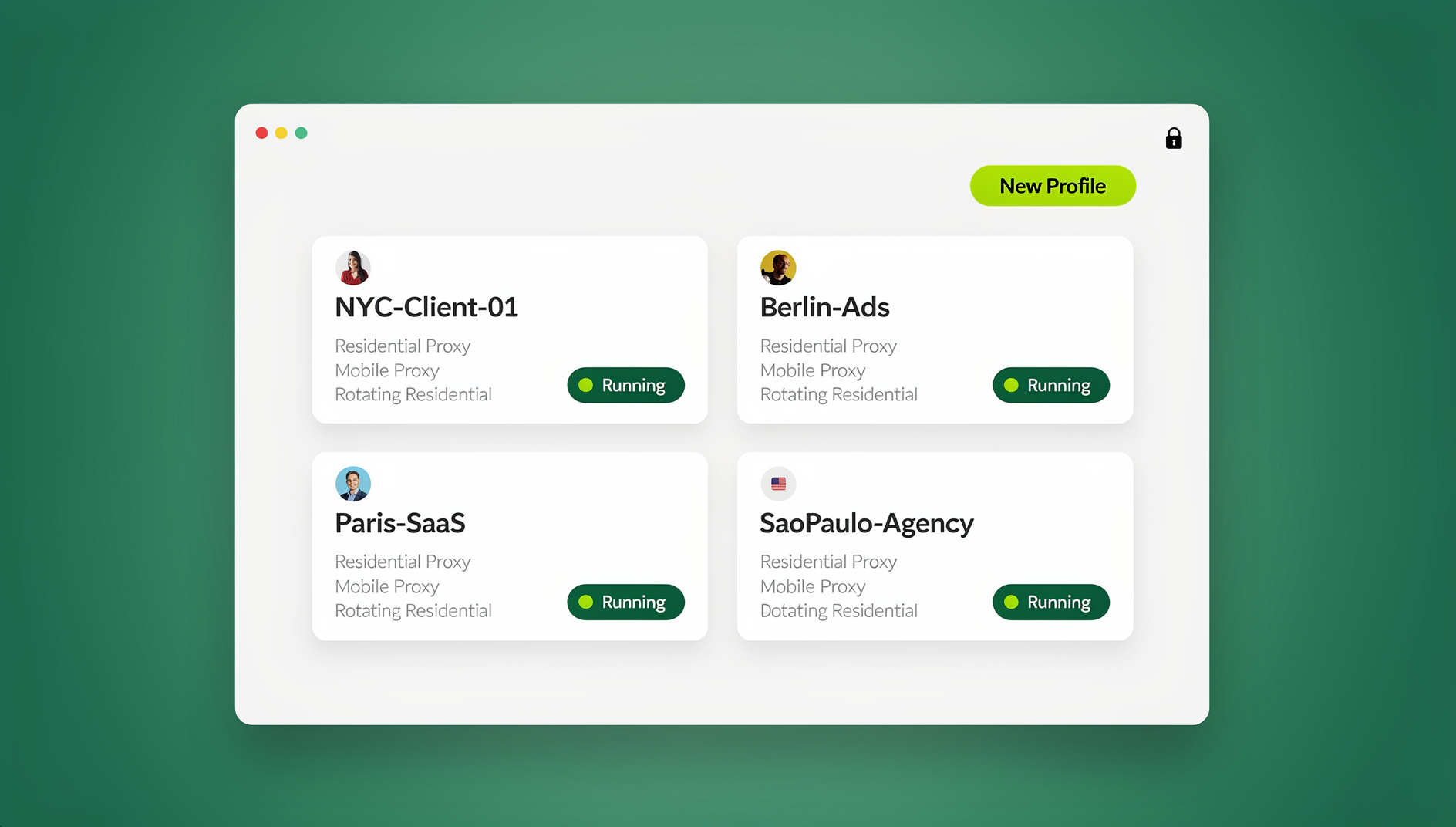
To overcome the limits of GTM’s native switcher, agencies use isolated browser profiles. By setting up distinct profiles, you can run multiple GTM sessions side-by-side in separate windows. Each profile maintains its own cookie database, local cache, and saved credentials, allowing you to log into different Google accounts simultaneously.
Using the best browser for multiple accounts can streamline GTM QA cycles by allowing team members to keep preview sessions open side-by-side without interference. Rather than relying on standard profiles that share local system metrics, tools like Sendwin Browser run on isolated, sandboxed environments. This ensures that when you run GTM’s Preview and Debug mode for Client A, the debug cookies do not interfere with Client B’s active preview tab, saving hours of troubleshooting time.
Using isolated profiles is the standard industry method to manage google tag manager multiple accounts without credentials collisions. Additionally, Sendwin’s cloud browser sessions allow you to share these configured environments with other team members. If a senior analyst needs to review a junior developer’s GTM draft, they can open the shared session in their browser, complete with active logins, without needing to input passwords or trigger two-factor authentication prompts.
Standardizing Tag Implementations with JSON Templates
Managing multiple GTM containers individually can lead to inconsistent tracking. To maintain quality across your portfolio, establish a template-based workflow. GTM supports importing and exporting container configurations as JSON files, which allows you to deploy standardized setups in minutes:
- Build a Master Template Container: Create a GTM container that includes all your standard tags, variables, and triggers. This typically includes GA4 configuration, Meta Pixel scripts, Google Ads conversion linkers, and standard user interactions (like scroll depth and outbound link clicks).
- Export the Master JSON: In the Admin section of your master container, click “Export Container”. Select the workspace version you want to export and save the JSON file to your system.
- Prepare the Client Container: Open the new client’s GTM container. Navigate to Admin and select “Import Container”. Choose the master JSON file you exported.
- Select Import Options: Choose whether to overwrite the existing workspace or merge the contents. We recommend selecting “Merge” and choosing “Rename conflicting tags” to prevent losing any custom setup the client already has in place.
- Update Client IDs: Once imported, navigate to the Variables section and update the constant variables (such as the GA4 Measurement ID or Meta Pixel ID) with the client’s specific tracking codes. This activates the entire tracking suite instantly.
User Access and Permission Levels
Security is paramount when managing client GTM accounts. GTM offers granular permissions at both the account and container levels. The table below outlines these permission levels and who they should be assigned to:
| Permission Level | Account Capabilities | Container Capabilities | Recommended User |
|---|---|---|---|
| Admin (Account) | Add/remove users, edit settings | Inherits full container control | Agency Directors, Client Owner |
| User (Account) | View account list only | Set per container | All agency staff and contractors |
| Publish (Container) | N/A | Create versions, edit tags, publish live | Senior Analytics Engineers, Lead Devs |
| Approve (Container) | N/A | Create versions, edit tags, approve drafts | Project Managers, QA Analysts |
| Edit (Container) | N/A | Edit workspaces, create tags (no publish) | Junior Developers, Marketing Assistants |
| Read (Container) | N/A | View tags, triggers, and variables only | Client Marketing Team, Auditors |
To coordinate user access across google tag manager multiple accounts, administrators must define precise roles for each team member. Always enforce the principle of least privilege. Junior team members should only have Edit permissions, preventing them from publishing untested changes directly to a live website. Only designated QA leads or senior developers should have Publish permissions. Also, remember to review user access lists quarterly and immediately revoke access for former employees or completed projects.
Programmatic Management via the GTM API
For large agencies managing hundreds of containers, manual updates are inefficient. The Google Tag Manager API v2 allows developers to automate tasks, ensuring consistency and saving time. You can write scripts to execute bulk actions across all your accounts:
For example, using the official Google API Client Library in Python, developers can authenticate using a Service Account or OAuth 2.0 to access the Tag Manager API. The script initializes the client, targets the GTM API endpoint, and loops through the accounts list:
# Programmatic GTM account listing example
from googleapiclient.discovery import build
from google.oauth2 import service_account

SCOPES = ['https://www.googleapis.com/auth/tagmanager.readonly']
creds = service_account.Credentials.from_service_account_file('credentials.json', scopes=SCOPES)
service = build('tagmanager', 'v2', credentials=creds)

# List GTM accounts accessible by this service account
accounts = service.accounts().list().execute()
for account in accounts.get('account', []):
    print(f"Account ID: {account['accountId']}, Name: {account['name']}")
This script allows agencies to verify account access in bulk, making it a foundation for automated tracking compliance checks across hundreds of active client properties. By writing a Python script using the GTM API, you can scan all managed containers, find the target tags, update the code blocks, and create new drafts in minutes. The GTM API also allows you to automate client onboarding by programmatically creating new GTM accounts, generating containers, and adding team users during the setup phase.
Server-Side GTM in Multi-Account Portfolios
Server-side tracking is becoming the industry standard due to privacy regulations and ad-blockers. In server-side GTM, a container runs in a cloud environment (typically Google Cloud Platform or Stape.io) rather than in the user’s browser. When managing multiple server-side containers, there are several key points to keep in mind:
First, isolate billing. Each client should have their own Google Cloud billing account linked to their GTM server container. This prevents your agency from accumulating costs for client traffic and ensures easy handoff if the client changes agencies. Second, configure custom domains. For server-side tracking to function as first-party data collection, you must map a custom subdomain (like tracking.clientdomain.com) to the server instance. Keep a central registry of these domain configurations to simplify troubleshooting. Third, monitor server performance: check server logs to ensure the cloud instances are scaling correctly during high-traffic events (such as Black Friday for e-commerce clients).
Transitioning client properties from client-side tracking to server-side tag management is a major undertaking for any agency. It requires setting up custom DNS records (such as an A or AAAA record pointing to the server’s IP address) for each client. By establishing custom tracking domains, you ensure that cookies are set in a first-party context, which bypasses modern browser protections like Apple’s Intelligent Tracking Prevention (ITP). Agencies must coordinate these DNS changes with each client’s IT department, making a unified tracking registry essential to monitor the setup status across all accounts.
Quality Assurance and Debugging Protocols
Deploying untested tags can break website layouts or lead to duplicate transaction tracking, corrupting client sales data. Establish a strict QA checklist before publishing any GTM version:
First, always run Preview Mode. When you click “Preview”, GTM opens Tag Assistant, which connects to the target website. Use isolated profiles to ensure Tag Assistant runs in the exact same session context as the GTM container, avoiding cookie conflicts. Second, verify tag firing triggers: click through the website and confirm that tags fire only on the correct actions (e.g., the purchases tag should fire only when the thank-you page is fully loaded). Third, check variable values: review the data layer values to ensure dynamic variables (like cart total or product SKU) are formatted correctly. Fourth, publish with descriptive logs: always name your GTM versions using a consistent format (like YYYY-MM-DD - GA4 Setup - DeveloperName) and write detailed notes describing what changed. This makes it easy to roll back if issues arise.
🏆 Send.win Verdict
Managing Google Tag Manager multiple accounts across clients and brands requires strict session isolation and organized user permissions. Relying on standard browsers leads to constant account switching and preview database conflicts. Sendwin Browser offers isolated sandboxed profiles and shared cloud sessions, allowing your agency team to run multiple client GTM dashboards and debug windows side-by-side with complete data separation.
Try Send.win free today — Get a 30-day free trial of our Pro or Team plans to simplify your agency tracking workflow.
Frequently Asked Questions
How many GTM accounts can one Google account access?
There is no official limit to the number of GTM accounts a single Google account can access. Large agencies frequently have access to hundreds of client GTM accounts using a single corporate login. GTM’s built-in search and filtering features help you navigate long account lists quickly.
Can I copy tags between GTM containers?
Yes. GTM does not support copying and pasting tags directly between containers, but you can export a container (or selected tags, triggers, and variables) as a JSON file and import it into another container. This allows you to transfer custom tracking configurations between setups.
Should I use one GTM account for all clients or separate accounts?
You should always use separate GTM accounts for each client. This ensures client data and access are isolated. If you put all client containers in a single GTM account, anyone with account-level permissions can view or modify other clients’ containers, posing a major security risk.
How do I manage GTM user access across many accounts?
For manual setups, maintain a centralized master spreadsheet tracking team permissions. For large portfolios, use the GTM API to programmatically list, add, or remove users. Utilizing isolated browser profiles like Sendwin Browser helps team members access accounts without sharing actual passwords.
What’s the difference between GTM accounts and containers?
An account represents a business entity or client and serves as the top-level organizational folder. A container holds the actual tracking configurations (tags, triggers, variables) for a specific website or app. An account can contain multiple containers (such as one for web and one for iOS).
Can multiple people work in one GTM container simultaneously?
Yes. Google Tag Manager supports workspaces, which are separate drafting environments. Multiple team members can work in different workspaces at the same time. When publishing, GTM prompts you to merge changes and resolve conflicts before creating a new live version.
Why does GTM log me out when switching Google accounts?
Standard web browsers store cookies in a single shared database. When you log into a different Google account to access another client’s GTM, the browser overwrites the active session cookies, logging you out of the first account. Running isolated profiles resolves this issue.
How can I audit tags across all my client containers at once?
You can use the GTM API to write custom scripts that scan all your containers programmatically. This script can list active tags, check for deprecated scripts, verify Google Analytics configurations, and generate an audit report, eliminating the need to review each container manually.