Why Every Chromebook User Needs a Cloud Browser
A cloud browser for Chromebook users solves the biggest limitation of ChromeOS: you can’t install desktop applications. Cloud browsers run isolated, fingerprint-managed browser profiles on remote servers and stream the session back to your Chromebook — no APK sideloading, no Linux container, no workarounds. You get antidetect-level privacy, multi-account management, and full browser isolation from a device that was designed to run only Chrome. Below is everything you need to set this up.
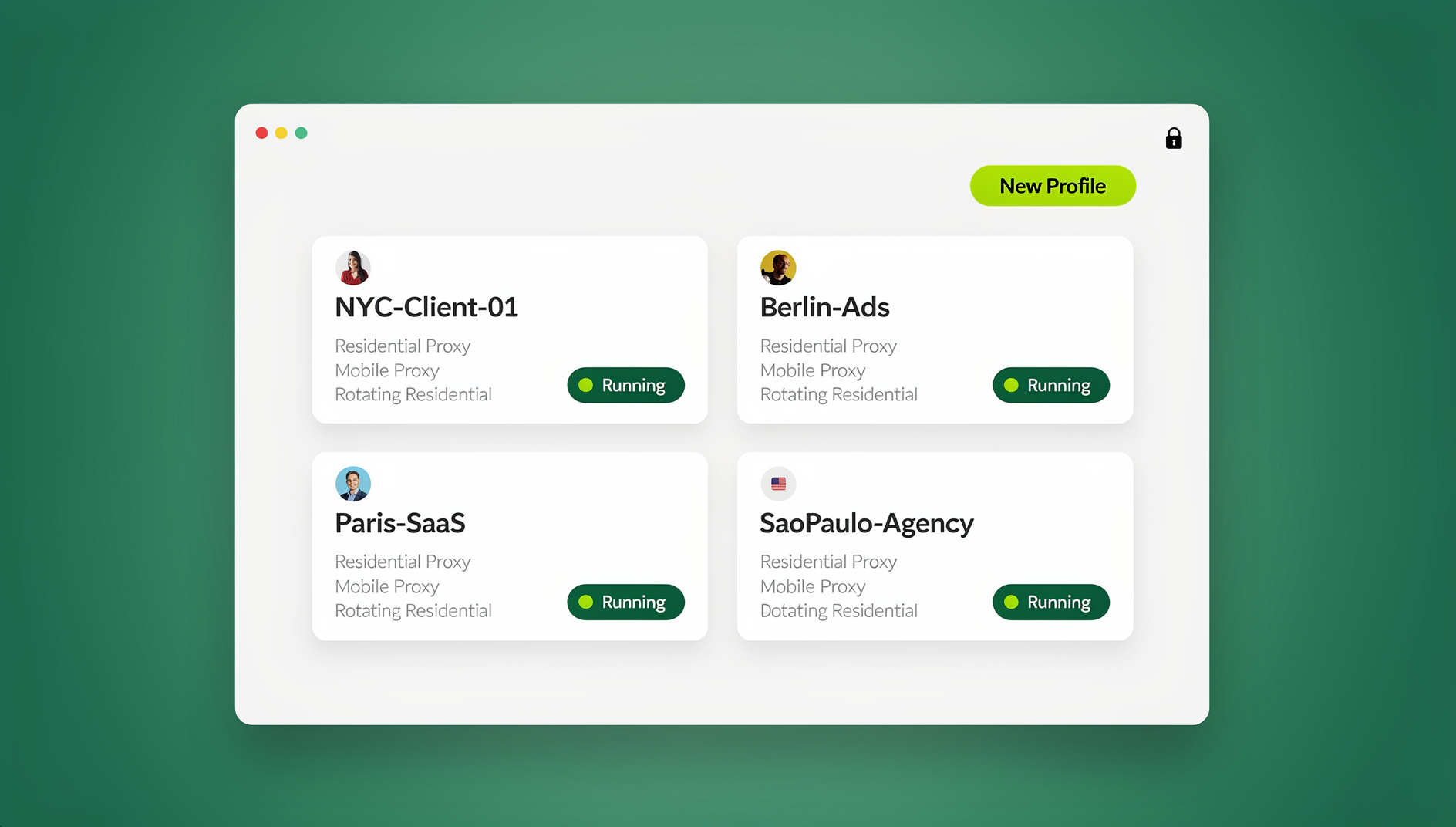
The Chromebook Problem: One Browser, One Identity
ChromeOS is built around a single browser — Google Chrome. That simplicity is the selling point, but it’s also the ceiling. Here’s what Chromebook users can’t do that desktop users take for granted:
- Install browser profile managers — tools like the Sendwin Browser desktop app, Multilogin, or GoLogin require Windows, macOS, or Linux installers. ChromeOS doesn’t run native .exe or .dmg files.
- Run truly isolated browser profiles — Chrome’s built-in profile switcher shares the same browser fingerprint across all profiles. Websites can link your accounts through canvas hashes, WebGL renderers, and other fingerprint signals.
- Separate browser fingerprints — every Chrome window on a Chromebook reports the same hardware, screen dimensions, installed fonts, and WebGL hash. There’s no native way to spoof these.
- Manage proxies per profile — ChromeOS uses a single system-level proxy. You can’t route different Chrome profiles through different IPs.
- Use automation frameworks — running Puppeteer or Playwright locally requires Node.js, which needs Linux (Crostini) support, and even then it’s limited by the container’s sandboxing.
For casual browsing, none of this matters. But if you manage multiple accounts, do freelance work across client platforms, or care about browser-level privacy, the Chromebook’s single-browser model is a wall.
What a Cloud Browser Does Differently
A cloud browser runs a full browser instance on a remote server and streams the session to your screen. Your Chromebook acts as a thin client — it displays the output and forwards your keyboard and mouse input, but the actual browsing happens on infrastructure you don’t need to maintain.
This is fundamentally different from Chrome’s built-in profiles or even Incognito mode. Each cloud browser profile is a separate, isolated environment with its own:
- Browser fingerprint — unique canvas hash, WebGL renderer, audio context, screen resolution, user-agent string
- Cookies and local storage — completely separated from every other profile
- Proxy and IP address — each profile can route through a different residential, datacenter, or mobile proxy
- Timezone and language — matched to the proxy’s geolocation for consistency
- Session persistence — your login states, bookmarks, and history carry over between sessions
Because everything runs remotely, your Chromebook’s specs are irrelevant. A $200 Chromebook gets the same session isolation as a $3,000 workstation running the desktop app.
How Send.win Cloud Sessions Work on Chromebook
Send.win offers two modes: the Sendwin Browser desktop app (for Windows, macOS, and Linux) and cloud browser sessions that run entirely in the cloud with no local install. The cloud sessions are the Chromebook play.
Step 1: Choose a Paid Plan or Try the Free Cloud Demo
Go to send.win from your Chromebook’s Chrome browser. Create an account — or try the free cloud demo first, which gives you a 3-minute preview without signup. You’ll have immediate access to cloud browser sessions.
Step 2: Create Your First Browser Profile
Inside the Send.win dashboard, create a new browser profile. Configure:
- Fingerprint preset — choose from pre-built fingerprint configurations or customize individual parameters
- Proxy — assign a residential or datacenter proxy, or use Send.win’s included proxy bandwidth (5 GB on Pro, 20 GB on Team)
- Timezone and language — auto-matched to your proxy’s location for consistency
- Operating system fingerprint — the cloud session can emulate Windows, macOS, or Linux browser signatures regardless of your Chromebook
Step 3: Launch the Cloud Session
Click launch. The cloud browser session opens in your Chromebook’s browser — it looks and feels like a regular browser window, but it’s running remotely. Your browser fingerprint inside that session is completely different from your Chromebook’s real Chrome fingerprint.
Step 4: Work, Close, Resume
Log into your accounts, do your work, and close the session when you’re done. Your cookies, login states, and browsing data persist in the cloud. Next time you launch that profile — from your Chromebook, a phone, or any other device — everything is exactly where you left it.
Use Cases: What Chromebook Users Can Finally Do
Work and Personal Account Separation
ChromeOS makes it tempting to stay logged into everything in one browser. Cloud browser profiles let you create hard boundaries between work and personal browsing. Your employer’s Google Workspace stays in one profile with its own fingerprint and IP. Your personal email, banking, and social media live in another. No cross-contamination, no accidental data leaks.
Freelancing Across Multiple Client Platforms
Freelancers often manage accounts on Upwork, Fiverr, social media scheduling tools, and client ad platforms simultaneously. Platform terms of service frequently prohibit multiple accounts, and using the same browser fingerprint across client accounts can trigger flags. Cloud browser profiles give each client engagement its own isolated identity — separate fingerprint, separate proxy, separate cookies.
Managing Multiple Social Media Accounts
Social media managers running accounts for multiple brands need isolation. Platforms like Instagram, TikTok, and Facebook detect multiple account usage through fingerprinting, IP correlation, and cookie linking. A cloud browser profile per brand account eliminates these linkage vectors. Each profile looks like a different person on a different device in a different location.
Privacy-First Browsing
Even if you only use one account per platform, a cloud browser on your Chromebook adds a privacy layer that ChromeOS doesn’t provide natively. Your real IP, hardware fingerprint, and location stay hidden behind the cloud session’s configuration. This is safe browsing at a level that Incognito mode can’t touch — Incognito hides your history from the next user of the device, but it doesn’t change your fingerprint or IP.
E-Commerce and Dropshipping
Running multiple seller accounts on Amazon, eBay, or Shopify from a Chromebook becomes practical with cloud browser profiles. Each storefront gets its own fingerprint and proxy, preventing platform algorithms from linking your accounts. The profiles persist between sessions, so you don’t lose your login states or cart configurations.
Ad Account Management
Advertising platforms (Google Ads, Meta Ads) are aggressive about account-level enforcement. If one ad account gets flagged, linked accounts can be banned in a chain reaction. Cloud browser profiles break the linkage. Each ad account runs in an isolated environment with a unique fingerprint and IP, protecting your other accounts from cascading bans.
Why Chrome’s Built-In Profiles Aren’t Enough
Chrome lets you create multiple user profiles, and ChromeOS supports multiple Google accounts. But these profiles share the same underlying browser engine, hardware fingerprint, and IP address. Here’s what that means in practice:
| Feature | Chrome Profiles | Cloud Browser Profiles |
|---|---|---|
| Cookie Isolation | Yes — separate cookie jars | Yes — fully isolated storage per profile |
| Fingerprint Isolation | No — same canvas, WebGL, fonts, screen size | Yes — unique fingerprint per profile |
| IP Isolation | No — all profiles share one IP | Yes — per-profile proxy assignment |
| Timezone Spoofing | No | Yes — matched to proxy geolocation |
| OS Fingerprint | Always ChromeOS | Configurable — Windows, macOS, or Linux |
| Team Sharing | Not available | Share profiles with team members |
| Automation API | Limited via Crostini/Linux | No |
The gap is especially clear on fingerprinting. Websites that use canvas fingerprinting, WebGL fingerprinting, or AudioContext fingerprinting will see all your Chrome profiles as the same device. Cloud browser profiles show as completely different devices.
Chromebook Limitations That Cloud Browsers Bypass
No Native App Installation
ChromeOS can’t run .exe, .dmg, or .AppImage files. Desktop antidetect browsers are off-limits unless you enable the Linux (Crostini) container — which not all Chromebooks support, and which adds complexity. Cloud browser sessions sidestep this entirely: you access them through Chrome, the browser your Chromebook already runs.
Limited Extension Isolation
Chrome extensions run across all tabs in a profile. Privacy extensions like uBlock Origin or Canvas Blocker apply globally — you can’t configure them per-tab. Cloud browser profiles let you have different extension configurations (or no extensions at all) per profile, since each profile is a separate browser instance.
Hardware Constraints
Budget Chromebooks run on ARM processors with 4 GB of RAM. Running a virtual machine or a Linux container browser alongside Chrome is sluggish at best, unusable at worst. Cloud browser sessions run on remote servers, so your Chromebook’s hardware doesn’t bottleneck the experience.
Single-OS Fingerprint
Every website you visit from your Chromebook sees a ChromeOS user-agent string. There’s no way to natively make it look like you’re browsing from Windows or macOS. Cloud browser profiles can emulate any OS fingerprint, which is critical when platforms flag unusual OS-browser combinations.
Remote Browser Isolation: The Security Layer
Cloud browsers are a form of remote browser isolation (RBI). Originally an enterprise security concept, RBI keeps web content — including malicious scripts, drive-by downloads, and phishing payloads — contained on the remote server. Your Chromebook never directly executes untrusted web code.
For Chromebook users, this adds a layer of protection that ChromeOS’s existing sandboxing doesn’t cover. ChromeOS isolates each Chrome tab in a sandbox, but that sandbox still runs on your device with your real network identity. An RBI-based cloud browser adds geographic and identity separation on top of code-level sandboxing.
Automation for Chromebook Users
One of the less obvious benefits: cloud browsers give Chromebook users access to full browser sessions without local installs. Send.win’s cloud browser, available on both Pro ($19/month, $83.88/year) and Team ($49/month, $251.88/year) plans, lets you run isolated browser profiles with their own cookies, storage, fingerprint settings and proxy.
The workflow looks like this: open your Send.win cloud browser session from your Chromebook, and each profile runs with its own cookies, storage, fingerprint settings and proxy. Your Chromebook handles the browsing; Send.win handles the isolated profile sessions.
What About Android Apps on Chromebook?
Some Chromebooks support Android apps via the Play Store. There are a few Android browsers that offer basic privacy features — Brave, Firefox Focus, DuckDuckGo Browser. But none of them provide antidetect-level fingerprint management, per-profile proxies, or session persistence across devices.
Android browsers on ChromeOS also share the same underlying network stack, so IP-based tracking applies to all of them equally. And they can’t match the profile-level isolation that a cloud browser provides — each Android browser is still one identity, not many.
Pricing for Chromebook Users
Send.win’s pricing works the same regardless of your device:
- Free account: 10 minutes a day of cloud browsing and 1 saved session, no credit card required
- Pro plan: $19/month ($83.88/year) — 150 profiles, 5 GB proxy bandwidth
- Team plan: $49/month ($251.88/year) — 500 profiles, 20 GB proxy bandwidth, 16 team seats
Compare this to the alternative: buying a Windows laptop ($400-$800) or a MacBook ($999+) just to run desktop antidetect software. A cloud browser on your existing Chromebook is dramatically more cost-effective.
🏆 Send.win Verdict
Chromebook users no longer have to choose between convenience and privacy. Send.win’s cloud browser sessions deliver per-profile fingerprint isolation, per-profile proxies, and multi-account management directly through your Chromebook’s Chrome browser — no app install, no Linux container, no workarounds. With up to 500 profiles and team sharing built in, Send.win turns your $200 Chromebook into a multi-profile powerhouse.
Try Send.win today — paid plans with a 7-day money-back guarantee on your first card purchase, works on any Chromebook.
Frequently Asked Questions
Do cloud browsers work on all Chromebooks?
Yes. Cloud browser sessions run through your Chromebook’s built-in Chrome browser — no app installation or Linux support required. Any Chromebook with a web browser and internet connection can access cloud browser profiles. This includes budget ARM-based Chromebooks, older models, and school-issued devices.
Run Cloud Browser For Chromebook Users in the Cloud With Send.win
Send.win’s cloud browser runs your isolated profiles on remote infrastructure — open a clean, fingerprint-isolated session from any device without installing anything:
- Instant cloud sessions – launch an isolated browser in seconds, no local install
- Isolated profiles – separate fingerprint, cookies, and storage per session
- Cloud sync & profile sharing – pick up the same profiles on the desktop app (Windows, macOS, Linux) or share them with your team
- Built-in residential proxies – with automatic timezone and locale matching
You can try it right now: the Send.win demo browser opens an isolated cloud session directly in this browser tab. The cloud demo is free, and paid plans start at $19/month — see pricing.
Is a cloud browser faster than using a VPN on Chromebook?
They serve different purposes. A VPN changes your IP address but doesn’t alter your browser fingerprint. A cloud browser changes both your IP (via per-profile proxies) and your fingerprint. Speed-wise, cloud browser sessions add some latency compared to local browsing, but the trade-off is complete identity isolation — something a VPN alone can’t provide.
Can I use a cloud browser for online banking on my Chromebook?
Yes, and it can actually enhance security. A dedicated cloud browser profile for banking isolates your financial sessions from your general browsing. Even if your regular browsing session is compromised, your banking profile has separate cookies, a different fingerprint, and a different IP. However, always ensure you’re using a reputable cloud browser provider and connecting via HTTPS.
How many profiles can I run at the same time on a Chromebook?
Since cloud browser sessions run on remote servers, your Chromebook’s hardware doesn’t limit simultaneous profiles. The limit is set by your Send.win plan — Pro supports 150 profiles, Team supports 500. You can switch between active sessions as easily as switching browser tabs.
Do I need to enable Linux (Crostini) on my Chromebook?
No. Cloud browser sessions are accessed through your standard Chrome browser. You don’t need to enable Linux, install any containers, or modify your ChromeOS settings. This is one of the main advantages over trying to run desktop browser profile software on a Chromebook — there’s nothing to install.
Can I share cloud browser profiles with my team from a Chromebook?
Yes. Send.win’s Team plan includes 16 seats and profile sharing. Team members can access shared profiles from any device — including Chromebooks. Role-based permissions control who can view, edit, or launch specific profiles. All profile data syncs through the cloud, so there’s no file transfer or USB drive sharing needed.
Will websites know I’m using a cloud browser?
Well-configured cloud browser profiles are designed to appear as standard browsers on desktop operating systems. Send.win’s fingerprint management ensures each profile presents a consistent, realistic fingerprint — including OS, browser version, screen resolution, and hardware identifiers. The session doesn’t reveal that it’s running on cloud infrastructure.
What happens if my Chromebook loses internet during a cloud browser session?
The cloud browser session continues running on the remote server for a short grace period. When you reconnect, you can typically resume where you left off. Your profile data — cookies, login states, bookmarks — is always saved in the cloud regardless of disconnections, so nothing is lost.