Why Penetration Testers Need Cloud Browsers
A cloud browser for penetration testing runs your recon, web app testing, and social engineering assessments in a remote, isolated environment — keeping your local workstation clean of target artifacts, giving you unique browser fingerprints per engagement, and letting you test from any geographic location through per-session proxies. Instead of contaminating your host machine with cookies, cached credentials, and forensic traces from client targets, every session stays sandboxed in the cloud and can be destroyed with a single click when the engagement ends.
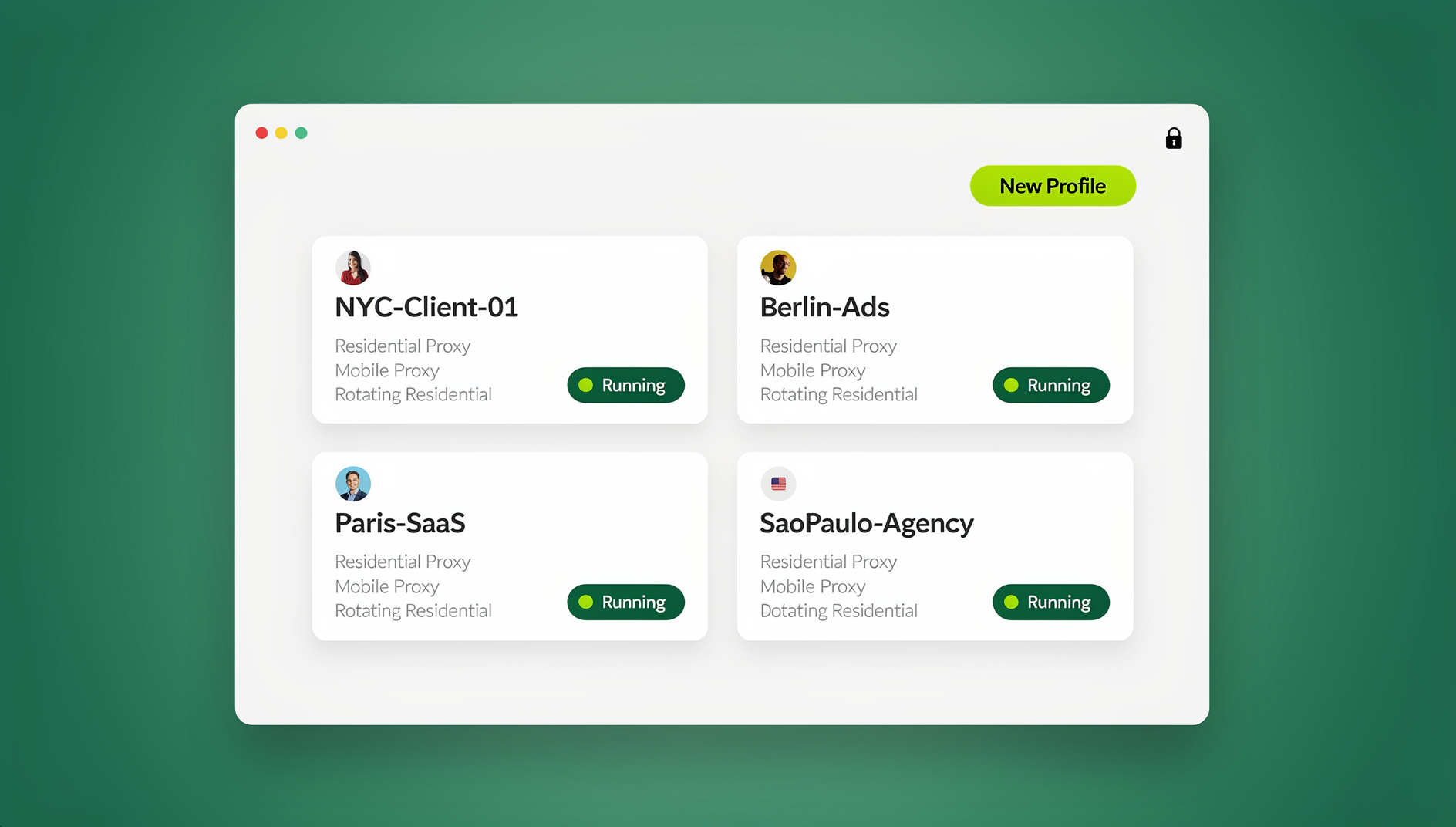
The Problem with Local Browsers in Pentesting
Most penetration testers run recon and web application testing from their local browser or a VM. Both approaches create problems that a cloud browser for penetration testing eliminates.
Local Machine Contamination
When you browse a client’s web application from your local machine, your browser accumulates target-specific data: cookies, session tokens, cached responses, autofill data, and downloaded files. Even in private browsing mode, DNS cache entries, swap file fragments, and browser crash recovery files can leak engagement data.
For pentesters handling multiple concurrent engagements — or working under strict data isolation requirements in contracts — this contamination creates compliance headaches. Post-engagement cleanup is manual, error-prone, and never guaranteed to be complete.
Fingerprint Consistency Blows Your Cover
Web application firewalls (WAFs), bot detection systems, and security monitoring tools fingerprint browsers by canvas rendering, WebGL output, audio context, installed fonts, and dozens of other signals. When your Kali VM presents the same fingerprint across every target, you are instantly flaggable and easily correlated between engagements.
This matters especially during social engineering assessments and red team operations where stealth is the objective. If the target’s SOC notices the same unusual fingerprint hitting their login portal, phishing pages, and internal tools, they can block or trace you before the assessment achieves its objectives. Understanding how these signals work is essential — our browser fingerprint explained guide covers the full technical breakdown.
VM Overhead and Management Burden
The traditional answer is “use a VM.” But managing VMs for browser-based testing is heavyweight: you need to maintain OS images, handle snapshots, allocate RAM and disk, and ensure each VM has the right browser version and extensions. Spinning up a fresh VM for a quick recon task adds 10-15 minutes of overhead. Cloud browser sessions launch in seconds.
How Cloud Browsers Solve Pentesting Challenges
Complete Session Isolation
Each cloud browser session runs in its own isolated container. Cookies, storage, cache, and credentials from one engagement cannot leak into another. This is true isolation — not just separate browser profiles sharing the same process space, but separate runtime environments on remote infrastructure.
For pentesters, this means:
- Engagement A’s session tokens never appear in Engagement B’s browser
- No risk of accidentally authenticating to the wrong client’s portal
- Post-engagement data destruction is complete and verifiable
- Client audit requests for data handling are easy to satisfy
For a deep dive into how session isolation works technically, see our session isolation guide.
Unique Browser Fingerprints Per Engagement
Cloud browsers generate distinct fingerprints for each session — covering canvas, WebGL, audio context, navigator properties, screen resolution, timezone, language, and installed fonts. This means your recon against Target A presents a completely different browser identity than your recon against Target B.
Why this matters for pentesting:
| Scenario | Without Cloud Browser | With Cloud Browser |
|---|---|---|
| WAF fingerprint correlation | Same fingerprint flagged across scans | Each session has unique fingerprint — no correlation possible |
| Social engineering recon | Target’s SIEM correlates your browsing across their properties | Each property visited from different fingerprint and IP |
| Multi-engagement separation | Accidental cross-contamination of client data | Full isolation — no shared state between engagements |
| Red team persistence | Burned fingerprint compromises entire operation | Destroy and create new session — fresh identity in seconds |
| Bug bounty platform testing | Platform links your accounts/activity | Separate sessions with distinct identities per program |
Per-Session Proxy for Geographic Testing
Many web applications behave differently based on the user’s geographic location — serving different content, applying different access controls, or redirecting to region-specific endpoints. Cloud browsers let you assign a proxy per session, effectively testing from any country without managing your own proxy infrastructure.
Practical applications:
- Geo-restricted access controls: Test whether an application properly enforces geographic restrictions by accessing it from the target region
- CDN behavior analysis: Verify that edge-cached content serves the same security headers across regions
- Regional compliance testing: Check that GDPR consent banners, CCPA notices, or other region-specific features render correctly
- DNS-based access controls: Test applications that use GeoDNS to route users to different backends
Zero Forensic Trace on Your Machine
Post-engagement, your workstation holds nothing from the target. No cached login pages, no stored credentials in the browser’s password manager, no DNS cache entries pointing to the client’s staging environment. This simplifies compliance with engagement contracts that require data destruction and makes your machine clean for the next client without any manual sanitization.
Pentesting Use Cases in Detail
Web Application Security Testing
For manual web app testing — authentication bypass attempts, session management testing, access control verification — cloud browsers provide a clean, isolated environment for each test scenario. You can maintain multiple simultaneous sessions: one logged in as an admin, another as a regular user, a third as an unauthenticated visitor, each with its own fingerprint and proxy.
This is particularly useful for testing multi-tenant applications where you need to verify that Tenant A’s data is not accessible from Tenant B’s session. Each cloud browser session provides genuine isolation rather than relying on separate browser profiles that share process memory.
OSINT and Reconnaissance
Open-source intelligence gathering is where cloud browsers shine. OSINT researchers need to:
- Visit target websites without revealing their identity or organization
- Monitor social media profiles without triggering “someone viewed your profile” notifications tied to their real account
- Access data brokers and people-search engines without leaving a trace
- Archive web content that may be taken down (using screenshots and exports from the cloud session)
- Research dark web marketplaces and forums without exposing their local machine
Each OSINT task can run in a separate cloud browser session with its own residential proxy, making it nearly impossible for the target to detect that the same researcher is conducting reconnaissance across multiple platforms. Cloud browsers are also effective at getting past anti-bot systems during OSINT — our bypass anti-bot detection guide covers the techniques.
Social Engineering Assessments
Social engineering engagements often require setting up convincing online personas — LinkedIn profiles, email accounts, social media presence — to establish credibility before contact. Cloud browsers let you build and maintain each persona in a separate, isolated session with:
- A unique browser fingerprint matching the persona’s supposed location and device
- A dedicated proxy in the persona’s claimed geographic area
- Separate cookies and login sessions that never cross with your real identity
- Independent browsing history that platforms cannot correlate with your other personas
When the engagement ends, you destroy the sessions. No trace of the personas remains on your machine, and the cloud-side data is wiped.
Phishing Campaign Analysis
When testing an organization’s susceptibility to phishing (with authorization), pentesters often need to interact with phishing infrastructure — their own or known-malicious examples for training purposes. Opening phishing kits and credential harvesting pages in a cloud browser ensures that any malicious JavaScript, drive-by downloads, or exploit attempts execute in the remote sandbox, not on your workstation.
This also applies to defensive work: analyzing suspected phishing emails by clicking their links in a cloud browser session reveals the phishing page’s behavior without risking your local machine.
API and Automation Testing
Modern web applications expose APIs that pentesters need to test for authentication flaws, injection vulnerabilities, and rate limiting. Cloud browsers with automation support let you script browser-based API testing using tools like Selenium, Puppeteer, or Playwright — each test running in an isolated cloud session with its own fingerprint and proxy.
This is valuable for testing anti-automation defenses: does the application’s bot detection flag automated requests? By running the automation through a cloud browser with a unique, realistic fingerprint, you can test whether the application detects automation or only detects known bad fingerprints. For more on how browser isolation layers with proxy management, check our proxy browsers overview.
Cloud Browsers vs. Traditional Pentesting Environments
| Feature | Cloud Browser | Local VM (Kali/Commando) | Docker Container |
|---|---|---|---|
| Setup time | Seconds | 10-15 minutes (from snapshot) | 1-2 minutes |
| Fingerprint uniqueness | Unique per session — canvas, WebGL, audio, fonts | Same VM fingerprint every time | Headless fingerprint easily detected |
| Geographic flexibility | Per-session proxy, any country | Requires VPN or proxy chain setup | Requires external proxy |
| Local forensic trace | Zero | VM disk image contains everything | Container image and volumes persist |
| Multi-engagement isolation | Complete — separate cloud environments | Requires separate VMs or careful snapshots | Requires separate containers |
| Resource consumption | Minimal — stream to thin client | High — RAM, CPU, disk per VM | Moderate |
| Automation support | Selenium/Puppeteer/Playwright via API | Full local tool access | Full tool access |
| Collaboration | Share profiles with team members | Export/import VM images (large files) | Push/pull container images |
When to use each: Cloud browsers excel at browser-based recon, web app testing, OSINT, and social engineering — tasks where fingerprint management, geographic flexibility, and data isolation matter most. Local VMs remain necessary for network-layer testing (Nmap, Metasploit, Burp Suite’s active scanning) that requires raw network access. The best pentesting setup combines both: cloud browsers for browser-based tasks, local VMs for network-layer tools.
Building a Pentesting Workflow with Send.win
Send.win provides both cloud browser sessions (no local install required) and the Sendwin Browser desktop app. For penetration testing, the combination is powerful:
Engagement Setup
- Create a profile group per engagement — name it with the client code and engagement dates
- Assign dedicated proxies — route each profile through a proxy in the target’s geographic region. Pro plans include 5GB proxy bandwidth; Team plans include 20GB
- Configure fingerprints — each profile gets auto-generated unique fingerprints, but you can customize OS, browser version, screen resolution, and timezone to match your test scenario
- Set up profiles — create isolated browser profiles with their own cookies, storage, fingerprint settings and proxy for manual testing
During the Engagement
- Parallel sessions: Run up to 150 isolated profiles simultaneously on Pro ($19/mo, $6.99/mo annual) or 500 on Team ($49/mo, $20.99/mo annual)
- Cloud browser sessions: Access from any device without installing software — useful when testing from client-site machines that you cannot install tools on
- Team collaboration: Share specific profiles with team members (up to 16 seats on Team plan) without exposing the full account — useful for distributed red teams
- Manual testing: Run repetitive tests across multiple profiles, each hitting the target from a different fingerprint and location
Run Cloud Browser For Penetration Testing in the Cloud With Send.win
Send.win’s cloud browser runs your isolated profiles on remote infrastructure — open a clean, fingerprint-isolated session from any device without installing anything:
- Instant cloud sessions – launch an isolated browser in seconds, no local install
- Isolated profiles – separate fingerprint, cookies, and storage per session
- Cloud sync & profile sharing – pick up the same profiles on the desktop app (Windows, macOS, Linux) or share them with your team
- Built-in residential proxies – with automatic timezone and locale matching
You can try it right now: the Send.win demo browser opens an isolated cloud session directly in this browser tab. The cloud demo is free, and paid plans start at $19/month — see pricing.
Post-Engagement Cleanup
- Export any evidence needed for the engagement report (screenshots, network logs)
- Delete the engagement’s profile group — all cloud-side data is destroyed
- Your local machine retains zero engagement artifacts
- Client data isolation requirements are satisfied with verifiable deletion
Scripted Recon Example
Using Send.win’s cloud browser profiles, you can carry out reconnaissance across multiple isolated profiles. Each profile keeps its own cookies, storage, fingerprint settings and proxy. A typical workflow creates multiple profiles with different proxies and fingerprint settings, then works through each profile in turn. The target sees traffic from multiple distinct “users” in different locations. All results stay in the cloud environment, and the profiles can be destroyed after data collection.
🏆 Send.win Verdict
For penetration testers who need isolated, fingerprint-unique browser sessions with per-engagement proxy assignment, Send.win delivers the exact workflow security professionals need. Each profile keeps its own cookies, storage, fingerprint settings and proxy. Cloud browser sessions mean you can run assessments from client sites without installing anything. At $19/mo (Pro), it costs less than a single month of VM hosting for equivalent isolation.
Try the free Send.win cloud demo — a 3-minute preview without signup, or 10 minutes a day with a free account.
Frequently Asked Questions
Is using a cloud browser for penetration testing legal?
Cloud browsers are legal commercial tools. The legality depends entirely on whether you have authorization to test the target — the same legal framework that governs all penetration testing. Using a cloud browser versus a local browser does not change your legal obligations. Always ensure you have a signed scope agreement, rules of engagement, and written authorization before testing any target.
Can targets detect that I’m using a cloud browser?
Quality cloud browsers with proper fingerprint management are extremely difficult to detect. The browser presents a realistic, unique fingerprint — not the uniform Tor Browser fingerprint or the obvious headless Chrome signals that WAFs flag instantly. The key is using residential proxies rather than data center IPs, which some aggressive WAFs can identify. Send.win’s per-session proxy assignment with included bandwidth makes this straightforward.
How does a cloud browser compare to Burp Suite’s built-in browser?
Different tools for different purposes. Burp Suite’s embedded browser is designed for intercepting and modifying HTTP traffic — it’s an attack tool. A cloud browser is designed for realistic browsing with fingerprint isolation — it’s a stealth and isolation tool. Use Burp for active testing (injections, parameter manipulation), and cloud browsers for recon, OSINT, and social engineering where you need to look like a normal user. Many pentesters proxy their cloud browser through Burp for the best of both worlds.
Can I run exploit frameworks through a cloud browser?
Cloud browsers are designed for browsing — rendering web pages and executing JavaScript. They are not replacements for network-layer exploit frameworks like Metasploit. However, for browser-based exploits (XSS, CSRF, clickjacking testing), cloud browsers are excellent because each session provides a realistic browser environment. For network-layer testing, continue using local VMs or dedicated attack infrastructure.
How many simultaneous sessions can I run for large-scope engagements?
Send.win’s Pro plan supports up to 150 profiles, and the Team plan supports 500. Each profile is a fully isolated browser environment with its own fingerprint, cookies, and proxy. For most engagements, you will use far fewer — perhaps 5-10 profiles for different test scenarios. The high limits become relevant for large-scope red team operations or when running automated test scripts across many fingerprints in parallel.
What about network-level penetration testing?
Cloud browsers handle the browser layer — HTTP/HTTPS requests, JavaScript execution, DOM interaction. For network-level testing (port scanning, service enumeration, protocol fuzzing), you still need dedicated tools like Nmap, Masscan, or custom scripts running from your local environment or a VPS. The ideal pentesting setup uses cloud browsers for web-layer work and separate infrastructure for network-layer work, with no overlap between the two.
Can I use cloud browser automation for fuzzing web applications?
Yes. Create multiple cloud browser profiles with different fingerprint settings, then work through your fuzzing payloads in each one. The target sees requests from diverse “users” rather than a single source. This is particularly effective for testing client-side input validation and JavaScript-heavy applications where headless HTTP tools miss vulnerabilities that only manifest in a real browser.
How do I handle evidence preservation for engagement reports?
Before destroying engagement profiles, export all necessary evidence: screenshots, saved pages, network activity logs, and any captured responses. Cloud browser platforms typically support screenshot export and page saving. Store exported evidence in your encrypted engagement folder, then destroy the cloud browser profiles — clean separation between evidence and browsing environment.