Why Was Your Amazon Seller Account Deactivated for a Related Account?
If your Amazon seller account deactivated related account notice just arrived, it means Amazon’s systems detected a link between your account and another seller account — possibly one that was previously suspended, owes money, or violated policies. Amazon connects accounts through shared IP addresses, browser fingerprints, cookies, device IDs, payment methods, and even matching physical addresses. Below is a complete recovery plan: what triggered the deactivation, how to write a winning appeal, and how to prevent this from ever happening again.
What “Related Account” Actually Means to Amazon
Amazon’s seller platform enforces a strict one-account-per-seller policy. When Amazon says your account is “related” to another, it means their automated systems found overlapping data points that link your account to a different seller identity. This isn’t a manual review — it’s algorithmic pattern matching across dozens of signals.
The Signals Amazon Uses to Link Accounts
| Signal | What Amazon Tracks | Risk Level |
|---|---|---|
| IP Address | Every IP you’ve ever logged in from, including VPNs and shared WiFi | 🔴 High |
| Browser Fingerprint | Canvas hash, WebGL renderer, installed fonts, screen resolution, timezone, user-agent | 🔴 High |
| Cookies & Local Storage | Amazon tracking cookies that persist across accounts in the same browser | 🔴 High |
| Device ID | Hardware identifiers from the device you access Seller Central on | 🔴 High |
| Payment Method | Bank accounts, credit cards, billing names | 🔴 High |
| Physical Address | Business address, return address, ship-from address | 🟡 Medium |
| Phone Number | Verification phone numbers shared between accounts | 🟡 Medium |
| Product Listings | Identical product images, descriptions, or UPC/EAN codes reused | 🟡 Medium |
| Email Patterns | Similar email addresses or emails from the same domain | 🟢 Low-Medium |
The critical thing to understand is that Amazon doesn’t need all of these to match. Even two or three overlapping signals — say, the same IP address and a matching browser fingerprint — are enough to trigger a “related account” flag. Understanding what a browser fingerprint reveals about you is the first step toward avoiding this.
Why Amazon Deactivates for Related Accounts
Policy Violations on the Linked Account
The most common trigger: Amazon finds that your account is related to another account that was previously suspended for policy violations — counterfeit complaints, review manipulation, listing abuse, or IP infringement. Even if you’ve never violated a policy yourself, the association is enough. Amazon assumes that if one account was problematic, the related account is a circumvention attempt.
Multiple Accounts Without Approval
Amazon requires explicit approval to operate more than one seller account. If you created a second account without going through the formal multi-account request process, Amazon treats it as a policy violation — even if both accounts are legitimate businesses with different products and different owners.
Shared Environment with Another Seller
This is the scenario that catches innocent sellers. You share a home, office, or WiFi network with someone who also sells on Amazon. Or you used a shared computer — a family PC, a coworking space machine, or a VA’s laptop that they also use for another client’s Amazon account. Amazon’s systems can’t tell the difference between “two people who happen to share an IP” and “one person operating two accounts.”
Automated False Positives
Amazon’s detection is aggressive and errs on the side of caution. VPN usage, corporate NAT (where hundreds of users share one public IP), hotel WiFi, and even ISP-level carrier-grade NAT can create false “related account” matches. Amazon’s appeal process exists specifically because the automated system generates a meaningful number of false positives.
Recovery: How to Appeal a Related Account Deactivation
Step 1: Don’t Panic — and Don’t Create a New Account
Creating a new account after a deactivation is the worst thing you can do. Amazon will immediately link the new account to the deactivated one (same device, same IP, same payment info) and permanently ban both. Your only path forward is a successful appeal on the original account.
Step 2: Understand What Amazon Is Alleging
Read the deactivation notice carefully. Amazon will specify “related account” but may not tell you which account yours is linked to. Think through every possible connection:
- Did a family member, roommate, or business partner ever have an Amazon seller account?
- Did you ever log into Seller Central from a shared computer, public WiFi, or a VA’s machine?
- Did you use the same bank account, credit card, or business address for multiple accounts?
- Did you ever create a test account or a second account you forgot about?
Step 3: Write Your Plan of Action (POA)
Amazon’s appeal process requires a Plan of Action — a structured document that addresses the root cause, the corrective actions you’ve taken, and the preventive measures you’ll implement. Here’s a proven template:
Plan of Action Template
Subject: Appeal for Account [Account ID] — Related Account Deactivation
1. Root Cause
Identify the specific connection Amazon found. Be honest and specific:
- “My business partner [Name] previously operated a seller account [Account ID, if known] from the same office network and computer. That account was closed in [month/year] for [reason, if known]. I was unaware that using the same network and device would create a linkage.”
- “I created a second account on [date] to sell products in a different category, not realizing that Amazon requires formal approval for multiple accounts.”
2. Corrective Actions Taken
- Permanently closed the related account (provide evidence if possible)
- Changed to a dedicated internet connection with a unique IP address
- Set up a separate device exclusively for this Amazon account
- Separated all payment methods and business registration details
- Cleared all browser data and cookies from previous sessions
3. Preventive Measures
- Implemented isolated browser profiles with unique fingerprints for Amazon access
- Assigned a dedicated IP address that no other Amazon seller uses
- Established internal procedures to prevent any shared access to Seller Central
- Set up regular compliance audits of account access practices
Step 4: Submit Supporting Evidence
Attach documents that prove your identity and the legitimacy of your business:
- Government-issued photo ID
- Business license or registration documents
- Utility bills showing a unique business address
- Bank statements showing a separate business account
- If applicable: proof that the related account belonged to a different person (e.g., their ID, a lease showing a different tenant at the same address)
Step 5: Submit and Follow Up
Submit your POA through Seller Central’s Performance Notifications or via email to [email protected]. Response times vary from 48 hours to several weeks. If your first appeal is denied:
- Revise the POA with more specific details and stronger evidence
- Address any specific points Amazon raised in the denial
- You typically get 2-3 appeal attempts before the case is escalated to final review
- Consider hiring a professional Amazon reinstatement service if your second appeal fails
Prevention: How to Never Get Flagged Again
Use Isolated Browser Profiles
The single most effective prevention measure is running each Amazon seller account in a completely isolated browser profile with a unique fingerprint. This means separate cookies, separate canvas hash, separate WebGL renderer, separate timezone, and separate device identifiers. Standard browser incognito mode does NOT provide this level of isolation — it resets cookies but keeps the same fingerprint.
For sellers legitimately managing multiple accounts (with Amazon’s approval) or operating in a shared environment, proper session isolation is non-negotiable. Each account must look like it’s being accessed from a completely different device in a completely different location.
Dedicated IP Addresses
Assign a unique residential or static IP to each account. Avoid datacenter IPs — Amazon flags them. Avoid VPNs that share IP pools across users (the same IP might be used by a suspended seller). A residential proxy tied to a specific location and used exclusively for one account is the gold standard.
Separate Payment Methods
Each account needs its own bank account, credit card, and billing address. Do not reuse any financial instrument across accounts. If you’re running a legitimate multi-account operation (e.g., separate brands), set up separate business entities with their own EINs and bank accounts.
Unique Physical Details
Different business addresses, phone numbers, and email addresses for each account. If you’re operating from the same physical location, use a virtual office or registered agent service for the second account’s address.
Never Share Devices
Don’t access multiple Amazon accounts from the same physical computer or phone — even in different browsers. Amazon’s device fingerprinting goes deeper than the browser level. If you must use one computer, use a tool that creates fully isolated virtual browser environments with distinct device identifiers.
How Send.win Prevents Related Account Detection
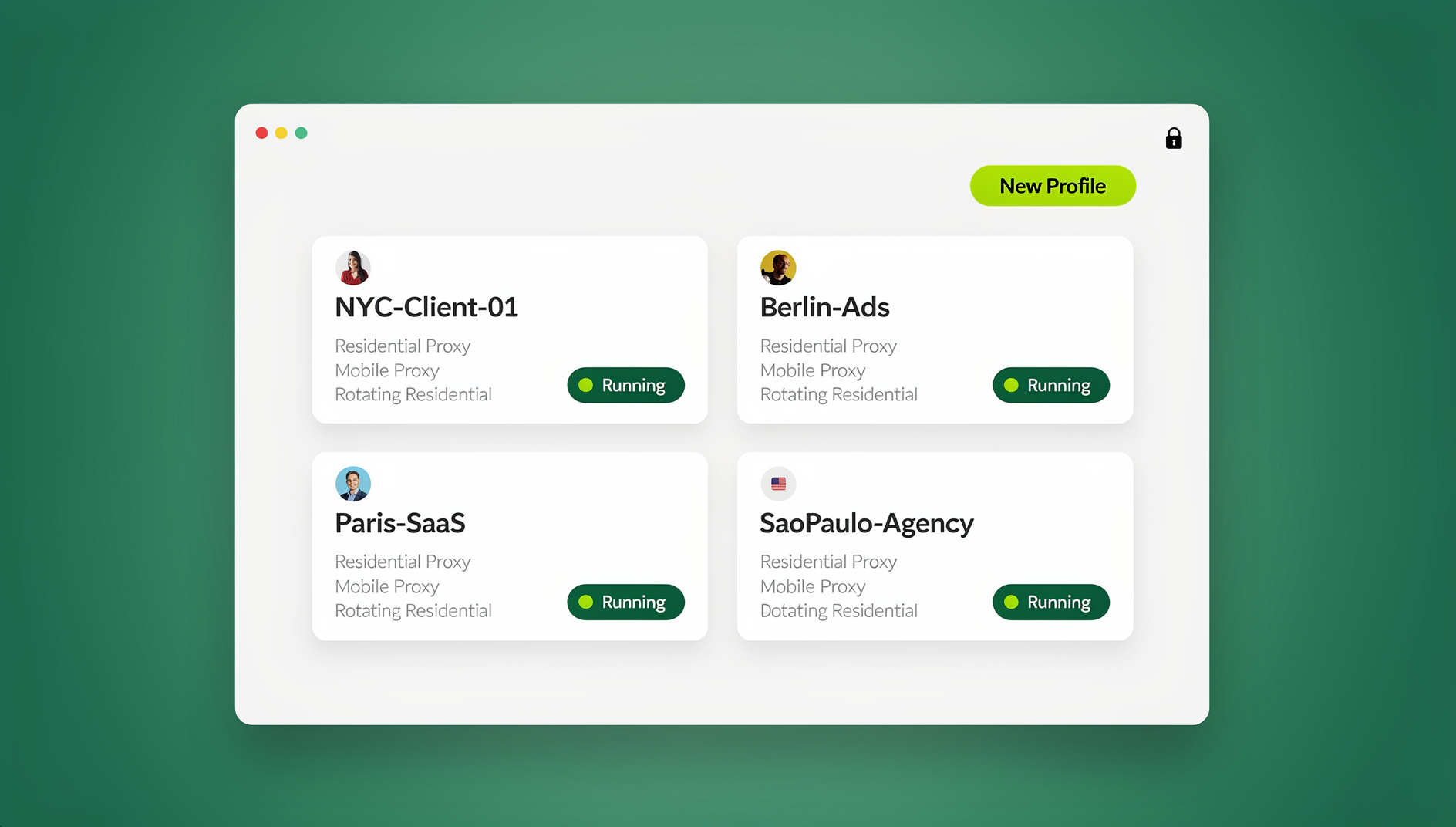
Send.win’s Sendwin Browser creates isolated browser profiles where each profile has a unique, customizable fingerprint — canvas, WebGL, audio context, fonts, screen dimensions, timezone, language, and user-agent. When you access Amazon Seller Central through a dedicated Send.win profile, Amazon sees a completely different device than the one used for any other account.
Key capabilities for Amazon sellers:
- Per-profile proxy assignment: Attach a dedicated residential IP to each profile so every account originates from a different network
- Cookie and storage isolation: Each profile maintains its own cookies, local storage, and cache — zero cross-contamination
- Persistent sessions: Unlike incognito mode, profiles persist between sessions so you maintain natural login patterns that don’t trigger Amazon’s “new device” alerts
- Cloud browser sessions: Access your isolated profiles from any device without installing the desktop app — useful for teams and VAs who need secure access from different locations
- Team collaboration: The Team plan ($49/mo, $20.99/mo annual) supports 16 seats, letting you share profiles with VAs and team members without exposing credentials
Experienced e-commerce sellers use similar strategies for other marketplaces. If you also sell on eBay, the same isolation principles apply — our guide to stealth eBay selling covers the platform-specific details.
Common Mistakes That Lead to Related Account Flags
Using a VPN Without Fingerprint Isolation
A VPN changes your IP — but leaves your browser fingerprint identical. Amazon sees the same canvas hash, same fonts, same screen resolution from “two different sellers.” The VPN actually makes it more suspicious, because now the same fingerprint appears from different IPs, which is a classic bot/multi-account signal.
Logging into the Wrong Account
Accidentally logging into Account B from Account A’s browser — even for 30 seconds — creates a permanent link in Amazon’s systems. The cookies from Account A were present when Account B’s credentials were entered. This is irreversible in Amazon’s eyes and is one of the most common triggers for innocent sellers.
Sharing a Computer with a VA
Virtual assistants often manage multiple clients’ Amazon accounts from the same machine. If your VA accesses your account from a device they also use for another seller, your accounts are now related. Require your VAs to use isolated browser profiles — or give them access through Send.win’s team sharing feature, which confines each client’s access to a separate, isolated profile.
Reusing Business Details Across Accounts
Using your personal phone number as the verification number for two accounts. Using the same registered agent address. Having the same tax ID linked. Each of these creates a hard link that no amount of browser isolation can overcome — the financial and legal details must be genuinely separate for each account. Read our guide on managing multiple accounts for a full operational checklist.
Timeline: What to Expect During the Appeal Process
| Stage | Typical Duration | What Happens |
|---|---|---|
| Initial deactivation | Immediate | Account suspended, listings removed, funds held |
| First appeal submission | 1-3 days to prepare | Submit POA via Performance Notifications |
| Amazon review | 2-14 days | Automated + human review of your POA |
| Response received | Varies | Approval, denial with feedback, or request for more info |
| Second appeal (if needed) | 1-7 days to revise | Address specific denial reasons |
| Final decision | 2-30 days | Account reinstated or permanently closed |
| Fund disbursement (if reinstated) | Up to 90 days | Amazon releases held funds after review period |
🏆 Send.win Verdict
Amazon’s related account detection relies heavily on browser fingerprints, cookies, and device IDs — exactly the signals that Send.win’s isolated browser profiles neutralize. Each profile creates a genuinely different browser identity with its own fingerprint, proxy, and storage. For Amazon sellers managing multiple legitimate accounts (with Amazon’s approval), recovering from a deactivation, or simply protecting their primary account from accidental cross-contamination, Send.win offers the strongest per-account isolation available at $6.99/month (Pro annual) — a fraction of what a single account deactivation costs in lost revenue.
Try Send.win today — paid plans start at $19/mo with a 7-day money-back guarantee on your first card purchase, and your Amazon accounts stay fully isolated from day one.
Frequently Asked Questions
Can Amazon detect related accounts even if I use different computers?
Yes. Different computers help, but Amazon also tracks IP addresses, payment methods, business addresses, and phone numbers. If two accounts share a WiFi network, bank account, or business address, Amazon can link them regardless of the device. Full isolation requires separate networks, separate financial details, and separate browser identities.
How long does an Amazon related account appeal take?
Most first appeals receive a response within 2-14 days. However, complex cases involving multiple linked accounts or escalated reviews can take 30 days or more. During this period, your account remains suspended, listings are inactive, and funds are held. Having a strong Plan of Action with supporting evidence significantly speeds up the process.
Will a VPN prevent Amazon from linking my accounts?
No. A VPN only changes your IP address. Amazon’s detection system also checks browser fingerprints, cookies, device IDs, and payment details. Using a VPN without changing these other signals actually increases suspicion — the same fingerprint appearing from multiple IPs is a classic multi-account pattern. You need full browser profile isolation, not just IP masking.
Can I open a new Amazon seller account after being deactivated?
This is extremely risky and generally inadvisable. Amazon will almost certainly link the new account to the deactivated one through shared signals (same device, same IP range, same payment methods). The new account will be immediately suspended, and it strengthens Amazon’s case against reinstating the original account. Always appeal the original account first.
What if I legitimately need multiple Amazon seller accounts?
Amazon does allow multiple accounts if you have a “legitimate business need” — for example, operating separate brands, selling in different marketplaces, or managing distinct business entities. You must request approval through Seller Support before creating the second account. Even with approval, each account should be accessed through isolated browser environments to avoid accidental cross-contamination that triggers automated flags.
Does incognito mode prevent Amazon from linking accounts?
No. Incognito mode clears cookies and browsing history after the session, but it does not change your browser fingerprint, IP address, or device identifiers. Amazon can still link two accounts accessed from the same browser in incognito mode because the underlying hardware and software fingerprint remains identical. You need a tool that generates a unique fingerprint per profile, not just a private browsing window.
How much revenue do sellers typically lose during a deactivation?
It varies widely, but even small sellers report losing $5,000-$20,000 in held funds and missed sales during a 30-day appeal process. High-volume sellers can lose six figures. Beyond direct revenue loss, you lose Buy Box eligibility, organic ranking momentum, and customer trust. Prevention through proper account isolation is dramatically cheaper than recovery.
Can my account be deactivated for a related account I don’t know about?
Yes, and it’s more common than you’d think. Buying a used computer that a previous owner used for Amazon selling, sharing an office with an unknown Amazon seller on the same network, or having a family member who once had a suspended account can all trigger a related account flag without your knowledge. This is why proactive isolation — dedicated devices, dedicated IPs, and isolated browser profiles — matters even if you only operate one account.
How Send.win Helps With Amazon Seller Account Deactivated Related Account
Send.win is a browser profile manager built for exactly this kind of work — every profile is a clean, isolated identity:
- Isolated profiles – unique fingerprint, separate cookies and storage per profile
- Consistent fingerprint per profile – canvas, WebGL, fonts, and audio settings kept consistent within each profile
- Desktop app + cloud sessions – native app for Windows, macOS, and Linux, or run profiles in the cloud with no install
- Built-in residential proxies – with automatic timezone, locale, and WebRTC matching
- Team features – share logged-in profiles with teammates without sharing passwords
Try the instant cloud browser demo — no install, no signup — or download the desktop app. There is no free trial; paid plans start at $19/month, and the first card purchase is covered by a 7-day money-back guarantee (see pricing).