What Is a Chart of Accounts and Why Does It Matter for Multiple Entities?
Designing the best chart of accounts for managing multiple entities requires establishing a standardized numbering system, segment coding for each entity, and dedicated inter-company accounts to allow clean consolidation at the parent level. By separating different business units using distinct prefix segments, finance teams can produce standalone and consolidated reports efficiently. Below, we examine the optimal chart of accounts architecture, step-by-step design strategies, and the security systems needed to access multiple entity portals safely.
For fast-growing organizations, holdings company structures, and digital brands operating multiple business units, financial consolidation is a critical challenge. A chart of accounts (COA) serves as the structural backbone of your bookkeeping system. It defines how assets, liabilities, equity, revenue, and expenses are categorized and reported. When you add a second or third business entity, maintaining a single, flat chart of accounts quickly becomes chaotic, resulting in mismatched categories and manual spreadsheets that delay your month-end close.
To scale your financial operations, you must implement a standardized, multi-entity chart of accounts template. This framework aligns your account numbering across all subsidiaries while using segment tags to identify separate business units. In this comprehensive guide, we will outline the core principles of multi-company COA design, walk you through establishing segment structures, and show you how to manage multiple entity portals securely.
Why Standard Charts of Accounts Fail in Multi-Entity Structures
Most commercial accounting software packages ship with a default, flat chart of accounts designed for a single legal entity. The moment you introduce a second business unit, this default setup fails for four primary reasons.
1. Inconsistent Naming Conventions
Without centralized controls, Entity A might create an expense account named “Marketing Expenses” while Entity B creates a similar account named “Advertising & Promo.” When your finance team attempts to consolidate the balance sheets, these mismatched names will fail to align, forcing accountants to perform manual mapping in spreadsheets, wasting hours of valuable time.
2. Inconsistent Account Numbering Ranges
If Entity A uses a 5000-series code for cost of goods sold (COGS) and Entity B uses a 6000-series code for COGS, your consolidated profit and loss statement (P&L) will be highly distorted. Standardizing your numbering ranges across all entities is mandatory to allow database engines to aggregate financial transactions automatically.
3. Lack of Dedicated Inter-Company Accounts
Multi-entity structures frequently engage in inter-company transfers, loans, and shared management fees. If you do not have dedicated inter-company receivable, payable, and elimination accounts established within your master template, you will not be able to eliminate these inter-company balances during consolidation, resulting in inflated revenue and expense reports.
4. Duplication and Scale Bottlenecks
Some companies attempt to manage multiple entities by duplicating the entire chart of accounts list for each entity within a single file. This results in a massive, bloated list of hundreds of accounts, making daily transaction coding highly error-prone. A segmented, clean structure is the only way to scale your database clean.
Core Building Blocks of a Multi-Entity Chart of Accounts
An institutional-grade multi-entity chart of accounts is built around four foundational components. Establishing these rules early prevents database restructuring down the road.
1. Standardized Numbering System
Every entity in your portfolio must utilize the same numeric ranges for its primary account types. A standard, industry-proven numbering range configuration includes:
- 1000 – 1999 (Assets): Cash, accounts receivable, inventory, and fixed assets.
- 2000 – 2999 (Liabilities): Accounts payable, accrued expenses, credit cards, and long-term loans.
- 3000 – 3999 (Equity): Owner’s investment, partner capital, and retained earnings.
- 4000 – 4999 (Revenue): Product sales, service fees, and interest income.
- 5000 – 5999 (Cost of Goods Sold – COGS): Raw materials, shipping fees, and direct manufacturing labor.
- 6000 – 6999 (Operating Expenses): Office rent, team payroll, software tools, and marketing spend.
- 7000 – 7999 (Other Income and Expenses): Interest expense, asset gains, and tax allocations.
- 8000 – 8999 (Inter-Company & Eliminations): Accounts receivable from subsidiaries, accounts payable to parent, and consolidation elimination codes.
2. Segment Coding Structure
Rather than multiplying accounts, utilize segment codes to track different entities, departments, and geographic locations. A standard segmented account code format looks like this: [Entity Prefix] - [Account Number] - [Department Suffix]. For example: 01-1000-10 represents Entity 01, Cash account, Executive Department, while 02-1000-20 represents Entity 02, Cash account, Sales Department. This allows you to run filtered financial reports by entity or division without altering your primary account list.
3. Dedicated Inter-Company Accounts
Set up matching inter-company accounts to track transfers between subsidiaries. For instance, if the parent company pays a shared software bill, the expense must be allocated: Entity A records an inter-company receivable, and Entity B records an inter-company payable. During consolidation, your accounting platform uses these inter-company accounts to generate elimination entries, zeroing out the transactions so they do not inflate your consolidated financials.
4. Centralized Governance Policies
Establish strict administrative rules regarding who can create, edit, or deactivate accounts in the master database. If every local bookkeeping team is allowed to create accounts ad-hoc, your standardized template will degrade within months. Centralize these permissions with your corporate CFO or controller.
Step-by-Step Guide to Structuring Your Master Chart of Accounts
To transition your multi-company business to a clean, standardized chart of accounts, we recommend following this four-phase implementation process.
Step 1: Perform a Comprehensive Account Audit
Export the active chart of accounts from every entity into a single master spreadsheet. Group matching accounts side-by-side to identify naming variations (e.g., “Office rent” vs “Rent expense”) and number range conflicts. Map each existing account to a proposed new standardized account number.
Step 2: Define Your Segments and Dimensions
Decide how many segments are required to run your business reporting. For small holdings, two segments (Entity and Account Number) are usually sufficient. For large, multi-divisional enterprises, configure three or four dimensions, including Department, Location, and Project tags.
Step 3: Construct the Master Database Template
Build your master template spreadsheet, defining the Account Number, Account Name, normal balance type (debit or credit), and detailed descriptions of what should be coded to each account. This document serves as the absolute source of truth for all bookkeeping teams across your subsidiaries.
Step 4: Configure Your Accounting Software and Software Rules
Import your master template into your primary accounting platform. If you utilize enterprise-grade systems like NetSuite or Sage Intacct, configure the global subsidiary settings to automate inter-company eliminations. If you run multiple entities on separate QuickBooks Online files, ensure the configurations match exactly.
Software Selection for Multi-Company Accounting Management
Selecting the right platform is critical, as different software packages offer varying degrees of native multi-entity support and segment coding flexibility.
| Accounting Platform | Multi-Entity Support | Consolidation Features | Segment Coding | Best For |
|---|---|---|---|---|
| NetSuite | Native Subsidiaries | Automated eliminations | Highly flexible | Mid-market & enterprise |
| Sage Intacct | Native Multi-Entity | Real-time consolidation | Dimension-driven | Finance-heavy enterprises |
| QuickBooks Online Advanced | Separate company files | Via Fathom or add-ons | Classes & Locations | Growing small businesses |
| Xero | Separate organizations | Via consolidation tools | Tracking Categories | Boutique firms & startups |
Challenges of Accessing Multiple Accounting Portals Online
For accountants, controllers, and CFOs, designing a standardized chart of accounts is only half the battle. Managing the day-to-day bookkeeping across separate legal entities requires logging into multiple instances of the same accounting platform, which introduces severe security risks and technical bottlenecks.
If you are an agency managing retail client storefronts across multiple amazon accounts, your bookkeeping requirements will scale rapidly. Implementing the procedures in our multiple amazon accounts complete guide is a proven way to keep operations safe. CFOs and controllers need a systematic method for managing multiple accounts securely without data crossover. Relying on the best browser for multiple accounts allows accountants to open and run multiple client QuickBooks files in parallel safely.
Traditional browsers share cookie stores across tabs, which means you cannot be logged into Client A’s accounting file and Client B’s accounting file simultaneously without constant login timeouts and session conflicts. Furthermore, managing sensitive payroll and financial records requires advanced session isolation to prevent credential theft or browser tracking flags.
How Send.win Simplifies Multi-Entity Financial Administration
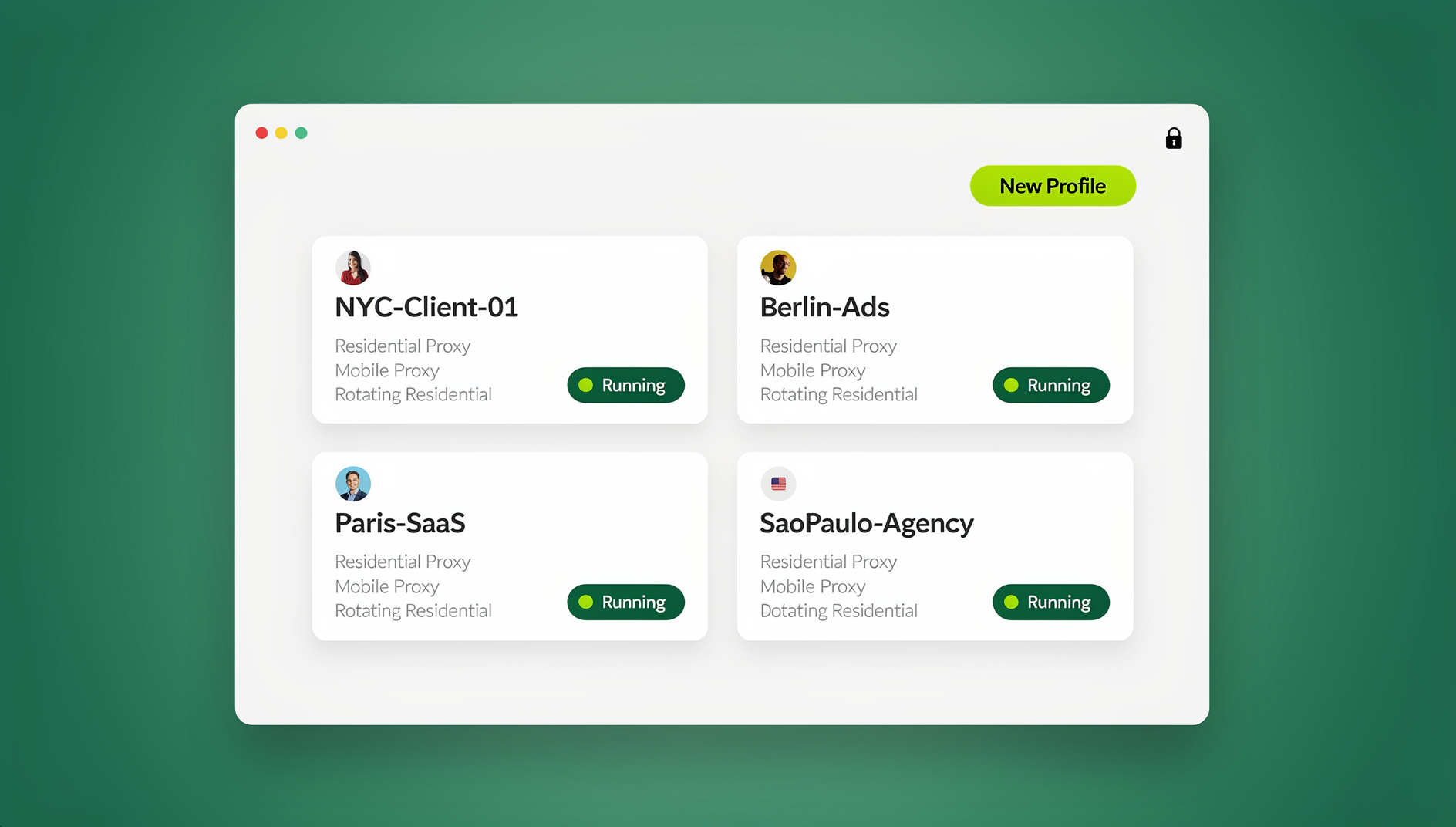
Send.win is specifically engineered to address the challenges of multi-account management. By creating isolated, sandboxed browser profiles for each client or business entity, Send.win allows financial teams to operate multiple dashboards in parallel with absolute security.
Two Flexible Operational Modes
Send.win adapts to your organization’s infrastructure by providing two distinct deployment models:
- Sendwin Browser: A native desktop application available for Windows, macOS, and Linux. This client runs browser profiles locally inside sandboxed container zones, ensuring maximum performance and execution speed while isolating cookies, history files, and caches.
- Cloud Browser Sessions: Launch isolated tabs inside remote cloud environments. This mode requires no local installation, allowing you to access and modify your financial portals securely from any device, including mobile phones or tablets, while working remotely.
Advanced Fingerprinting Protection and Proxy Integration
Every profile created inside Send.win operates with its own unique Canvas, WebGL, WebRTC, and hardware device fingerprints, ensuring portals view each tab as a completely separate machine. Additionally, you can integrate dedicated proxies with each profile, routing your connections through localized IP addresses to prevent security warnings and login lockouts.
Affordable, Scalable Pricing Structures
Send.win provides enterprise-grade session isolation at a fraction of the cost of competitive tools. Paid plans start at $19/mo (Pro) or $49/mo (Team), and your first card purchase is covered by a 7-day money-back guarantee, enabling you to test the workflows risk-free. Choose the plan that matches your scaling needs:
- Pro Plan ($19/mo or $83.88/yr): Supports up to 150 isolated profiles, includes 5GB of proxy bandwidth, and is ideal for single CFOs and independent accountants.
- Team Plan ($49/mo or $251.88/yr): Supports up to 500 isolated profiles, includes 20GB of proxy bandwidth, and supports up to 16 team seats for corporate accounting divisions.
- Add-on Pricing: Purchase extra proxy bandwidth at $6/GB and additional profiles at $0.05 per profile as your entity portfolio grows.
No Automation API
Send.win does not offer an automation interface: there is no API, SDK, headless mode or Selenium/Puppeteer/Playwright support on any plan. Instead, each profile keeps its own cookies, storage and fingerprint, so you can manage multiple entity dashboards in separate, isolated sessions.
🏆 Send.win Verdict
Consolidating multiple balance sheets shouldn’t be delayed by fragmented accounting profiles or security warnings. Send.win provides isolated browser profiles and cloud browsing sessions to execute your best chart of accounts for managing multiple entities strategy safely, allowing you to access and modify various client dashboards simultaneously with zero session overlaps.
Try Send.win free today — standardize your accounting portals with secure browser isolation.
Frequently Asked Questions
What is the best numbering system for a multi-entity chart of accounts?
The most proven system uses a 4-digit primary account number (defining the account type, like 1000 for cash) combined with a 2-digit entity prefix (like 01 for Subsidiary A). This establishes a clean, standardized template (e.g., 01-1000) that allows up to 99 legal entities and 9,999 accounts per category range.
Should each subsidiary have its own unique chart of accounts?
No. Standardizing your chart of accounts is mandatory to allow automated consolidation at the parent level. While subsidiaries can add specific sub-accounts to track unique local expenses, the core account numbers (such as 1000 for cash, 2000 for accounts payable) must match across all entities.
How often should a multi-entity chart of accounts be reviewed?
For fast-growing conglomerates, a quarterly review is the recommended best practice. For stable holdings structures, an annual review is sufficient. During the audit, the corporate controller should deactivate unused codes, correct naming variations, and enforce numbering standards.
Which accounting software is best for managing multiple companies?
NetSuite and Sage Intacct are the industry leaders for native multi-entity management, offering real-time consolidation and automated inter-company eliminations. For smaller organizations, using separate QuickBooks Online Advanced or Xero company files paired with consolidation add-ons is a cost-effective alternative.
How do I handle inter-company loans in the chart of accounts?
You must establish matching inter-company asset and liability accounts (typically in the 8000-series code range). If Parent Company loans cash to Subsidiary A, Parent Company records an inter-company receivable asset, and Subsidiary A records an inter-company payable liability. These balances must eliminate during consolidation.
Can I use tracking categories instead of a segmented chart of accounts?
Tracking categories or classes are useful for very simple multi-entity structures operating within a single file. However, this approach does not scale well as you add legal entities, run separate payrolls, or require formal consolidated balance sheets. Segmented numbering is the gold standard for scaling organizations.
Does Send.win offer a free trial for financial teams?
No. Send.win has no free trial. Paid plans are Pro at $19/mo or $83.88/yr and Team at $49/mo or $251.88/yr, and the first card purchase is covered by a 7-day money-back guarantee. The only free option is the cloud demo at https://send.win/demo-browser/, a 3-minute preview without signup (10 minutes a day with a free account), which lets your corporate accounting team see how to manage multiple entity dashboards safely.