Where the Ethical Line Actually Sits
Browser automation ethics come down to authorization, transparency, and impact rather than the tool itself: automating your own accounts for a legitimate business purpose is ethical, while using the exact same scripts to fabricate accounts, inflate engagement, or evade a ban is not. Selenium, Playwright, and antidetect browsers are all neutral technology — what separates ethical automation from abuse is who authorized it, whether it creates real value, and whether it deceives the platforms and people affected by it.
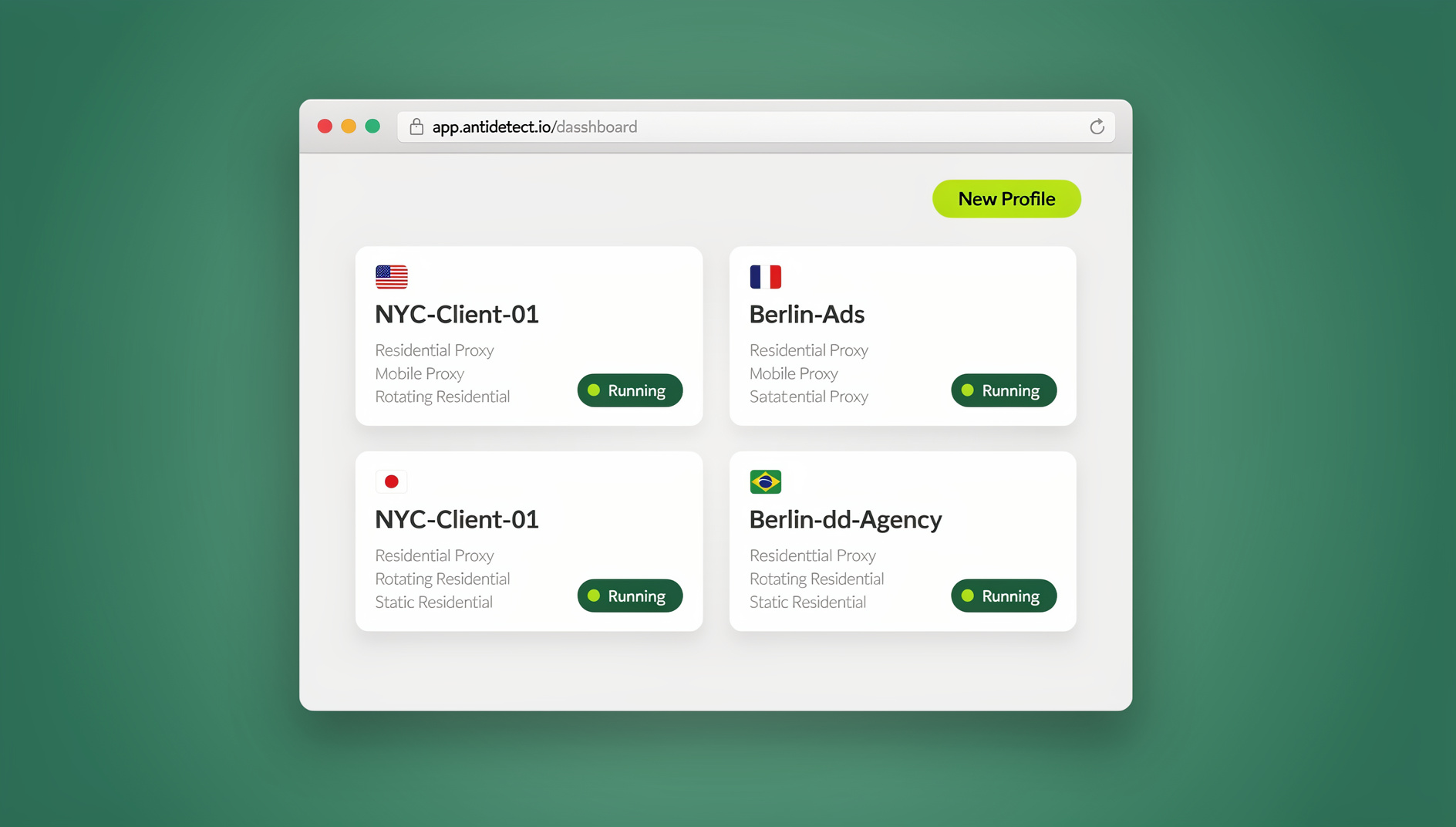
This isn’t a black-and-white issue, and treating it as one misses the actual problem. A social media manager scheduling posts across 20 legitimate client accounts is doing the same technical thing — running multiple isolated browser sessions — as someone operating 20 fake accounts to inflate engagement metrics. The code can look nearly identical. The ethics live entirely in intent, authorization, and consequence, not in the automation itself.
The Automation Spectrum
Clearly Ethical Uses
| Use Case | Why It’s Ethical |
|---|---|
| Automated QA testing | Testing software you own or are authorized to test. No one is harmed; it’s standard industry practice. |
| Accessibility auditing | Automating accessibility checks improves the web for everyone. |
| Personal task automation | Automating your own repetitive tasks on platforms where you’re an authorized user. |
| Legitimate multi-account business management | Managing real business accounts you own or are contractually authorized to manage. |
| Data backup and export | Pulling your own data from platforms that don’t provide adequate native export tools. |
Gray-Area Uses
| Use Case | Why It’s Complicated |
|---|---|
| Scraping public data | Legally permissible in many jurisdictions (see hiQ v. LinkedIn below), but may still violate a site’s Terms of Service. Context matters — academic research reads very differently from reselling the dataset. |
| Competitor price monitoring | Legal and commonplace, but high-frequency scraping can degrade the target site’s performance for real users. |
| Ad verification | Brands checking that their own ads render correctly may need to spoof location or device. The intent is legitimate; the method involves some deception of the ad platform. |
| Automated SERP checking | Collecting rank data from search engines at scale is common in SEO tooling, even though search engines technically restrict it. |
Clearly Unethical Uses
| Use Case | Why It’s Unethical |
|---|---|
| Fake account creation | Manufactures fraudulent identities that undermine platform trust and can enable harassment. |
| Engagement manipulation | Fake likes, follows, and views deceive advertisers, users, and the platform itself. |
| Credential stuffing | Automated login attempts using stolen credentials. Directly harms real individuals. |
| Ticket or sneaker botting | Automated bulk purchasing that denies fair access to genuine consumers. |
| Ad fraud | Generating fake clicks or impressions to steal advertising budgets. |
What the Law Actually Says
The Computer Fraud and Abuse Act (CFAA)
The CFAA makes it illegal to access a computer system “without authorization” or by “exceeding authorized access.” Courts have spent years arguing over whether violating a website’s Terms of Service alone counts as unauthorized access:
- hiQ v. LinkedIn (2022): The Supreme Court declined to hear LinkedIn’s appeal, effectively letting stand a ruling that scraping publicly available data is not a CFAA violation. Scraping public web pages is, on its own, generally legal under U.S. law.
- Where the line still holds: Accessing password-protected content without authorization remains clearly illegal regardless of method. The unresolved gray area is public data that a site’s Terms of Service prohibit collecting via automation, even though nothing is technically locked behind a login.
GDPR and Data Protection
In the EU, automated collection of personal data is far more tightly constrained than in the U.S.:
- Scraping personal data — names, emails, profile details — requires an actual legal basis under GDPR, not just “it was public.”
- Legitimate interest can justify some B2B data collection, but scraping consumer personal data carries real regulatory risk.
- Data subjects retain the right to object to automated processing of their personal data, even after the fact.
The Ethics of Running Multiple Accounts
Automation and multi-account management overlap constantly. Using a multi-login browser to run several accounts in parallel raises its own, more specific ethical questions.
When Multi-Accounting Is Ethical
- Agency account management — a social media agency running 30 real client accounts is providing a legitimate service; every account represents an actual business with real customers.
- Multi-brand companies — a company with five product lines needs five separate social identities. Standard practice, not deception.
- Multi-marketplace selling — running storefronts on Amazon, eBay, and Etsy at once under different accounts is common and fully accepted.
- Personal/professional separation — keeping a personal identity separate from a professional one is a reasonable privacy practice, not manipulation.
When Multi-Accounting Is Unethical
- Fake social proof — creating extra accounts to review your own product or inflate your own follower count.
- Ban evasion — spinning up a new account specifically to dodge a legitimate suspension.
- Market manipulation — running multiple storefronts to fake the appearance of competition, or to enable price fixing.
- Astroturfing — operating many accounts designed to look like independent voices pushing the same message.
Fingerprint Spoofing: Privacy Tool or Evasion Technique?
Modifying your browser fingerprint sits at the center of every antidetect browser, and it’s the piece of this debate people argue about most.
The Case for Fingerprint Protection
- It’s a privacy right. Browser fingerprinting is tracking users never explicitly consented to; defending against it is a legitimate privacy measure, not an attack.
- No obligation to be trackable. Nothing legally or morally requires presenting a unique, trackable fingerprint to every site you visit.
- Defense against discrimination. Sites use fingerprints for price discrimination and behavioral profiling; resisting that is reasonable self-defense, not deception of an innocent party.
The Case Against Spoofing
- Undermining real security. When fingerprinting exists explicitly for fraud prevention — banking, account protection — defeating it can undercut genuine user safety.
- Enabling the unethical column above. The same technique that protects a legitimate user’s privacy also enables fake accounts, engagement manipulation, and ban evasion at scale.
How This Plays Out Across Industries
The five-question test looks different depending on who’s holding the automation script, and a few industry patterns come up constantly:
- QA and engineering teams automate against staging or their own production environments they’re authorized to test. The main ethical failure mode here isn’t malicious — it’s running load tests against a third-party integration partner’s API without warning them first, which can look indistinguishable from an attack.
- Marketing and social media agencies run legitimate multi-account scheduling for real clients, but drift into unethical territory the moment automation is used to inflate a client’s own follower count or fake engagement to justify a retainer.
- SEO and competitive-intelligence teams scrape public SERPs and competitor pricing pages — broadly accepted practice — but cross the line if scraping frequency degrades the target site’s performance for real visitors, or if collected personal data (reviewer names, emails) gets resold without a legal basis.
- E-commerce sellers running multiple authorized storefronts across marketplaces are doing normal, accepted multi-account business. The same sellers cross into unethical territory only if they use those accounts to fake competition, manipulate reviews, or evade a suspension tied to a genuine policy violation.
- Researchers and journalists scraping public data for accountability reporting generally sit on the ethical side, provided personal data is handled responsibly and the research doesn’t misrepresent itself to gain access it wouldn’t otherwise have.
Notice the pattern: in every industry, the technology is identical to what a bad actor would use. The determining factor is always authorization, whether real value is created, and whether anyone is deceived by the outcome — which is exactly what the five-question framework below is designed to make explicit rather than left to gut feeling.
A Five-Question Framework for Ethical Automation
Before automating any browser-based activity, run it through five questions:
- Am I authorized? Do I own the accounts, or have explicit permission to act on the platforms I’m automating?
- Am I creating value or extracting it? Does the automation produce something genuine — content, service, product — or does it just exploit an existing system?
- Am I transparent? Would I be comfortable if the platform, my clients, and the people affected knew exactly what I was doing?
- Am I causing harm? Does this degrade platform performance, deceive users, or unfairly disadvantage legitimate participants?
- Is the benefit proportional? Does the efficiency gained justify the server load, bandwidth, and API calls the automation consumes?
Rate Limiting and Resource Respect
Even fully legitimate automation should behave considerately toward the systems it touches:
- Add delays between requests that roughly mimic natural human usage patterns.
- Respect
robots.txtdirectives and published rate-limit headers. - Avoid running heavy automation during a site’s known peak-traffic windows.
- Cache results locally where possible instead of re-requesting the same data.
Building an Ethical Automation Policy for Your Team
Platform Terms of Service as a Social Contract
ToS violations aren’t automatically illegal, but they represent a real social contract with the platform:
- If a platform explicitly prohibits automation, using it anyway creates account-termination risk that clients should be told about upfront.
- A platform that ships an API is implicitly endorsing the automated activities that API supports.
- Activities outside API coverage but not explicitly banned live in a professional-judgment gray zone — document your reasoning.
Professional Standards Worth Adopting
- Document every automation tool and technique used on client accounts.
- Get explicit client sign-off on the automation approach before running it.
- Never use automation to fabricate engagement on managed accounts.
- Keep an audit trail of automated actions, especially anything touching customer-facing content.
- Isolate each managed account in its own session — via session isolation — so a mistake on one client’s automation can’t spill into another’s account.
🏆 Send.win Verdict
Browser automation ethics aren’t decided by which tool you run — they’re decided by authorization and transparency. Send.win doesn’t change that calculus, but it removes the technical excuse for cutting ethical corners: isolated profiles in Sendwin Browser keep every legitimate account’s cookies and fingerprint separate on their own, and the Automation API (available on both Pro and Team plans) lets you run Selenium, Playwright, or Puppeteer against real, authorized accounts without the session bleed that causes accidental cross-account mistakes.
Try Send.win free for 30 days — no credit card required, Pro plans from $6.99/month billed annually.
Frequently Asked Questions
Is web scraping ethical?
Scraping publicly available data for legitimate purposes — research, price comparison, market analysis — is generally both ethical and, per hiQ v. LinkedIn, legal in the U.S. Scraping private data, personal information without consent, or copyrighted content for redistribution is not.
Is using an antidetect browser inherently unethical?
No — the tool itself is neutral. Using it to manage legitimate business accounts, protect your privacy, or test how your own site behaves across regions is ethical. Using it to create fake accounts, evade a ban, or commit fraud is not. Intent, not the tool, determines the ethics.
Should I tell clients I’m using browser automation on their accounts?
Yes. Transparency about the tools and methods you use builds the trust the relationship depends on. If you’re using browser profiles, scheduling automation, or anything else, clients should know and explicitly consent.
Is it legal to automate my own accounts?
Generally yes — you’re authorized to act on your own accounts, and courts have consistently distinguished authorized-account automation from unauthorized access. The main risk is a platform’s own Terms of Service, which can still lead to suspension even when no law is broken.
What makes engagement manipulation unethical specifically?
It deceives three parties at once — advertisers who pay for reach that isn’t real, users who trust inflated social proof, and the platform whose metrics get corrupted. That three-way deception is what separates it from legitimate scheduling automation.
Does using proxies or fingerprint masking automatically count as evading a ban?
No. The same techniques that protect privacy on legitimately owned accounts are used for ban evasion; the difference is whether the account was banned for a real policy violation you’re dodging, or whether you’re simply protecting an account that never violated anything.
How do agencies stay on the ethical side of multi-account automation?
By running the five-question framework on every use case, documenting client consent and tooling in writing, and keeping each client’s accounts in fully isolated sessions so no automation mistake can cross between them.
Conclusion
Browser automation ethics isn’t a question of whether you automate — it’s a question of how. The exact same tools that enable fraud also enable legitimate productivity gains, privacy protection, and scaled professional services. Run every use case through the five-question test, stay transparent with clients and platforms, and make sure your automation creates genuine value rather than extracting it through deception.