Browser Isolation vs Sandbox: What’s the Real Difference?
The core browser isolation vs sandbox comparison comes down to where code executes. Browser isolation runs web content on a remote server and streams only safe pixels to your device — nothing ever touches your local machine. A sandbox runs everything locally inside a contained environment that limits what malicious code can access. Both reduce risk, but they solve fundamentally different problems: isolation eliminates local exposure entirely, while sandboxing contains it. Below, we break down threat models, performance, deployment complexity, fingerprint protection, and multi-account capability so you can pick the right approach — or combine both.
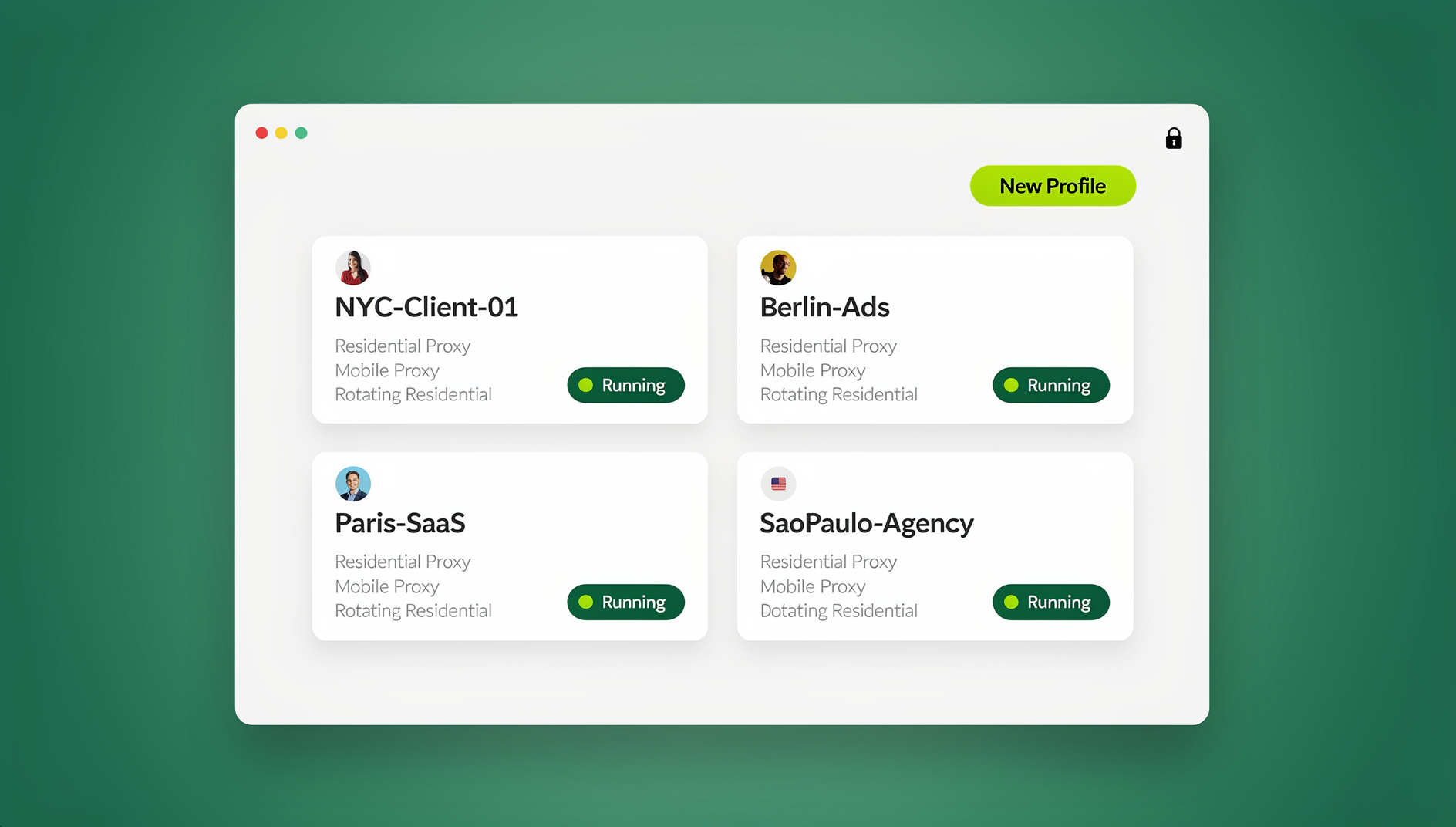
How Browser Isolation Works
Browser isolation — sometimes called remote browser isolation (RBI) — moves web browsing off your endpoint entirely. Instead of your local browser downloading HTML, JavaScript, and images, a cloud-based browser does the work. You see a visual stream (pixel-rendered output or sanitized DOM reconstruction) of the remote session.
Key Characteristics of Browser Isolation
- Execution location: Remote server or cloud infrastructure
- Local exposure: Zero — malicious scripts, drive-by downloads, and exploit payloads never reach your device
- Rendering method: Pixel-push (video stream), DOM mirroring, or sanitized content delivery
- Fingerprint surface: The remote browser presents its own fingerprint, not yours
- Session persistence: Each session can be fully disposable or persistently isolated per profile
- Resource usage: Minimal local resources — heavy lifting happens server-side
Run Browser Isolation Vs Sandbox Comparison in the Cloud With Send.win
Send.win’s cloud browser runs your isolated profiles on remote infrastructure — open a clean, fingerprint-isolated session from any device without installing anything:
- Instant cloud sessions – launch an isolated browser in seconds, no local install
- Isolated profiles – separate fingerprint, cookies, and storage per session
- Cloud sync & profile sharing – pick up the same profiles on the desktop app (Windows, macOS, Linux) or share them with your team
- Built-in residential proxies – with automatic timezone and locale matching
You can try it right now: the Send.win demo browser opens an isolated cloud session directly in this browser tab. The 30-day free trial needs no credit card, and paid plans start at $6.99/month billed annually — see pricing.
The biggest advantage is the air gap. Since web content never runs on your hardware, even zero-day exploits targeting browser engines are neutralized before they reach you. Enterprise security teams deploy RBI to protect employees from phishing sites, malicious ads, and watering-hole attacks without restricting browsing freedom.
How Browser Sandboxing Works
A browser sandbox creates a restricted local environment where the browser process runs with limited permissions. Modern browsers like Chrome and Firefox already use sandboxing internally — each tab runs in its own process with reduced OS-level privileges. Dedicated sandbox tools (like Sandboxie, Windows Sandbox, or VM-based approaches) go further by wrapping the entire browser in an isolated container.
Key Characteristics of Sandboxing
- Execution location: Local machine, inside a restricted container
- Local exposure: Reduced but not eliminated — code still runs on your hardware
- Rendering method: Standard browser rendering, but file system and registry access are restricted
- Fingerprint surface: Your real hardware fingerprint leaks through unless additional masking is applied
- Session persistence: Sandbox can be wiped after each session, but the underlying OS stays exposed during execution
- Resource usage: High — runs full browser processes locally, often with VM-level overhead
Sandboxes are effective at preventing malware from persisting after a browsing session ends. If something malicious executes inside the sandbox, the damage stays contained and is discarded when the sandbox closes. However, during the active session, sophisticated attacks can still exploit sandbox escape vulnerabilities.
Head-to-Head Feature Comparison
This table puts browser isolation and sandboxing side by side across the dimensions that actually matter for security teams, multi-account operators, and privacy-focused users.
| Feature | Browser Isolation (RBI) | Browser Sandbox |
|---|---|---|
| Where code runs | Remote cloud server | Local machine (restricted container) |
| Threat model | Prevents all local execution of web threats | Contains threats but code still runs locally |
| Zero-day protection | Strong — exploits hit the remote server, not your device | Moderate — sandbox escape exploits exist |
| Performance impact | Low on endpoint; depends on network latency | High — full browser + sandbox/VM overhead on local CPU/RAM |
| Setup complexity | Low — cloud-managed, no local installs needed | Medium-high — requires VM software, configuration, snapshots |
| Scalability | Highly scalable — spin up cloud sessions on demand | Limited by local hardware resources |
| Fingerprint protection | Strong — remote browser has its own unique fingerprint | Weak — real hardware fingerprint leaks through the sandbox |
| Multi-account support | Native — each session is fully isolated with separate identity | Manual — requires separate sandbox instances per account |
| Data persistence | Cloud-synced profiles that persist across sessions | Typically wiped on sandbox close unless explicitly saved |
| Bandwidth usage | Higher — pixel streaming or DOM reconstruction over network | Standard — browsing happens locally |
| Offline capability | None — requires internet connection to remote server | Full — works without internet (for local testing) |
| Cost model | Subscription-based (cloud infrastructure) | One-time or free (local software) |
| Team collaboration | Built-in — share profiles, transfer sessions | Difficult — each user needs their own sandbox setup |
Threat Model: What Each Approach Actually Stops
Understanding the threat model difference is critical to making the right choice. These are not interchangeable security tools — they defend against different attack vectors.
Browser Isolation Threat Coverage
Browser isolation provides a true air gap between web content and your endpoint. The remote server absorbs all risk from:
- Drive-by downloads: Malicious files land on the remote server, never your disk
- JavaScript-based attacks: Cryptominers, keyloggers, and exploit kits run in the cloud sandbox
- Phishing sites: Even if a user visits a phishing page, credential-harvesting scripts can’t access local password managers or autofill data
- Browser exploits: Zero-day vulnerabilities in the rendering engine affect only the remote instance
- Fingerprinting and tracking: Websites see the remote browser’s fingerprint, providing natural browser fingerprint protection
Sandbox Threat Coverage
Sandboxing limits the blast radius of an attack but doesn’t prevent execution:
- Malware persistence: Infections are wiped when the sandbox resets — they can’t survive
- Registry/file system changes: Contained within the sandbox boundary
- Process-level isolation: Malicious browser processes can’t escalate to the host OS (in theory)
The critical gap: during an active sandbox session, sophisticated malware can still exfiltrate data, log keystrokes, or exploit sandbox escape vulnerabilities. Sandbox escapes aren’t theoretical — they’ve been demonstrated against Chrome’s own sandbox, VMware, VirtualBox, and Windows Sandbox. Each escape turns the containment model into a false sense of security.
Performance and Resource Usage
Performance is where the two approaches diverge sharply in practice.
Browser Isolation Performance
Since rendering happens remotely, your local machine barely notices. A Chromebook, thin client, or even a tablet can run isolated browser sessions smoothly because the heavy work — JavaScript execution, page layout, image decoding — happens on cloud servers with dedicated resources. The tradeoff is latency: pixel streaming adds 20-80ms of visual delay depending on your connection quality. For standard web browsing, email, and SaaS apps, this is barely perceptible. For latency-sensitive tasks like real-time gaming or video editing in-browser, it’s noticeable.
Sandbox Performance
Sandboxes are resource-hungry. Running a browser inside a VM or dedicated sandbox container means you’re paying double: the sandbox overhead plus the browser itself. A single sandboxed Chrome instance can consume 2-4GB of RAM. Running multiple sandboxed browsers simultaneously — which multi-account operators need — can easily max out 16GB of RAM and pin CPU cores. This makes sandbox-based multi-account management impractical at scale without expensive hardware.
Deployment and Management
For teams and organizations, the operational burden of each approach differs dramatically.
Browser isolation solutions are typically cloud-managed. There’s nothing to install on endpoints — users access isolated sessions through a gateway or dedicated app. IT teams configure policies centrally: which sites get isolated, session timeouts, data transfer rules, and user permissions. Scaling to hundreds of users means increasing cloud capacity, not provisioning hardware.
Sandbox deployments require per-machine setup. Each endpoint needs sandbox software installed, configured, and maintained. Updates to the sandbox engine, snapshot management, and disk space for sandbox images all fall on local IT. When a team member’s laptop runs out of disk space because of accumulated sandbox snapshots, that’s a support ticket. Multiply by 50 or 500 employees and the management overhead becomes significant.
Fingerprint Protection and Multi-Account Use
This is where the comparison gets especially relevant for digital marketers, e-commerce sellers, affiliate managers, and anyone managing multiple accounts across platforms.
Why Sandboxes Fail at Fingerprint Protection
A sandbox isolates processes but doesn’t change your session isolation fingerprint. When you open a sandboxed browser, websites still see your real screen resolution, GPU model, installed fonts, timezone, WebGL renderer, canvas hash, and dozens of other hardware-derived signals. Running five sandboxed Chrome instances on the same machine produces five sessions with identical fingerprints. Platforms like Amazon, Facebook, and Google detect this instantly and link all accounts together.
Even using separate user profiles within the sandbox doesn’t help. The underlying hardware fingerprint — which modern tracking scripts read at the WebGL, AudioContext, and canvas API level — remains constant across all sandbox instances on the same physical machine.
Why Browser Isolation Solves the Fingerprint Problem
Cloud-based browser isolation naturally solves fingerprinting because each remote session runs on different infrastructure. The fingerprint presented to websites comes from the cloud server, not your local hardware. Advanced isolation platforms go further by assigning unique, consistent fingerprints per profile — different screen sizes, canvas hashes, WebGL renderers, font lists, and timezone configurations for each isolated session.
This is exactly the architecture that antidetect browsers use, and it’s why safe browsing for multi-account management requires isolation rather than sandboxing.
When to Use Browser Isolation
Browser isolation is the right choice when you need:
- Multi-account management: Running separate identities across e-commerce platforms, social media, or ad networks without fingerprint linkage
- Enterprise web security: Protecting employees from web-based threats without blocking sites or reducing productivity
- Remote team access: Giving distributed teams secure, consistent browser environments without per-machine setup
- Lightweight endpoints: Keeping local resource usage low while handling heavy browsing workloads
- Automation at scale: Running automated browser workflows (Selenium, Puppeteer, Playwright) without maintaining local browser farms
- Compliance requirements: Ensuring browsing data stays in controlled cloud infrastructure, not on employee laptops
When to Use a Sandbox
Sandboxing makes more sense in specific scenarios:
- Malware analysis: Security researchers intentionally detonating malware in a controlled local environment
- Untrusted software testing: Running downloaded executables in an isolated container before trusting them on the host
- Offline environments: Air-gapped networks where cloud connectivity isn’t available
- Single-user local testing: Developers testing browser behavior in a clean environment
- One-off risky browsing: Opening a suspicious link in a disposable environment when cloud isolation isn’t available
Notice the pattern: sandboxes excel at local, single-user, temporary containment tasks. They’re not built for persistent multi-session workflows, team collaboration, or fingerprint diversity.
Can You Combine Both?
Yes, and many advanced security architectures do. An organization might use browser isolation for all standard employee browsing (eliminating the most common attack surface) while maintaining local sandboxes for the security research team that needs to analyze malware samples. The two approaches aren’t mutually exclusive — they cover different points in the threat landscape.
For multi-account operators, though, layering a sandbox on top of isolation adds complexity without meaningful benefit. If your browser sessions are already running in isolated cloud environments with unique fingerprints, a local sandbox around the viewer adds latency and resource overhead without improving security or identity separation.
The Cost Reality
Sandboxes often appear cheaper upfront — tools like Windows Sandbox are free, and VirtualBox is open source. But the hidden costs add up fast:
- Hardware costs: Running multiple VM-based sandboxes requires expensive local hardware (32GB+ RAM, fast SSDs, multi-core CPUs)
- Management time: Configuring, updating, and troubleshooting sandbox environments across a team consumes IT hours
- Scaling ceiling: Local hardware limits how many concurrent sandboxed sessions you can run
- No fingerprint diversity: You still need additional tools (and their costs) to solve the fingerprinting problem
Browser isolation platforms consolidate all of this into a single subscription. Cloud infrastructure scales elastically, management is centralized, and fingerprint isolation is built in. For teams running 10+ concurrent profiles, the total cost of ownership for isolation is typically lower than maintaining a sandbox farm.
🏆 Send.win Verdict
For anyone managing multiple accounts, running automation workflows, or needing real fingerprint isolation — browser isolation wins this comparison decisively. Sandboxes solve a different problem (local containment), but they don’t give you the identity separation, fingerprint diversity, or team collaboration that modern multi-account workflows demand.
Send.win delivers both modes: Sendwin Browser (native desktop app for Windows, macOS, and Linux) with per-profile fingerprint isolation and an Automation API for Selenium, Puppeteer, and Playwright — plus cloud browser sessions that need no local install at all. The Pro plan is $19/month ($6.99/month billed annually — 63% savings) with 150 profiles, 5GB proxy bandwidth, and full Automation API access. The Team plan is $49/month ($20.99/month annual — 57% savings) with 500 profiles, 20GB bandwidth, and 16 seats.
Try Send.win free today — 30-day trial, no credit card required. Replace your sandbox farm with real browser isolation.
Frequently Asked Questions
Is browser isolation the same as a browser sandbox?
No. Browser isolation runs web content on a remote server and streams only safe visual output to your device. A sandbox runs the browser locally but restricts what the browser process can access on your system. Isolation eliminates local execution entirely; sandboxing contains it within limited permissions on the same machine.
Can a sandbox protect against browser fingerprinting?
Not by itself. A sandbox isolates processes and file access but doesn’t modify your hardware-level fingerprint. Websites still see your real screen resolution, GPU, canvas hash, WebGL renderer, and other hardware signals through a sandboxed browser. You’d need a separate fingerprint-masking tool on top of the sandbox to change these values.
Is browser isolation slower than using a local sandbox?
It depends on the task. Browser isolation adds 20-80ms of network latency for the visual stream, which is unnoticeable for normal browsing. However, your local machine uses far fewer resources since rendering happens remotely. Sandboxes have no network latency but consume significant local CPU and RAM — running multiple sandboxes simultaneously often causes worse overall performance than isolated cloud sessions.
Which is better for running multiple accounts simultaneously?
Browser isolation wins clearly here. Each isolated session gets its own fingerprint, IP, and cookie storage by default. With sandboxes, you need to manually set up separate sandbox instances, and all share the same hardware fingerprint — which platforms detect as linked accounts. Isolation scales to hundreds of profiles; sandboxing hits hardware limits at a fraction of that.
Can I use browser isolation for automated workflows like Selenium or Puppeteer?
Yes. Modern browser isolation platforms expose automation endpoints that work with standard tools like Selenium, Puppeteer, and Playwright. Send.win’s Automation API lets you connect automation scripts to isolated profiles, each with its own fingerprint and proxy configuration, starting on the Pro plan at $6.99/month (annual billing).
Is a sandbox enough for enterprise security?
For basic containment, sandboxes help. But they don’t prevent data exfiltration during active sessions, and sandbox escape vulnerabilities are regularly discovered in all major sandbox implementations. Enterprise security teams increasingly use browser isolation as the primary defense because it prevents web threats from reaching endpoints entirely, rather than hoping the sandbox contains them after execution.
What happens to my data in browser isolation — is it safe in the cloud?
Reputable browser isolation providers encrypt session data, isolate profiles from each other, and let you control data persistence policies. Your browsing data exists on managed cloud infrastructure with security controls that typically exceed what a local sandbox provides. Look for providers that offer profile-level encryption and region-specific data residency options.
Do I need both browser isolation and a sandbox?
For most users, no — browser isolation covers the primary use cases (secure browsing, multi-account management, team workflows) more effectively than sandboxing. The main exception is malware research: if you need to deliberately run malicious executables locally, a sandbox is purpose-built for that. For web browsing security and multi-account operations, isolation alone is sufficient and simpler to manage.