Cloud Browser vs Virtual Machine: Which One Should You Actually Use?
A cloud browser vs virtual machine comes down to one core trade-off: lightweight, instant browser isolation versus full operating-system isolation. Cloud browsers launch in seconds, manage browser fingerprints natively, and scale to hundreds of profiles without taxing your hardware. Virtual machines give you an entire sandboxed OS — powerful for development and deep testing, but heavy on resources and painful to scale. Below we break down every angle so you can pick the right tool for privacy, multi-account management, and team workflows.
What Is a Cloud Browser?
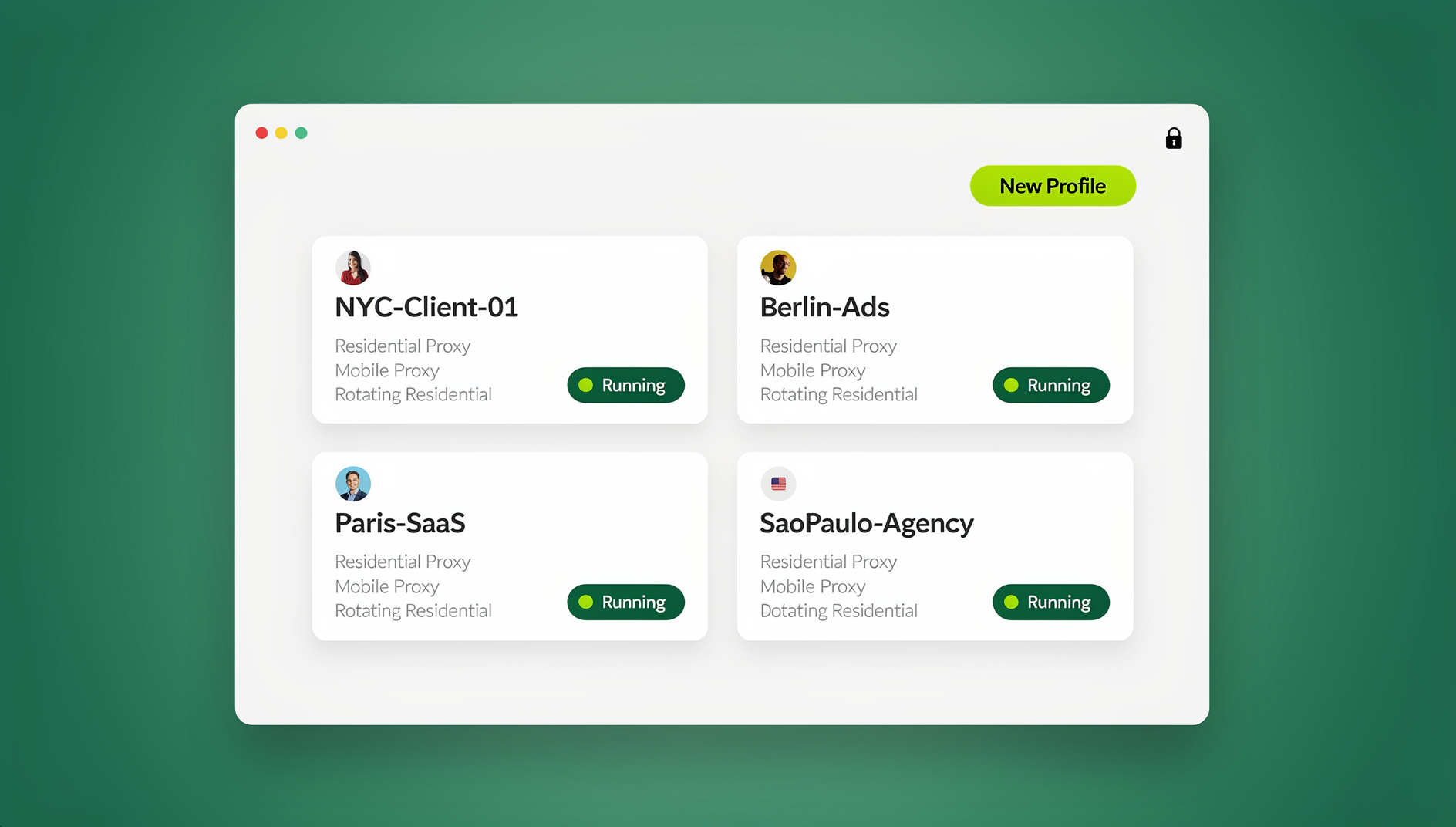
A cloud browser runs an isolated browsing session on a remote server rather than on your local machine. You connect through a lightweight client or a web interface, and every tab, cookie, cache file, and fingerprint stays siloed inside that remote session. When you close it, nothing lingers on your device.
Cloud browsers were originally built for enterprise security — isolating risky web content away from corporate endpoints. Today they’ve evolved into full-featured privacy tools. Modern cloud browsers like Send.win’s cloud browser sessions let you spin up dozens of isolated browser profiles, each with its own fingerprint, proxy, timezone, and language settings, all without installing a desktop application.
Key Characteristics of Cloud Browsers
- Browser-level isolation — each session gets its own cookies, local storage, WebRTC config, and canvas fingerprint
- Zero local footprint — nothing is stored on your machine after the session ends
- Instant launch — most sessions are ready in under 10 seconds
- Fingerprint management — built-in spoofing of user-agent, screen resolution, WebGL hash, timezone, and more
- Cloud sync — sessions, bookmarks, and profile data persist across devices
Run Cloud Browser Vs Virtual Machine in the Cloud With Send.win
Send.win’s cloud browser runs your isolated profiles on remote infrastructure — open a clean, fingerprint-isolated session from any device without installing anything:
- Instant cloud sessions – launch an isolated browser in seconds, no local install
- Isolated profiles – separate fingerprint, cookies, and storage per session
- Cloud sync & profile sharing – pick up the same profiles on the desktop app (Windows, macOS, Linux) or share them with your team
- Built-in residential proxies – with automatic timezone and locale matching
You can try it right now: the Send.win demo browser opens an isolated cloud session directly in this browser tab. The free cloud demo gives a 3-minute preview without signup, or 10 minutes a day with a free account; paid plans start at $19/month, and the first card purchase is covered by a 7-day money-back guarantee — see pricing.
What Is a Virtual Machine?
A virtual machine (VM) emulates a complete operating system inside a hypervisor like VirtualBox, VMware, Hyper-V, or KVM. You install a guest OS — usually Windows or Linux — inside the VM, and it runs as a fully isolated environment with its own network stack, file system, and hardware fingerprints.
VMs have been the gold standard for development, QA testing, and security research for decades. They offer unmatched isolation: a compromised VM can be snapshotted, rolled back, or destroyed without affecting the host machine.
Key Characteristics of Virtual Machines
- Full OS isolation — the guest OS is completely separate from the host
- Hardware-level emulation — you can assign CPU cores, RAM, GPU passthrough, and virtual NICs
- Snapshot and rollback — freeze a VM’s state and restore it later
- Broad use case — runs any software, not just browsers
- Complex setup — requires hypervisor installation, OS images, and manual configuration
Head-to-Head Comparison: Cloud Browser vs Virtual Machine
The table below compares cloud browsers and virtual machines across the factors that matter most for privacy, multi-account workflows, and team productivity.
| Feature | Cloud Browser | Virtual Machine |
|---|---|---|
| Setup Time | Under 1 minute — sign up, launch a profile | 30-60 minutes — install hypervisor, download OS ISO, configure networking |
| Resource Usage | Minimal — rendering happens on remote servers | Heavy — each VM needs 2-4 GB RAM, 20-50 GB disk, dedicated CPU cores |
| Fingerprint Control | Built-in — spoofs canvas, WebGL, user-agent, timezone, language, screen resolution | Manual — must configure each VM’s browser separately; no native spoofing |
| Scalability | Hundreds of profiles from a single account | Limited by host hardware; 5-10 VMs on a typical workstation |
| Cost | $6.99-$20.99/mo (e.g., Send.win Pro/Team) | Free hypervisors exist, but OS licenses + cloud VM hosting can reach $20-100+/mo per instance |
| Team Collaboration | Built-in profile sharing, role-based access, team workspaces | None — requires shared drives, VPN access, or remote desktop tools |
| Browser Fingerprint Isolation | Each profile has a unique, consistent fingerprint across sessions | Fingerprint is tied to VM hardware config — limited variety without manual tweaking |
| Proxy Integration | Per-profile proxy assignment (residential, datacenter, mobile) | System-level proxy per VM — can’t split by browser tab |
| Automation Support | Native API for Selenium, Puppeteer, Playwright | Automation runs inside the VM’s browser — no built-in multi-profile API |
| Persistence | Cloud-synced — access from any device | Local snapshots — tied to the host machine |
Setup Time: Instant vs Hours
Cloud browsers win this category outright. A tool like Send.win lets you create a new browser profile in seconds — pick a fingerprint preset, assign a proxy, and you’re browsing. There’s no OS to install, no drivers to configure, and no hypervisor compatibility to debug.
Virtual machines demand a longer runway. Even with a pre-built image, you’ll spend time configuring networking, installing a browser, and tuning the guest OS. Multiply that by the number of isolated environments you need, and setup becomes a full project.
Resource Usage: Featherweight vs Heavyweight
Each virtual machine reserves a chunk of your host’s RAM, CPU, and disk. Running five VMs simultaneously on a laptop with 16 GB of RAM is uncomfortable. Running ten is impractical. Cloud-hosted VMs push the compute off your machine, but you pay by the hour for every instance.
Cloud browsers flip this model. Because the rendering engine runs on remote infrastructure, your local device barely notices the load. You can manage 50 or 150 isolated browser sessions from a mid-range laptop — or even a Chromebook.
Fingerprint Control: Built-In vs DIY
This is where the cloud browser vs virtual machine gap is widest. Antidetect cloud browsers generate and manage browser fingerprints at the profile level. Every profile has a unique combination of canvas hash, WebGL renderer, audio context, screen dimensions, installed fonts, and timezone — all configurable and consistent across sessions.
A virtual machine’s fingerprint is whatever the guest OS and browser happen to report. You can change the user-agent string manually, but spoofing canvas, WebGL, and hardware-level identifiers requires specialized browser extensions or patched browser builds. And even then, the VM’s hardware emulation layer can leak detectable artifacts — hypervisor signatures, virtual hardware IDs, and synthetic timing patterns that sophisticated fingerprinting scripts can flag.
Why Fingerprint Consistency Matters
Platforms like Google, Meta, and Amazon don’t just check fingerprints once. They track fingerprint consistency over time. A browser profile that suddenly changes its canvas hash or timezone gets flagged as suspicious. Cloud browsers maintain consistent fingerprints across sessions by design. With VMs, any OS update, driver change, or snapshot restore can shift the fingerprint unpredictably.
Scalability: Profiles vs Machines
Scaling virtual machines means provisioning more hardware. Each additional VM needs CPU, RAM, and storage. Cloud VM providers like AWS, Azure, and GCP charge by the instance-hour, and costs compound fast when you’re running dozens of isolated environments.
Cloud browsers scale at the profile level instead of the machine level. Send.win’s Pro plan supports 150 profiles; the Team plan handles 500. Each profile is a lightweight data container — fingerprint settings, cookies, proxy config — not a full operating system. That’s why a single Send.win account can replace a small server farm of VMs for managing multiple accounts.
Cost Breakdown
Let’s put real numbers on this comparison.
Cloud Browser Costs (Send.win Example)
- Pro plan: $19/mo or $83.88/yr — 150 profiles, 5 GB proxy bandwidth
- Team plan: $49/mo or $251.88/yr — 500 profiles, 20 GB bandwidth, 16 team seats
- Paid plans: Pro $19/mo or $83.88/yr, Team $49/mo or $251.88/yr; first card purchase covered by a 7-day money-back guarantee
Virtual Machine Costs
- Local VMs: Free hypervisor (VirtualBox), but Windows licenses cost ~$140 each unless you use Linux
- Cloud VMs (AWS t3.medium): ~$30/mo per instance — running 10 isolated environments costs $300/mo
- Cloud VMs (DigitalOcean 2 GB droplet): ~$12/mo per instance — 10 instances = $120/mo
For multi-account management, cloud browsers are an order of magnitude cheaper per isolated environment. A VM makes economic sense only when you need full OS-level capabilities — running non-browser software, testing installers, or sandboxing malware.
Team Features: Collaboration Built In vs Bolted On
Cloud browsers are built for teams from the ground up. Send.win’s Team plan includes 16 seats with shared profile access, so team members can pick up a client’s browser session without transferring cookies or exporting bookmarks. Role-based permissions control who can view, edit, or delete profiles.
Virtual machines have no native collaboration layer. Sharing a VM means sharing access to an entire operating system — messy, insecure, and hard to audit. Remote desktop tools (RDP, VNC) add latency and another attack surface. VM snapshots can be shared via file transfer, but they’re multi-gigabyte files that take minutes to import.
Security and Isolation: Different Threat Models
VMs provide stronger isolation against operating-system-level threats. A VM escape — malicious code breaking out of the guest into the host — is rare and requires sophisticated exploits. For security researchers analyzing malware, VMs are the standard containment tool.
Remote browser isolation addresses a different threat model: protecting your real identity and environment from web-based tracking, fingerprinting, and account linking. Cloud browsers isolate at the browser level, which is precisely where web tracking operates. For privacy-focused workflows — managing ad accounts, affiliate profiles, or social media accounts — browser-level isolation is both sufficient and more practical.
Automation: APIs vs Scripting Inside VMs
With VMs, automation means installing the browser and automation framework inside each VM, then orchestrating across machines via SSH, RDP, or a provisioning tool like Ansible. It works, but the operational overhead grows with every VM you add.
When to Use a Virtual Machine
VMs are still the right choice in specific scenarios:
- Malware analysis — you need OS-level sandboxing to safely execute suspicious files
- Software development — testing across different OS versions (Windows 10 vs 11, Ubuntu vs Fedora)
- Non-browser applications — running desktop software that doesn’t exist in a browser
- Compliance requirements — regulated environments that mandate OS-level isolation (e.g., PCI DSS)
- Kernel-level testing — testing drivers, system services, or low-level networking configurations
When to Use a Cloud Browser
Cloud browsers are the better fit when your workflow is browser-centric:
- Multi-account management — running dozens or hundreds of isolated browser profiles
- Ad account management — each account needs a unique fingerprint and proxy
- Web scraping at scale — rotating fingerprints across automated profiles
- Affiliate marketing — managing accounts on multiple platforms without cross-contamination
- E-commerce operations — running separate seller accounts with clean identities
- Team workflows — sharing browser profiles across team members with access controls
- Privacy-first browsing — keeping personal and work browsing completely separate
Can You Combine Both?
Yes — and some power users do exactly that. A common setup uses VMs for development and testing environments while using a cloud browser for all multi-account browser work. The VM handles OS-level tasks; the cloud browser handles identity management. This avoids the worst drawback of each tool: you don’t overload VMs with browser profiles, and you don’t expect a cloud browser to replace a full dev environment.
Send.win supports this hybrid approach well. The Sendwin Browser desktop app runs natively on Windows, macOS, and Linux — including inside a VM if you prefer that extra layer. Meanwhile, Send.win’s cloud browser sessions need no local install at all, so you can access your profiles from any device without configuring a VM.
🏆 Send.win Verdict
For browser-based privacy and multi-account workflows, a cloud browser like Send.win replaces a stack of virtual machines at a fraction of the cost and complexity. Send.win gives you up to 500 isolated browser profiles with built-in fingerprint management, per-profile proxies, and team sharing — starting at $19/month on the Pro plan. Cloud browser sessions run without any local install, and the Sendwin Browser desktop app covers Windows, macOS, and Linux when you need local performance.
Try the Send.win cloud demo — a 3-minute preview without signup, or 10 minutes a day with a free account.
Frequently Asked Questions
Is a cloud browser more private than a virtual machine?
For web browsing privacy, yes. Cloud browsers manage browser fingerprints, isolate cookies, and assign unique proxies per profile — all the vectors websites use for tracking. VMs isolate at the OS level, which doesn’t directly address browser fingerprinting. A VM running Chrome with default settings still leaks a consistent, linkable fingerprint.
Can a virtual machine replace an antidetect browser?
Only partially. A VM gives you a fresh browser environment, but it doesn’t spoof fingerprints, manage proxy rotation, or provide team collaboration. You’d need to manually configure each VM’s browser and install anti-fingerprinting extensions — and even then, the VM’s hardware emulation can be detected by advanced fingerprinting scripts.
How many cloud browser profiles can I run simultaneously?
It depends on the provider. Send.win’s Pro plan supports 150 profiles and the Team plan supports 500 profiles. Cloud browser sessions run on remote infrastructure, so your local machine’s specs don’t limit the number of active profiles.
Are virtual machines detectable by websites?
Yes. Many fingerprinting scripts check for VM artifacts — virtual GPU names (like “VirtualBox Graphics Adapter”), synthetic MAC address prefixes, hypervisor CPUID flags, and timing irregularities. Some platforms actively block access from detected VMs.
Which is cheaper for managing 50 accounts?
A cloud browser is significantly cheaper. Send.win’s Team plan at $20.99/month covers 500 profiles. Running 50 VMs — even on budget cloud providers at $5/month each — costs $250/month. Local VMs save on hosting fees but demand a powerful workstation and hours of setup.
Can I automate tasks in a cloud browser?
No. Send.win has no automation interface: no API, SDK, headless mode or Selenium/Puppeteer/Playwright support on any plan. Each browser profile keeps its own consistent fingerprint and proxy settings for privacy and organisation.
Do cloud browsers work on any device?
Cloud browser sessions work from any device with a web browser — including Chromebooks, tablets, and low-powered laptops. Since the rendering happens remotely, your device only needs enough power to display the stream. Send.win also offers the Sendwin Browser desktop app for Windows, macOS, and Linux when you want local performance.
What happens to my data when I close a cloud browser session?
Profile data — cookies, bookmarks, login states — persists in the cloud and syncs across devices. When you close a session, the remote browser environment is cleaned up, but your profile configuration and saved data remain accessible for the next session. Nothing is stored on your local device.