How to Manage Multiple Users on Elementor Pro
Elementor Pro multiple users management starts with assigning the right WordPress roles, configuring Elementor’s built-in Role Manager, and establishing clear workflows so your team can build pages simultaneously without overwriting each other’s work. For agencies juggling multiple client sites, isolating each WordPress dashboard in its own browser profile eliminates credential chaos entirely. This guide covers every step — from role setup to license scaling to design governance — so your team ships faster without stepping on toes.
Why Multi-User Management Matters in Elementor Pro
Elementor Pro is the go-to page builder for agencies, in-house marketing teams, and freelance collectives. But as soon as a second person touches the builder, problems multiply. Without a clear management structure, you run into conflicting edits, broken layouts, unauthorized style changes, and security gaps that can take hours to untangle.
The cost of poor multi-user management goes beyond wasted time. Client trust erodes when a junior designer accidentally publishes a half-finished landing page. Revenue drops when a staging change goes live prematurely. And security risks compound when multiple people share a single admin login instead of using individual accounts with appropriate permissions.
Getting this right means every team member can contribute productively inside Elementor Pro while guardrails prevent the mistakes that derail projects. Whether you are a two-person freelance partnership or a 30-seat agency, the principles are the same — the scale of your tooling just changes.
WordPress User Roles and Elementor Pro Permissions
Before touching Elementor’s own settings, you need to understand the WordPress role hierarchy that underpins everything. Each role carries default capabilities that determine what a user can and cannot do inside the page builder.
| WordPress Role | Elementor Pro Access | Can Edit Templates | Can Use Theme Builder | Can Manage Global Settings | Best For |
|---|---|---|---|---|---|
| Administrator | Full access | Yes | Yes | Yes | Agency owners, lead developers |
| Editor | Full builder + all posts/pages | Yes (if Role Manager allows) | Yes (if Role Manager allows) | No | Senior designers, content leads |
| Author | Builder on own posts only | No (default) | No | No | Content writers, junior designers |
| Contributor | Limited — drafts only | No | No | No | Guest writers, freelance contributors |
| Subscriber | No access | No | No | No | Newsletter subscribers, registered visitors |
The critical principle: assign the least privilege necessary. If a team member only writes blog posts, they should be an Author — not an Editor. If they design landing pages but should never touch the global header/footer templates, Editor with restricted Role Manager settings is the right call.
Elementor Role Manager: A Deep Dive
Elementor Pro’s Role Manager is the primary tool for fine-tuning what each WordPress role can do inside the page builder. You will find it under Elementor → Settings → Role Manager in your WordPress dashboard.
What Role Manager Controls
For each WordPress role, you can toggle access to specific Elementor capabilities:
- No access to editor — Completely blocks the role from using Elementor’s visual builder. They can still use the default WordPress editor.
- Access to content area only — Users can edit text, images, and content within existing widget structures but cannot add, remove, or rearrange widgets or sections. Perfect for content editors who should not touch layouts.
Additionally, you can control access to specific Elementor Pro features per role:
- Theme Builder — Who can create and edit headers, footers, single post templates, archive templates, and 404 pages.
- Custom Code (HTML widget, Custom CSS) — Restricting this prevents junior team members from injecting potentially breaking CSS or JavaScript.
- Design System / Global Widgets — Controls who can create, edit, or override global widgets that affect multiple pages.
Recommended Role Manager Configuration
| Team Member Type | WordPress Role | Role Manager Setting |
|---|---|---|
| Agency owner / Tech lead | Administrator | Full access (default) |
| Senior designer | Editor | Full Elementor access, Theme Builder enabled |
| Junior designer | Editor | Full Elementor access, Theme Builder disabled, Custom Code disabled |
| Content editor | Author | Content area only |
| Client reviewer | Contributor | No access to editor |
Setting Up Multi-User Workflows Step by Step
Getting the technical permissions right is only half the battle. You need workflows that prevent conflicts and keep everyone aligned. Here is a practical setup process.
Step 1: Create Individual WordPress Accounts
Never share a single WordPress login across team members. Create individual user accounts for every person who will touch the site. This gives you an audit trail of who changed what and when — invaluable when something breaks at 2 AM.
Step 2: Assign Roles Based on Responsibilities
Use the role matrix above to assign the correct WordPress role. When in doubt, start with less access and upgrade as needed. It is far easier to grant additional permissions than to undo damage from over-privileged accounts.
Step 3: Configure Role Manager
Navigate to Elementor → Settings → Role Manager and restrict each role according to your team’s structure. Save these settings and test them by logging in as a user with each role to verify the restrictions work as expected.
Step 4: Establish a Page Assignment System
Decide who owns which pages. In WordPress, you can assign authors to pages and posts. Establish a convention: each team member works only on pages assigned to them. Use a project management tool (Trello, Asana, Notion) to track assignments and prevent two people from editing the same page simultaneously.
Step 5: Implement a Staging Environment
For teams larger than two people, a staging environment is non-negotiable. Use a staging plugin or your hosting provider’s built-in staging feature. All Elementor design work happens on staging first, gets reviewed, then gets pushed to production. This eliminates the risk of half-finished pages going live.
Step 6: Set Up Revision Tracking
WordPress stores revisions of every post and page. Elementor Pro also stores its own revision history, accessible from within the builder via the History panel (clock icon in the bottom-left). Train your team to use named revisions for major changes so you can roll back to any previous state.
Managing Multiple Elementor Pro Licenses for Agencies
If you are an agency managing multiple client websites, license management becomes a significant operational challenge. Here is what you need to know.
License Tiers and Site Limits
Elementor Pro licenses are sold in tiers based on the number of sites you can activate:
- Essential — 1 site
- Advanced — 3 sites
- Expert — 25 sites
- Agency — 1,000 sites
For agencies managing more than a handful of client sites, the Expert or Agency tier is almost always the right choice. The per-site cost drops dramatically at higher tiers, and you avoid the administrative headache of managing dozens of individual licenses.
Client Handoff Considerations
When a client project ends, you will need to decide whether to transfer the Elementor Pro license to the client or keep it on your agency license. If the client wants full ownership, deactivate the license from their site in your Elementor account, and have them purchase their own license. Document this in your contracts upfront to avoid awkward conversations later.
Centralizing Dashboard Access
Agencies typically maintain access to dozens of WordPress dashboards simultaneously. Logging in and out constantly, managing passwords for each, and keeping sessions separated is a productivity drain. This is where browser profile isolation becomes essential — each client’s WordPress dashboard runs in its own isolated environment with saved credentials, eliminating the constant login-logout cycle. Tools that let you share accounts without passwords are particularly valuable because team members can access client dashboards without ever seeing the raw credentials.
Design System Governance
When multiple designers work in Elementor Pro on the same site, visual consistency becomes a real challenge. Without governance, you end up with five slightly different shades of blue, inconsistent button styles, and typography that drifts across pages.
Global Colors and Fonts
Elementor Pro’s Global Colors and Global Fonts features let you define a centralized palette and typography system. Once set, every widget defaults to these global values. The key governance rule: only Administrators should be able to modify Global Colors and Global Fonts. Everyone else should use them, not change them.
Global Widgets and Saved Templates
Create Global Widgets for reusable elements — CTAs, testimonial blocks, pricing tables, contact forms. When a Global Widget is updated in one place, it updates everywhere. Restrict who can edit Global Widgets using the Role Manager to prevent accidental changes from rippling across the entire site.
Saved Templates serve a similar purpose for larger layout sections. Build your standard section layouts — hero blocks, feature grids, FAQ sections — as Saved Templates. Designers can insert them and modify the content without rebuilding the layout from scratch.
Style Guide Page
Create an internal style guide page (not published publicly) that documents your design system: approved colors, typography scale, spacing conventions, button styles, image treatments. Link to this page in your team onboarding docs. When a designer is unsure whether to use 16px or 18px body text, the style guide answers it instantly.
Collaboration Best Practices
Page Locking and Edit Conflicts
WordPress has a built-in post-locking feature. When one user is editing a page, other users see a warning that the page is currently being edited. Respect this lock. Attempting to override it risks losing the other person’s unsaved work. If you need to make an urgent change to a locked page, communicate with the person editing it first.
For larger teams, establish a check-in/check-out convention in your project management tool. Before editing a page, mark it as “in progress” with your name. When done, mark it as “available.”
Version Control for Templates
Export critical templates regularly using Elementor’s built-in export feature (Templates → Saved Templates → Export). Store these exports in a shared drive or version-controlled repository. If a template gets accidentally modified, you can re-import the last known good version. This is especially important for Global Widgets and Theme Builder templates that affect the entire site.
Communication Protocols
Set clear communication rules for your team:
- Announce in a shared channel before starting work on a page.
- Describe changes made in a brief commit message (even if informal) after finishing edits.
- Flag any changes to global elements (colors, fonts, widgets) to the entire team before making them.
- Use Elementor’s Notes feature (available in Elementor Pro) to leave contextual comments directly on the page for other team members.
Security Considerations
Multi-user Elementor setups introduce security risks that single-user sites do not face. Here is how to mitigate them.
Individual Accounts with Strong Passwords
Every team member gets their own WordPress account. Enforce strong passwords and consider requiring two-factor authentication using a plugin like WP 2FA or Wordfence Login Security. Shared passwords are a security liability — if one person’s credentials are compromised, you do not know whose account was breached.
Limit Administrator Access
Only one or two trusted people should have Administrator access. Everyone else should operate with the minimum role necessary. Administrator accounts can install plugins, modify themes, and change core settings — capabilities that most team members do not need for their daily Elementor work.
Credential Isolation for Agency Teams
Agencies face a unique challenge: multiple team members need access to multiple client WordPress dashboards. Rather than sharing passwords via spreadsheets or chat messages, use tools that let you share app access without exposing raw credentials. Each team member gets access to the client’s dashboard through an isolated browser profile, with sessions completely separated so one client’s cookies never cross-contaminate another’s.
Regular Access Audits
Review your WordPress user list monthly. Remove accounts for team members who have left. Downgrade roles for people whose responsibilities have changed. Stale accounts with elevated privileges are a common attack vector.
How Send.win Solves Agency Multi-Site Management
The biggest operational bottleneck for agencies managing Elementor Pro across multiple client sites is not Elementor itself — it is the constant context-switching between client dashboards. Logging into one client’s WordPress, making changes, logging out, logging into the next client, repeating the process dozens of times per day.
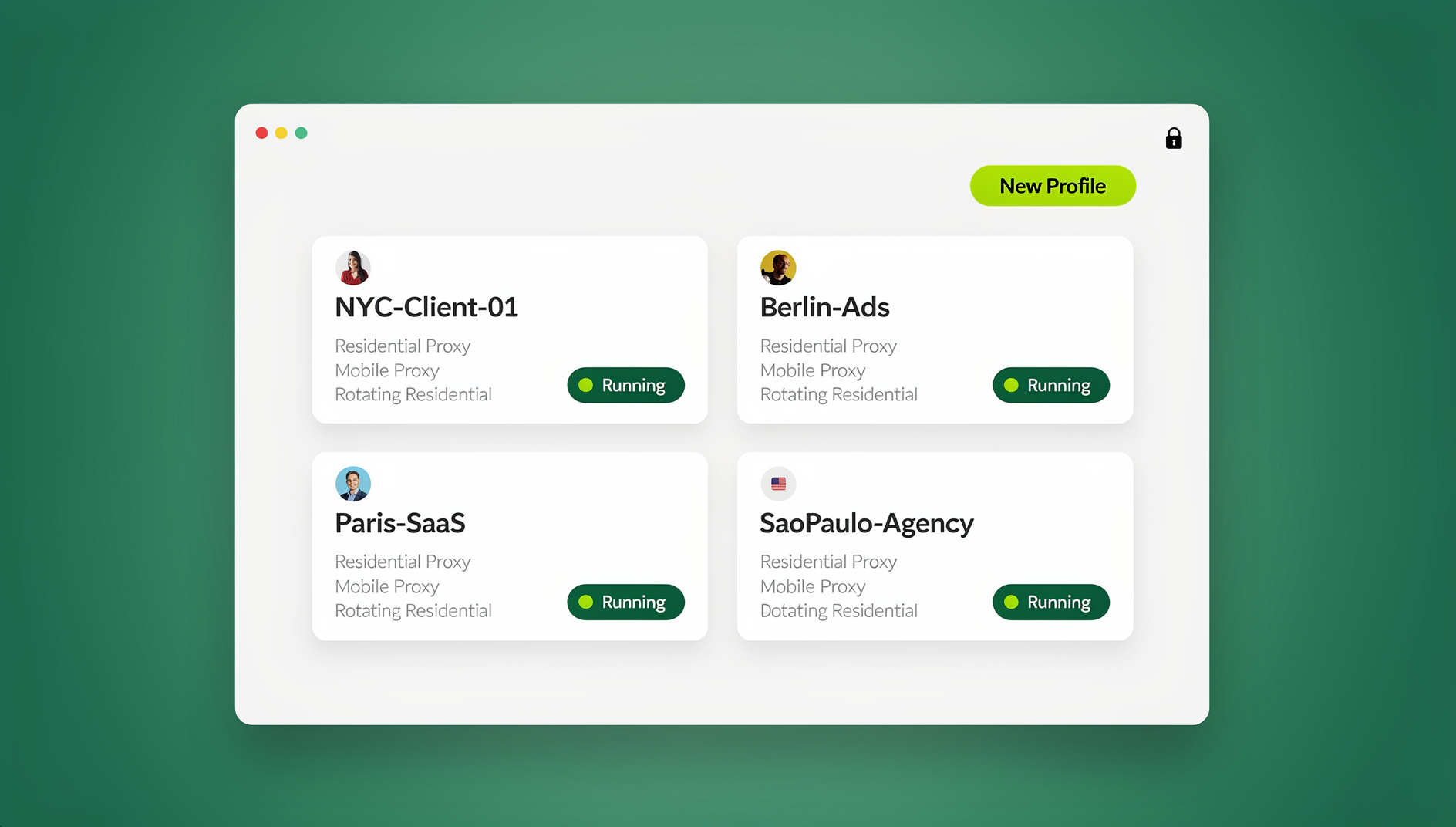
Send.win eliminates this entirely with isolated browser profiles. In Sendwin Browser (the native desktop app for Windows, macOS, and Linux), each client gets their own profile with saved credentials, cookies, and session state. Switch between client dashboards with a single click — no login screens, no password lookups, no session conflicts.
For agencies with distributed teams, this solves the credential sharing problem too. You can use a team browser setup where team members access client profiles without ever seeing the underlying passwords. The agency owner controls who has access to which profiles, and every session is logged for accountability.
Cloud browser sessions take this further — team members can access client dashboards from any device without installing Sendwin Browser locally. Need a freelancer to make a quick CSS fix on a client’s Elementor site? Grant them access to that client’s cloud browser session, and they are editing within seconds. Revoke access just as quickly when the task is done.
The profile isolation is what makes this particularly valuable for Elementor Pro workflows. Each client’s WordPress dashboard runs in a completely separate browser environment. There is zero risk of cookie leakage, cached credential conflicts, or accidentally editing the wrong client’s site because you forgot to log out of another dashboard. For agencies running a multi-login browser workflow across 10, 50, or 100+ client sites, this isolation is not a luxury — it is a necessity.
Scaling From Small Teams to Large Teams
Two to Three People
At this size, informal communication usually works. Assign clear page ownership, use Elementor’s revision history as your safety net, and make sure everyone has individual WordPress accounts. Role Manager configuration can be minimal — restrict Authors to content-only editing and let Editors have full builder access.
Four to Ten People
You need formal workflows now. Implement a staging environment, establish your design system governance, and use a project management tool to track page assignments. Consider restricting Theme Builder access to senior designers only. Conduct weekly design reviews where the team walks through recent changes together.
Eleven or More People
At this scale, you are managing multiple sub-teams (design, content, development). Each sub-team needs its own lead who is responsible for quality control within their domain. Your staging environment should have a formal approval process before changes are pushed to production. Automated testing (visual regression testing tools like Percy or BackstopJS) can catch unintended layout changes before they reach production. Global Widgets and Theme Builder templates should be locked down to a very small group of senior designers.
Troubleshooting Common Multi-User Issues
| Problem | Likely Cause | Solution |
|---|---|---|
| User cannot access Elementor builder | Role Manager restricts their role | Check Elementor → Settings → Role Manager; adjust access for their WordPress role |
| Two users editing the same page — one loses changes | WordPress post lock ignored or expired | Enforce a check-in/check-out system via your project management tool |
| Global Widget changed unexpectedly | User with Editor+ role modified a Global Widget | Restrict Global Widget editing to Administrators only via Role Manager |
| Styles inconsistent across pages | Designers using custom colors instead of Global Colors | Enforce Global Colors usage; audit pages monthly for custom overrides |
| License activation limit reached | Too many sites activated on current license tier | Upgrade to Expert or Agency tier; deactivate sites no longer in use |
| User sees “You are not allowed to edit this post” | Wrong WordPress role or insufficient capabilities | Verify the user’s role has edit_pages or edit_posts capability |
| Revision history missing | Revisions disabled in wp-config.php or by a plugin | Add define('WP_POST_REVISIONS', true); to wp-config.php |
| Custom CSS disappearing after edits | Another user overwriting page-level CSS | Move page-level CSS to Global Custom CSS or a child theme stylesheet |
🏆 Send.win Verdict
For agencies and teams managing Elementor Pro across multiple client sites, Send.win eliminates the biggest pain point: constant login juggling. Each client’s WordPress dashboard gets its own isolated browser profile in Sendwin Browser (the native desktop app) or via cloud browser sessions — no install needed. Team members access shared profiles without ever seeing raw passwords, and every session stays completely separated. At $6.99/month on the annual Pro plan, it costs less than a single hour of the productivity you’ll reclaim.
Try Send.win free today — 30-day trial, no credit card needed.
Frequently Asked Questions
How many users can work in Elementor Pro at the same time?
There is no hard limit on simultaneous Elementor Pro users. WordPress itself can handle multiple logged-in users, and Elementor Pro does not impose a concurrent user cap. However, two users cannot edit the same page simultaneously — WordPress’s post-locking mechanism prevents this. The practical limit depends on your hosting resources and how you structure page assignments.
Does each team member need their own Elementor Pro license?
No. Elementor Pro licenses are per-site, not per-user. One license activates Elementor Pro on one website, and all WordPress users on that site can use it according to their Role Manager permissions. For agencies managing multiple sites, you need a license tier that covers your total number of active sites.
Can I restrict a user to only editing content without changing layouts?
Yes. Elementor Pro’s Role Manager includes a “content area only” restriction that lets users edit text, images, and other content within existing widget structures without the ability to add, remove, or rearrange widgets or sections. Set this for Authors or any role that should focus on content rather than design.
What happens if two users try to edit the same page?
WordPress displays a post-lock notification to the second user, warning them that someone else is currently editing the page. The second user can choose to take over the lock (which may cause the first user to lose unsaved changes) or wait. Best practice is to respect the lock and coordinate with the other editor before taking over.
How do agencies manage WordPress credentials for dozens of client sites?
The most secure approach is using isolated browser profiles — each client’s dashboard gets its own profile with saved credentials that team members can access without seeing raw passwords. This prevents credential leakage, eliminates password-sharing spreadsheets, and keeps sessions completely separated. Send.win’s Sendwin Browser provides exactly this functionality with its profile isolation feature.
Can I use Elementor Pro’s Role Manager with custom WordPress roles?
Yes. If you create custom roles using a plugin like Members or User Role Editor, those custom roles will appear in Elementor’s Role Manager settings. You can then configure Elementor-specific permissions for each custom role just like you would for the default WordPress roles. This is particularly useful for creating specialized roles like “Designer” or “Content Manager” with precisely the right capabilities.
How do I prevent junior designers from breaking global templates?
Use Role Manager to disable Theme Builder access for junior designers’ WordPress roles. Additionally, restrict access to Global Widgets so they can use them but not edit them. Pair this with a staging environment where all design work is reviewed by a senior designer before being pushed to production.
What is the best Elementor Pro license tier for a growing agency?
If you currently manage 5-10 client sites with plans to grow, the Expert tier (25 sites) offers the best value. It gives you room to grow without upgrading immediately. Once you consistently manage more than 20 active sites, the Agency tier (1,000 sites) becomes the most cost-effective option per site, even if you are nowhere near 1,000 sites.